Wednesday, February 22, 2023

Dr. Kate Yont - A Life of Service


Post by Doris McCraw aka Angela Raines

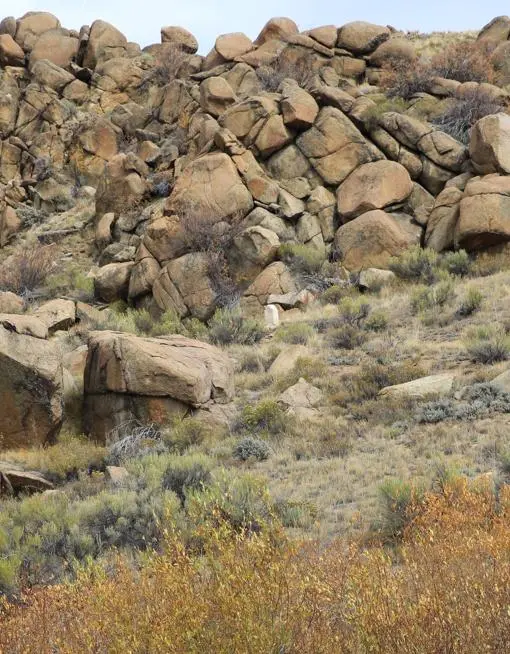
Headframe - Cripple Creek/Victor Mining area
Photo (c) Doris McCrw

In 2014 a friend from the museum in Victor, Colorado, gave me the name Kate Yont. The museum had been given some of her items but they had no record of her in the area.  To me, that was like being given the keys to the kingdom. Off I went on the journey to find this woman and what connection she had to Victor. The following is what I found on the journey of exploration.

In 1873  Katherine Eliza Geiger was born in Jackson, Michigan to John and Mary (Ver Planck) Geiger.  She attended the University of Michigan in Ann Arbor and graduated in 1896. She moved to Denver, Colorado in 1897. That same year she received her Colorado license #2514 to practice medicine. She was twenty-five at the time.  1897 also saw her marriage to Jesse Grant Yont, an 1895 graduate of the University of Michigan.

Jesse Yont, according to some records graduated with a law degree, but he also played football while in college and with two ‘professional’ teams in Denver: Bently football 1894

Around 1900 he was living in Victor. His family probably came with him. While there is no record of Kate practicing medicine in the area, there is a high probability she did in some capacity.

Jesse in a football uniform

The next time we hear of Kate is when Jesse fell about 60 feet in the Strong mine in the Cripple Creek/Victor area on June 6, 1903. The newspapers state he was scalped from the fall but did not crack his skull. There was some question about whether he would survive. He did recover but according to family stories, he was not mentally the same after. This was also the first record I found of Kate in the area.

The family returned to Denver and Kate resumed her practice. The couple separated/divorced around 1920. There were two children from the union and they both remained with Kate, however, family stories do say the son would. periodically visit his father.

While in Denver Kate was the assistant gynecologist at St. Anthony’s Hospital. She also was involved with the Flower Mission, a nucleus of the Visiting Nurses Association, worked as the resident physician at the Florence Crittenton Home, and was well-known to the Italian community for helping in their naturalization process.

She died December 7, 1943, in Denver. Colorado.

As I said, an unexpected journey and a story of an almost forgotten woman.

Until Next Time: stay safe, stay happy, and stay healthy.

Doris


Friday, February 10, 2023

On This Day in the Old West: February 10

 On February 10, 1846, the Mormons started their long march west with 3,000 families and around 2,500 wagons. They would end by traveling 1,300 miles to reach their “New Jerusalem.” Whether your characters were sympathetic to the Mormon plight or followed the more popular dislike of the sect, they would probably have heard of Joseph Smith’s group.


The Mormons had been thinking about moving out of the western borders of the United States for some time before Joseph Smith’s assassination in 1844, but this act solidified their resolve. In 1845, mob violence in Illinois resulted in the legislature revoking their charter, so they had to leave. Brigham Young, who was emerging as the new leader, conducted a census that fall, and counted 3,000 families who agreed to accompany him West. He divided the church members into smaller administrative groups of tens, fifties, and hundreds, following the pattern described in the Old Testament.


The groups planned to leave Illinois in the Spring, but further hostilities forced their hand, and they started out from Nauvoo on February 10 instead. Several thousand people crossed the frozen Mississippi River (dry-shod, as the Hebrews in the Bible crossed the Red Sea). Their suffering was intense. On one evening of the trek, nine babies were born, their parents barely able to provide shelter from the elements for them. Wagons collapsed and people died from exposure. It took 131 days for the convoy to travel 310 miles to the relative safety of the Missouri River, where it divided Nebraska and Iowa. It was now June, 1846.


The group remained in that area (near modern Omaha) for some time, and Young decided that, since the neighboring Native tribes were friendly, they would spend the winter there. However, when winter arrived, scurvy claimed as much as 15% of the camp members. Brigham Young’s son later called this settlement “The Valley Forge of Mormondom.” Even Young himself became sick in February of 1847, and began to doubt, but a vision of Joseph Smith sustained his beliefs.


In April, 1847, an advance party of 25 wagons, led by Brigham Young, left the “Winter Quarters,” headed for the Rocky Mountains. They traveled across the Platte River, creating a new route along its north bank rather than risk encounters with other travelers along the Oregon Trail. The first half of the journey, along the plains, was far easier going than the mountains looming past Laramie, Wyoming. But the Mormons kept marching, lightening their journey with evening singing and dancing around their campfires. 


Like many others in his band, Brigham Young came down with “mountain fever” along the way. On July 24, after 111 days of travel, a wagon carrying the prostrate Young reached the valley of the Great Salt Lake. As he looked out over the area, Young declared, “It is enough. This is the right place.” Even as this group was reaching their destination, another band of 1,500 people (with nearly 600 head of cattle) was leaving their “Winter Quarters” headed west. 


Over the next two decades, nearly 60,000 Mormons would journey to Utah Territory. Thousands came by wagon, but thousands more pulled simple handcarts across the forbidding terrain. Many died along the way, and survivors would find that the nation they sought to escape would soon expand its borders to encompass them. However, the Mormons had found a permanent home. Save for a brief period during the “Utah War” in 1857, the sect has called the Great Salt Lake home since their arrival. Depending on when your characters lived, they might associate the Mormons with the lake, or with the great march West.


J.E.S. Hays

www.jeshays.com

www.facebook.com/JESHaysBooks

Wednesday, February 1, 2023

Classic Country Ballads of Lost Love - February #westernfictioneers #countryballads #classiccountrymusic

I grew up in the late 50s and 60s listening to the country music of that era. I stuck with country music through the 70s. I made it into the 80s but, by the late 80s, country music as I knew and loved was headed in a direction that, with a few exceptions, I wasn’t interested going. So I didn’t. (Get off my lawn.)

The old west gunfighter and trail ballads, drinking songs, and revenge songs had an influence on me that was, and still is, every bit as strong as the impact Louis L’Amour’s books left with me. My lifelong interest, perhaps fascination bordering on obsession, with everything old west—truth, legends, and myths alike—have roots in those old cowboy and country songs.

I’m inviting you to read along with me this year as I post one or two nostalgic-for-me country ballads on the first Wednesday of each month. I will share a snippet of trivia about each song along with a YouTube video.

Each month, I will include a link back to the previous month’s article as reference to those songs. The common thread that runs among the songs I’ve chosen for this musical memory lane excursion is tragic lost love.

January – Marty Robbins – El Paso and Feleena

This month’s tragic lost love ballad is by Faron Young – The Yellow Bandana.

Faron Young, publicity photo 
By Mercury Records - Billboard, page 1, 7 November 1964, Public Domain, 

The song was ranked #18 and peaked at #4 on the Billboard Top Country Singles chart of 1963.

The song has a pleasant, upbeat, catchy tune with ¾ time, which is deceivingly happy for as sad as the lyrics are. A cavalry soldier falls in love with Roseanna. He gives her his yellow bandana to wear as a memento until he returns. He returns and discovers the yellow bandana…


If the video doesn't show on your device, this is the URL to Faron Young singing The Yellow Bandana -  https://youtu.be/HIxvvFnq4fQ

As an aside, a yellow bandana as part of a cavalry soldier’s uniform likely came out of Hollywood in the John Wayne / John Ford westerns era. Soldiers did wear handkerchiefs, neckerchiefs, scarves, sashes, etc., but generally speaking, other colors than yellow, and these items weren’t necessarily standard military issue.

Until next time,
Kaye Spencer
Writing through history one romance upon a time
www.kayespencer.com

Tuesday, January 24, 2023

It all Began with a Headstone: Who was Jane Kirkham?


Post by Doris McCraw aka Angela Raines 

Photo property of the author

Jane Kirkham - It all began with a headstone. 

Image from the Loveland Reporter-Herald

Along Highway 24 near the junction of Highway 82 on the east side of the Arkansas River, you will find a lone headstone. This area is near the old stage road between Buena Vista and Leadville. Should you get out of your car and walk to this small white grave marker you would read the following:

My wife — Jane Kirkham, Died March 7, 1879, Aged 38 years, 3 months, 7 days.

But who was Jane Kirkham? No one seems to know for sure. Therein is where myths, legends, and stories begin. This post hopes to look at some of the more prevalent stories and a couple of possibilities.

Searches so far the exact date the stories began has not been found. What has been found are various stories about who she was and why the headstone is located where it is.

In John Halfor's book "Strange but True, Colorado: Weird Tales of the Wild West" he tells the tales of a gold shipment being held up in a spot where there were other hold-ups. The guards shot the robber and when they pulled the mask off the robber they saw it was a woman. She also was the wife of one of the guards who was so ashamed he buried where she fell. 

Most of the stories follow this story with the 'husband' being the sheriff, or some other authority figure who kills his 'wife'. 

It's the book "Forgotten Tales of Colorado" by Stephanie Waters that has the sheriff pursuing the bandit and bullets ricocheting off rocks like lightning that really makes it 'come alive'. She ends her story with the line, "...but at least he had the decency to erect the lonesome tombstone..."

Lest you think the story ends there, Jane Kirkham's name shows up in a court case in the town of Rosita in Custer County as having property in that town. 

There are also those who have tried to find out more about the person whose name appears on that stone. There are no newspaper reports about the stories mentioned earlier in the post, nor does her name appear in any census records in that area. 

There is also a story that she was a woman who was riding the stage and died in childbirth and they buried her there.

One person suggests, after doing ancestor research, her name was Eliza Jane Harris, born in 1840 in Iowa. Here is the link to that story: https://www.tamatoledonews.com/opinion/editorials/2022/10/21/a-history-mystery/

A YouTube video from 2018: https://youtu.be/FQmzW7E2OnY


I leave it to you and your research or imagination to answer the question - Who is Jane Kirkham?

Until next time: stay safe, stay happy, and stay healthy.

Doris


Thursday, January 12, 2023

On This Date in the Old West: January 13

 On January 13, 1840, en route from New York City to Boston, the paddlewheel steamboat Lexington caught fire. Of the estimated 143 people on board, only four survived. Let’s look at this tragedy and see what happened—and what might have been avoided.


Commissioned by Cornelius Vanderbilt, Lexington was one of the fastest and most luxurious steamships in operation along the east coast. She was commissioned in early 1834 and the keel was laid in September of that year. Unlike later steamships, no detailed plans of Lexington were made. Instead, a wooden model of the hull was created and altered to fit Vanderbilt’s ideas. Using this model as a guide, full-sized outlines were then drawn out in chalk on the hull timbers, which were then cut and assembled by the carpenters. The engine was constructed at West Point Foundry, and was one of the most efficient of its time. The finished ship was 207 feet long and weighed 488 long tons. Lexington was also one of the most luxuriously outfitted steamships on the east coast, with teak deck railings, cabin doors, staircases, and paneling. She also included both a lounge and a dining salon, with elegant deck lighting, curtains, and furniture.


In 1835, Lexington began service as a day boat between New York City and Providence, Rhode Island, and in 1837, she began service to Stonington, Connecticut, the terminus from the newly built railroad from Boston. 


At 4:00 pm on January 13, 1840, Lexington left her pier on Manhattan’s East River, headed for Stonington. She was carrying 143 passengers and crew, along with 150 bales of cotton. She was expected to arrive in Stonington the following morning to meet the train from Boston. The ship’s usual captain, Jacob Vanderbilt, was not onboard due to illness, but veteran captain George Child was behind the wheel.


At 7:30 pm, the first mate noticed the casings and woodwork around the smokestack were on fire. At this time, Lexington was four miles off Eaton’s Neck on the north shore of Long Island. Crew members tried throwing water on the flames, using buckets and boxes and even a small hand-pumped fire engine. However, it soon became apparent the fire could not be extinguished and the ship’s three lifeboats were prepared for launch. 


Lexington’s paddlewheel was still churning at full speed, since none of the crew could reach the engine room to shut off the boilers. The first lifeboat was sucked into the wheel, killing all occupants. Captain Child had fallen into this lifeboat, and was among those killed. The ropes used to lower the other two boats were then cut incorrectly, causing the lifeboats to hit the water stern first and promptly sink.


Pilot Stephen Manchester turned the ship toward the shore in hopes of breaching it, however the drive-rope that controlled the rudder quickly burned through and the engine stopped two miles from shore. Lexington, now out of control, drifted northeast, away from land.


The cargo of cotton quickly ignited, spreading the fire from the smokestack to the entire superstructure. The remaining passengers and crew tossed empty baggage containers and unburned cotton bales into the water as makeshift rafts. The center of Lexington’s main deck collapsed shortly after 8:00 pm, and the fire continued to spread to such an extent that most of the passengers and crew were forced to jump into the frigid water my midnight. Those with nothing to climb onto quickly succumbed to hypothermia.


Lexington was still burning when she sank at 3:00am.


One of the passengers lost was noted radical minister and abolitionist Karl Follen. According to legend, poet Henry Wadsworth Longfellow was scheduled to make the trip, but missed it due to a discussion with his publisher over the poem, The Wreck of the Hesperus, which featured a sinking ship.


Only four survived the disaster:


Chester Hilliard, 24, the only passenger to survive, had been helping crew members toss bales of cotton to people in the water. He climbed onto the last bale at 8:00, along with ship’s fireman Benjamin Cox, who later succumbed to hypothermia. Hilliard was rescued at 11:00am by the sloop Merchant.


Stephen Manchester, the pilot. He and around 30 others huddled at the bow of Lexington until around midnight, when the flames closed in on them. He climbed onto a bale of cotton with passenger Peter McKenna, who died of exposure three hours later. Manchester was also rescued by Merchant at noon.


Charles Smith, one of Lexington’s firemen, climbed down the stern of the ship and clung to the rudder, along with four other people. The five dove into the sea just before the ship sank around 3:00 am, then climbed onto a floating piece of the paddlewheel. Smith was the only survivor, and was rescued by Merchant at 2:00 the next afternoon.


David Crowley, the second mate, drifted for 43 hours on a bale of cotton, finally coming ashore 50 miles to the east, at Baiting Hollow, Long Island. Crowley, weak, dehydrated, and suffering from exposure, staggered a mile to the house of Matthias and Mary Hutchinson, collapsing after he knocked on their door. A doctor was immediately summoned and once well enough, Crowley was taken to Riverhead, where he eventually recovered.


An inquest jury found a fatal flaw in Lexington’s design to be the major cause of the fire. Her boilers had originally been built to burn wood, but had been converted to coal in 1839. This conversion had not been properly completed, and not only did coal burn hotter than wood, but extra coal had been burned on that night because of rough seas. A spark from the over-heated smokestack set the casing ablaze on the freight deck, a fire which quickly spread to the bales of cotton, which were stored improperly close to the smokestack.


Lexington had suffered previous, smaller fires, which had been extinguished successfully, however, nothing had been done to correct her problem.


The jury also found crewmen’s mistakes and violation of safety regulations to be at fault. Chester Hilliard testified that, once crew members noticed the fire, they went below to check the engines before attempting to extinguish the flames. The jury believed the fire could have been defeated if the crew had acted immediately. Also, not all of Lexington’s fire buckets could be located during the emergency, and only around twenty passengers were able to locate life preservers. The fiasco at the lifeboat launches was blamed on crew carelessness as well.


The sloop Improvement, which had been less than five miles from the burning steamship, never came to Lexington’s aid. Her captain, William Tirrell, explained he was running on a schedule and didn’t stop because he didn’t want to miss the high tide. The public became rightly furious at this excuse, and Tirrell was attacked by the press in the days following the disaster.


The Lexington remains Long Island Sound’s worst steamboat disaster. Ultimately, no legislation was passed in the wake of the tragedy, though critic John Neal issued a call for better construction and operation practices in the New York Evening Signal. Not until twelve years later, when the steamboat Henry Clay burned on the Hudson River, were new safety regulations imposed.


J.E.S. Hays

www.jeshays.com

www.facebook.com/JESHaysBooks


Wednesday, January 4, 2023

Classic Country Ballads of Lost Love - January #westernfictioneers #countryballads #classiccountrymusic


I grew up in the late 50s and 60s listening to the country music of that era. I stuck with country music through the 70s. I made it into the 80s but, by the late 80s, country music as I knew and loved was headed in a direction that, with a few exceptions, I wasn’t interested going. So I didn’t. (Get off my lawn.)

The old west gunfighter and trail ballads, drinking songs, and revenge songs had an influence on me that was, and still is, every bit as strong as the impact Louis L’Amour’s books left with me. My lifelong interest, perhaps fascination bordering on obsession, with everything old west—truth, legends, and myths alike—have roots in those old cowboy and country songs.

I’m inviting you to read along with me this year as I post one or two nostalgic-for-me country ballads on the first Wednesday of each month. I will share a snippet of trivia about each song along with a YouTube video.

Each month, I will include a link back to the previous month’s article as reference to those songs. The common thread that runs among the songs I’ve chosen for this musical memory lane excursion is tragic lost love.

Because the first two songs are so closely related, it would be unfitting of me to post them in separate months—El Paso and Feleena by the master of the old west ballad, Marty Robbins.

El Paso hit the radio airwaves in the fall of 1959. Marty Robbins wrote and recorded it. As a single, it was the A side. Running Gun was the B side. El Paso was an instant hit, a chart cross-over song, and earned Marty Robbins a Grammy in 1961.

Robbins recorded a prequel to El Paso in 1966—Feleena. Coming in at eight minutes long, it didn’t get the airtime it deserved.


El Paso by Marty Robbins: https://youtu.be/KAO7vs_Q9is


Feleena by Marty Robbins: https://youtu.be/gj0IyyB3RTk

Until next time,
Kaye Spencer
Writing through history one romance upon a time

www.kayespencer.com

Sunday, January 1, 2023

Tuesday, December 27, 2022

CLEANING UP ODDS & ENDS


Post by Doris McCraw aka Angela Raines

Photo Property of the Author

We're in the final stretch of 2022. I don't know about you, but it seemed to fly by. I thought for my final post of this year I'd take a look back and take care of some odds and ends.

First, I apologize for not getting the author interviews out as I had anticipated. Rest assured, I will return to that project and make sure those interviews are shared.

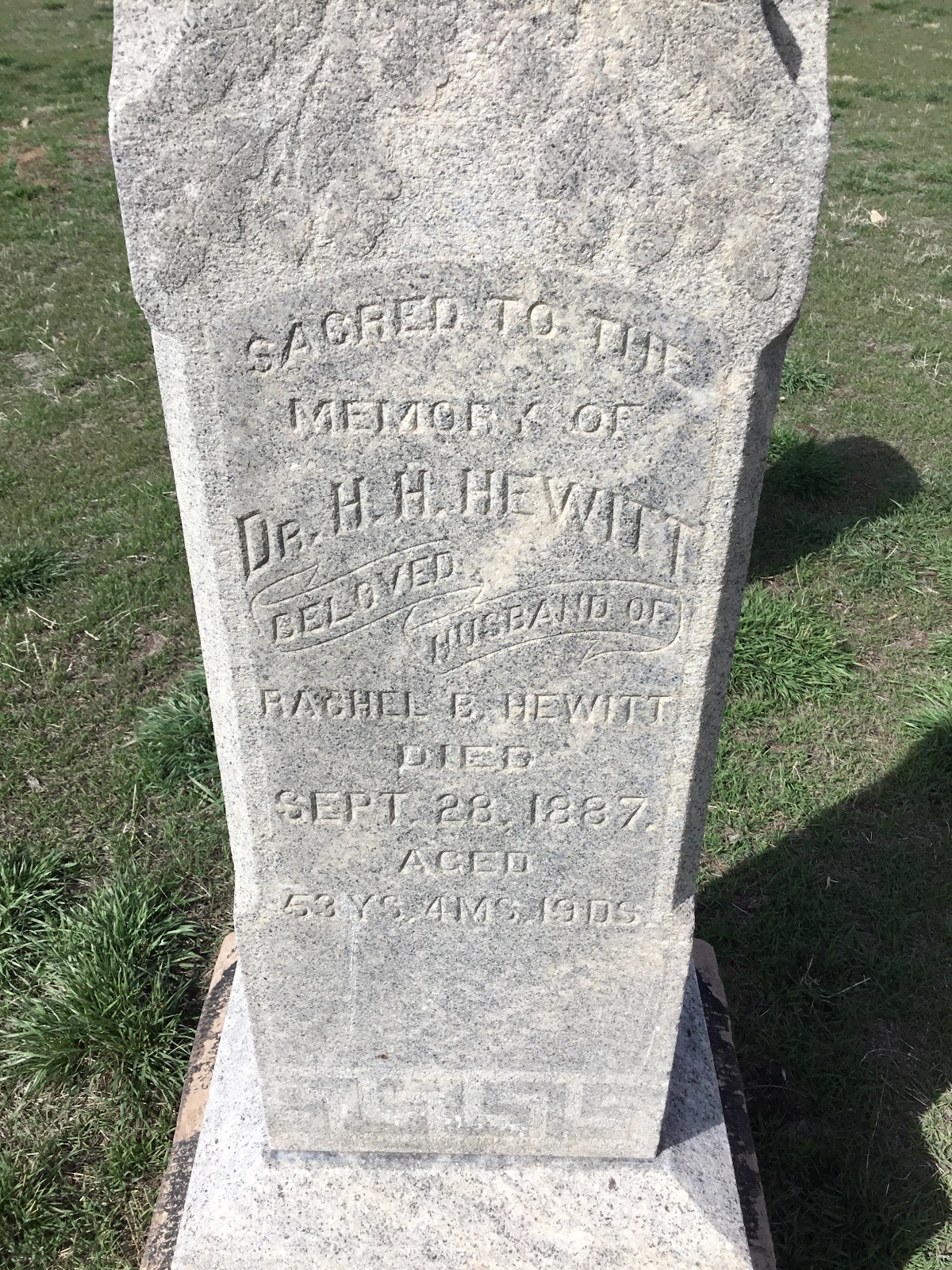
Second, in August I wrote about Dr. Henry H. Hewett. I found him. Most of the information I gleaned was from the Don and Jean Griswold books on Leadville, CO. What I did find, he evidently married at some point prior to his death in a stagecoach accident. He was taken to Denver, CO. where he passed away from his injuries. I found his headstone in Riverside Cemetery in Denver CO. His death date is listed as September 28, 1887.  The following photo can be found on the Find A Grave website for Dr. Hewitt.

From Find A Grave


Third, I was able to republish "Chasing a Chance" with a new cover for the paperback. I also published "Under the Stone: Early Women Doctors in Evergreen Cemetery" and "52 Haiku- Reflections From a Life in Colorado".

And lastly, I had hoped to post more than one marketing post on my blog, but the best-laid plans of... It is my goal to do more than one for 2023. 

Here's to the end of one year, and the beginning of another along with some great stories and other work from all of you.

Auld Lang Syne

HAPPY NEW YEAR!

Doris


Wednesday, December 21, 2022

WESTERN CHRISTMAS ART TO MAKE YOU SMILE by Cheryl Pierson


It's the middle of December, and Christmas is only a few days away--that means that in less than two weeks, we'll be saying goodbye to 2022 and hello to a brand new year.


I love Christmas artwork of all kinds, but especially the western kind. So today I want to show off some of my favorites by Jack Sorenson. I just love his paintings--so detailed, and with such movement and stories to tell us! Take a look!


This has got to be my all-time favorite!


Here's hoping each and every one of you has a very Merry Christmas and a Happy New Year, and that 2023 brings us all--personally and professionally--the best of everything we could ever hope for. MERRY CHRISTMAS!

(All illustrations by Jack Sorenson)

Sunday, December 18, 2022

MEMBER BOOKS PUBLISHED IN 2022 - LAST MINUTE GIFT?

Post by Doris McCraw 


Photo Property of the Author.

In time for the last-minute gift buying.  Below are some of the offerings from 2022 by our authors just in time for the Holidays:

Anthology from Western Fictioneers

The Western Fictioneers Anthology: 

Over Western Trails - Richard Prosch, Editor

Return to Canyon Creek ( A Luxton Danner Novel)

 John Layne

Rowdy (3 book series) Chris Mullen - 

Wild and Mean, Sharp and Keen, Redemption, Dead or Alive

Hell West of the Pecos - V. J. Rose

Coldwater Range - John D. Nesbitt

Blue is Not the Word/Buckskin Train (two short stories)

 John D. Nesbitt

Blood on the Trail ( A Jeremiah Halstead Western Book 1) Terrance McCauley

Disturbing the Peace ( A Jeremiah Halstead Western Book 2) Terrance McCauley

Death Waits at Yellowstone - Guns of Legende Book 2)

 Brody Weatherford

Colorado City Kill: A Classic Western Con Game - Brody Weatherford

Pony Boys (Curse of the Niobrara Trilogy 1) Richard Prosch) Release date 12-21-2022

Forever Sheriff (The High Mountain Sheriff Series)

 Edward Massey

Hired Hand - John Hansen

The Good Lawman and Other Western Stories - John Porter

Rawhide Jake: Learning the Ropes (The Life and Times of Detective Jonas V. Brighton 1) JD Arnold

Jubal Beckman: Mountain Man - Big 'Jim' Williams

Gallows Justice: Jake Silverthorne Texas Ranger Years 

Book Four - Big Jim Williams

Bounty Hunter Nate Landry: Family Fury -

 Mark L. Redmond


And the non-Western and Non-Fiction


I do hope you enjoy the options for some amazing stories
for your gift selection or for yourself. Happy Reading
and HAPPY HOLIDAYS!

Doris