Showing posts with label Dr George Goodfellow. Show all posts

Thursday, June 28, 2018

LEAD POISONING


The Doctor's Bag

The blog about Medicine and Surgery in the Old West 

By Keith Souter aka CLAY MORE


Dr George Goodfellow, the famed surgeon to the gunfighters, was an innovator, a scientist, mining engineer, geologist and in his youth, a champion boxer. During his time in Tombstone he performed many post mortem examinations and reported on them, sometimes in straightforward clinical terms and sometimes with a wry sense of humour. His summation after the post mortem examination of a gambler by the name of McIntyre, who had been shot after an argument over the card table is an example of his wit:

'I performed the necessary assessment work and found the body full of lead, but not too badly punctured to hold whiskey."


Dr George Goodfellow

Lead poisoning indeed!

Plumbism and Saturnism
The medical name for lead poisoning is plumbism, from the Latin 'plumbum' for lead. Thus, in chemistry its symbol is Pb. 

Interestingly, it's archaic name is 'saturnism,' because lead was associated with the planet Saturn according to the alchemists. It is the heaviest of the base metals, which the alchemists sought to transmute into gold. 

The alchemist's goal of transmuting lead into gold

Lead poisoning can be devastating an individual. It can affect people of all ages, although children can be highly susceptible, as their organs are still developing. Lead is toxic to virtually every organ of the body and gradual exposure can result in a slow build up within the body.

It can cause acute or chronic poisoning. Acute is due to sudden accumulation and exposure. It can cause vomiting, weakness, tingling, diarrhea and weight loss. 

Chronic poisoning, as the name implies, is slow and takes a long time. It can cause colic, or severe abdominal pains. This is why it was sometimes called 'painter's colic,' as exposure to lead paint could produce it, without the individual being aware of it. It also caused kidney problems and, most alarmingly, profound damage to the brain and nervous system.

The Ancient Romans had an expression, 'as crazy as a painter.' This seems to have come from the erratic behaviour of artists, and it is possible that many had excessive exposure to lead based paints, especially if they sucked or moistened brushes dipped in lead paint. 

The Romans also essentially invented plumbing, again from plumbum, the Latin  word for lead. They used malleable lead piping. So, drinking water that travelled in lead pipes may have been a problem for the Ancient Romans. They also used lead acetate as a sweetener for food and wine, so that could be another source.

Interestingly, an analysis of ancient Roman cook-books finds that many writers, such as Marcus Gabius Apicius, a gourmand who lived in the first century during the reign of Emperor Tiberius, wrote the first great cookbook 'On the Art of Cooking.' He used vast amounts of spices and honey. It is thought that this was to disguise sometimes rancid meat, but also to give taste to the food of people who may have been suffering from chronic lea poisoning. Loss of taste is one of the symptoms of chronic plumbism.


Copy of Apicius' cook-book, 1541


During the middle ages wealthy people ate and drank from glazed earthenware dishes and analysis of skeletal remains in Denmark compared those living in rural areas and compared them with urban dwellers. They found a significantly higher amount of lead in the skeletons of city dwellers. The glaze would contain lead.

The Renaissance artist Caravaggio (1571-1610) is thought to have gone mad and possibly died from lead poisoning. Indeed, analysis of his bones showed that he had significant levels of lead in them, consistent with chronic plumbism.


Salome with the head of john the Baptist, by Carravagio, circa 1610

Caravaggio is a real example of the tortured genius.

Those at risk
Anyone exposed to lead paint, involved in the lead mining industry, or in the making of lead based medication or tonics. Also anyone drinking water from lead piping

The medical literature mentions people who had retained lead bullets in their bodies, could rarely develop lead poisoning.  As writers of western novels you might consider that as a cause of erratic behaviour or memory difficulty. 

Indeed, last year  the Centers for Disease Control and retention, CDC produced a report that suggested if anyone has a retained bullet or bullet fragments, then they could be at risk of lead poisoning effects. Memory loss would be very significant and lead blood levels should be tested and extraction of the lead should be considered. 

If you are interested in reading further, follow the link in one of my replies below!

Symptoms of lead poisoning
As mentioned above, lead poisoning can either acute or chronic.

Acute poisoning
  • Abdominal pain - moderate-to-severe, usually diffuse but may be colicky.
  • Vomiting.
  • Encephalopathy or inflammation of the brain. This would be more common in children, characterized by seizures, mania, delirium and coma, death.
  • Jaundice (due to hepatitis or inflammation of the liver).
  • Lethargy (due to  anemia).
  • Black diarrhea.
Chronic poisoning
  • Mild abdominal pain.
  • Constipation.
  • Weight loss.
  • Aggression.
  • Antisocial behaviour.
  • Headaches.
  • Hearing loss.
  • Foot drop.
  • Wrist drop. 


  • Carpal tunnel syndrome.
  • Gradually developing paralysis
  • Neuritis.
  • Gout.
  • Increased perspiration and sleep disturbances

The Burton Line
Chronic lead poisoning is associated with a classic blue line on the gums. This is called the Burton Line, named after Dr Henry Burton (1799-1849), and English physician who first described it and deduced it was due to lead poisoning.  A blue line is seen when the lips are pulled back, just at the margin of the gums and the teeth.


I confess to having used lead poisoning in one of my short western crime stories, although I will not say which one!

Dr George Goodfellow (1855-1910)
I began this post with an anecdote about Doctor George Goodfellow. Undoubtedly, the surgeon to the gunfighters was a truly remarkable man. He was a  pioneering surgeon. Throughout his career he established a reputation as the foremost expert on gunshot wounds, as well as being the first surgeon to perform a perineal prostatectomy along with other ‘first’ operations. For example, he improvised and performed brain surgery when it was needed and he rebuilt a friend's nose in an early plastic surgery operation. 


In addition, he wrote and published many medical papers in the journals of the day. His work on the impenetrability of silk would lead to the actual bulletproof vests of the future.

He was also a scientist, an expert in mining and geology. His research into Gila Monsters was published in The Scientific American. And in his youth he had been the boxing champion at the United States Naval Academy at Annapolis.


In March, 1910, while in  Mexico he developed an illness, although the details about it seem to be sketchy. Over several months he became more unwell and was unable to perform surgery.  He developed wrist-drop. It seems that he developed paralysis of both arms, the right worse than the left, as well as generalized weakness. He therefore made his way to Los Angeles to let his brother-in-law investigate and look after him. Apparently, he joked that people would say he was suffering from alcoholic neuritis. He said that "some would say this because they did not like him and others because  they did not know."

His brother-in-law, Dr Charles Fish treated him in Angelus Hospital in Los Angeles for several weeks. Several specialists were consulted, but no agreement was reached on the diagnosis. 

One source suggested that he had developed 'multiple neuritis,' which is a non-specific diagnostic term meaning that several peripheral nerves seem to be affected. It was speculated that it was due to an old attack of beri-beri, that he had suffered from during the Spanish-American War. Nowadays we know that this condition is caused by a deficiency of thiamine, or vitamin B1. 

He died at 7am on the morning of December 7, 1910, having previously stated that if he could not perform surgery, he had no wish to live. 

Alcoholic neuritis is a possibility, as Doctor Goodfellow himself joked, but so too is chronic lead poisoning. 

I must emphasize that I make no claim that this actually was the cause of his illness or of his death. I have no evidence and have not researched this. I think, however,  that with his wry sense of humour, as described in the anecdote that I started this post with, he may have been amused by the irony of being poisoned by the substance that he had spent a good deal of his life digging out of his patients. 

***


If you are interested in reading more about medicine and surgery in the frontier days, including the work of Doctor George Goodfellow, then you may find The Doctor's bag useful. It is a collection of my blog posts, published by Sundown Press.


The novel about Dr George Goodfellow, the Tombstone surgeon to the gunfighters


The novel about Ned Buntline, the King of the Dime Novelists


Buy The Dime Novelist


Thursday, May 24, 2018

I THINK IT'S BUSTED, DOC!


The Doctor's Bag

The blog about Medicine and Surgery in the Old West 

By Keith Souter aka CLAY MORE


It is a dangerous business being a character in a western novel. You can get shot at, tossed off a horse, hurled through a saloon window or be pushed over a ravine. You have seen it on the movies, read it in the novels or written about it yourself. Any of them can have fatal consequences, but more often than not in this fictional world that we love so much the result is a broken bone somewhere. And then the Doc comes along just in time to hear that speculative diagnosis - "I think it's busted, Doc!"


Aiding a comrade by Frederic Remington

And of course, an examination reveals all, a splint is manufactured, a snort of whiskey or a dose or two of laudanum and "You'll be up and about in no time at all."

But in real life it is often more complex than that.


The birth of orthopaedics
We know that doctors have been setting bones since the days of the ancient Egyptians. We have surgical papyri outlining treatments and mummies have been found with splints made of bamboo, reeds, wood or bark, padded with linen.

The roman physician Galen (129-199 AD) treated gladiators and recorded his treatments in his medical and surgical encyclopedias. His treatments were used as the basis for treatments all the way up the the Renaissance.

The name orthopaedics was first used in 1741 in France, when Nicholas Andry, a professor of medicine at the University of Paris coined it from the Green words 'orthos,' meaning 'bone' and 'paideia' meaning 'rearing of children'. His book Orthopédie was about the prevention and correction of musculoskeletal deformities in children. There was a real need for this since there were many diseases that could cause problems like scoliosis (curvature of the spine), abnormalities in the growth of bones (e.g., tuberculosis), various infections (osteomyelitis), vitamin disorders (e.g. vitamin D deficiency causing rickets or bowed legs), and conditions that could cause paralysis, such as poliomyelitis.

So, the specialty of orthopaedics was originally all about treating children to prevent problems. The treatment of fractures became added along the way.

The frontispiece for his book showed a sapling supported by a staff. This has been taken as the logo of orthopaedic institutions and organizations across the world ever since.


In   Jean-Andre Venel established the first orthopaedic institute in 1781 for the treatment of children.

Splints and supports
As mentioned above, splints of various forms have been used from the times of antiquity. The purpose of them is simply to support the leg and prevent movement of the broken ends of the broken bone.

In medieval times surgeons knew that fractures bones had to be kept in place. One method of doing this was to soak bandages in horses' urine. As the bandage dried it would stiffen into a splint.

                  The Hodgen splint was invented in 1863 by John T Hodgen, a surgeon from St Louis. It was a suspension leg splint for fractures of the middle or lower femur.


Plaster of Paris casts
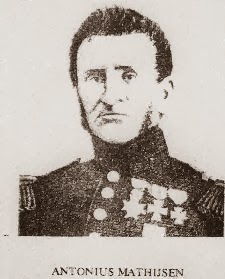
This was a fantastic addition to the surgeon's armamentarium of treatments. It was the invention of Antonius Mathijsen, a Dutch military surgeon in 1851. Essentially, a continuous bandage is wound round and round the limb then soaked in Plaster of Paris. It is called this because it was first used extensively in Paris in medicine and in building.


Essentially, it is made from gypsum, which is heated to produce anhydrous calcium sulphate. When water is added to this it forms gypsum again and hardens.  Hardening takes place very quickly, but it has to dry out. The larger the cast, the longer it takes. An arm cast will dry out in 3-6 hours and a leg cast may take up to 6 hours.Yet full drying may not be complete for 72 hours.
                             
                  Nikolai Pirogov is credited as the first surgeon to use them to treat casualties in the Crimean War in the1850s, so of course, Dr Logan Munro was aware of the method and would use it in his practice in Wolf Creek!

Diagnosis of fractures
Nowadays we are very dependent on x-rays, but in the old West there was no such thing. William Roentgen discovered them in 1895. Only a year later, Dr John Hall-Edwards in Birmingham, England started to use the so-called X-rays in medical diagnosis.

In the Old West doctors relied on physical examination to diagnose fractures. Then, and now fractures would be divided into two broad types:

Closed or simple fractures - when the skin is intact.
       
Open or compound fractures - when the broken bone protrudes through the skin.

The type of fracture can vary immensely. We talk about a 'clean break' meaning a simple transverse fracture. But it can also be oblique, as can happen with a torsion or twisting  injury. Or it can be comminuted, meaning fragmented. It can be complicated by causing blood vessel or nerve damage. And it can be a 'greenstick' (as happens in youngsters, when a bone gets bent and only partially fractures).


The principles of treatment of fractures was relatively simple then. If moving the part of the body distal to (furthest away from the site of the pain) caused extreme pain or if  grating could be felt, then a fracture would be diagnosed. 

The bone had to be set. That is, the limb had to be stretched in order to make sure it was the same length as the other. This would give the best chance to get the two broken ends in position against one another to allow healing to take place.

Without the use of x-rays it is very likely that all manner of injuries would end up being diagnosed as a fracture. The treatment would involve immobilizing the part and hopefully, the injured part would just 'knit together' and be whole again after a few weeks. Remember, that nature actually does the healing, not the doctor, surgeon or nurse. All that they do is create the best circumstances for nature to do its job.

And of course if the 'broken bone' healed up all right, it would bring nothing but kudos to the doctor, whether it actually had been a fracture or not.


Bone healing
What actually happens when the bone ends are back in opposition is that a large haematoma, or blood clot forms around the ends. This is rather like jelly. After a few days blood vessels grow into it and cells called phagocytes start digesting any debris and tissue that won't heal. Then other cells called fibroblasts start to lay down collagen, that forms a framework around the bone ends. This secures the  one ends and new bone is laid down. As a rule of thumb, most bones will have knitted in about 6 weeks.

Some fractures worth knowing about
There are lots of different fractures, many of which are named after the doctors or surgeons who first described them. Some of the ones which our western doctors would have known about are as follows:

Colles fracture
A fracture of the distal radius one inch (2.5 cm) above the wrist. It was described by Abraham Colles an Irish professor of anatomy in 1814. It is sustained by falling on the outstretched hand as when you try to break your fall. The problem is that the broken bone gets displaced and causes a dinner-form abnormality if it is not replaced in posit and immobilized. It takes 4- 6 weeks to heal. 

Smith's fracture
By contrast, a Smith's fracture, also known as a Groyland-Smith fracture is a 'reverse' Colles fracture. It was described by the Irish orthopaedic surgeon Robert Smith in his 1847 book,  Treatise on Fractures in the Vicinity of Joints, and on certain forms of Accidents and Congenital Dislocations.  

 It is a fracture  of the distal (bottommost) part of the radius, caused by a blow to the back of the forearm, or a fall on the flex wrist. 

Thus, a Colles fracture is an extension injury and the Smith's fracture is a flexion injury. 


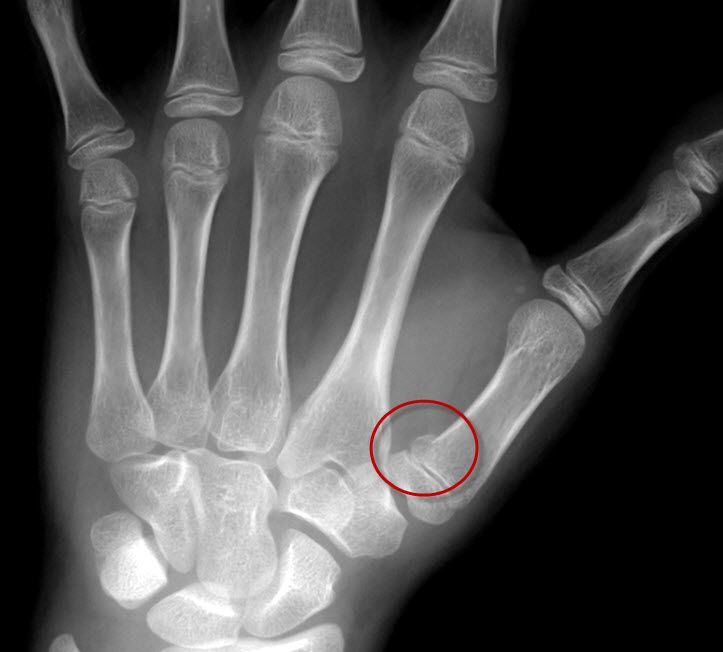
Bennett's fracture 
This is one that could occur in saloon brawls, or whenever a really hard surface was punched. If you swing at someone and they duck, causing you to punch the wall, you may end up with a Bennett's fracture.
Bennett's fracture

It can also occur if someone punches someone else's skull! It is a fracture of the first metacarpal, the big bone at the base of the thumb. It is also common in people who have never learned how to punch correctly - which is most people! It was described by Edward Hallaran Bennett, professor of surgery at Trinity College Dublin in Ireland in 1882. It needs immobilization of for 4-6 weeks.

Scaphoid fracture
This is not named after anyone, but is the name of one of the bones of the wrist. It also occurs when you try to break your fall. It causes pain in the 'anatomical snuffbox.'  This is an area at the base of the thumb. It is called this because in days of yore when folk took snuff, they placed a pinch in the little depression on the back of the wrist formed when you elevate the thumb perpendicular to the hand. 

The anatomical snuffbox outlined

The problem with this fracture is that the scaphoid has a variable blood supply and in many people the blood supply comes distally. That is, blood vessels do a U-turn to supply the bone from its far end. If they do not also have a blood supply going directly into the base of the bone (that is, from the top and bottom) then non-union of the bone can occur and the piece without the blood supply can die.

Monteggia fracture
This is a fracture of the proximal third of the ulna (the larger bone in the forearm) with dislocation of the head of the radius (the smaller bone). It was named after Giovanni Monteggi, (1762-1815) an Italian professor of anatomy and surgery. It occurs with a fall and a twist. 

Monteggia fracture, by Jane Agnes

It is a difficult one to treat because the breaks and the two bones are hard to get in the right positions.  Nowadays it may necessitate operation.

Clavicle fracture
The collar bone is commonly injured in contact sports and fights. A direct blow to the upper chest can  fracture it, most usually at the junction between the middle and outer thirds. They heal up very well generally. We used to use figure of eight bandages and a sling, but really they generally just heal without any intervention.


Fracture of neck of femur
The femur is the thighbone. The two main parts are the neck of the femur, where it forms the hip joint and the shaft, the main part of the thigh.  This is the sort of fracture that happens in older people who may have osteoporosis, or thinning of the bone. This is nowadays treated by internal reduction and fixation. It is probably not going to occur to your hero or heroine in the western novel, but could to another character. It classically causes a great deal of pain after a fall or twist, and the leg will show external rotation due to the weight of the limb.


Fracture of the shaft of the femur
This can occur with any large trauma, either directly from a blow or from a fall. Depending upon which part of the shaft is affected the muscles will move the two parts ion different directions. The first aid treatment would be to strap the two legs together, so that the good leg acts as a splint.

Skull fracture
The big thing here is the possibility of a hemorrhage inside the skull or into the brain. In terms of the novel, the big question would be whether to trephine or not. That is, whether to make a hole in the skull to release blood.

This just happens to be one of the questions that Doc Logan Munro is forced to consider in Wolf Creek 8: Night of the Assassins. But you will find no spoilers here!

***

If you are interested in reading more about medicine and surgery in the frontier days, then you may find The Doctor's bag useful. It is a collection of my blog posts, published by Sundown Press.


The novel about Dr George Goodfellow, the Tombstone surgeon to the gunfighters


The novel about Ned Buntline, the King of the Dime Novelists

The Dime Novelist