Showing posts with label Old West History. Show all posts

Monday, December 10, 2018

Samuel Clemens (Mark Twain) and Suspenders by Kaye Spencer #trivia #westernfictioneers #fashionhistory

Suspenders (aka braces and galluses) have been around for centuries as a practical means of holding up one's britches, particularly because of the high waists on men's trousers before belts and belt loops became functionally popular, which was roughly around World War I, when soldiers were introduced to uniform belts. Since the 1920s, suspenders have continued to ride a roller coaster of fashion popularity.

An article on the website Time.com offers this tidbit about the origins of suspenders along with an amusing anecdote:

The first suspenders can be traced to 18th century France, where they were basically strips of ribbon attached to the buttonholes of trousers. Benjamin Franklin is said to have worn them — although it's probably best not to ask how historians know that; back then, suspenders were considered an undergarment never to be seen in public. In fact, visible suspenders were considered risqué as recently as 1938, when a town in Long Island, NY tried to ban gentlemen from wearing them without a coat, calling it "sartorial indecency."
"First Suspenders" Public Domain Image


This article goes on to explain that in the 1820s, a British designer named Albert Thurston manufactured suspenders as we know them, which brings me to Samuel Langhorne  Clemens, aka author Mark Twain, as an  inventor of an alternative to suspenders.
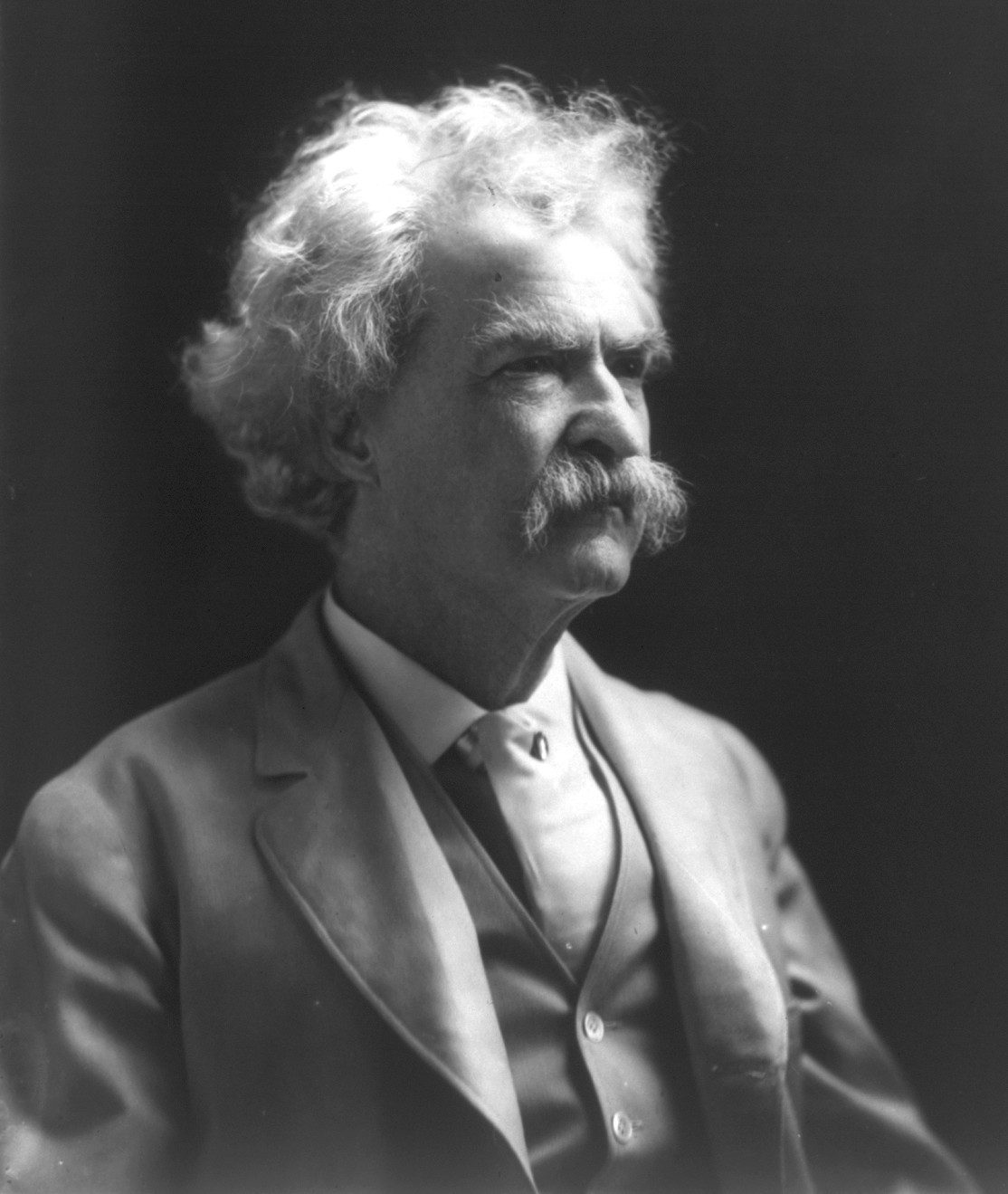
Samuel Clemens Public Domain (b. Nov. 30, 1835 - d. Apr. 21, 1920)

Clemens received his first patent (#1221992) on December 19, 1871 for an alternative to suspenders, which he reportedly loathed entirely as miserably uncomfortable. He called this invention an "Adjustable and Detachable Straps for Garments" (ADSG). However, as with many inventions, the original designs are often adapted and the inventor's intent is either lost completely or altered in new and interesting ways.

Suspenders in Hollywood:
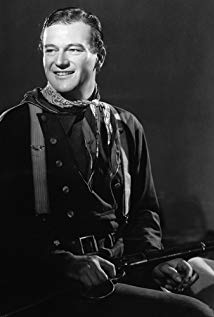
John Wayne with suspenders*


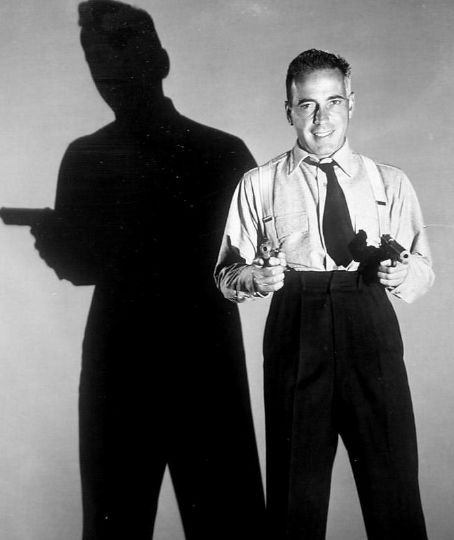
Humphrey Bogart with suspenders**
Clemens' suspenders patent didn't catch on for suspenders. According to an article from Smithsonian Magazine (HERE):

His “improvement in adjustable and detachable straps for garments” was a button-on adjustable strap that could be used to tighten garments–it could pinch a shirt at the waist, for example. “The advantages of such an adjustable and detachable elastic strap are so obvious that they need no explanation...” It would also be simple to make non-elastic detachable straps, Clemens wrote, “but I prefer to make them elastic.”

An article in The Atlantic Monthly (HERE) explained it this way:

Clemens designed the adjustable and detachable strap to be used from one garment to another in order to 'fix' whatever clothing issue the wearer encountered. However, he did not elaborate on exactly how his invention should be used. He wrote that the "advantages of having a stretchy strap for any item is so obvious that they need no explanation."
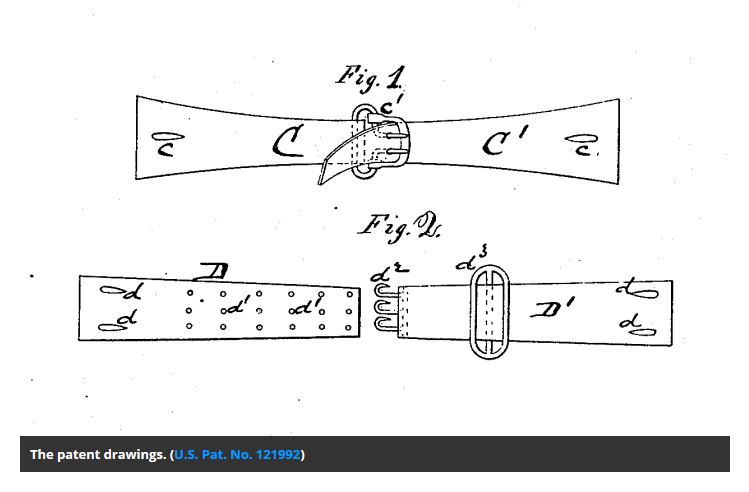
Image from Smithsonianmag.com

His invention 'ADSG' did not catch on for pantaloons, suspenders, or vests. It did, however, find its niche with one particular garment: the brassiere. So, now you know who to thank, or cuss, for how a traditionally designed bra fastens.


On a side note, the other patents Clemens received were for a self-pasting scrapbook technique (1873) and a history trivia game (1875). He made $50,000 from the scrapbook invention. His other inventions either cost him money in the long run or simply didn't work. The website ThoughtCo.com has more information about his other inventions and investments-gone-wrong HERE.


Until next time,

Kaye Spencer
Writing through history one romance upon a time


Website/Blog | Instagram | Twitter | Pinterest
Facebook | Amazon |  LinkedIn |
Prairie Rose Publications |YouTube

Resources/References
Shop Mr & Mrs Renaissance - https://www.mrm-accessories.com/blog/2015/1/5/the-look-and-history-of-suspenders-braces
Smithsonian.com - SmartNews - https://www.smithsonianmag.com/smart-news/how-mark-twains-hatred-suspenders-drove-him-invent-180967577/
U.S. Patent and Trademark Office - https://www.uspto.gov/about-us/news-updates/mark-twain-granted-his-first-patent-december-19-1871
The Atlantic - https://www.theatlantic.com/technology/archive/2011/07/celebrity-invention-mark-twains-elastic-clasp-brassiere-strap/241267/
Time.com - http://content.time.com/time/nation/article/0,8599,2037331,00.html

ThoughtCo.com - https://www.thoughtco.com/what-were-mark-twains-inventions-740679
Images:
First Suspenders image Public Domain - Miscellaneous Items in High Demand, PPOC, Library of Congress [Public domain], via Wikimedia Commons
Samuel Clemens - Public Domain image: UnknownUnknown author, MarkTwain.LOC, marked as public domain, more details on Wikimedia Commons
*John Wayne imbd - https://www.imdb.com/name/nm0000078/mediaviewer/rm2120462592
**Humphrey Bogart - https://goo.gl/images/KU44HM

Openclipart.com - 'wow'

Tuesday, June 26, 2018

BACKSTORY AND CONTEXT #WesternFictioneers #Writing #history @renawomyn1


I've found, for me, the two pieces that fit both my fiction and non-fiction writing are the need for backstory and context. Whether I'm writing a historical piece of fiction or filling in pieces of history about an area, these two always play into the words on the page.

Some may wonder why backstory and context? Coming from a performance and sociology background it just made sense to me. When I am preparing for a performance, whether in a play or one of the historical characters I portray, I need to know where they come from, what made them do what they did.

Helen Hunt Falls, Colorado Springs, CO Photo (c) by the author
When I began preparing to portray Helen (Hunt) Jackson, I obviously needed to know who she was, where she came from and how she ended up being the writer and activist she was. This involved reading her works, which fortunately are many, and biographies. That built the foundation, but then to get a full picture, I needed to find out who those around her thought of her and her actions. There, letters and stories others told were invaluable. Many might think that would suffice, but time was different in the 1800s, so it became important to fit her life in the context of what was happening while she was alive. We tend to put history in the context of what we are dealing with in the present. While a worthwhile endeavor, the picture becomes less tainted when looked at through the lens of the time it was painted.

 Then of course you get those times when the person you're researching has little left of who they were, other than a few news reports. That has been the case with Ward, the man I've been 'hunting' for almost ten years. What makes his story interesting? There are more than a few Ward's with the same or similar name showing up in the same general area. I do feel by studying the time and events occurring in the numerous places he was or could have been, gives me a better understanding of what could have driven him to do the things he was accused of, whether verifiable or not.

Pikes Peak behind the clouds. Photo (c) by the author
The same holds true for my fiction writing. I research the area and people of the place I am writing about. Then I create the backstory for my main characters. Even if it never shows up in the story, the backstory gives me the parameters of what the characters would and wouldn't do in certain situations. Believe me, the let me know if I try to have them do something counter to who they are and what they believe.

Additionally, have a context of where they are and what is happening allows for a greater authenticity to their words and actions. I think the hardest thing for me as a reader is the disbelief of some action or event that doesn't fit the story. For me, having the backstories and context for the events helps me avoid those discordant notes a bit easier. Still, I am a modern person, writing in a time I didn't live in, so mistakes are made. I just try to set the stage so they aren't as likely to happen.

So for now, I'm finishing up the paper on Ward for the PPLD Symposium book based on the presentations of June 9, and a short story for WF submission about an incident in Colorado in the 'early' days. Lastly, I'm bound to finish the novel with the backdrop of the first Labor War in the Cripple Creek district.

Abandoned building in the Cripple Creek, CO area. Photo (c) by the author
Until the next fourth Tuesday of the month, happy reading and writing.

Doris Gardner-McCraw -
Author, Speaker, Historian-specializing in
Colorado and Women's History
Member of National League of American Pen Women,
Women Writing the West,
Pikes Peak Posse of the Westerners

Angela Raines - author: Where Love & History Meet
For a list of Angela Raines Books: Here 
Photo and Poem: Click Here 
Angela Raines FaceBook: Click Here

Monday, May 14, 2018

Today in U.S. History: May 14, 1856 - Military camels set foot on Texas soil by Kaye Spencer #westernfictioneers #OldWestHistory


The Great U. S. Military Camel Experiment unfolds, briefly, this way:

By the 1830s, American westward expansion was going nowhere fast. Difficult terrain and often inhospitable climates made traveling a daunting challenge at best, especially in the southwest.

But in 1836, an outside-of-the-box thinker had a bold plan. The then Lieutenant, and later Major, George H. Crosman proposed to the U.S. War Department:

For strength in carrying burdens, for patient endurance of labor, and privation of food, water & rest, and in some respects speed also, the camel and dromedary (as the Arabian camel is called) are unrivaled among animals.  The ordinary loads for camels are from seven to nine hundred pounds each, and with these they can travel from thirty to forty miles a day, for many days in succession.  They will go without water, and with but little food, for six or eight days, or it is said even longer.  Their feet are alike well suited for traversing grassy or sandy plains, or rough, rocky hills and paths, and they require no shoeing...¹

The War Department ignored the report.

However, the War Department's attitude did an about-face in 1847 when the right people were in the right place at the right time. Crosman met Major Henry C. Wayne, who shared his camel enthusiasm. Together, they submitted another report to the War Department and Congress. At this point, Senator Jefferson Davis took up their cause.

There wasn’t a western railroad system at this time, and horses and mules needed water in a water-scarce environment. All three men reasoned that since camels thrived in deserts elsewhere in the world, they would also thrive in the American southwest. Congress listened and appropriated $30,000 for “...the purchase and importation of camels and dromedaries to be employed for military purposes.”¹

The task of sailing to the Middle East and North Africa to bring back camels fell, willingly, to Major Wayne. It took Wayne about a year to gather up camels for the voyage back to America. While the ship carrying the camels, “Supply”, arrived at the port in Indianola, Texas on April 29, rough ocean waters prevented unloading the camels. It wasn’t until May 14 that the ocean calmed enough to safely move the camels into small boats and deliver them to shore. From the Texas coast, the camels moved out under Army control for Camp Verde. Not too long after that, another group of 41 camels also made their home at Camp Verde.

 State Historical Marker - Indianola, Texas
Image by Larry D. Moore (citing below) -
As a side note, a civilian, Mrs. J. J. Watson, attempted to bring camels to America as a cover for her slave trade, but she wasn’t allowed to unload them. So she dumped them out in Galveston and sailed for the slave markets in Cuba.²  Two private shipments of camels arrived not long after but, like Mrs. Watson's camels, these camels were turned loose on the Galveston shore and were doomed to wander in neglect.

The military used the camels for the next ten years for hauling supplies to different locations as well as using them for the in-camp tasks. The camels were also important during cross-country military expeditions. One expedition involved surveying what is now the historic Route 66. Another was a scouting mission to identify possible fortifications in southwest Texas. While the soldiers brought feed and water for the horses and mules, the camels were content to forage off the land and drink when water was naturally available. Despite being naturally adapted to the American Southwest’s climate and terrain, realistically, camels had a terrible smell, horses were terrified of them, and handlers detested them because of their surly temperaments.

The War Between the States brought the camel corps to an end in 1866 through lack of funding and general neglect. The camels were auctioned to private owners. Some camels ended up on supply trains as pack animals, others went to miners and prospectors, and some went to circuses. A few ended their days on private ranches. However, many camels escaped. Camel sightings continued for decades. “For years, travelers in the Southwest told tales of camels looming up in the flickering light of campfires.”³

From that comment, an idea sparked, and I wrote a scene involving camels in my novel, The Comanchero's Bride. Here is a teaser from the camel encounter:

A horse snorted.

Mingo came wide awake with a revolver already in his hand. A glance without looking directly at the diminished fire told him he’d slept for two or three hours. The sound of heavy breathing and grunting drew his attention beyond their lean-to. Peering into the darkness, he ran through his mental catalog of sounds to identify the source while simultaneously planning a defense against whatever—or whoever—was out there. He separated the soft whisper of drizzle from the normal night noises, ruled-out humans, while sensing a vague familiarity that wasn’t horse, but he was certain it had four legs. And there was more than one.

Careful in his movements, he eased his arm along his thigh and down his leg to grasp the handle of his knife tucked in the sheath on the inside of his tall boot shaft. Shifting his position, he waited. In the glow of the orange embers of the fire, he could make out hulking, ghoulish shadows hovering just at the edge of camp. When a whiff of breeze swirled around their shelter, stirring up ashes at the edge of the fire, Mingo picked up a pungent odor of urine and manure mixed with the tang of wet, dead carcass. There was no mistaking the visitors now, and he relaxed, chuckling softly.

Slipping from under the blankets with slow, deliberate care, he placed a light touch on Isabel’s shoulder. Her eyes popped open, and he spoke in a low tone. “I must calm the horses. Do not make a sudden move or noise, and keep your voice quiet. Build up the fire and stay close without looking into it.”

She rolled to her knees, grabbing Mingo’s arm as she whispered, “Eww, what’s out there? The stench is horrid.”

Speaking close to her ear, he replied, “Camellos.”

Isabel jerked her head around. “Wha— Camellos? Camels?” She looked across the coals into the darkness. “Here? In Texas?”

Mingo’s grin widened at her bewilderment, and he handed her a piece of firewood. “At least two of them. I do not think they will come closer, but it is also not wise to startle them. The horses are already frightened, and we do not want them to bolt. Trying to catch a camel to ride it to our ranch is not how I want to finish this journey...”


The Comanchero's Bride
available on Amazon.com

See you next month on the 2nd Monday for another episode of ‘Today in U.S. History’,

Kaye Spencer


Website/Blog- https://www.kayespencer.com
Instagram - kayespencer
Twitter - http://www.twitter.com/kayespencer
Pinterest - http://www.pinterest.com/kayespencer
Facebook - https://www.facebook.com/kayespencer23
Amazon - http://www.amazon.com/author/kayespencer
LinkedIn - https://www.linkedin.com/in/kayespence
Prairie Rose Publications - http://prairierosepublications.com/
YouTube Channel - https://www.youtube.com/c/kayespencer0203

References and Resources:

I would direct you HERE for an excellent article about the camel corps.

1. National Museum-United States Army. Vince Hawkins, “The U.S. Army's ‘Camel Corps’ Experiment”, accessed May 12, 2018, https://armyhistory.org/the-u-s-armys-camel-corps-experiment/


2. Handbook of Texas Online, Chris Emmett and Odie B. Faulk, “Camels”, accessed May 12, 2018, http://www.tshaonline.org/handbook/online/articles/quc01.

3. Smithsonian Magazine. Owen Edwards, “Camelot”, accessed May 12, 2018. Smithsonian.com. https://www.smithsonianmag.com/science-nature/camelot-121505856/

*Larry D. Moore, US Camel Corps State Historical Marker, CC BY-SA 4.0

*Texas Highways. The Travel Magazine of Texas. The Great Camel Experiment.
http://www.texashighways.com/history/item/7475-the-great-camel-experiment-texas-camel-corps. July 2014. Accessed: May 12, 2018.


Thursday, June 19, 2014

Hurdy Gurdy Girls #western #history @JacquieRogers


Hurdy Gurdy Girls
by Jacquie Rogers
Website | Pickle Barrel Gazette

When a man puts in over sixty hours of backbreaking labor in the mines, or punches cattle from dawn to dark every day, by the end of the week he's ready for a little entertainment. In the American West, that entertainment was provided primarily by saloons and dance halls. With the man to woman ratio of 20:1 or even worse, sometimes much worse, seeing a pretty lady was the delight of a man's week. And he spent a lot of money for the privilege. Enter: the hurdy gurdy girls.

Hurdy gurdy girls were distributed all over Europe, Australia, and North America, but this article addresses only the girls who came to the American West, including Canada, USA, and territories. What's a hurdy gurdy? (Find out at Chris Eaton's website) Why were they called hurdy gurdy girls, and how did this all come about? The best site to answer this is The Universe of Bagpipes.
To supplement their incomes, in the 1820s farmers and farmworkers began to make wooden brooms and fly-whisks during the winter which they, as itinerant peddlers, sold in the summers in the surrounding areas... It was soon discovered that the wares sold better when accompanied by dancing, hurdy-gurdy playing girls. Quickly the dancing and music became ever more important and the pretty girls became ever better known...there was a lot of easy money to be made.

Hurdy gurdy girls could be found all over the West. Generally, prostitution was not involved. The girls, from poverty-stricken families in the duchies of Germany, were of strong moral fiber. They danced with men, and cajoled them to spend money on drinks, but services beyond that were taken care of by other women.
In 1913 Idaho Governor William McConnell wrote in his book Early History of Idaho:

The girls were engaged by the proprietors of the 'social resorts,' in sets of four, with a chaperone who accompanied them at all times. They were almost invariably German girls, and although they were brought into contact with rough people and sometimes witnessed even the shedding of human blood, the rude, generous chivalry of the mountain men, some of whom were always found in these resorts, was a guarantee of protection from violence, and strange as it may sound to those of modern times, these girls were pure women, who simply did the work they had bargained to do, and when their contracts expired, most of them married men whose acquaintance they had made while pursuing their vocation, the men who knew them best, and with the money they had earned by dancing with 'Wild Bill,' 'Texas Pete,' and others, helped to buy a house for themselves and husbands. The poor girls, and they danced only because they were poor, had kind hearts and wonderful patience and forbearance.

Some hurdy gurdy girls came over in family groups. Arthur Hart, Director Emeritus for the Idaho Historical Society, cited some census data in his article for the Idaho Statesman, Idaho History: Hurdy-Gurdy girls on frontier danced with all comers. Notice that this troop is called a "Hurdie Gurdie Troop" but it appears they only play violins.

The 1870 census is enlightening. In Granite Creek, Boise Basin, with its post office in Placerville, a "Hurdie Gurdie Troop" is listed as made up of Conrad Schneider, 43, his wife, Catherine, 35, and children ages 15, 11 and 2. Conrad was a violinist, as was his brother, George, 37, whose wife, Mary, was 34. A third violinist in the troop was Conrad Deihl, 19. Four dancing girls ranged in age from 15 to 27. All were from the Rhineland area of Germany.

There were two kinds of women in the Old West: good (meaning strong moral fiber) and bad (meaning sexually promiscuous). Hurdy gurdy girls were considered "good women" by men, but usually not by "respectable" ladies, the schoolmarms, and bankers' wives of the town. Because the dance hall owners had to make sure the girls were safe, hall patrons were expected to follow rules such as these posted at the Alhambra, a dance hall in Silverton, Colorado:

Rule 1. No lady will leave the house during evening working hours without permission.
Rule 2. No lady will accompany a gentleman to his lodgings.
Rule 3. No kicking at the orchestra, especially from the stage.
Rule 4. Every lady will be required to dance on the floor after the show.
Rule 5. No fighting or quarrelling will be allowed

The ladies to the left are hurdy gurdy girls in Barksville (I think), British Columbia, Canada. They danced as many as fifty dances a night, at a doller per dance.

Later in the 19th Century, hurdy gurdy girls didn't just dance, but then they weren't from the Rhineland, either. The name became synonymous with soiled dove, and the girls' origins were not limited to a small area of Germany. However the original hurdy gurdy girls in the American West often found husbands and made good homes for themselves and their new families.

Sources: The Universe of Bagpipes
Arthur Hart: IdahoStatesman.com
bcheritage.ca