Showing posts with label have gun will travel. Show all posts

Monday, September 9, 2019

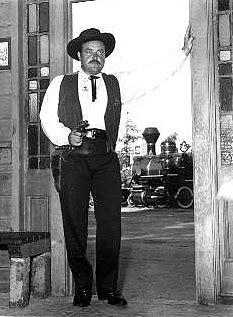
Have Gun – Will Travel — Television Debut 1957 by Kaye Spencer #classicwesterns #classictelevision #westernfictioneers


Have Gun – Will Travel – September 14, 1957

During my growing-up years, I watched reruns or as-they-aired episodes of what are now classic television westerns: Bonanza, Gunsmoke, Lone Ranger, The Big Valley, High Chaparral, Rawhide, Laredo, The Virginian, Sugarfoot, Cheyenne, Maverick, Wagon Trail, Tales of Wells Fargo, Branded, Wyatt Earp, Johnny Yuma, Laramie, Broken Arrow, Guns of Will Sonnet, Zorro, Lancer, Cimarron Strip,Yancy Derringer... The list goes on and, no doubt, you have your favorites, too.

It just so happens that one of my favorite classic western television shows is celebrating its premiere date this week.
The adventures of a gentlemanly gunfighter for hire.

Sixty two years ago, the television-watching population enjoyed the premiere of the thirty-minute, Saturday night western show Have Gun - Will Travel starring Richard Boone as the somewhat mysterious soldier of fortune, but always a gentleman, Paladin. The premise of the show was Paladin worked as a gunfighter-for-hire who traveled the west c. 1875 offering his special kind of problem-solving skills. He was a high-dollar gunman—$1000 per job wasn’t unusual—but he also provided his services for free to those with a worthy cause who couldn’t afford him otherwise. However, violence by gun-play wasn’t his only weapon. He was a pugilist and dueling champion of some renown in his former life.

General Trivia

  • The word ‘paladin’ derives from the knights in Charlemagne’s Court, who were champions of worthy causes.
  • Paladin was a Union cavalry officer and graduate of West Point.
  • His residence is the luxury Carlton Hotel in San Francisco.
  • When not riding about the countryside doing good deeds—dressed as the original “Man in Black”—he lives the life of a cultured businessman who wears custom-made suits, consumes fine wine, plays the piano, and attends the opera. He also has a weakness for women.
  • With just a sip, he can determine a particular bourbon’s distillery.
  • Paladin is an expert chess and poker player, an accomplished swordsman, and possesses skill in Chinese martial arts having studied under a Kung Fu master.
  • His level of education is such that he quotes classical literature, philosophy, case law, and he speaks several languages.
  • Paladin’s weapons: 1) custom-made, single action .45 Colt (Army cavalry model) that he carries in a black leather holster adorned with a platinum chess knight symbol, 2) lever action Marlin rifle, and 3) concealed derringer.
  • He has a signature calling card/business card. In Paladin’s words:  “It's a chess piece, the most versatile on the board. It can move in eight different directions, over obstacles, and it's always unexpected.”


  • The show’s four note opening motif was done purposely to create a musical memory akin to other popular television shows at the time: Highway Patrol, Dragnet, Twilight Zone, and Perry Mason.


  • The show closes with the song, “The Ballad of Paladin”, which was written by Johnny Western, Richard Boone, and Sam Rolfe. Johnny Western sings the ballad.


  • The show ran from 9/14/1957 to 4/20/1963 with 225 episodes.
  • A radio version began in 1958 with actor John Dehner portraying Paladin.


From 1974 to 1991, a trademark lawsuit against the concept of the show moved in and out of court culminating with a substantial settlement. You can read the details here: HGWT Website

Hollywood Trivia

Notable Episode Writers:

  • Gene Roddenberry (Star Trek)
  • Bruce Geller (Mission Impossible)
  • Harry Julian Fink (Dirty Harry)
  • Sam Peckinpah (directed a plethora of western movies)
Unusual for the era, many episodes were filmed outdoors and not on the Old West film lots – Bishop and Lone Pine, California – Paladin Estates between Bend and Sisters, Oregon – the Abbott Ranch near Prineville, Oregon.

Notable Guest Stars:

  • Angie Dickinson
  • Ben Johnson
  • Buddy Ebsen
  • Charles Bronson
  • Dan Blocker
  • DeForest Kelley
  • Denver Pyle
  • Dyan Cannon
  • George Kennedy
  • Jack Elam
  • Jack Lord
  • James Coburn
  • Johnny Crawford
  • June Lockhart
  • Ken Curtis
  • Lee Van Cleef
  • Lon Chaney, Jr.
  • Pernell Roberts
  • Robert Blake
  • Suzanne Pleshette
  • Vincent Price
  • Werner Klemperer

Who was Paladin?

Paladin was a West Point graduate, a Civil War cavalry officer, and his base of operations was the Hotel Carlton in San Francisco, California. While it's been too many years since I've watched these episodes, I've read that in the episode entitled "Fandango", Paladin encounters a sheriff who knew him from their Civil War days. The sheriff calls Paladin 'Bobby' and goes on to say, "It's been a long time since Bull Run." Maybe Paladin's real first name was Robert.

Generally, though, the consensus is his real name is never revealed. However, Paladin’s backstory is shown in flashback sequence in the first episode of the last (6th) season, “Genesis”, which aired September 15, 1962. This episode explains how Paladin came by his pseudonym and his subsequent mission to champion the causes of the less fortunate. It isn't his shining moment. Through his actions, another man dies, and Paladin takes on the dead man's identity and mission as a type of penitence to atone for his own actions.

 Read the episode details at the HGWT Website link above.


Until next time,
Kaye Spencer
Writing through history one romance upon a time


Stay in contact with Kay via these venues:

Amazon Author Page | BookBub | Blog | Twitter | Pinterest


Sources:


Tagline - IMDb website: http://www.imdb.com/title/tt0050025/

Have Gun, Will Travel website: http://www.hgwt.com/

Have Gun, Will Travel Wikipedia: https://en.wikipedia.org/wiki/Have_Gun_%E2%80%93_Will_Travel

Image: Richard Boone - By CBS Television (eBay item photo front photo back) [Public domain], via Wikimedia Commons
https://upload.wikimedia.org/wikipedia/commons/0/0e/Richard_Boone_Paladin_1962.JPG
https://commons.wikimedia.org/wiki/File%3ARichard_Boone_Paladin_1962.JPG

Image: Paladin - By Source, Fair use, https://en.wikipedia.org/w/index.php?curid=33548427

Image: Calling Card - By CBS Publicity; http://www.thrillingdetective.com/paladin.html, https://en.wikipedia.org/w/index.php?curid=15170596

Image: John Dehner - http://blogs.pjstar.com/mindingbiz/2013/12/23/before-he-was-mr-wilson-he-was-mr-radio-10-tv-stars-who-made-it-big-on-radio/


Tuesday, June 17, 2014

THOSE THRILLING DAYS OF YESTERYEAR . . . By Tom Rizzo


Every morning before dawn, I strap on an arm band that holds my iPod, slip on a pair of wireless earbuds, and head to the streets to walk for an hour or so. 


But, I'm not listening to music. On my iPod are more than 1,500 Podcasts--mostly old radio shows of every genre you can imagine. Many of the Podcasts are old time radio Westerns. These programs are great sources of entertainment. Not only do they help pass the time on my walks, they keep me connected to a past that required listeners to make full use of their imaginations.

The actors were outstanding. Sound effects functioned as effective imagery, appealing to a range of human senses that helped deepen the audience's understanding of story.

One moment, you may hear dialog exchanged with the sound of a babbling mountain stream in the background. Or, the dramatic sound of gunshots exchanged in a fierce battle between the good and the bad guys.

Sometimes, all that was needed to set the stage for the right amount of tension or suspense was the sound of a character's breathing.

There were other sounds too. Doors being opened and closed. Coffee or liquor being poured. Horses galloping across the radio dial. The crackle and pop of a campfire. A dog barking. Maybe a baby crying. Based on dialog, sound effects, and scene-setting musical scores, listeners were able to add their own splashes of color and strokes of reality across a canvas of the imagination.


I didn't realize how many different Westerns were available back when radio was king. Among them:


    •    Gunsmoke  
    •    Have Gun Will Travel
    •    Frontier Gentleman
    •    The Lone Ranger
    •    Fort Laramie
    •    The Roy Rogers Show
    •    The Six-Shooter
    •    Death Valley Days
    •    Maverick
    •    Hopalong Cassidy
    •    The Cisco Kid
    •    Red Ryder
    •   . . . and many, many more.

In the Fifties, the western improved its entertainment value when writers created more complex story lines, laced with psychological motivations for the protagonist and antagonist. 


Dubbed adult westerns, these radio dramas were often referred to as "the thinking man's western"--the antithesis the traditional shoot-em-up style of western.  

The actors, of course, were key to the success of these mostly 30-minute productions. If you listened to a lot of radio, you'd eventually hear the same voices on multiple productions. But, you had to pay attention. Most of these men and women were skillful enough to alter their voices so they matched the theme or genre of a particular program. 

For this month ... a snapshot look at three of the most skillful radio professionals.


  • WILLIAM CONRAD starred in Gunsmoke, which took place in Dodge City in the mid-1880s. 

The program is considered by many the greatest radio drama ever primarily because of its authenticity, thanks to superb acting and creative sound effects.


It is difficult to imagine anyone else but Conrad playing radio's Marshal Matt Dillon. Thanks to his deep, resonant voice and veteran acting skills, he brought an unparalleled believability to the part. 

Before taking the role, he was already a prolific radio actor. In fact, he almost didn't land the role because of his extensive exposure on other radio shows.

Conrad narrated the radio drama anthology, Escape, on which all the Gunsmoke regulars happened to work. He also served as narrator for the TV shows, The Fugitive, The Invaders, Tales of the Unexpected, Rocky and his Friends, and The Wild World of Animals. In all, he worked in more than  7,500 radio productions.

When producers turned to James Arness to play Dillon on the TV series, it deeply upset Conrad. But, his short and heavy physical stature worked against him for what producers had in mind for the TV version.

Before taking on the role of Matt Dillon, Conrad made his motion picture debut in the 1947 film, The Killers.

Conrad eventually made it to theTV screen. He played the featured role in Nero Wolfe, as well as the district attorney lead in Jake and the Fat Man. Conrad also starred as detective Frank Cannon in Cannon. After it was cancelled, he remarked, "Cannon was crap. I was delighted to see it canceled."

And, Conrad once served as the voice of The Long Ranger on Saturday morning cartoons.


  • JOHN DEHNER starred in two radio Westerns: Have Gun Will Travel and Frontier Gentleman. 

Have Gun Will Travel opened September 1957 on television first--one of the few such instances. The radio show debuted more than a year later in November 1958. 

HGWT featured a gun-for-hire by the name of Paladin who tried to resolve any assignments he accepted in a peaceful way, preferably without violence.

Frontier Gentleman
revolved around a character named JB Kendall, a disgraced British Army officer on personal exile in the West. The show lasted only one season, a victim of television's growing influence.

Dehner, before hitting the airwaves, worked a variety of jobs. They included WWII army publicist, disc jockey, pianist, and animator. He once worked for Disney as an Assistant Animator. In fact, he drew the owl sequences in Bambi, and the Beethoven sequence in Fantasia.

He certainly ranks as among the best radio actors. But, based on his background and accomplishments, Dehner had the talent and commitment to be the best at whatever career he chose.
After leaving Disney, he joined the Army where the military made full use of his language and media skills in a public relations capacity. 

After the service, he went into radio as an announcer, news reporter, and news editor in California. Dehner, in fact, won a Peabody Award for his coverage of the first United Nations Conference.

But he followed his heart into acting and, along the way, appeared as a cast member in nearly every network prime-time hit. His versatile voice and acting skills kept him among the busiest radio performers in the industry.

Dehner played characters in a number of radio westerns as well as old time radio shows such as Suspense, Johnny Dollar, Phillip Marlowe, Let George Do It and Rogers of the Gazette.

  • BRACE BEEMER first became associated with The Lone Ranger as an announcer. 

But after the accidental death of Earle Graser in 1941, Beemer assumed the role of the masked legend of the Plains. 

Return with us now to those thrilling days of yesteryear . .  .

The program, which debuted on WXYZ radio in Detroit, ran for hundreds of episodes between January 1931 and September 1954. 

George Senius/Seaton held the role for five months in 1931, Graser between 1933 and 1941, and Beemer from 1941 to 1954.

He got his first radio job in 1922 in Indianapolis, Indiana, and happened to be the first ever radio personality to broadcast the Indy 500.

Beemer lent a booming voice to the part of the Lone Ranger. He stood six-feet-three, and personified the values and ideals that producer George W. Trendle and writer Fran Striker wanted to communicate through a character who played hardball with the lawless, but demonstrated understanding and kindness towards the law-abiding.

Beemer's size worked for and against him in one instance. Larger than most young men of his age, he managed to enlist in the Army and serve with the America Expeditionary Forces during World War I. He got wounded in combat, sent home, and discharged when officials discovered he was only 14.

Since Beemer played the role longer than anyone else, he's the most famous of the Lone Ranger actors. In fact, his voice was so closely associated with the role that Clayton Moore - who played the masked man on TV, imitated Beemer's speech patterns in the early episodes of the TV series.

Listening to these old, and sometimes scratchy, radio shows helps release the neurons of nostalgia. 

I remain amazed at the production quality of some of these old Westerns and other programs. Not only the acting, but the skill in blending sound effects that provided for a much richer listening experience.

But, the real truth is that it's still so darn much fun to listen. 


An Internet search will reveal countless sources from which to download recordings of these shows. Here are three different sites to start, if you're so inclined. 


# # # 


Sunday, February 16, 2014

The Card of a Man


Troy D. Smith


Growing up in the 70s, I got plenty of Gunsmoke amd Bonanza on TV, and caught The McCahans and Little House on the Prairie from episode 1. But I missed out on getting the first-run experience of the many B&W classics from the 50s that my Uncle Horace told me about.


Then in the early 80s we got cable- 13 whole channels!! And there was this one called CBN, the Christian Broadcasting Network. I wasn't very interested in their daytime programming, such as the PTL Club -though Jim and Tammy Faye did get very interesting by the time the decade was out- but nighttime and weekends, that was something else. At night they showed old sitcoms from the fifties, and I watched 'em all. Which is why, at 45, I can converse knowledgeably about YOU BET YOUR LIFE, OZZIE AND HARRIET, LIFE OF RILEY, MY LITTLE MARGIE, and THE JACK BENNY PROGRAM.

And Weekends? Weekends were for westerns! Still are, in fact, as CBN morphed by the end of the decade into The Family Channel.


WYATT EARP, BAT MASTERSON, THE WESTERNER, RAWHIDE, MAVERICK, there were slews of 'em, and I loved 'em all.

But my favorite was that dapper soldier of fortune based in San Francisco, the one they called Paladin.


You know him -though we never learned his actual name. Paladin was a persona he assumed, this erudite former cavalry officer with a taste for poetry and a gift for classical languages. He was like James Bond, but more sophisticated -and always ready to slap leather or throw a punch for justice. Justice that was foreshadowed at the beginning of every episode, with the camera trained on his hip as he drew his gun and his off-screen voice lectured the villain like a schoolmaster.


Gee, wonder why I liked him so much?

Like him I did, for a lot of reasons. I liked what he stood for, what a paladin was- a knight without a master, ever seeking a righteous cause to which he could lend his sword.

I took to heart the character's words in the episode when he explained the chess knight which was his symbol: the knight is the only piece on the board which can move over any obstacle, and change directions in the middle of a turn.

Much later, around 1997, I started jangling amongst the internet tubes, particularly hanging out in the Books and Literature chatrooms of Yahoo. And of course, you had to have a chat-name- mine came pretty easily. Paladin. (Except when I wanted to fly under the radar, then I was Hec Ramsey.) After all, I was trying to make a living (or at least part of one) as a writer, so I literally was a paladin- a free-lance. Later still, when I decided to get a tattoo, it was that chesspiece.


How about you- was there ever a western character you wanted to be like, just a little?