Showing posts with label owyhee avalanche. Show all posts

Saturday, January 31, 2015

1875: News Reporting at Its Finest #western @JacquieRogers


January in the Old West
by Jacquie Rogers

I'd planned to write my article on A Million Ways to Die in the West, but can't overwhelmingly endorse it. <snort>  Okay, I did laugh out loud a few times, but if they'd taken the F-bomb out of the script, the movie would've been about 20 minutes long.  Enough said about that.

So it's back to my favorite stomping grounds, the archives of The Owyhee Avalanche.  I didn't have to look far, and I'm not going write a whole lot today, because this report of a house fire really tickled my funny bone, and I hope you're entertained as well.

From the January 3, 1874 issue of The Owyhee Avalanche:


And of course they partied--here's how, from the January 30, 1875 issue:


I'm thinkin' this reporter wasn't too enamored with dentists:


That's all for this month.  I've been busy because my Hearts of Owyhee rights reverted back to me Dec. 31, so I've been working on getting the books reissued, renumbered with new covers and a few typo corrections.  Here they are:


coming soon:
Much Ado About Mustangs

Thursday, November 20, 2014

Railroads, Silver, and Weddings #western #history @JacquieRogers


November in the Old West
by Jacquie Rogers

I can’t help myself—just keep poring over those old newspapers. There’s no better way that I know of to get the genuine flavor of post-Civil War daily life west of the Mississippi than to read contemporary reports of the day. Of course, we know they printed what sold papers, just as now. Old-time editors weren’t above sensationalizing, or throwing in an editorial comment here and there—and sometimes even made a joke of one of the esteemed residents.

These snippets all come from The Owyhee Avalanche, first established in Ruby City, Idaho Territory, and then moved to Silver City (as did everyone else—they even moved the hotel). They began publishing in 1864 and still have a going concern today, so this is their 150th year in business.

With the war over, the United States concentrated on building the infrastructure we enjoy today. Every move the railroads made was news and reported in every newspaper in the territory—and usually the adjacent states and territories as well. Here’s an example from November 4, 1865.

The Owyhee Avalanche, November 4, 1865

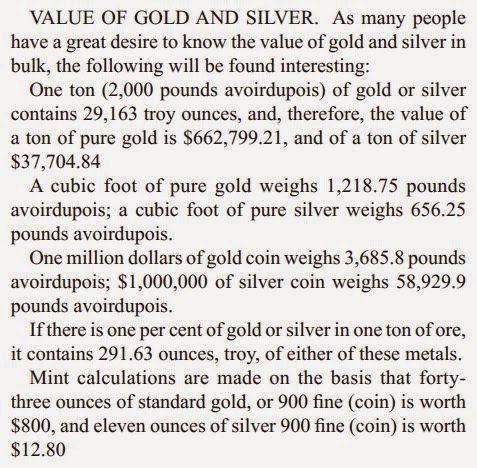
In a mining camp (Silver City was always called “camp” and locals call it that to this day), a good share of the articles concerned who dug up how much of what ore and who came up empty—that sort of thing. This article, dated November 22, 1873, gives us an insight into what all those numbers mean. How much is a ton ore worth?

The Owyhee Avalanche, November 22, 1873

The Paiute hadn’t quite come to terms with being ousted from their homeland, and few of the immigrants had any idea why the Indians were in a toot about moving on (not that they had anywhere to move to). Articles in The Owyhee Avalanche and other newspapers in the Pacific Northwest aren’t kind, to say the least, and definitely not politically correct by today’s standards.

The Owyhee Avalanche, November 11, 1865

When a man takes off into the wild country to find his fortune, in his zeal for riches he sometimes forgets his family. But working alone on top of a mountain is a good way to remember. Here’s an item about a man who did just that.

The Owyhee Avalanche, November 4, 1865

Life can get a little barren when there are no supplies to be had, but entrepreneurs were always ready to fill the void. Generally the storekeepers made more money than the miners. In fact, just about everyone made more than about 90% of the miners—poor fellows. Anyway, Silver City definitely was excited when a new shopkeeper came to town bringing wagons full to brimming with goods, as reported in the same issue.

The Owyhee Avalanche, November 4, 1865

Nineteenth Century newspaper editors weren’t a bit afraid to make light of important persons. In fact, if they didn’t make fun of you, you just weren’t important enough. So it was a dubious honor to be mentioned. This item was published in the November 11, 1865 issue.

The Owyhee Avalanche, November 11, 1865

And of course we can't forget the local gossip.

The Owyhee Avalanche, November 8, 1873

That's it for now!  See you next month with more news from the Old West.

Muleskinners #1: Judge Not


Elsie Parry and her eight mules survived the war, but can they escape the wrath of the Danby Gang? She lived alone for five years after the Recent Unpleasantness and was overcome with happiness to be reunited with her father. Now, his fondest desire is to leave all the bad memories behind and see the Pacific Ocean, so she agreed to head west. All’s well until they approach Wolf Creek, where they’re set upon by the notorious gang of ex-Confederate guerrillas… intent on proving the war is not over, after all.


Thursday, October 16, 2014

Freight and the Red Stocking Base Ball Club #western @jacquierogers #halloween


Stocking Up for Winter
by Jacquie Rogers

October was a busy month in the Old West, especially in the northern climes. Silver City, Idaho Territory was not only north, it’s high elevation (6,200ft). They had to finish up the summer work and stock up for winter because no freight could go in or out for a few months after the snows came.

So it’s no surprise that October articles in The Owyhee Avalanche covered these things, for they meant survival to a couple thousand people. Here’s where they report a cattle drive. Since I wrote Mail-Order Ruckus (the second book in Mail-Order Tangle--the first book, Mail-Order Promise was written by Caroline Clemmons), anything that connects Owyhee County to Texas always interests me. A lot of folks there came from Texas and stayed. A lot of folks went to Texas and came back. Frankly, I’d rather winter down there than in Silver. Brrr.

News item from October 19, 1869:


On the 23rd of that same month the newspaper reported a freight delivery. Apparently, this 10-mule freight wagon was unique.


All this freight was welcome, but in the desert, so is rain. Silver City only gets about eight inches of precipitation a year, and quite a bit of that is snow. By autumn, the surroundings are so dry that the slightest spark could cause an inferno in a flash. (No pun intended.)


But all was not dour business. They worked hard and played hard. I didn’t see any reports from Virgin Alley but here is an article about a dance.


Speaking of balls, here's a report about base-ball.  If you ever wondered how interested cowhands and miners could be in Base Ball, just know that this game took place a thousand miles from the remote mining camp of Silver City, Idaho Terr.


And just for our friend Troy, I found this interesting tidbit:


That's it for today. Here's my latest release, a great Halloween read from Prairie Rose Publications. My story, Have Wand - Will Travel, is a mash-up of Have Gun - Will Travel, Narnia, and The Princess Bride. See what Nora does with her iron fan, and meet the Beavers of Extraordinary Size!

Cowboys, Creatures, and Calico, Vol. 2
Halloween short stories by
Cheryl Pierson, C. Marie Bowman, Jacquie Rogers, 
Kaye Spenser, Kristy McCaffrey, Kathleen Rice Adams

What better way to spend Halloween than with some handsome cowboys and feisty heroines who are determined to fall in love despite their supernatural powers—or lack thereof? Halloween’s a good time to take a chance on love—and to see what these Cowboys, Creatures, and Calico Vol. 2 stories might reveal to the unsuspecting reader—you!

Cheryl Pierson’s Spellbound will have you on the edge of your seat as safecracker Brett Diamond and witch Angie Colton take on a border gang leader who is pure evil. Can Angie’s supernatural powers save them? No matter what, Brett and Angie are hopelessly Spellbound.

C. Marie Bowen’s Hunter and Lily Graham is an unforgettable tale of a beautiful school marm’s love for her children that surpasses all. When a Cajun bounty hunter known only as “Hunter” shows up, Lily Graham knows he, and no one else, can help her save a young girl.

Have Wand — Will Travel 
is Jacquie Rogers’s offering about a handsome young mage, Tremaine Ramsey, who has a wand and knows how to use it…sometimes. Will his magic be strong enough to pull off a daring rescue of his father from the evil Gharth? Or will he need the warrior Nora’s love to help him see his Fate through?

Will Kaye Spencer’s character, Mercy Pontiere, be able to break a centuries-old curse and find true love all at the same time? It all depends on Reid Corvane and what he’ll do For Love of a Brystile Witch.

In Kristy McCaffrey’s story, The Crow and the Coyote, Hannah Dobbin is after an evil Navajo sorcerer who murdered her father, and she’s determined to see him dead. But she’ll need a bounty hunter, The Crow—to help find this vile man. With Hallowtide upon them, more evil is afoot than they can handle; but love will find a way.

A failed bank robber, Tombstone Hawkins, along with a fake gypsy fortune teller, Pansy Gilchrist, set out to make both their deceased fathers proud in one final spectacular heist. Family Tradition is Kathleen Rice Adams’s tale of the discovery of true love amid the commission of a crime—or the failure to commit a crime—while being overseen by the ghosts of the couple’s fathers. How can there be a happy ending? It’s Halloween, and anything can happen!
Available in digital at:

Thursday, December 19, 2013

Fossils, Hoaxes, and Christmas Trees in the Old West by @JacquieRogers #western


December in the 
Old West

Winter months in Owyhee County in Idaho Territory brought plenty of inclement weather and the citizens couldn’t do much in the way of prospecting or farming. Nevertheless, they kept themselves busy, and the Christmas season brought plenty of opportunity, which The Owyhee Avalanche took great delight in reporting. The following articles all came from December issues.

December 14, 1867
SOCIAL BALL. We had the pleasure of attending a Social Ball given at the Mechanics hall on Tuesday evening last. A general invitation was extended and a large number were present, who appeared to enjoy themselves hugely. There was good music, and the new Hall is certainly a splendid place in which to “twist your heel around.” One of the best features of the arrangement was the magnificent supper prepared and eaten at the Idaho Hotel, the proprietors of which can’t be excelled in their line of business. We return thanks for complimentary tickets.

I think it would be rather painful to “twist your heel around,” but it is a colorful term for dancing. Besides the larger events, plenty of spirit found its way to smaller venues, such as the Avalanche office.

December 21, 1867
Thanks to Messrs. Chase & Brooker of the Owyhee Exchange for a liberal supply of champagne. “Fenian dew drop,” and a box of fragrant Havana’s. The boys use everybody first rate—give them a call.

Another article on the same day shows that the people of the Old West had a variety of interests besides finding the next big strike, drinking, and gambling.

FOSSIL RESEARCH. There is an extensive and interesting field for geological research on and in the vicinity of Sinker Creek, commencing at its junction with Snake River and extending several miles up the creek. Mr. J.C. Holgate of this place, who is quite a practical geologist has recently made of some interesting discoveries in that section, showing abundant evidence of its having been densely populated by animals that existed during the Cretaceous period of the Reptilian age. Among other things of interest that were shown us by Mr. H were a number of bones that from their size and appearance, unmistakably have belonged to the Microgigarous, long before a man’s appearance on the earth. It is thought the entire skeleton in which these bones belong can be exhumed. In the collection we observed the head of a reptile, well preserved and almost entire somewhat resembling that of an alligator of the present day. It had fearful looking teeth and its jaws were firmly set as it was sealed by some great and sudden convulsion of nature. Marine shells and petrified rocks also abound. Facts like these, if investigated by Agassiz would form valuable to science. As it is, they exhibit one among the many interesting features of Owyhee County.

One thing about people—there have always been scammers. And so it went in Owyhee County, although they seemed to have good humor about it.

December 7, 1872
A HOAX. As referred to in our last issue the great diamond excitement has proved as complete a hoax as was the South Sea Bubble. Owyhee, too, has her diamonds, which can be gathered by the quart on Sinker Creek. Perhaps we can dig up old Caleb Lyons diamond, and get up another first-class excitement.

Nothing went to waste. People moved often and those who stayed or had just moved in were beneficiaries, either by gift or by sale.

December 7, 1872
THERE WILL BE AN AUCTION TODAY, commencing at 11 o’clock A.M. at the house recently occupied by W.D. Walbridge, near the Owyhee mill. Carpets, stoves, and household furniture of every description will be sold to the highest bidder. A conveyance will be in readiness to accommodate ladies who desire to attend the auction.

I’ve heard lots of talk lately about whether they had Christmas trees in the Old West. They did in Silver City.

December 21, 1872
THE CHRISTMAS TREE. The Christmas Tree Festival will be held in Jones & Bonney’s Hall. We will stake in addition to what was said in our last issue, that the Brass Band, composed at present of Messrs. Charles Leonard, Joe Gross, Benj. Davis, Rufus King, Ferd. W. Frost and E. Douglas, will perform some of their best pieces, which will add greatly to the pleasure of the occasion.

The singing, accompanied by the organ, will be done principally by young girls who have learned all the music they know in Silver City, and who by virtue of talent, industry and a good teaching have acquired, in our judgment, wonderful proficiency in the beautiful art over which the Muses preside. They are our little folks, and not imported singers, which will make it all the more interesting; that they will do their part in first-class style for their ages, we have not the least doubt, in fact, we know they will.

The tree will be a prolific one no doubt. The Argosy of Santa Claus, St. Nicholas, & Co. arrived at the port of San Francisco four days ago, as we are informed per telegram, and a large cargo of its merchandise is on its way up here, and will not fail to arrive in time.

In 1871, the livestock business was just taking hold.  The oldest ranch had been in business only five years. New stock, especially blooded animals, whether horses, cattle, or hogs, always made the news.

December 23, 1871
THOROUGH-BRED STOCK. We regard the man, who introduces an improved breed of horses, cattle, or hogs into our Territory, as a greater public benefactor than he who discovers a rich quartz mine. Messrs. Hoffer & Miller, well known, highly esteemed and enterprising citizens of this place, are taking steps in the right direction. Last summer they imported from Kentucky nine thorough-bred Durham bulls and two young Berkshire hogs—a bore and a sow. From some cause or the other one of the bulls died not long ago, but the remaining eight are doing finely. The hogs are beauties and can be seen at Sommercamp’s Brewery. Mr. Hopper started for Kentucky again last week after more stock, and will bring back with him in the spring several thorough-bred Durham heifers, some genuine White Chester hogs, and also a number of Durham bulls for Mr. W.F. Sommercamp, who intends to engage quite extensively in the business of stock raising... It costs no more to raise good stock than inferior, and it is vastly more profitable to the owners after getting rightly started in the business. Although they will have expanded a large amount of money, before they can hope for an return, yet they are certain to reap the substantial benefits that their energy and enterprise so well deserve.

The editor of The Owyhee Avalanche reported something about the suffragist movement in nearly every issue. It appears as though he’s amused by the whole idea of women voting, and I doubt he thought such a thing would ever come about.

December 14, 1872
COLONEL SUSAN B. ANTHONY and fourteen other strong-minded females have been arrested in New York for voting. Col. Susan has long been anxious to have her action at law against the State for depriving her of the elective franchise; now has her lawsuit, but the State is a plaintiff. This is pilling on the outrage. Susan went to one of the registrars in the city of Rochester and demanded registration; like a man of gallant and chivalrous disposition, he said “Yea, yea,” and now the lady must fight the word “male” in the State Constitution. Susan’s constitution is by far the strongest.

I’ve seen this next item on the internet several times, although never in a contemporaneous newspaper. But here it is, the language of handkerchiefs. Saratoga is in New York, so I’m not quite sure what this article had to do with the local citizens, especially when there weren’t enough ladies to go around as it was.

December 14, 1872
THE HANDKERCHIEF LANGUAGE.—The young ladies at Saratoga are so closely watched by their parents that they can’t flirt half as well as they used to. The fellows complain that they can’t get five minutes talk with a young lady alone, and that accounts for so few engagements this year. They say they don’t want to propose before the young ladies’ mothers. To foil the fathers and mothers, some of the fellows have invented the following language of the handkerchief. Thus they can set an talk for hours, and the savage and Kroll parent can’t understand a word. This is the new handkerchief language:
Drying a cross the lips—Desirous of acquaintance.
Handing it to mother—Mother objects.
Putting it in the pocket—Meet me at the spring.
Letting it rest on the right cheek—Yes.
Letting it rest on the left cheek—No.
Drawing it across the eyes—I am sorry.
Taking by center—You are too willing.
Dropping—We will be friends.
Twirling in both hands—Indifference.
Drawing it across the cheek—I love you.
Drawing through the hands—I hate you.

You can just imagine the poor editor scrambling for anything he could find to fill the pages during the slow months. Here’s the very definition of a slow news day—he reported a man’s dream. Not kidding. Here it is.

December 16, 1871
ED. SMITH’S DREAM. A comical genius, of War Eagle Mountain, named Ed. Smith, relates that he dreamed of dying the other night and going to heaven, or at least to the gate of the celestial city whose streets are said to be paved with gold. Knocking at the portal, Smith was confronted by St. Peter who told him he must cut 15 cords of dry tamarack wood, or take a ticket for “the other place.” He took the ax, and after performing the task imposed, returned to the gate, where he was somewhat surprised to meet his old friend Ike Culp, of the Oro Fino saloon. St. Peter directed Ike to take the ax and cut 14 1/2 cords of dry tamarack as a preliminary to the right-of-way through the gate. Ike didn’t seem very well pleased with the idea and went off grumbling. In a short time he returned, threw down the ax, and told St. Peter he would take a through ticket for Pandemonium rather than cut the d.m.d wood. Ike’s boisterous manner and loud talk awoke Smith and thus ended the dream.

All those who wonder whether or not they cussed have it right there. I’m sure we all know what d.m.d means.

If you need to know about stage lines, this next tidbit could be useful:

December 24, 1870
CHANGED HANDS. Wells, Fargo, & Co. have sold out their stage line between Virginia and Reno to Hill Beachey. That was the last of W.F. & Co.’s stage lines.

And here’s a variety of local events and happenings collected from several issues:

  • Our old friend Fred Hibb is again driving stage from Silver City to the Sheep Ranch.
  • Crowley & Glynn have leased Maj. Brookey’s Restaurant, and will dish things up in tip-top shape. Their advertisement will appear next week.
  • There are some tattling busybodies in Silver City, who would do well to mind their own business instead of continuing meddling with that of others.
  • Andy Baker has taken the place of Charles Haybes in the management of the stage line from Boise City to Winnemucca. He is a clever, genial gentleman, and has the reputation of being a good stage man.
  • J.F. Dye, of MTN City, whose settlement of the Pacific Coast antedates old ‘49-ers 20 years, passed through Elko on Thursday last for San Francisco where he will spend a few weeks with his children, after which he contemplates a visit to Texas with a view of driving a band of cattle to Nevada. Mr. Dye is an old pioneer on this coast, and although aged 65 years, still has the vim and the enterprise of one in the prime of life.
  • We are informed that a gay deck of hardies will all arrive here this week.
  • Joe Short has just received an extensive stock of liquors, &c, from San Francisco.
  • Another an effort has been made to get a Governor for Idaho, the President having nominated a carpet bagger named A.H. Connors.
  • Yesterday we noticed a large quantity of goods being brought into town. We understand that our townsman G.W. Grayson, Esq., has gone into merchandising and will do business in the building formerly occupied by Creed & Bro.
  • Every time that Thos. Ewing & Co. make a big sale of goods they consider the printers and send us a bottle or two of something nice to take. They have made it rather lively for us during the last two weeks.


December Events

  • December 18, 1860: Texas Ranger Sul Ross found Cynthia Ann Parker during the Battle of Pease River, in Foard County. She’d been captured in 1839 and married Peta Nocona. 
  • December 3, 1864: Gold was discovered near Confederate Gulch in Montana Territory. 
  • December 3, 1866: Nelson Story and his cowboys drive his herd of a thousand cattle into Gallatin Valley in Montana Territory. This was the first cattle drive from Texas to Montana, a distance of 2,500 miles. 
  • December 9, 1867: Denver becomes the capital of Colorado, taking the honor from Golden.
  • December 11, 1869: About 65 vigilantes lynched the Reno brothers, who’d been jailed for the country’s first train robbery (Ohio and Mississippi Railway, Indiana) in 1866. 
  • December 25, 1869: In Towash, Texas, John Wesley Harding got his reputation as the fastest gun in the West when he out-drew Jim Bradley. (This event is reported as occurring Jan. 5, 1870, at some sites, including Wikipedia.)
  • December 10, 1871: Lots go on sale for the first time in Phoenix, Arizona.
  • December 8, 1874: Lt. Lewis Warrington III attacked a Comanche camp in the Mushaqua Valley, Texas, while on a scouting mission during the Red River War. He was awarded the Medal of Honor. 
  • December 4, 1876: Jack McCall’s second trial for the murder of Wild Bill Hickock begins in Yankton, Dakota Territory. He was convicted on December 6. 
  • December 10, 1878: Henry Wells, of Wells, Fargo, & Co., died.
  • December 15, 1890: Lakota police officers shot and killed Sitting Bull, saying he resisted arrest. 
  • December 24, 1894: Harvey Logan (Wild Bunch) shot and killed deputy sheriff Pike Landusky at a party in Jew Jake’s Saloon. 

 May your saddle never slip.


Hearts of Owyhee
Much Ado about Miners
(coming Dec. 2013!)

Jacquie Rogers


Thursday, November 21, 2013

Bad Roads, Indians, & Roller Skating by @JacquieRogers #western #oldwest

This month in the Old West
by Jacquie Rogers

By November, the weather makes a decided turn for the worse in the northern climes.  We prepare for winter now, but in the Old West, they had a lot more to do.  Besides that, there was the ongoing fight for the land — new settlers considered the land free for the taking, and the existing population was a might perturbed by the invasion.

All articles cited are from The Owyhee Avalanche, which is still in business and publishing in Homedale, Idaho.

November 10, 1866
INDIANS IN FLINT. Last Saturday night two horses were stolen from a ranch in Flint District, and some other devilmint transacted, the character of which we are not informed. For pure cussedness, these red men are unrivaled. They come into the Owyhee settlements occasionally and, when there is a dearth of horse-flesh for stealing purposes, they break up agricultural implements, slosh round and fix things that as A. Ward would say. O, the gentle cues so to speak.
Silver City and surrounding boomtowns were, of course, in the mountains.  The toll road, privately owned and only route to the area, was rugged in good weather, and nigh to impassable when the rain and snow entered the equation.  (Still that way, although now a public road.)

November 10, 1866
ROADS. Teamsters landing goods in Owyhee have more trouble in getting here after having apparently a arrived at their destination, then they had all the balance of the trip. When persons here of their freight on Reynolds Creek or in Jordan Valley, seven or eight miles distant, they anticipate its reception in a day or two at far best, but in nearly every case teams seem to be a week to days in a accomplishing the feat. The road to Jordan Valley or more particularly the part between Boonville and Wagontown, has been a source of great deal A to the heavy teams coming from California. The heavy rain last Sunday rendered the grade, which is too narrow most every where, and gives great trouble to teams and passing, dangerous and the extreme. Major Biggs had trouble enough for a dozen of man, his wagons being large and very heavily loaded came pretty near never making that few miles. Skinner & Co. should endeavor to have the road improved by early spring, though the road as it is has been a great blessing to the people. The travel over in it next year will amply justified the proprietors for further improvements.

The Owyhee Avalanche had been established in Ruby City, then moved to Silver City when residents of Ruby got tired of the yearly flood. The newspaper was only a couple years old when the original owner sold out. But those years were hard-scrabble, and I'm sure the editors deserved a fine vacation on their way to new adventures.  The new editor sent them off with a fine piece of purple prose.

November 9, 1867
JNO. & JOS. WASSON, former into tears and proprietors of the Avalanche, departed this week from this vale of tears. They are "God's own men," and with but few exceptions take with them the best wishes of our whole community. They established the first newspaper in all why he, and carried it on for two years; in doing so they did more than anyone else for the prosperity and development of our mines. John left here on the morning of the sixth, and goes of the Columbia River route to 'Frisco. He will visit the Puget Sound country on his way thither. He is now special correspondent for the New York Tribune and Alta California, in whose columns he has acquired a distinguished reputation as a spicy and elegant writer.
Joseph Wasson has been out all summer with Gen. Crook, and in his letters to the Avalanche has given an interesting account of the Campaign. He is a practical printer and writer of more than average ability. He left here this morning on the Humboldt Stage for San Francisco. The brothers will meet at the metropolis of the Pacific, compare notes, and enjoy a city life after a four years' sojourn in the mountains. They will write to the Avalanche occasionally. Now we must say: "Farewell, a word that must be and hath been, a word that makes as linger, yet farewell."
I included a piece about roller skating before, but their enthusiasm for the new pastime was so great, I just had to show you another article.  I've searched the archives and maps, but can't find the actual location of the skating rink.  

November 25, 1871
ROLLER SKATING. The gayest amusement, to which our people have yet been treated, is McKay's Roller Skating Rink now in operation at Jones & Bonney's Hall. For particulars as to time, &c., see advertisement in another column. Although the rink has only been running about a week, it is quite extensively patronized and already there are many quite proficient in the art. Besides being one of the most innocent of pastimes, it is exhilarating, healthful and pleasant in the highest degree. Our word for it, go to the rink annual have a jolly time. Old and young, parents and children, lads and lassies—and in fact everybody goes.
And a bit of tongue-in-cheek was always welcome.

November 25, 1871
JEFFERSON'S TEN RULES. A friend of sends us "Jefferson's Ten Rules," which he says cannot be too often published. He has ridden them down from memory, and it seems to us that he has got them quite right:
1. Never do to-day what you can put off till tomorrow.
2. Never do yourself what you can get any one else to do for you.
3. Never spend ready money when you can get credit.
4. Always buy anything that is cheap. If you don't want it now, you may by and by.
5. If you only have proper pride you can endure hunger, thirst and cold.
6. We seldom repent having eaten all really good dinner.
7. A man should not be too willing to put himself to trouble.
8. It is better to be troubled about imaginary evils then real ones.
9. When angry, pitch in at once.
NOTE: only nine of the 10 rules were printed.

On a more serious note, where there's gold and silver, there'll also be competition for who gets it, whether the ore is still in the ground or out of it.  And so it happened amongst greedy men in 1872 when The Owyhee Avalanche reported this incident.


November 23, 1872
A MINE JUMPED. Yesterday morning, or sometime during the previous night, Col. Fogus took possession of the Illinois Central mine which has been worked by the Sands Brothers and H. S. Cheasbro for nearly two years past. They had not been working at night but went to the mine as usual in the morning and found Fogus and some other parties on guard with Henry rifles. We know nothing in relation to the title to the mine. Fogus may have a just claim to it, and he may not, but we cannot, nor shall we countenance any such high-handed proceedings. If his claim is right and just, he should have sought redress in our law courts, instead of taking forcible and armed possession of the mine. In this matter the general sentiment of the community is against Fogus and the quicker he leaves the Illinois mine, the better in it will be for him.

Later, Col. Fogus arrived at the Idaho Hotel, at two o'clock this morning, and has probably given up the idea of holding the mine.
Even with all the mine jumping about, Silverites still loved their entertainment.  I included some of these tricks in my book, Sleight of Heart, in which the hero is a thoroughbred gambler and sleight-of-hand artist.

November 23, 1872
CARL BOSCO. This world-renowned sleight-of-hand performer and illusionist gave one of his wonderful entertainments in Good Templar Hall last night. The Hall was crowded, and everybody present was immensely delighted. Among other incomprehensible tricks performed were the following: The Enchanted Cards; Candles and Handkerchief; Wreath and Rings; Coin and Decanter; Aerial Bell and Frame; Mystic Clock; Demon Hat; or how is that for high? Floating Stick; Mysterious Water; The Hindoo Chain; Lessons in Legerdemain; Mystic Ball; Turkish Handkerchief; Treasures in the Air. Mr. Bosco will give another performance at the same place of this evening and we advise everybody to attend, as it is decidedly the best "show" that Silver City has ever had.

Local Happenings

  • Morality is still triumphant. Fans are getting fashionable. Raffles are all the goal here now. Iced lemonades ain't just the things now.
  • Father Mesplie christened seven babies during his recent visit to our town.

November in the Old West

  • November 16, 1821: William Becknell arrived in Santa Fe, taking the route now known as the Santa Fe Trail.
  • November 4, 1835: Nueces River, Texas—seventy Texans commanded by Adjutant Ira J. Westover fought ninety Mexicans led by Capt. Nicolás Rodríguez at the Battle of Lipantitlán.
  • November 13, 1835: The Lone Star Republic is established as Texas officially claimed independence from Mexico.
  • November 6, 1858: The Territory of Jefferson, which became Colorado, adopted its first constitution.
  • November 2, 1861: President Abraham Lincoln removed General John Charles Fremont as commander of the Western Department.
  • November 4, 1862: The US Patent Office granted a patent for a rapid-fire gun to Richard Gattling.
  • November 13, 1863: Chipita Rodriquez, convicted of killing John Savage, was hanged. She’s the first legal hanging in Texas.
  • November 14, 1863: Henry Tilden, riding across Horse Prairie, Montana Territory, was set upon by Harry Plummer and his gang, and robbed.
  • November 15, 1867: For the first time, a train rolls into Cheyenne, Wyoming.
  • November 6, 1869: Residents of Evans, Colorado Territory, hanged Jack Carr after an impromptu trial. He’d shot Daniel Steele because he didn’t like the food he’d purchased at the victim’s hotel.
  • November 4, 1870: The Central Pacific Train No. 1 was held up by gambler Jack Davis, who got away with $40,000 in gold.
  • November 5, 1871: Apaches attacked the Wickenburg-La Paz stage, killing six, severely wounding another woman who died later. Only one survivor, a man named Kruger.
  • November 10, 1875: Three men robbed the Silver City stagecoach just outside of Boise City and made off with the strongbox.
  • November 5, 1877: Canada Bill, considered the best at three-card Monte, died in Cheyenne, Wyoming.
  • November 4, 1879: William Penn Adair Rogers was born near Oologah, Indian Territory. He became known as Will Rogers and entertained all with his rope tricks and cowboy philosophy.
May your saddle never slip.
Jacquie
Website | Facebook | Twitter | Pinterest


Thursday, October 17, 2013

Chromotropes, Cowboy Laundry, & Indian Attacks by @JacquieRogers #western


October in the Old West

We can get a unique perspective of the Old West from newspapers of the time, and my idea of heaven is browsing the archives. The period's syntax, the attitudes, and exactly what they chose to report, or didn’t report, all reflect their contemporary outlook on this exciting time in our history. The articles here are all taken from Silver City’s The Owyhee Avalanche, the oldest continually running newspaper in Idaho, now publishing in Homedale, Idaho.

Entertainment was a highly sought-after commodity in boomtowns, and Silver City was no exception. But the citizens weren’t all that easily impressed, as we see in the October 5, 1867 issue.

THE DIORAMA came off last Saturday evening as per announcement. Everybody and his wife and children were there, and consequently the Court House was crowded. The performance did not come up to popular expectation, although a few very fine Chromotropes were displayed. The funny genius, the “razor-strop man,” helped the arrangement out considerably by singing a few of his comic songs. The general opinion of our people seems to be that the “Grand Diorama” was gotten up as a show for school children in the backwoods, and that the proprietor was guilty of a great mistake in bringing his show before an enlightened community—as that of Silver City.

It is but justice to Mr. Matteson to state that the reason why his views did not show to better advantage was that through an accident his calcium light was broken, which materially lessened the brilliancy of the scenes.

For examples of chromotropes, see Dick Balzer’s page.

Burglary has been around since the beginning of time, we all know that. What’s interesting is what and how they wrote about it. I don’t know who was more frightened, the reporter or the woman, in this news item found in the October 19, 1867 issue:

MIDNIGHT ALARM. About three o’clock, night before last, we were awakened from pleasant slumbers by the most heart-rending cries of distress and alarm that it was ever our lot to hear. Having become accustomed, in days gone by, to be startled from sleep by the fierce war hoop of the bloodthirsty savage, and for a moment, before we could collect our scattered ideas from the land of dreams, the scalping knife and tomahawk gleaned a fearful proximity before our eyes, and we almost involuntarily grasped a six-shooter to prepare for mortal combat. The facts of the case, as we afterwards learned, are as follows: A house adjoining our office is occupied by Mr. Jennings, who is absent from home. A burglar had effected an entrance to the kitchen, whereupon making some kind of noise, alarmed Mrs. Jennings, who was sleeping in another room, she screamed loudly for assistance, which attracted the attention of the night watchman and others, who immediately repaired to the scene of alarm. They found the lady in a great fright and much excited. During the confusion the robber escaped, leaving the door open behind him. We would advise our neighbors to keep their doors and windows well bolted and blocked at night, for there are many hard cases prowling round.

A year earlier, in the October 27, 1866, issue, the reporter took great delight in testing the area's refreshment establishments.

IRRIGATION. We take pleasure in saying to thirsty Silverites, when on a pilgrimage to Ruby [City], that the Poorman Saloon is a popular and first class place to moisten the bowels with any kind of toddies. “Peter” you can do up a hot or cold whiskey in a very palatable style.

And in that same issue, good news in the underwear and clean-smelling department:

BATHS. The bath house on Jordan Street is running again, and it will cost but little for everybody to go there and ascertain the whereabouts of sundry socks and undershirts which they have charged somebody with stealing. Drop by and try a bath, and possibly find some undergarments to last you till spring.

But all was not such lighthearted news.  In October 26, 1867, The Owyhee Avalanche reported an Indian attack that received a great deal of attention for the weeks to come. This article was printed as all one paragraph. I put some breaks in to ease our modern eyeballs.

SHOCKING MASSACRE. Again it is our painful duty to record one of the most terrible Indian massacres that has ever taken place in our midst. From M. S. W. Strong, of Jordan Valley, and others, we learn the following particulars: On last Monday morning, Sergeant Denoile and wife, and Sergeant Nichols, of Camp C. F. Smith, started in a four-horse ambulance from the Camp Lyon, on their way to Fort Boise.

They had preceded about nine miles, arriving at a point half-way between Camp Lyons and Reynolds Creek, when they were attacked and fired into by a party of Indians, who lay a concealed among the rocks near the roadside. Denoile, who was driving, immediately threw up his hands, exclaiming: “My God! I am shot!” dropped the reins and fell from the ambulance. The horses then ran at full speed about half a mile.

Nichols, who was armed with a Henry rifle fired several shots at the savages in the interim. The horses then became in some manner entangled in the harness and one of them fell. Nichols leaped from the ambulance, as also did Mrs. Denoile, who appeared perfectly frantic. The Indians were then only two or three hundred yards away and Nichols endeavored to persuade Mrs. Denoile to take shelter with him among some rocks a few yards distant; instead of which she started back towards her murdered husband.

Nichols to save his own life, found shelter in the rocks and commenced shooting at his pursuers. He finally succeeded in getting out of sight of the Indians, and arrived in a spiteful plight a short time before dark at Carson’s Ranch, on Reynolds Creek. He says the last he saw of Mrs. Denoile she was in the hands of the fiends. How terrible! How heart-rending the thought!

The lady was near the period of giving birth to a child, and if she were not immediately murdered, her fate at the hands of those devils incarnate would be infinitely worse than death. The horses were taken, the ambulance burned, and Denoile’s body stripped and dragged some distance from the roads, as we have recently learned. The atrocity was committed between ten and eleven o’clock in the forenoon.

The party made three other attacks during the day, but without killing anyone else. About noon a Mr. Hardy came along on horseback near the scene of the outrage. The Indians fired on him and killed his horse. He escaped into the rocks, and with two six-shooters kept the devils at bay till at last he made his escape.

At two o’clock Mr. Strong came along the same road with a wagon and two horses. He was also assailed and had both of his horses badly wounded, but succeeded in making his escape unhurt to Reynolds Creek.

The last attack the devils made was on three ox-teamsters, near sundown, but the man fought them off and they disappeared in the darkness, uttering demonic yells, after spending nearly a whole day in their fiendish work. Different accounts are given of the numbers of [the] murderous band, ranging from ten to thirty.

Maj. Hunt, of Camp Lyon, did not hear of the occurrence till Tuesday night, and he deserved credit for his promptness of action. He only had ten men in Camp, but immediately dispatched to five of them to the bloody scene to recover the dead body, and if possible get some trace of the woman. The Major at once started for Camp Three Forks Owyhee to inform Col. Coppinger, and Wednesday night they were encamped at Flint with sixty men, intending the next morning to go by way of Eves saw mill to Wagontown and if possible on the trail of the murderers; since which we have heard nothing from the command.

In a follow-up article:
STILL LATER. W. L. Burnham and J. McCourt, who were of the party of six men that went out on Wednesday eight to the scene of the massacre, between Camp Lyon and Reynolds Creek, have just returned. They found the body of Denoile which was partly stripped but not mutilated. They are of the opinion that Mrs. Denoile was carried off alive. They found a ribbon apparently belonging to a lady’s hat, a German bible, portions of a woman’s dress and sixty dollars in greenbacks. Some of the articles were five miles apart. The Indians went towards the Owyhee, and Col. Coppinger and Command are after them.

And, in the spirit of civic duty, the Avalanche reports a callous disregard for the public byways in the same issue.

DANGEROUS CARELESSNESS. It is truly astonishing to see what tranquil indifference some people evince for the welfare of their fellow men. As an example of downright and criminal carelessness we mention the fact of a neighbor of ours taking up a plank of the sidewalk in order that he might stow wood away in a subterranean passage, and after doing so, with the utmost disregard of consequence, he folded his arms and walked away without replacing the plank. An unfortunate hombre came along soon after, and not noticing yet, “put his foot in it,” (the hole in the sidewalk) spraining his ankle in a serious manner, which has confined him to the house for a number of days, and it is doubtful he ever well entirely get well. In our opinion, the perpetrators of such criminal neglect should pay dearly for their absence of mind.

Incidentally, elsewhere they report a case of Champagne delivered to the Avalanche office, and in yet another article below, they explain that the previous issue was printed late because of a printer’s difficulty. So the likelihood is that the lot of ’em were liquored up, the printer stepped into the hole in the sidewalk, and none of the rest were sober enough to get the newspaper printed.

OUR READERS will remember that the cause of our being late to press with the last issue was blamed on the printers and Thos. Ewing’s liberality. The main cause can be learned by finding out who it was that went through the sidewalk on the day of publication. Printers can stand some things but when it comes to piling it on thick—we pass.

The first thing you think of when someone mentions the Old West is poetry, right? As it happens, poetry was quite popular—it was certainly better received than the malfunctioning chromotrope.

LISLE LESTER gave one of her chaste and pleasing entertainments at the Court House on Tuesday evening. It consisted of a set of beautiful selections from the poets, any one of which, when embellished with the charming elocution of Laisle Lester is worth more than the price of admission. She left here on Wednesday evening on the Humboldt Stage, on her projected tour through Nevada, Utah, and Colorado. We wish her a pleasant journey and safe return to Owyhee.

October Events

  • October 2, 1835: American settlers defeated the Mexican cavalry in the first battle of the Texas Revolution. 
  • October 22, 1836: The Republic of Texas’ first president, Sam Houston, took office. He ran against and defeated Stephen F. Austin for the job. 
  • October 7, 1858: The first Butterfield Overland Mail stagecoach from St. Louis, Missouri, arrived in Los Angeles, California, on its way to San Francisco carrying mail and one passenger, New York Herald reporter Waterman Ormsby. In San Francisco he wrote, “Had I not just come out over the route, I would be perfectly willing to go back, but I now know what Hell is like. I've just had 24 days of it.” 
  • October 29, 1858: C.H. Blake and A.J. Williams open the first store on a site that would become Denver. 
  • October 4, 1861: Seth and Clara Sackrider Remington of Canton, New York, had a baby boy, Frederick. 
  • October 10, 1863: Denver finally gets a telegraph connection, a line from Julesburg. 
  • October 5, 1868: William F. Cody joined the 5th Cavalry as chief of scouts. 
  • October 20, 1870: A new townsite, formerly known as Swilling’s Mill, was formally established as Phoenix, Arizona Territory. 
  • October 5, 1871: Marshal James B. Hickok shot and mortally wounded Phil Coe as well as Deputy Marshal Mike Williams in Abilene, Kansas. 
  • October 9, 1872: Montgomery Ward mailed its first catalog, a one-pager listing 163 items. 
  • October 6, 1874: Texas lawmen kill Belle Starr’s common-law husband, Tom Reed when he attempted to escape from custody. 
  • October 5, 1877: Nez Perce Chief Joseph made his famous speech, “I will fight no more forever” when he surrendered to Generals Nelson Miles and Howard. 
  • October 8, 1878: Sheriff Bat Masterson and his posse—Wyatt Earp, Charlie Bassett, Neal Brown, and Bill Tilghman captured James “Spike” Kenedy, wanted for the murder of singer Dora Hand (stage name, Fannie Keenan). Kenedy was later acquitted. 
  • October 26, 1881: Gunfight at the O.K. Corral. 
  • October 4, 1883: Jack Alder of the Red Jack Gang was shot and killed by Sheriff Bob Paul and his posse after tracking Alder to a hideout near Wilcox, Arizona. 
  • October 5, 1982: The Dalton Gang was shot down in Coffeeville, Kansas, when they tried to rob two banks at once. Only Emmett Dalton survived. 
May your saddle never slip.

Sleight of Heart: a gambler, a spinster, and a fortune

Hearts of Owyhee series:
Much Ado About Marshals
Much Ado About Madams
Much Ado About Mavericks
Much Ado About Miners (coming soon)

To visit Jacquie: Website | Facebook | Twitter | Pinterest | Newsletter

Thursday, September 19, 2013

Jaded Maidens, Jail Break, & the Razor-Strop-Man by @JacquieRogers #Western


September in the Old West

Even though not yet well-established in 1867, Silver City was still the largest city in Idaho Territory.  (Note: Silver has never been incorporated, even though it was the county seat of Owyhee County from 1867 to 1934.)  The Owyhee Avalanche reported mostly mining news, most of which is not all that interesting unless you’re a miner.  But little tidbits here and there give us an idea what it was like to live in an Old West boomtown.

Ever tried to follow an old recipe (often called a “receipt”)?  Most are vague at best and nearly impossible for someone today who cooks by measurement to use.  This recipe, though, found in the September 28, 1867 issue, I’m sure anyone can make:

THE FOLLOWING is said to be a private recipe of a Washoe editor: “Take one pint of whisky, stir it well with one spoonful of whisky, then take another pint of whisky, beat carefully with a spoon, and keep pouring in whisky. Fill a large bowl with water and make a servant set it out of your reach. Take a small tumbler, pour in two spoonfuls of water; pour it out, fill up with whisky and add to the above. Flavor with whiskey to suit your taste. Dose—three ‘fingers’ every half-hour.”

Likely as not, that recipe turns out right every time.  While imbibing in the aforesaid recipe, a fellow might as well get in a little reading.  He’d be in luck, because Silver would soon have a new store, as reported in the September 28, 1867 issue:

J.  H. MISENER, of the firm Misener & Lamkin, Boise City, has sold his interest in the Post Office and book store to Major A.  G.  Brown.  Mr. Lamkin visited our locality this week while on his way to San Francisco, by the Railroad line.  He will return in a short time with the largest stock of books and stationery ever brought into Idaho Territory.

Peddlers and drummers of every ilk descended upon boomtowns.  The busy, dusty streets, filled with horses, teams of oxen, and pedestrians could be a tough place to sell his wares.  Just as in today’s publishing market, so must a peddler call attention to himself and his product.  The September 28, 1867, issue reports on one such enterprising fellow.

A DROLL SORT of character is holding forth in Silver now—he calls himself—Giles, the razor-strop-man.  He has for sale a species of composition, which he said is composed of tailings from a quartz mill—at any rate, what ever it be, it is an excellent thing for sharpening knives, razors &c., in fact it operates like a charm, causing the dullest knife to cut a hair in a very short period of time.  He may be seen mounted on a dry goods box, with a flambeau on the street corners during an evening, telling all kinds of funny stories and singing funny songs, stopping at intervals to serve customers with his sharpening compound at fifty cents per package.

In the same issue, we’re reminded that most of the population was male, and sales pitches for household goods were aimed at them rather than the ladies.  This changed in the next dozen years, when more women came to live “inside.” 

NOTICE BRIGHAM & WEEKS news advertisement.  They keep on hand plenty of hard-ware, cheap enough to suit hard times, for hard cash or greenbacks.  Also, they have a large stock and made to order tin ware of every description—so that every old or young bachelor, if he can not get a wife to “cook his goose,” can at least go to Brigham & Weeks and buy a cook stove well furnished on which to cook his slap-jacks &c.  Give the boys a call—on Jordan Street, opposite of the Silver City Stable.

Travel had always been arduous, but after the Civil War, many miles of railroad track was laid, to the delight of Westerners.  The railroad never made it to Silver City, but regular stagecoach service made an early appearance, and by 1868 was well-established, running on a regular schedule.  When the railroad reached Winnemucca, business with San Francisco and Denver became much more profitable, and Silver City citizens could purchase goods not available in many towns.  This is from the September 19, 1868 issue:

THE RAILROAD is now completed to Winnemucca and stages connect with the cars at that place.  Only forty hours staging from here to Winnemucca and now that the Vallejo Railroad is in operation the time from here to San Francisco is made inside of three days.

No one likes a horse thief, then or now, but especially then.  My guess is that this hard case never saw the inside of a jail cell again—or anywhere else—once they caught him, and they’d have done their best.  Jurisdictions and state or territory borders didn’t mean much when the law was hot on the trail.  I read a one-liner in a later issue that reported they’d “found” a dead horse thief, but I don’t know if that’s this man or not.  Reported in the September 14, 1867 newspaper:

BROKE JAIL.  The horse thief, of whom we made mention last week took “French leave” of the jail last Saturday night.  He somehow got out of his cell, and either by his own handicraft, or by help “from the outside,” he managed to unlock the main entrance door.  He was heavily ironed, but ere this has probably had them removed.  Sheriff Springer, and assistants have been searching for him for several days, but as yet without success.

Every man has to eat.  Several articles in every edition address food in some way, whether how to cook it, where to buy it, or where to hunt it.  And of course they liked a little flavor, just as we do now.  L.J. Martin would’ve been the most popular man in camp.  I’m not sure who “Red” was, but this was printed in the September 14, 1867 issue of The Owyhee Avalanche:

ONIONS EXTRAORDINARY.  “Red” received a load of onions last week from the ranch of McComt & Cowghays, in Boise Valley, six miles below the city.  We were shown a specimen of them which measured twenty one inches in circumference and weighed a trifle over two and a half pounds.

The weather, if not out of the ordinary, always gave the editor some fodder for filler, as well as a forum for his purple prose.  In the same issue, he sharpened his pen and wrote:

WE HAVE NEGLECTED the weather item for the last three weeks, during which time it has been exceeding fine—cleared and gradually becoming cooler, and now we have real, unadulterated Indian Summer, its hazy atmosphere dimming the brightness of the sun, and causing the moon to shed of a milder light upon the earth.

When you have several mining camps full of young men with libidos, enterprising women could always make them happy for a dollar or two, which the men were enthusiastic to pay.  And did.  Flint was a town a few rugged miles from Silver City.  Thus, as reported on September 26, 1868:

A QUARTETTE TROUPE of Teutonic damsels, with lager beer and accordion accompaniment, paid Flint a visit last week.  The boys “danced all night till broad daylight,” and oh how hard it was to part with the girls in the morning.  After several nights of “Sally come up and Sally come down, Sally come twist your heel around,” the jaded Maidens were obliged to come back to Silver, where they will recruit exhausted nature, repair their soles and await another pay day in Flint. 

September Events

  • September 5, 1836:  The citizens of the Republic of Texas elected SamHouston as their president. 
  • September 13, 1847:  Battle of Chapultepec.  Troops under the command of General Winfield Scott won the defining battle of the Mexican-American War, capturing the ancient Chapultepec fortress at the edge of Mexico City. 
  • September 1, 1858: In the Battle of Four Lakes, Col. George Wright defeated the Spokane Indians using the new long-range Springfield Model 1855 Rifle-Musket. 
  • September 11, 1858: Mountain Meadows Massacre.  Paiutes, at the instigation of Cedar City mayor and Mormon stake president Isaac Haight (contrary to LDS President Brigham Young’s orders) attacked a California-bound wagon train, killing all (120) except for 17 children, who were adopted by local families, and later returned to relatives in Arkansas. 
  • September 15, 1858: The Butterfield Overland Mail Company sent out its first two stages, beginning service from St. Louis to San Francisco.  
  • September 30, 1850: Elias D. Pierce and Wilbur F. Bassett discovered on the discovered gold at Orofino Creek in Idaho Territory. 
  • September 27, 1867: Wild Bill the Indian-Slayer is published—the first fictional depiction of Wild Bill Hickock. 
  • September 1, 1870: Martha Jane Canary, “Calamity Jane,” claims to have secretly married James Butler “Wild Bill” Hickok. 
  • September 10, 1875: North West Mounted Police Inspector Ephrem Brisebois and his troop arrive at the confluence of the Bow and Elbow Rivers and start building Fort Calgary. 
  • September 2, 1875: Six felons were hanged, sentenced by Judge Isaac Parker, at Fort Smith, Indian Territory.  Eight outlaws were sentenced to die, one’s sentence was commuted, and one was shot and killed when he attempted to escape. 
  • September 7, 1876: The James and Youngers attempted to rob a bank in Northfield, Minnesota.  Frank and Jesse James escaped but the Youngers were captured and their fellow accomplices killed.  Three citizens were also killed. 
  • September 18, 1877: Sam Bass, Joel Collins, and gang rob a Union Pacific train near Big Springs, Nebraska, getting away with $60,000 in gold coins plus other valuables. 
  • Sept 18, 1879: Battle of Las Animas Canyon.  Chiricahua Apache chief Victorio, using clever tactics, led his followers to victory over a militia and two companies of the 9th Cavalry. 
  • September 3, 1880: Jesse James and William Ryan held up a stagecoach traveling between Mammoth Cave and Cave City, Kentucky. One of the items stolen was Judge Rowntree’s watch, which was found in James’ house after his death. 
  • September 2, 1885: 28 Chinese coal miners were killed and 15 injured in the Rock Springsmassacre, caused by both racial prejudice and labor issues. 
  • September 2, 1887: Andy Blevins led cattlemen on a night attack on the Tewksbury sheep camp, killing John Tewksbury and Bill Jacobs.  The Graham-Tewksbury feud had been going on for several years, called the Pleasant Valley War. 
  • September 3, 1887: Mary Killeen Leslie divorced Buckskin Frank Leslie, on the grounds of physical abuse and unfaithfulness. She claimed that his sexual foreplay consisted of standing her against the wall and tracing her outline by firing his .45 around her. 
  • September 16, 1893: In current day Oklahoma, over 100,000 people hoped to claim land in the Cherokee Strip Land Run.
  • September 8, 1900: Hurricane in Galveston, Texas, kills over 6,000 people there, and possibly 12,000 in all. 
  • September 19, 1900: Members of the Wild Bunch steal $2,000 (some say $32,000) from the First National Bank in Winnemucca, Nevada.  Butch Cassidy may not have been involved, however. 

May your saddle never slip.

Coming November 1:
Sleight of Heart
by Jacquie Rogers

1883 Colorado:
A gambler, a prude, and a treasure