Thursday, September 17, 2015

CHARACTERS and DIALOGUE by Ken Farmer

I've got over forty years in film and TV mostly in front of the camera...I also have a degree in drama...Did write and direct one feature film, but like most actors...I wrote screen and teleplays. Always thinking I can write something better than some of the crap that was floating around.
   
     It is the silence between the words that makes it a story.

 After basically retiring from on-screen work...still do a lot of VO, but that's another story. Well, four years ago, a buddy of mine from the Marine Corps called and asked if I could adapt his novel to a screenplay. I said sure, John, send it down. He sent me a 974 page novel...over 350,000 words. Well, long story short, my partner, Buck Stienke (he executive produced the film I wrote and directed, "Rockabilly Baby") and I sat down and in twelve weeks, we adapted John's 350,000 word novel to a 125 page screenplay (that's about 25,000 words) that is currently making the round at Disney.


Buck and I looked at each other when we finished and said, "Hell, we can write a novel." We had written some twenty-five screen and teleplays over that last three or four years. Three months later, we finished our first novel, (110,000 words) "Black Eagle Force: Eye of the Storm"—it was published Feb. 14, 2012. We have just published novel # thirteen, "Black Eagle Force: ISIS", and are over half way finished with # 14 "BASS and the LADY". 


Our second novel was an adaptation of a western screenplay I wrote back in '86 entitled "The Tumbleweed Wagon". It was a full length script, 122 pages. The finished novel was over 75,000 words. And yes, we did have to add some scenes, but mostly when I write, I not only see a movie, but I also hear (the dialogue), feel, taste and smell the scene...I just write it down. The actual dialogue was almost identical to the screenplay, but the actor in me always comes out in the action lines. I write exactly what the camera would film. I like to create a visual...I call it writing word pictures. Oh, that novel, "THE NATIONS" was one of three finalists for the Elmer Kelton Award and it just won the Laramie Award for the best Classic Western - 2014.


The biggest problem I had in transitioning from screen/Teleplay writing to novel writing, was in my tenses. I was so used to writing in present tense for screen/Teleplay, I really had to watch that I maintained past tense when writing my novels…except for dialogue, of course. Other than that, I thought the transition was quite easy, especially in writing dialogue. Now, to be honest, I think the ease of writing dialogue came from my acting experience or skills and not from my script writing background. In forty years, I never did a movie or TV show that I didn't change my dialogue from what was in the script...with the director's approval, by the way.
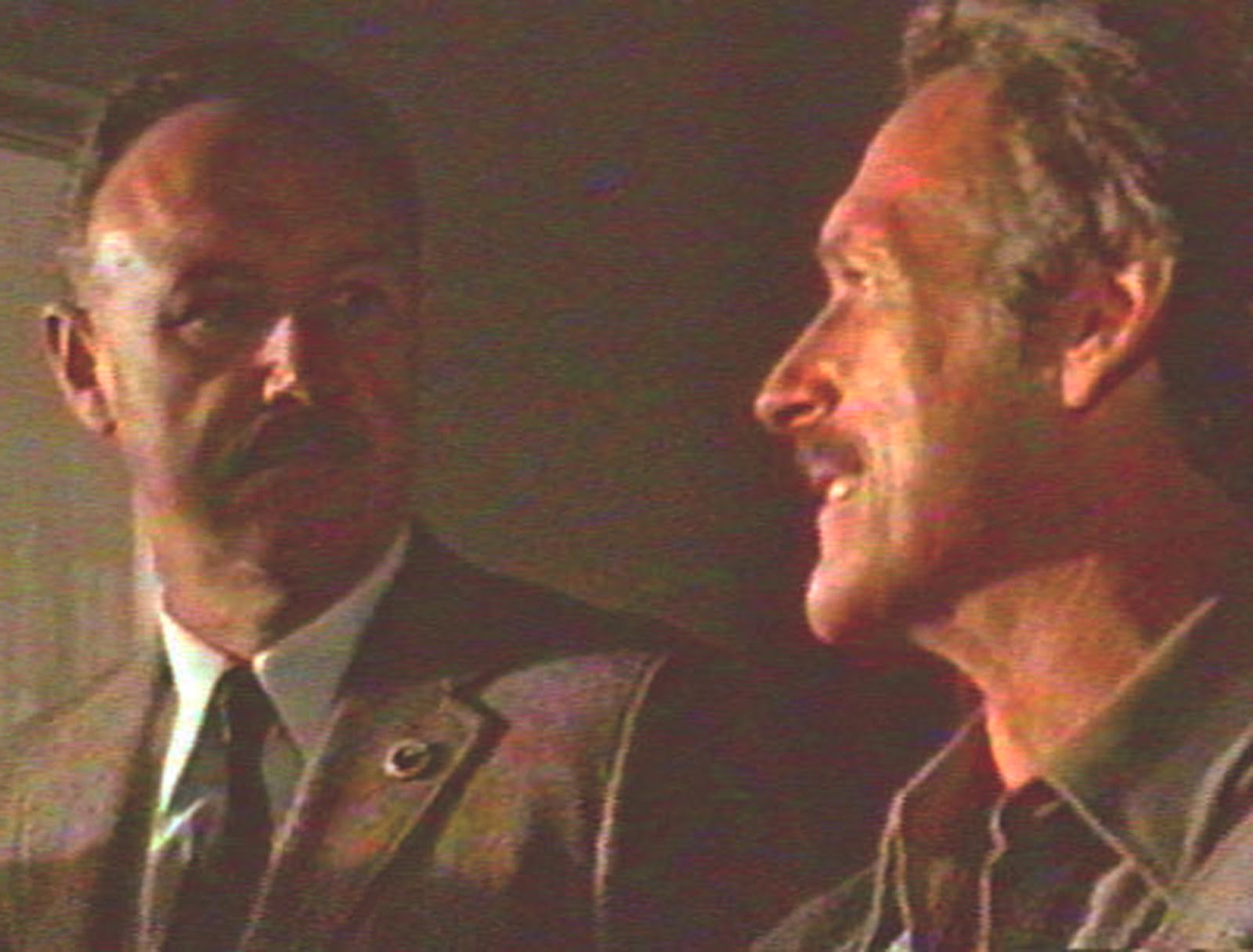
The first movie I ever did was called "Split Image", directed by Ted Kotcheff. Starred James Woods, Brian Dennehy, Karen Allen...and me. One scene, Ted thought was real flat. My character didn't have any dialogue in that particular scene, he just stood there. (I was Woods sidekick) Kotcheff asked me, "Kenny, what would your character say in this scene?" I replied, "Hell, I don't know, Ted, let's run the God damned camera and find out." We did, I improved some lines, Woods improved back, Ted said, "Cut, print, star that." Farmer, you don't get writing credits...next set up." On the way over to the next scene, Ted walked beside me and said, "Kenny anytime you think your character needs to say something, go ahead...you have carte blanche. He gave me the same freedom in "Uncommon Valor." I actually made Gene Hackman break character in a scene we did with an ad-lib.
A good story comes from the heart…not the head.

My point is, as an actor, I relied on my instincts in playing the character to fix or correct the dialogue. As an author, I just play each of the characters in the story and create their dialogue as the story unfolds. I listen to them talk and write it down. That ability to play each character also holds me in good stead when I do the audio versions.
One of the things we do is to create a back story for each character. You can't know how they talk unless you know/create their personality, level of education, their job...what they do...their background, history, where they're from and so on. 
A little trick I use is as the author/creator (we get to play God), we can pick their birthday. Now, I don't really care if you buy into Astrology or not…it really doesn't matter. But, I found a book I used as an actor and now also use it as an author that can be an enormous help in creating your character's traits. "THE LITTLE GIANT ENCYCLOPEDIA OF THE ZODIAC", - ISBN 0-8069-9529-7. You pick the birthdate, go to that sign and there you'll find listed their Positive Characteristics and their Negative Characteristics…Handy as handles on a jug.

The Writer is the brush; Emotions are the Colors; the Character is the Canvas; the Palette…your Imagination.
Each character must have their own voice. As an actor and acting coach, I tell my students when they're working on characterizations, to OBSERVE people...at the mall, church, grocery store. Listen to how they talk, move, act. What makes them unique/interesting? Readers are always drawn to unique/interesting characters...As a writer, that's our job...create interesting characters.
Great writers don't just follow a formula or some manual...they create wonderful characters and let them tell the story.




Tuesday, September 15, 2015

MASKED RIDER OF THE SILVER SCREEN by Tom Rizzo


On this day, Sept. 15, 1949, The Lone Ranger—starring Clayton Moore, and Jay Silverheels as Tonto—premiered on ABC television and ran until September 12, 1957. Moore appeared in about 170 episodes between 1949 and 1957. 


Years ago, I met Moore to interview him after an appearance at a Columbus, Ohio, car dealership that paid him $275 an hour to “unmask” that year’s new car models. I knew the owner of the dealership and told him I would have done it for a hundred bucks.

“Appreciate the offer, but we’re trying to attract a crowd, not your friends and relatives.”

Hmm, touché.

Moore, born Jack Carlton Moore, September 14, 1914, grew up in Chicago and spent much of his youth practicing gymnastics. He eventually joined a trapeze act called The Flying Behrs at age 19.

Moore traveled to Hollywood in 1938 and found work in films as a stuntman and bit player. 


He appeared in a number of serials as well as B-westerns. After a serving in the military, he returned to Hollywood and took a number of supporting roles, mostly in westerns. 

According to IMDB, one of his movie roles caught the attention of George W. Trendle, who produced the successful Lone Ranger radio series. Trundle, in the process of casting the lead role, approached Moore to offer him the role.

“Mr. Moore, would you like the role of the Lone Ranger?”

“Mr. Trendle, I AM the Lone Ranger.”

If there was any hesitation about his confidence, his performance in this 1949 pilot for the Lone Ranger series quieted the doubters.  

The day I met the Masked Rider of the Plains, I spotted him standing on a riser surrounded by Lone Ranger fans. 


The aging actor wore the all-too-familiar Lone Ranger costume but, in place of the famous half-mask, he wore large sunglasses. 

“Before I say anything else,” he told the fans gathered inside the showroom, “I’m required by law to tell you that my name is Clayton Moore who used to portray The Lone Ranger.”

Later, during our interview, Moore couldn't mask his disappointment at losing the right to wear The Lone Ranger mask. 

The Wrather Corp., at that time, owned the rights to Moore's character and planned a feature film starring a younger man as The Lone Ranger

The issue ended up in court. Wrather won the argument that two Rangers would confuse the public. (Courts, movie producers, and politicians always seem to consider the public a bit feeble-minded and stupid in these kind of matters). 

During our conversation, Moore shook his head slowly as if still in disbelief at the disheartening turn of events.  


“Here's a company that said to me for all these years: 'as The Lone Ranger, don't to this, don't do that. Uphold the name of The Lone Ranger.' I've done that for 30 years. I have lived the part of The Lone Ranger.”


In what was believed a backlash of fan support for Moore, the movie flopped at the box-office, sort of giving Moore the last word. But, to his credit, he never displayed any public pleasure at the film's disappointing showing. 

In fact, in his 1996 autobiographyI Was That Masked ManMoore said he would "never wish failure on anyone,” displaying strict adherence to The Lone Ranger persona. Always a class act. 

Moore counter-sued, but the legal proceedings went on for years until Jack Wrather—without explaining why—simply dropped the case. Wrather died a month later. His widow Bonita sent a letter to Moore, in which she wrote: “please be advised that Wrather Corporation hereby grants to Clayton Moore the rights to wear The Lone Ranger mask.”

I remember watching Moore that afternoon at the dealership captivate his audience as he revealed the legend of the masked rider's origin. And, he was more than believable. 


"From a personal perspective, what kind of impact has the The Lone Ranger character made on you?"

He flashed a warm smile. "I'm sure the character I've been portraying has helped make a better person of me. More tolerant. More considerate."

For a second, I was skeptical and thought he might have been carrying the Lone Ranger persona a little too far. But I was wrong. Clayton Moore was the real deal. Genuine and steadfast in his beliefs. 

“Sounds like you’ve taken a page out of The Lone Ranger Creed," I said.

“I tell the truth,” he countered in a soft but firm voice. “Part of the Lone Ranger Creed is: I believe that everything changes on this earth but the truth. And it goes on forever.”

If I had any doubts about the sincerity of the role he cherished, I remember watching The Late Show with David Letterman one evening. One of his guests, Jay Thomas—actor, sportscaster, and writer—told a great story about Clayton Moore.


Thomas said he appeared on a radio show where Clayton Moore was a guest back in the early 70s. At the end of the broadcast, Moore's transportation to the airport didn't show up so Thomas agreed to give him a ride. 

Moore, still wearing his LR outfit—including mask—climbed into the back seat of Jay’s Volvo. Thomas and his producer—both of whom wore extremely long hair that was stylish at the time—sat up front. 

During a stop in heavy traffic, the driver ahead of them backed up and hit the Volvo and then took off. Thomas decided to give chase and finally caught up the guy. Thomas and his producer jumped out of the car and confronted the other driver. 

“What are you going to do?” the man asked. 

“We’re going to call the cops,” Thomas replied.

“Oh really. Who do you think they’re going to believe, you two hippie freaks or me?”

At this point, Clayton Moore climbed out of the backseat of the Volvo, approached the hit-and-run driver, rested his hands on the handles of his six-shooters and said,  “They’ll believe me, citizen.” 

When I left the interview and made my way out of the showroom, one of the salesman corralled me.


“This guy really thinks he’s The Lone Ranger,” he said in a conspiratorial whisper, rotating his eyes to the ceiling.

Obviously not a believer.

"Stranger," I said to him, feeling the need to provide cover for one of my childhood heroes, “he is The Lone Ranger.”

____

Tom Rizzo blames the The Lone Ranger, Durango Kid, Randolph Scott, Tim Holt, and Paladin for triggering his lifelong obsession with the American Frontier—and for convincing him that outlaws must face justice, no matter how many guns they carry or how high the odds. 
A novelist and naturally curious amateur historian, Tom’s new three-volume collection, Tall Tales from the High Plains & Beyond features dozens of quick-read true stories featuring characters and events of the Old West, crafted with a fictional technique that drops readers into the middle of the action. If you enjoyed the story above, please share it with your friends. And visit Tom's Blog and rediscover the Old West.


Monday, September 14, 2015

Wild West Words: It’s a Gamble


Gamblers, c. 1900. Artist unknown.
By Kathleen Rice Adams

Gambling has been a popular way to fill empty time almost as long as people have existed. Many modern words related to gambling saw their genesis in the 1300s. “Pasteboards,” slang for playing cards, arose in the 1540s because the cards were made of layers of paper pasted together. Roulette, in the gambling sense, originated in about 1725. Terms like “game of chance” (1920), “snake eyes” (1930), and Lady Luck (1935), on the other hand, didn’t arrive until the early 20th Century.

The following words and phrases, most of them slang appropriations of previously mundane words and phrases, sneaked into the language during the 1800s.

Ante: opening bet; American English poker slang. Noun form arose 1838; verb, 1846. Both are based, appropriately, on the Latin ante, meaning before.

Baccarat: As a card game, arose 1848. Variant spelling of the French word for the same game, baccara, which is of unknown origin.

Bank: to put money on. American colloquial usage arose c. 1884, based on the 1833 meaning “to deposit in a bank.”

Bankroll: roll of bank notes. American slang from 1887 as a conflation of “bank” and “roll,” the latter of which gained the slang meaning “quantity of paper money” in 1846.

Beginner’s luck: explanation for wins by the inexperienced. American slang c. 1897.

Big deal: in poker, a game-changing turn of the cards. Arose mid-19th Century. The sarcastic phrase meaning “So what?” is American English from c. 1965.

Bilk: a cheat or to cheat. Although the 1651 edition of the Oxford English Dictionary defines the word as a cribbage term meaning to spoil an opponent’s score by playing unusable cards, in the western U.S. after the Civil War, calling someone a bilk was about the worst insult one man could bestow on another. “[T]he most degrading epithet that one can apply to another is to pronounce him ‘a bilk.’ No Western man of pluck will fail to resent such concentrated vituperation.” (A.K. McClure, Three Thousand Miles Through the Rocky Mountains, 1869)

"Gambling Down Below," illustration from
the Mark Twain story of the same name, 1883
Blackleg: gambler or swindler. Popular in the American West 1835-1870.

Bottom dollar: the last of one’s money; from 1882.

Bluff: the noun meaning subterfuge in cards dates to 1839 in the U.S., perhaps from the Dutch bluffen (to brag or boast) or verbluffin (to baffle or mislead). Bluff as an alternative name for poker is American slang from 1844. The verb bluffing, meaning misleading in poker, arose c. 1845; later generalized to misleading in any context.

Card sharp: shortened form of the American slang term card-sharper, which entered the lexicon in 1859.

Chip: counter used in a game of chance. Americanism; first recorded in print 1840. “When the chips are down” is from the 1940s as a reference to the pile of poker chips on the table after all bets are made.

Cleaned out: left penniless by losses; arose c. 1812.

Craps: game of chance employing dice. American English from the Louisiana French craps (“play a dangerous game”), based on an 18th Century Continental French corruption of the British “crabs,” which was slang for the lowest dice throw: two or three.

Crap out: a losing throw of two, three, or twelve in the dice game of craps. American slang, 1835-1845. Called “seven-out” when the player threw a seven instead of making his “point.”

Dead-man’s hand: a poker hand including two aces, two eights, and any other card. Yes, it really is based on the hand Wild Bill Hickock held at the moment of his 1876 assassination by Jack McCall.

Dough: money. From 1851.

Down on [one’s] luck: at a low point financially or personally. From 1832; possibly borrowed from gambling. “Be in luck” first appeared in print in 1900 but may be older; “push [one’s] luck” first appeared in 1911.

Draw a blank: come up with nothing. The image is from lotteries, c. 1825.

Face card: jack, queen, or king; c. 1826. Also called “court cards” because of the “royal” images.

"The Gaming Table," Thomas Rowlandson, 1801
Four-flusher: a cheater or sneak. Arose 1896 from the earlier verb four-flush (origin uncertain), meaning to bluff a flush while holding only four cards in the same suit.

Full house: poker term for three of a kind and a pair. 1887 American version of the 1850s term “full hand.”

Gamble: a risky venture. Arose as slang, 1823. By 1879, the act of gambling. Apparently a remnant of the dialectical Middle English gamel (1590s), “to play games.” The B may have been added due to confusion with “gambol.”

Gouge: to cheat, swindle, or extort. Verb form attested 1880, probably from the 1560s gouge, meaning to cut with the tool of the same name.

Grand slam: in suit-based card games, to win a series of games, 1814. First use as a bridge term 1892.

Have a card up [one’s] sleeve: originally, the poker term was literal. Poker players would hide a winning card under their sleeve cuff and exchange it for a losing card the sly. Arose c. 1898.

High-roller: extravagant spender. American slang by 1873, probably originally as a reference to throwing dice.

Jackpot/jack-pot: big prize. From 1881, a series of antes that results when no player has an opening hand consisting of two jacks or better. The slot machine sense arose 1932; slang for a big win in any situation from about 1944.

Joker: non-royal face card in a poker deck, 1868. Probably a reference to the generic British slang meaning any man, fellow, or chap. Black Joke, a card game in which all face cards were called jokers, is mentioned in Hoyle’s 1857 edition of Games.

Kitty: pool of money in a card game. Arose 1887 from 1833 “kit,” meaning a collection of necessary supplies, with a possible contribution from the 1825 British slang “kit” meaning prison or jail.

Lucky break/lucky strike: in billiards, at least one ball landing in a pocket after the opening collision of cue ball with the rack. Attested from 1884. Earlier meaning “fortunate failure” arose 1872. Lucky Strike as the name for a brand of cigarettes, 1872.

"Monte in the Mines," J.D.Borthwick, 1851
Monte: a particular card game, so called because of the heap of cards left after the deal. The game arose 1824, with the name probably borrowed from monte, Spanish for mountain. The game was especially popular during the California gold rush. Three-card version arose in Mexico in 1877.

Pass the buck: American slang, originally literal, 1865. A bone-handled knife, “or buck,” was laid on the table in front of the dealer to keep track during poker games. When a player wished to pass the deal, he passed the knife to the next player. Figurative sense “shift responsibility” first recorded in print 1912.

Penny-ante: insignificant; American slang. Originally an 1855 poker term for small stakes.

Play the trump card: slang for an unexpected winning move; from 1886. Originally “play the Orange card,” which meant “appeal to Northern Irish Protestant sentiment for political advantage.”

Poker: a particular card game that arose in America in 1834. Origin of the term unknown, but perhaps from the German pochen, “to brag,” which itself arose from a slang corruption of the verb spelled the same way which meant “to knock or rap.” May also be related to French poque, a card game similar to poker, though that is undocumented.

Poker face: expressionless by intent. 1874 slang from a poker tactic disguising a bluff.

Risky: dangerous. Arose 1825 from “risk,” which itself was a 1728 anglicized version of the 1660s French risqué. “Risk-taker” is from 1894.

Showdown/show-down: lay down a poker hand face-up. From 1873; American slang. Figurative “final confrontation” arose 1904.

Stack the deck: cheat by unfairly arranging the cards in a deck before the deal. First recorded 1825.

Straight: a poker hand containing any sequential run of cards from different suits; arose 1841 from 1640s use of the term to mean “level.” By 1864, “straight” became slang for the straight part of a horse-racing track.

Straightaway: the flat, straight home stretch of a horse-racing track; 1839.

Stud poker: a form of poker in which the first card is dealt face-down and the others face-up. From 1864; antecedents unknown. The related term “hole card,” meaning the card dealt face-down, is an Americanism from 1905.

Swindle: cheat out of money. American English colloquialism from 1826.

Take a chance/take chances: do something with an uncertain outcome. From the 1815 usage meaning “participate in a lottery.” The related “take a risk” is first documented 1826, but may be older.

Tinhorn: of no value, but flashy. By 1857, from the earlier use referring to low-class gamblers who used a tin can to shake dice.


A Texan to the bone, Kathleen Rice Adams spends her days chasing news stories and her nights and weekends shooting it out with Wild West desperados. Leave the upstanding, law-abiding heroes to other folks. In Kathleen’s stories, even the good guys wear black hats. Her short story The Second-Best Ranger in Texas” won the 2014 Peacemaker Award for Best Western Short Fiction.

Visit her home on the range at HoleInTheWebGang.com.

Saturday, September 12, 2015

Confused and Tired - Summer in the Sun by Charlie Steel


My editor believes this article meanders too much and should not be published.  I disagreed and coerced her to lessen her standards and edit it.  Perhaps she is right.  So this article comes with a warning: Beware of the seemingly unrelated aspects.  The central thread of this article I believe IS: What I did, encountered, and thought about, while on vacation.  I KNOW, a bit of a stretch.
My summer home---a 27 foot Pearson sailboat, August 2015
 
Not so many years ago I owned a 45’ Columbia Sloop and sailed it from New Jersey up the Atlantic, past the Statue of Liberty and through the 32 locks of the Erie Canal to Lake Huron.  I anchored her off-shore near a home I have in Northern Michigan.  I do know how to sail, but that’s another story.  This one is about how I spent these last two months living on the Pearson sailboat, doing a lot of painting, cleaning, and repairing, along with a little fishing, some swimming...and thinking about writing, mortality, and the legacies we leave behind.
 
I was awakened early each morning to the raucous sounds of seagulls, the haunting call of loons across the bay, and water slapping onto the shoreline and hulls of boats.  I put on my trunks and hobbled around that little boat.  I ate oatmeal bars for breakfast, and swallowed the handful of pills that keep me alive.  A LOT OF THEM (18) and then got to work restoring the old, yet sturdy, craft.
 
Some repairs were superficial and cosmetic, others were necessary for the structure and integrity of the vessel.  I fixed a large leaking hole in the deck by drilling it out and filling it in with fiberglass.  It was a lot of work but turned out looking nearly like new.  I gelcoated over crazing and dug out blisters, painted the deck hatch blue, sanded the mahogany, varnished until the wood became a shiny golden brown.  The rest of the summer I waxed and polished until the old sloop shone.  This included the deck and hull.  Then before I left the marina, I winterized the boat, covering the wood with plastic and the deck and hull with a thick coat of wax to protect the finish.  I will remove the wax when I return in the spring.  (My neck and shoulder still hurt!)  Working on that boat was physical, but in many ways it was just like carefully constructing and writing a story. Like a good story, it took a lot of care and attention.
 
During those months on the boat, I spent time by myself. Being alone was nothing new for me. Until circumstances made it necessary to care for my elderly mother, I had lived alone for months at a time up on my Colorado mountain.  Living by myself on that craft all summer was a reawakening, it renewed my senses and made me feel alive.  I really had an enlightening time out there on the water, enjoying the crisp cool mornings, the hot sunny days, the gentle winds, and the strong summer storms with their heavy rains, lightning and thunder.  In a way, this summer invigorated me---it brought me back to life. 
 
You see, life has a way of throwing curves at us and the walls that we build around ourselves as people and as writers sometimes get torn down without warning.  I thought my walls were thick and strong and impenetrable.  They served me well when I worked behind the Iron Curtain for the government and later as a state Child Protection Worker.  I could escape from those stressful jobs and hide inside my emotional fortress to think, dream, and write countless stories.  Over the many years few people, not even my parents, were invited into my stronghold, and then, only so far---UNTIL---my strong-willed, widowed mother, was forced to live with me.
 
Last year my mother died.  She was 91 and for the last six and a half years I took care of her.   She was in fairly good health and came from a family known for its longevity.  I expected her to live many more years.  All that changed the day she fell and was injured in the doctor’s office.  Following a week of horrendous complications and treatment, she was gone.  Up until the solitary road trip to Michigan on U.S. Route 80, I hadn’t really recovered from her unexpected death.  On the trip, she was still much on my mind.
 
As far as I am concerned her death has everything to do with this blog.  And in those last six and a half years, she became one of my most honest, astute, and influential critics.  Besides I am proud of her and miss her, and I wanted to pay her tribute.  How often as writers do we use the various personalities of people we know when we create the characters in our books.  My mother lives in many of my stories as she certainly was a colorful character.
 
 
MOM – 90 years young - On the ranch.
 
It was the loss of her driver’s license (about six and half years ago) that caused me to step in and end up being her partner and to some extent caregiver.  (I promised to never allow her to reside in a nursing home).  Despite her age, she was quite active and acutely mentally alert.  As I said, all her life she had been a very strong-willed person.  After some adjustment to invading each other’s space, neither of us being particularly enthusiastic about the circumstances, we eventually worked out our differences.  To my amazement, we became buddies and close friends.  During those few years we did everything together: breakfast, lunch, supper, going out for dinner, to the movies, and staying home and reading books, watching  the news and Turner Classic Movies (her favorite pastime).  She also read my stories and made succinct and valid criticisms.
 
What insightful conversations we had about writing, life, and politics.  She was very opinionated and hated anyone who didn’t stand up for the working man.  As far as movies went, she had an endless knowledge of actors and was able to recall where she was when she first saw a particular film.  To my great surprise, my mother was always a stimulating companion.  When she died unexpectedly, I was greatly shocked, and returned to being alone once more on my Colorado mountain.  I found myself becoming pessimistic about the future.  Mortality is what I thought about as I started out on my summer trip and why Mother’s demise ended up being so significant to me.
 
Being there alone on the boat gave me time to reflect.  Apparently change is a good thing every once in a while.
 
All through the summer I thought about life, death, my mother, and the legacy a writer hopes to leave.  As an old man with a varied lifetime of experience, I have indeed, over these seven decades, formed some hard opinions.  Reflecting on my past, I once again thought about the many shameful choices that I have made.  I have come to realize how very important it is for a writer to leave a legacy of work of which one can be proud.
 
Perhaps all of us, as writers, are also preachers.  We WRITE what we THINK and what we BELIEVE.  In my opinion, as writers we have some power to do good in this world and effect change for the future.
 
Anyway, it has been a while since I have written a blog, and today this is my contribution.  I hope you found it somewhat interesting and not as my editor states: “disjointed and confusing.”
I wish all my fellow writers the very best and hope that the Western Fictioneers Convention will turn out to be a good and uplifting experience for all who attend. 
Not going this year but perhaps some time in the future.
All the best to everyone.

Charlie Steel 

Friday, September 11, 2015

Cowboy History

This is Part 1 of a series on everybody's favorite character: the cowboy.

The myth of the cowboy dates back to Colonial America. In western Massachusetts, the uplands of the Carolinas, in Florida and in the red clay hills of Georgia and Alabama, cattle-raising societies existed before the Great Plains had been cleared of buffalo. Much of the protocol of cattle branding actually evolved in Florida.  And yet, the cattlemen of the Southeast never became the national heroes that their Western counterparts did. They remained illiterate, and un-mounted, drifting from one grazing ground to another and trailing their herds to market in Savannah or Jacksonville, or to the Ohio River towns.


In the West, the Spanish imported cattle and horses, and ranching had spread into what is now Texas, Arizona and New Mexico by the 1700's. Few markets existed for meat, hides or tallow, and most ranchers shipped these products south to Mexico City. In the early 1800's, American ships began servicing the California ports, providing a ready market for the ranchers. Huge roundups were held to collect cattle, and hard-working vaqueros controlled the herds. Known for their expert riding and roping skills, vaqueros were said to dismount only for a chance to dance with a pretty senorita.

Ranching ceased to be a Spanish profession as more and more Americans flooded the West. Especially after the Mexican-American War, settlers moved into California and intermarried with the Hispanic ranchers, adopting their ranching style. As the livestock industry expanded, these horsemen found work in Oregon, Idaho, Nevada, Arizona -- and even Hawaii. Many of these cowboys retained strongly Hispanic styles ("buckaroo" comes directly from "vaquero"). 

The cowboy we know today had his roots in Texas. There, cattle grew wild and had few natural enemies. By the end of the Civil War, there were an estimated five million wild cattle in the territory. It was at this time that the Golden Age of the cowboy began. The era of the open range and the great cattle drives lasted from 1866 to 1886, and was ignited by the high price of beef in the North. Union armies had exhausted the supply there, and the urbanizing East provided a ready beef market. A steer worth four dollars in Texas might be sold for forty dollars in the North.


Beginning in 1866, Texans began moving long lines of longhorns northwards to market, using the techniques of the vaqueros. The primary railhead at that time was Sedalia, Missouri. Indian tribes protested the passage of the cattle, as did farmers who resented the animals trampling their crops and spreading the dreaded Texas fever. Outlaws made off with the cattle -- and were not averse to murdering the men driving them.

The Texans desperately searched for a route with better grass and fewer Indians, farmers and desperadoes. As the railroad inched across the plains, new trails -- among them the Chisholm, Western and Loving -- veered westward to intercept them. Cattle towns like Abilene, Wichita, Ellsworth, Caldwell and Dodge City enjoyed a brief heyday of prosperity (and violence). Later trails headed even further north to Ogallala, Cheyenne, Glendive and Miles City.

By 1886, the open-range cattle business had spread across the Great Plains and merged with cattle enterprises in Colorado, Idaho, Washington, Utah, Nevada, Arizona and California. The men who worked cattle on the treeless expanses of the West -- at least one-fourth of them were black men -- became known as cowboys. The image of the courageous, spirited horseman living a dangerous life carried with it an appeal that still refuses to disappear. Driving thousands of cattle hundreds of miles to market; facing lightning and cloudbursts and drought, stampedes and rattlesnakes and outlaws; sleeping under the stars and eating at the chuck wagon -- the cowboy became a true American folk hero.


Cattle ranchers staked out homesteads on the Plains, often centered in a cottonwood grove with ample water nearby. Their cattle grazed over thousands of acres of unclaimed land. This open-range industry, along with the great trails, was only ended by the arrival of barbed wire, a web of railroads throughout the Great Plains, and enforcement of federal land laws. By the mid-1880s, prudent cattlemen realized that the industry was over-expanded, the Great Plains overgrazed, and the price of beef declining. The Golden Age of the Cowboy was over.

Yet the myth still lives. Modern cowboys may ride a pickup truck with his horse in a trailer behind him. He may use a computer to determine his cattle's feed, weight and salability. But he still dresses like a cowboy, because the garb is practical. He still understands horses and cattle. He still gazes out over the treeless expanse, exactly as his predecessors did.

Sources:
The Reader’s Companion to American History. Eric Foner and John A. Garraty, Editors. Copyright © 1991 by Houghton Mifflin Harcourt Publishing Company.
American Cowboy magazine

Photos from cowboyshowcase.com - photographer Verl L. Hunt (photographs of a cattle drive in 1918, just before barbed wire became popular in Wyoming)

Wednesday, September 9, 2015


Ranger Jim's Ramblings for September


Okay, after being AWOL for the past couple of months, I'm back. I'm not certain whether that will bring cheers or curses from most of you, but you're stuck with me for a while longer.

I've decided to tackle a different subject this time around. No horses or Texas Rangers in sight, at least, sort of.  I thought I'd talk a bit about designing the cover of a book, specifically, for this group, a Western. As authors, we think long and hard before putting pen to paper, so to speak, but how many of us give much thought to the covers of our books, or instead just defer those to the publisher? It is the cover which first grabs a potential reader's attention, and that  cover is almost as important as the story itself. A good cover can make a book, a mediocre or bad one break it.

I'm no expert on the subject, so will give credit where credit is due for the examples, Livia Reasoner.
The first picture is the cover of my latest Lone Star Ranger book, Volume 6, A Ranger Gone Bad. The Lone Star Ranger series is a young adult series, following the adventures of orphaned, fourteen year old Nate Stewart as he rides with the Texas Rangers who rescued him. The cover captures all the elements of the story. Livia has chosen to use a simulated leather background, in different colors for each of the book. For example, on A Ranger's Christmas, Livia used a red leather background with a green title strip.  For this one, she used black, which matches the main plot line, that Nate has turned renegade. The Ranger badge image, which is courtesy of the Texas Ranger Hall of Fame and Museum in Waco, instantly tells the reader the book is about the Texas Rangers. The silhouetted riders in the star continue the theme, and the background colors behind them not only reflect the red rocks of the Western landscape and the clear blue Western sky, but also the patriotic red, white, and blue of the United States flag. It's an attention-grabbing cover, which is exactly what you want to pull in potential readers.

And that's what a good cover should do, grab a potential reader's attention, show him or her a bit of the story, and make him or her want to pick up the book. Type size, font, and colors are all important considerations when designing a cover. They, along with the all important cover illustration, must stand out from all the other books on the shelves vying for the reader's attention.

My favorite color is blue, followed by green. Given my choice, those would be the colors for the text on my books' covers. However, they are far from ideal for attracting a potential reader, especially for a Western. They don't "pop". Reds, oranges, and yellows are the colors you would usually want to employ.
The above illustration is the cover of my latest Jim Blawcyzk Texas Ranger novel, The Ghost Riders. Notice how the red and yellow letters jump out from the background illustration. The cover illustration itself, Andy Thomas' Gut Shot, used with his permission, shows the drama of a group of cowboys, in this case depicted as Texas Rangers, who have just ridden into an ambush. This is a cover that fairly screams at potential readers: "This is an action-packed, traditional Western novel, one any fan of Westerns just has to read." The addition of the A Jim Blawcyzk Texas Ranger Novel subtitle is an added, and powerful, additional selling tool, appealing to the good-sized sub-audience group who will read just about anything about the Texas Rangers. It's a cover which will sell a lot of books.

For my last example, here's the cover of my latest Texas Ranger novel, To Avenge a Ranger. Again, notice how the red and yellow text seems to fairly leap right off the cover, and at the reader. And again, the A Texas Ranger Sean Kennedy Novel  subtitle informs the reader this is a story about the Texas Rangers specifically, not the Arizona Rangers, or any other Rangers. The cover illustration, another Andy Thomas painting, Death of a Cowboy, again used with his permission, tells the potential reader right from the get-go that a Ranger has been bushwhacked on a muddy street, and whoever did the killing will be tracked down and brought to justice by the Rangers, most probably gunned down like he gunned down the Ranger. The gray sky, puddles, mud, and pouring rain (which is hard to see on this page) all add to the gloom of the scene. The reader can see the shock in the dying Ranger's eyes, the despair of the woman rushing to his side, the doctor hurrying to help him, despite realizing he is probably already too late. It's a cover that makes the reader want to pick up this book.

Livia has done a fantastic job designing these, and other, covers for my books. I owe her a debt of gratitude.

And that's what we want. A cover that tells the potential reader this is a story they just have to read, a story they will enjoy, and recommend to their friends.

A few years back, Western Writers of America and some publishers of already in print classic Westerns decided to try an experiment. They reissued some iconic Western novels, but replaced the original action-oriented covers with more generic, "prettier" covers, which generally depicted Western landscape scenes, along with cowboys and horses, but little, if any, gunfight type action. The theory was, by de-emphasizing the action angle, and replacing it with a more bland, "Western" angle, that more of today's readers would be more willing to pick up the books, and give them a try. The results? The last I'd heard, they weren't good. Sales didn't pick up, and in many cases dropped. The covers might have worked just fine for a non-fiction book about the west, or a tale about life on a ranch or the frontier, but they just didn't work for traditional, action oriented Westerns.

So, when you start to write your next novel, be it a Western, Western Romance, mystery, thriller, or what-have-you, don't just leave the cover as an afterthought. Some writers object to paying an artist for the rights to use his or her works on the cover of their books. I've found out, by experience, paying the (quite often small) sum an artist will ask is well worth the price, and will pay big dividends in increased sales. If you see a painting or photograph you'd like to use on the cover of your book, get in touch with the artist and ask for the rights. As long as the fee isn't exorbitant, you'll find it's well worth the price. Don't skimp on the cover, and you'll see the results in your bottom line.

And one final note: For any of you who write Western Romances, I'm always available to be the cover model of the (usually shirtless) cowboy hunk. With or without Yankee, my horse.

Until next month,

"Ranger" Jim