Showing posts with label Kathleen Rice Adams. Show all posts

Wednesday, August 17, 2016

PRAIRIE ROSE PUBLICATIONS CELEBRATES THREE YEARS! by Cheryl Pierson


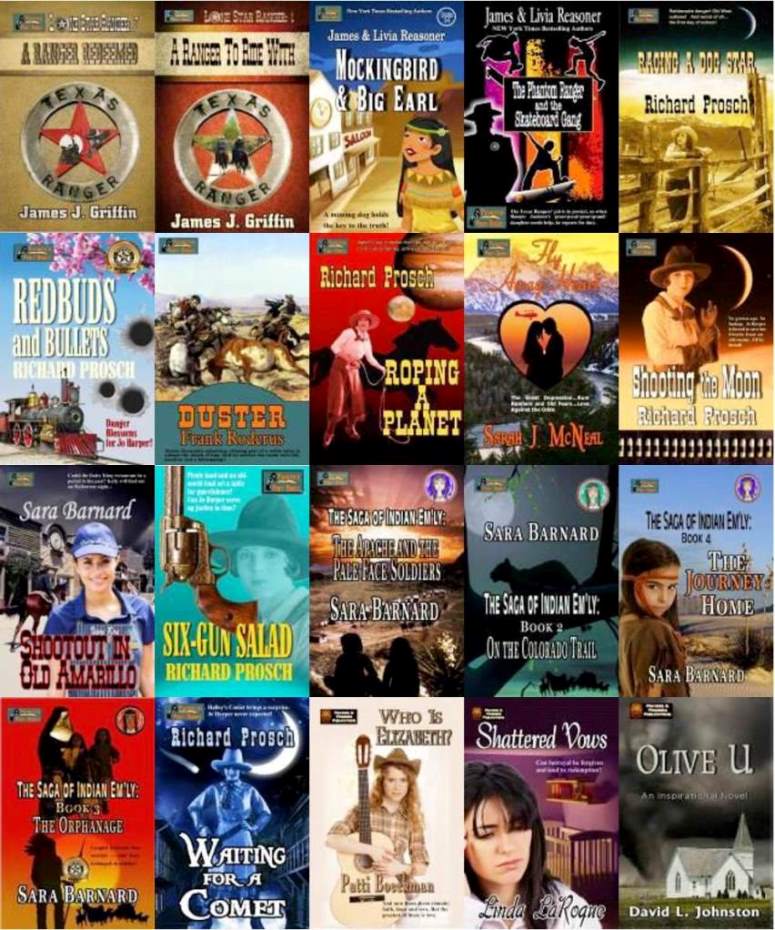
Hey everyone! Please help us celebrate our fantastic third birthday “bash” at Prairie Rose Publications! Yep, this month marks the “big date” for us when we became a company and actually set our dreams into motion.

From our very first publication, WISHING FOR A COWBOY, that made its debut in October 2013, to the present, we have strived to bring our readers the very best stories we could lay our hands on. And, we hope we’ve brought happiness and fulfillment to authors in all stages of their careers—from the newbies to the well-seasoned—who have all joined us and become part of the PRP and Imprints family. Over the past three years, we've expanded to SIX imprints, and have published hundred of novels, short stories, novellas, and boxed sets and anthologies--and we have loved every minute of it!

Our authors work hard to bring their characters and stories to life for readers, and our team at PRP has enjoyed these past three years immensely—I love reading and editing the submissions I receive and coming up with new ideas for boxed sets, anthologies and series. 
Livia and I, along with Kathleen, hash and re-hash what we think would be fun ideas for our authors to participate in, and we’re always open for submissions when our authors come up with their own fantastic tales.

Livia creates some of the most wonderful book covers ever, and is the true guru when it comes to getting all our work up and available for sale. She writes the release blogs for all our projects, and is, in general, like the “Wizard of Oz”, working behind the scenes (remember the curtain?) LOL And she is my hero—did y’all know that when she had a broken arm, she still managed to get a couple of releases up from the hospital? She’s one tough lady! Ok, you guessed it...she is actually...
...NOT a mild mannered author-type at all! Do you recognize her in this picture?

Kathleen is our website queen, among other things. I will never know anything close to what she’s already forgotten about social media, website and blogging issues, general info we need to be aware of in the publishing world, and …wait a minute…I think I just said that Tex is more brilliant than I am! Oh, but just in these areas. Never mind. There are others! (Kathleen—aka Tex—and I do a lot of good-natured sparring with one another since she’s a dyed-in-the-wool Texan who loves to be cantankerous to us Okies.)

Livia, Kathleen, and I love working together and think so much alike about so many things that it’s easy to “move along” with plans and ideas we have. We wanted to celebrate our third birthday with some new releases, sales, and prizes. So please join us every day at the PRP blog through the 19th of August for a variety showcasing of the talents of our many wonderful authors! We will be doing giveaways, so be sure to leave a comment with contact info on our blogs—your name COULD BE the one we pick! And you're certain to find some fantastic new books to add to your library, no matter what! Just take a look at all these wonderful stories, waiting to be read! Here's our link!
https://prairierosepublications.blogspot.com/


Friday, March 25, 2016

My Fave Western Books - Meg Mims


Okay, I admit it. I haven't read enough of the western genre to really have a good opinion, so I'm hereby declaring that I am totally inept and biased. But hey, it is what it is. FEEL FREE to add your own "favorite western" books, give a reason why, and we'll all be happy. Or write your own blog post. This one's mine.


CLASSIC WESTERN: 

For me, this is a toss-up between Owen Wister's The Virginian and Zane Grey's Riders of the Purple Sage. Which I'm reading right now. Have I read other western classics? No. Not yet. Give me a list of books and I'll add them to my (stacks and stacks) of TBR pile(s). How can I say they're my favorites when I haven't read more Louis L'Amour (I read one, sorry - not my favorite), and how could I not have read Hondo, Shane and other classics? So hang me. And I really think Wister's style was wonderfully fresh and pure. Sort of a romance set in the old west. Heh.


SHOOT-EM UP WESTERN:
Hoo boy. This one's tough. Again, because I haven't read a lot of shoot-em up westerns, but I will definitely throw these in my favorites ring: Johnny Boggs's West Texas Kill and Courtney Joyner's Shotgun. Go ahead and add to the list, because the more, the merrier. Just like at the O.K. Corral. Dodge those bullets.


CHILDREN'S WESTERN:
Who can fault Laura Ingalls Wilder's Little House series? Although her daughter Rose Wilder Lane helped write/edit them (read Susan Wittig Alber's A Wilder Rose if you're curious), Laura's childhood memories still resonate through the ages and give us a glimpse of how pioneer life was like. Through rose-colored glasses, I suppose, since she kept out some tougher times. My favorites of the series are On the Banks of Plum Creek and By the Shores of Silver Lake, but for grim reality, don't miss out on The Long Winter. For incredibly rich detail, read Farmer Boy. But I'm adding Gary Paulsen's Tucket series, because boys will LOVE the action in them, and Paulsen's tight writing. Definitely favorites.


ROMANTIC WESTERN:
Hmm. Some people would say Lonesome Dove by Larry McMurtry. I have to admit some favorites are far more romance than western: LaVyrle Spencer's Morning Glory and Hummingbird. I'd also throw in Pamela Morsi's Wild Oats and Courting Miss Hattie, plus Maggie Osborne's The Wives of Bowie Stone. But for more recent western romance, just go to Prairie Rose Publications -- my fave is A Cowboy's Brand (sorry, my own book is in the boxed set, but the others are fabulous too!), but I also love Kathleen Rice Adams's Peaches and Livia Washburn's Charlie's Pie.


TRUE-TO-LIFE DIALOGUE IN A WESTERN:

Hands down, it's Charles Portis for True Grit. No competition.


REVENGE WESTERN TALE:

Again, Portis's True Grit. This book (and the John Wayne movie, of course) totally influenced me in writing Double Crossing (my version of True Grit on the transcontinental train). The Coen Brothers version emphasized how right I was in being influenced - what a fabulous book! And I'm not saying my book or writing style is anywhere near Portis, because it ain't. True Grit is simply a masterpiece. Which is why I made a "dialogue" category.


NONFICTION WESTERN:

I have to name Bury My Heart at Wounded Knee, by Dee Brown, as my top contender. I cried while reading its stunning honesty. It's heart-wrenching. And while I've read lots of non-fiction research books, I guess the only one I enjoyed for its fun stories is Andy Adams's The Log of a Cowboy: A Narrative of the Old Trail Days. But I'll add in Ramon Adams's Western Words as a great resource.


WESTERN COWBOY TALE:
I loved Panhandle, by Brett Cogburn, and I also enjoyed The Traditional West anthology with Rod Miller's "The Death of Delgado" and Troy Smith's "The Sin of Eli". Both are fabulous in a fabulous anthology. If you're a fan of the Wolf Creek books like I am, my favorite is Night of the Assassins.


WESTERN MYSTERY:

I will vote for Ann Hillerman's Spider Woman's Daughter, because she stepped into her father's shoes and made them fit her own feet - and she's making fresh prints in the mystery genre. I'll also add John Fortunato's Dark Reservations, which won the Hillerman Prize. My daughter looooves the Steve Hockensmith series Holmes on the Range, which are also on my TBR pile. I'll take her word for it, since I trained her in reading mysteries. Heh.


So there you have it. And I've got more western books that could be added, once I finish (if ever!) my TBR pile. It keeps growing, despite the whip and chair. READ!! It *is* March, after all, SO SPRING into READING! And yes, I stole that from school days. But it fits!


Award-winning author Meg Mims writes historical and contemporary novels and novellas, plus short stories for anthologies. Double Crossing won the Best First Novel Spur Award. She is also one-half of the writing team of D.E. Ireland for the Eliza Doolittle & Henry Higgins Mystery series. Book 1, Wouldn't It Be Deadly, was nominated for a 2015 Agatha Award and Book 2, Move Your Blooming Corpse, is set at Ascot Racecourse. Meg is working on a cozy mystery series for Kensington that will debut in 2017 under the pseudonym Meg Macy. She lives in Southeastern Michigan, loves tea, books, Mackinac Island, cookies, and currently has a sweet Malti-Poo rescue.

Monday, January 11, 2016

Just Take Them Sheep Right On Outta Here


By Kathleen Rice Adams

Sheep Raid in Colorado (Harper’s Weekly, Oct. 1877)
Texans are resilient. They defeated the Mexicans — twice — took a beating during the Civil War and Reconstruction, and then chased the Comanche clean out of the state and into Oklahoma. All of those events were watershed moments in Texas history.

And so was the day they came.

Sheep. Hundreds of thousands of them, munching their way across the land like woolly locusts. The sight of a single woollyback could boil a cattleman’s blood. The critters trampled the range, close-cropped the forage, and left behind an odor neither cattle nor man could abide. They also carried “sheep scab,” a type of mange to which cattle were susceptible.

As if all of that weren’t enough, pastores herded sheep on foot, not horseback. Horses were a status symbol in the Old West. Cowboys figuratively and literally “looked down on” mutton-punchers.

Sheep are not native to Texas, although they’ve been in the state since padres brought Spanish stock with them in the 1700s. The animals provided both food and clothing, so no mission was without a flock.

In 1800, 5,000 head of sheep lived along the Rio Grande in far south Texas. By 1870, 700,000 woollies had moved in, primarily with Germans and other Europeans who immigrated to central and western Texas. By 1890, the state was home to 3.5 million of the critters. Of the 30 million sheep in the U.S. in the middle of the twentieth century, one-third were in Texas. At that time, the state produced 95 percent of the country’s merino wool.

The Plains Herder, NC Wyeth, 1909
Due to market fluctuations, drought, and some disastrous government programs, in 2012 the entire ovine population of the U.S. stood at only 5.3 million; 650,000 of those, still the largest bunch by more than 100,000 animals, were in Texas. To this day, mutton, lamb, and wool make a significant contribution to Texas’s economy.

Ranchers in the mid- to late-1800s never would have believed such a thing possible. In fact, they went to great lengths to prevent the possibility. The notorious clashes between sheepmen and cattlemen that scarred the entire West began on Charles Goodnight’s ranch in Texas. Between 1875 and 1920, one hundred twenty serious confrontations occurred in Texas, Arizona, Wyoming, and Colorado. Across the four states, at least fifty-four men died and 100,000 sheep were slaughtered.

Real and imagined problems led to the sheep wars. Texas cattlemen already were becoming testy with one another over grazing and water rights. Add sheep — which, as a means of finding other flock members, spray the ground with a noxious scent excreted by a gland above their hooves — and the range got a little smaller. Add “sheep drifters” who grazed their flocks on other folks’ land or public property because they owned no territory of their own, and the situation became volatile. Add barbed-wire fence…and everything exploded.

The Texas legislature outlawed grazing sheep on cattle range without permission and on public land at all. Cattle and horses faced no such restrictions. Consequently, sheepmen were among the first to throw up fences in order to keep their flocks in and other animals out. Sheep fences lit one of the first matches in what became known as the Texas Fence-Cutter War, which blazed across more than half the state from the mid-1870s through 1884. The cattlemen erected their own fences, and soon everyone was at someone else’s throat. The fence war died down, for the most part, when the legislature criminalized fence-cutting in 1884.

Soon thereafter, cattlemen were shocked — and somewhat relieved — to discover good fences really do make good neighbors. They also discovered mutton and wool sold even when a mysterious disease known as Texas Fever made driving cattle to the railheads in other states well-nigh impossible.

Today, many Texas ranches run sheep right along with their cattle, and all the critters get along just fine on the same range.

Of course, had stubborn Texans on both sides of the fence paid attention to the native Indians who’d been running cattle and sheep together for a hundred years before the trouble started, they might have spared themselves considerable aggravation.

(In case anyone’s curious, my Peacemaker-nominated novel Prodigal Gun is loosely based on events that took place during the Texas Fence-Cutter War. There’s more information at the link, which goes to my website.)


A Texan to the bone, Kathleen Rice Adams spends her days chasing news stories and her nights and weekends shooting it out with Wild West desperadoes. Leave the upstanding, law-abiding heroes to other folks. In Kathleen’s stories, even the good guys wear black hats.

Her short story “The Second-Best Ranger in Texas” won the coveted 2015 Peacemaker Award for Best Western Short Fiction. Her novel Prodigal Gun received a 2015 Peacemaker nomination for Best First Western Novel.

Visit her hideout on the web at KathleenRiceAdams.com.


Monday, December 14, 2015

‘You Take that Back!’ — Texas Feuds


By Kathleen Rice Adams

The notorious Hatfield clan, 1897
Although lesser known than the notorious Hatfield-McCoy fracas that claimed about a dozen lives along the West Virginia-Kentucky state line between 1865 and 1888, six and a half of the ten bloodiest American feuds took place in Texas.

Yes, six and a half. Just hold your horses and I’ll explain.

Two of Texas’s feuds were deadlier than the quarrel between the Hatfields and McCoys, and most of them erupted over a bigger insult than laying claim to a wayward pig.

In ascending order of body count, the feuds were…

Early vs. Hasley, 1865-69

Sam Hasley did not take it well when he returned from fighting for the Confederacy to discover his elderly father had been roughed up by a member of the Union occupation force sent to keep order in Texas during Reconstruction. Hasley vowed vengeance not only upon the culprit, John Early, but also on every other Federal in Bell County. He and the friends and family who gathered around him openly defied the authorities, leading the Early faction to accuse Hasley’s group of any crime of any kind anywhere in the vicinity. Yankee soldiers ambushed and killed one of the Hasley contingent in mid-1869, effectively disbanding the gang. One rogue member, however, pursued one of Early’s friends into Arkansas and killed him later that year. Sam Hasley went on to become a deputy sheriff. In 1889, drunk on duty, he was shot and killed by a deputy city marshal while resisting arrest in Temple, Texas. Body count: two.

Reese vs. Townsend, 1898-1907

A plantation house in Columbus, Texas, ca. 1840
The Reeses and the Townsends got crossways over politics. U.S. Senator Mark Townsend, the Boss Tweed of Columbus, Texas, withdrew his support from incumbent sheriff Sam Reese and threw his considerable political clout behind former deputy Larkin Hope instead. When Hope ended up on the wrong end of a broad daylight assassination in downtown Columbus, Reese was the most likely suspect, though no evidence surfaced. Townsend’s handpicked replacement won the election. Perturbed by the unanticipated turn of events, Reese picked a gunfight with a Townsend supporter, thereby moving out of politics and into a casket. The former sheriff’s family vowed to avenge him, provoking five shootouts in Columbus over the following six years. Four combatants died, including Sam Reese’s brother Dick. Body count: six.

Horrell vs. Higgins, 1874-1877

Lampasas, Texas, ca. 1882
When the five Horrell brothers—Ben, Mart, Tom, Merritt, and Sam—took it on the lam to Lincoln County, New Mexico, in order to avoid a murder rap in Texas, they probably didn’t plan to leave one of their number under six feet of dirt before scrambling back to Lampasas barely ahead of a posse. They fared no better in their hometown, running afoul of former friend and neighbor John “Pink” Higgins right away. Higgins accused the high-spirited Horrell boys of rustling cattle…and that’s when the trouble started. A jury acquitted the Horrells of all charges, but continuing ill will led to Merritt Horrell’s death at Higgins’s hand during a saloon fight. Folks lined up behind both families, swore to wipe the opposing faction from the face of the planet, and set about their task with admirable devotion. By the time the Texas Rangers put an end to the running gun battles in June 1877, four men were dead, dozens more were injured, and the three remaining Horrell brothers were behind bars. Although they were released in short order, two of the three were arrested on suspicion of murdering a shopkeeper less than a year later. A vigilante gang shot them to death in their jail cells. The feud ended when both sides signed a written promise to leave one another alone. Amazingly, they kept their word. Body count: seven.

Boyce vs. Sneed, 1911-1912

1912 New York Times report
about the Boyce-Sneed
disagreement. (Click to read.)
Wealthy ranchers John Beal Sneed and Albert Boyce, Jr. came to blows over Sneed’s wife. After more than a decade of marriage and two children, in 1911 Lena Sneed admitted to having an affair with Boyce and asked for a divorce. Sneed straightaway had her committed to an asylum. Boyce rescued the damsel in distress, and the couple ran off to Canada. Incensed when kidnapping charges were dropped, Sneed upped the ante: In early 1912, he murdered Boyce’s unarmed father in the lobby of a Fort Worth hotel. Widely publicized court proceedings ended in a mistrial, spurring a mob of Boyce supporters to storm the courthouse and kill four men. Sneed’s father was the next to go, in an alleged murder-suicide. Although John and Lena Sneed reconciled in mid-1912, he could not let the insult go: Wearing a disguise, he shot and killed Boyce in broad daylight on a Fort Worth street and then surrendered at the county courthouse. Juries later acquitted Sneed of all charges, calling the killings justifiable homicide. Body count: eight.

Sutton vs. Taylor, 1866-1877

former Texas Ranger Creed Taylor, ca. 1880
Dewitt County Deputy Sheriff William Sutton set off the longest-lasting and most widespread feud in Texas history when, in three separate 1866 incidents, he shot and killed three members of former Texas Ranger Creed Taylor’s family. In 1867, two more Taylors died while Sutton was attempting to arrest them on a minor charge. After adopting the motto “Who sheds a Taylor’s blood, by a Taylor’s hand must fall,” the Taylors retaliated by killing two Sutton allies. Mob violence, ambushes, prison breaks, and lynchings ensued. Sutton himself was gunned down while attempting to board a steamboat and high-tail it out of the area. After numerous attempts at peacemaking failed, Texas Ranger Captain Leander McNelly and his Special Force put a stop to the violence. Body count: at least 35.

Lee vs. Peacock, 1866-1871

Fighting Over a Stolen Herd, Frederic Remington, 1895
Only Arizona’s Pleasant Valley War, which took the lives of twenty to fifty men between 1887 and 1892, outstripped the Lee-Peacock feud of northeast Texas. Like the Early-Hasley dustup, the Lee-Peacock fandango grew out of lingering animosity over the Civil War. Confederate veteran Bob Lee butted heads with an organization of Union supporters, leading Lewis Peacock, the leader of the Union bunch, to round up a posse and arrest Lee for alleged war crimes. To “settle the charges,” Peacock seized Lee’s valuables and exacted a promissory note for $2,000. Lee won a subsequent lawsuit, earning an assassination attempt along with the money. His doctor was murdered while Lee convalesced in the medic’s home. Thereafter, Northeast Texas fractured along Union-Confederacy lines and bands of armed men proceeded to track down and do away with their ideological opponents. The Fourth United States Cavalry’s arrival to end the fracas only made things worse: Although a house-to-house search failed to turn up Lee, it sparked several more gun battles. Lee was betrayed by one of his own men in 1869 and died during the cavalry’s attempt to arrest him. Fighting continued until Peacock’s shooting death in 1871. Body count: about fifty.

And now for the one-half Texas feud…

Brooks vs. McFarland, 1896-1902

Although most of the violence took place on Oklahoma land belonging the Creek Nation, a fatal attempt to rob a former Texas Ranger started the fight. After would-be robber Thomas Brooks was killed, family patriarch Willis Brooks accused neighbor Jim McFarland of planning the unsuccessful crime and then tipping off the Ranger. Not disposed to sit idly by and watch the family name besmirched, the McFarlands lined up behind Jim and faced off with the Brooks clan. Both sides vowed to shoot members of the other on sight. The conflict came to a head in a Spokogee, Oklahoma, gunfight in September 1902, when Willis Brooks and his son Clifton were killed along with a McFarland family ally. The survivors were arrested, but allowing them to make bail may have been a mistake: One month later, Jim McFarland died in an ambush at his home. McFarland’s death put an end to the feud.


A Texan to the bone, Kathleen Rice Adams spends her days chasing news stories and her nights and weekends shooting it out with Wild West desperados. Leave the upstanding, law-abiding heroes to other folks. In Kathleen’s stories, even the good guys wear black hats.

Her short story “The Second-Best Ranger in Texas” won the coveted 2015 Peacemaker Award for Best Western Short Fiction. Her novel
Prodigal Gun received a 2015 Peacemaker nomination for Best First Western Novel.

Visit her hideout on the web at KathleenRiceAdams.com.