Showing posts with label marketing. Show all posts

Wednesday, May 24, 2023

Some Questions for the Future

Post by Doris McCraw aka Angela Raines


Photo (c) Doris McCraw


We are getting closer to the middle of 2023. It is usually a time of reflection for me. I take stock of where I am in my writing, publishing, and marketing. 

In line with that concept, I would appreciate feedback on what you would like to read in my blog posts. As a student of Colorado and Women's History and pretty much an expert on Early Women Doctors in Colorado, which of these three topics would be the most useful to you?

Would you like more marketing information?


Photo (c ) Doris McCraw

Is there interest in joining together to create a series of short 'novels' that tie together on a theme, time frame, or event?

Where would you like to see Western Fictioneers go in the future? 

What can I do as I finish my time as President to help make sure this blog and the organization continue to be a vibrant community? Please know, it does take a village to make things happen. 

Your feedback will help me to craft the remainder of 2023. 

We are getting ready to announce the Peacemaker winners and I want to say, it was a banner year and judging was some of the hardest I've faced. I want to thank everyone who submitted their work. It tells me the genre of the Western is alive and well. We just need to make sure the rest of the world knows what we know, these stories are the stories of not only the past but are a glimpse into the lives we live now.

Thank you each and every one for a great first half of 2023.

Until Next Time: Stay safe, Stay happy, and Stay healthy.

Doris


Tuesday, July 26, 2022

Engaging Readers and Our Love of Westerns


Post by Doris McCraw aka Angela Raines

Photo property of the author

The regularly scheduled post has been preempted by this short post. If I've done my job, it should be a 5-7 minute read.

How do we engage people to want to learn history, read history, and the stories we tell about the history of the West?

We have a short window of time to pique interest. We want to share our love, our passions, and our stories. Unless they are already a fan, the information dump is usually a turn-off. Leaving people wanting to know more, well, I think that is more of a win.

I liken this to the 'crisis' class I was semi-required to attend today. In a crisis, you narrow in on the event that is the issue. You tell the authorities what they need to know, leaving out the minute details that are not important at that time. Later, when the crisis is no longer threatening, you will have time to add the other details. If the media is involved, and they try to be first on the scene, you have to ignore their demands and focus on taking care of business. You talk to them later.

It may be better to be brief, leaving people wanting to know more so that they will engage. Once you have engagement, you are far more likely to build a long-term relationship with the reader of your blog, your essay, or your book. 

The other lesson from the class today? Dealing with situations is usually a team effort. As writers, we are used to going it alone. When I decided to pursue this 'next' career, I purposely sought out others who were writing what I was at the time. I connected to a group that was writing a series. By doing so, I was able to not only learn from them but also connected with a wider audience. Never a bad thing as an author.

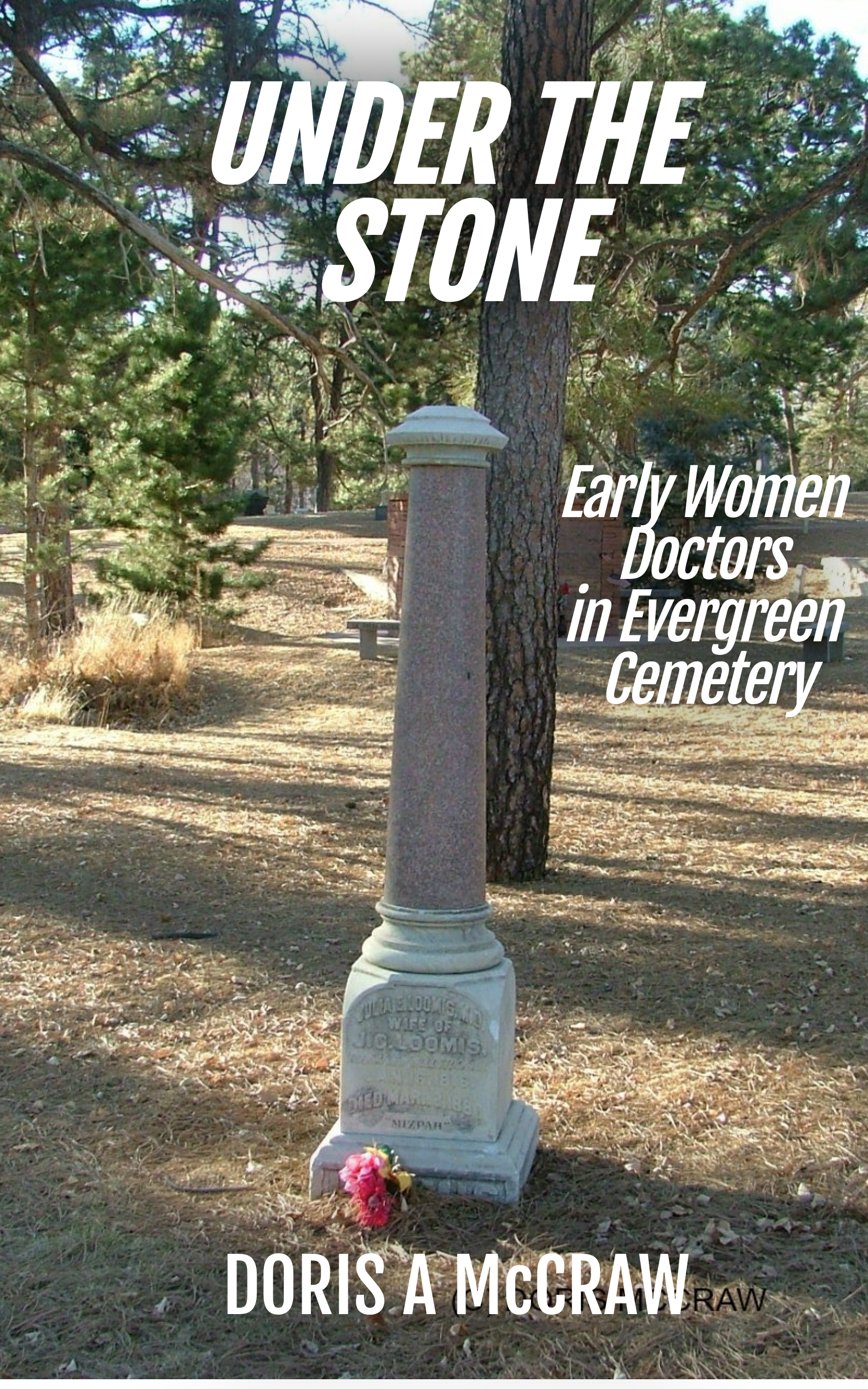
Those are the thoughts for now. With luck, the regularly scheduled post will show up next month. For now, it back to the book "Under the Stone, Women Doctors in Evergreen Cemetery". It's due soon, so, until next time...

Mock-up of the book cover


Doris McCraw


Friday, September 4, 2020

Why Blog?

 Post by Doris McCraw

writing as Angela Raines

Why Blog?
For most of us, we are more than half-way through the year. I like to take the time and take stock of where I am in my plans and goals. This Holiday weekend, with all the events, family, and COVID make it even more important. Things change, and yet remain the same.
Perhaps you’ve asked yourselves these same questions. Am I on target in our writing? How about that ‘blessed’ thing called marketing? How does blogging, and the time it takes, fit into all that? Why blog if no one reads or comments on what I’ve taken the time to think, research and write about? I rethink this every year, asking myself the same thing, why blog? After all I have so many other things that are important. Well, perhaps that is true, but as I explain below, I find it important.
For me the answer is a bit complex. I’ll break it down into three sections. 1. Marketing 2. Research and 3. Name recognition, (the one that’s a bit tricky for me.)
1. Marketing:
If we write stories, be they short, flash or full length, we want people to read them. Even with non-fiction we want the information to get to those who might enjoy what we’ve researched and written.
For someone like me, who writes slow, there can be a long time between the various stories. Added to that, I write in two historical genres: Western and Medieval. I love both equally. You add to that the poetry I occasionally write, along with non-fiction work, and it gets busy. Facebook can only do so much, as well as emails. Plus, how do you expand your readership. To me, blogging is one of those ways.
I realize not everyone will like what I write, despite my desire that they do. At the same time, finding those readers who will like my work, is a challenge. It helps to use all the options at my disposal, and blogging is one of those for me.
Photo property of the author
2. Research:
This is probably the primary reason I blog. I want to share the research I have done with others. History and the people who made it are a compulsion with me. To tell the stories of the people and places from history is something I want to do. I don’t want those pieces from the past to be lost. The nice thing about blogs, especially with the tags, your posts are available via searches almost forever.
For over ten years I’ve researched the story of a Colorado criminal. I told his story at the Pikes Peak Library History Symposium presentation on June 9 of 2018. It is my hope to complete the story of the whole family. A very telling piece of history and the time in which they lived.
The other research that’s important for me to share is the story of the early women doctors in Colorado. While ‘Doc Susie’ is a part of that story, it has been slanted her way for far to long. There were so many others who did as much if not more than she. Between blog posts and articles I've begun to balance that scale. For those who may be interested, the article in Saddlebag Dispatches can be read here: Dr. Quinn, Doc Susie and the Reality of Colorado Women Doctors
The stories of the doctors and so many others need to be preserved for future generations. When you feel like you can’t do something, just take a look at what those who preceded you did. It sometimes helps when put into that perspective.
 3. Name Recognition:
Since I write fiction under a pen name: Angela Raines, it is important I share that information on my posts. When you add my online name, Renawomyn, it gets a bit tricky.
At the same time, my non-fiction work is important. I simply do not want readers of romance to pick up a book with my real name expecting a sweet story and they are reading about juvenile delinquents, early criminals or lynchings. By using pen names I hope to avoid that problem. Of course the reverse could also be true. Can you imagine buying one of my books about the trials and tribulations of early women doctors, and find your reading a story about a medieval woman and the man she loves?
In the end, whether anyone reads or comments on my blog posts, I have things I want to say. Yes, it hurts when no one seems to care, but in the long run, it’s the future I write for. So, here’s to the future and to the readers who want to know what I have to share.

Doris Gardner-McCraw -
Author, Speaker, Historian-specializing in
Colorado and Women's History
Western Writers of America,
Colorado Author League,
Women Writing the West

Angela Raines - author: Telling Stories Where Love & History Meet

Tuesday, February 19, 2013

The Frontier Editor: Moralist and Antagonist, by Tom Rizzo


Henry Graham looked up from the conversation with his daughter when three men walked through the door. This trio was trouble—especially hotheaded Milt Ferris—and he felt almost offended by the intrusion. One of the men pulled down the window shade to block the view into the office from the street. 

"Hey!" Graham called out, and turned to his daughter and whispered. "Stay back here. If something happens, get out through the back and get Tim." He thought about retrieving a small handgun he kept in the desk drawer, but decided against it. 

"I'd prefer keeping the shade up," said Graham, wiping his hands on an ink-stained cloth he kept in his back pocket as he approached the trio. 

"No need to get all riled about a little privacy," Ferris said, grinning. 

"We run a newspaper, not a confessional. What do you want?" 

"Look, we're not lookin' for trouble," Ferris said. "We're here sort of unofficial-like, askin' you to tone down some things you been writin'." 

"Lucas send you here?" Graham said, common knowledge this trio worked for him. 

"Everybody thinks you're puttin' the town in a bad light." The man's eyelids fluttered rapidly as he spoke. 

"No one ever mentioned to me how they feel. I can't imagine Lucas Cameron, or any other business owner, hiring you on as their mouthpiece. None of you strike me as the chamber of commerce types."

--Excerpt from the novel, Last Stand At Bitter Creek

Frontier newspapers served as strong voices for the communities in which they operated.

Just before the war, Graham scraped together enough money for a Washington Hand Press. He and his wife filled a wagon with the press, and the rest of their belongings, and journeyed from Colorado Springs into the Dakota Territory. They agreed to put down roots at the first community not served by a newspaper, and launch the Public Opinion

Their arrival in Bitter Creek coincided with the Union Pacific's recent completion of a railroad depot. The presence of a railroad also helped lure settlers crossing the vast territory west of the Missouri to communities that sprang up along the rail line. 

Our fictional Henry Graham, like other frontier newspaper editors, often assumed the role of moral compass for the public. If those who broke, or skirted the law, went unpunished, Graham and his counterparts had no problem admonishing them, even to the point of publishing names and crimes. Public officials, who declined to react to such lawlessness, weren't spared negative publicity either. They often saw their names in print too, including town council members, mayor, sheriff, or judge. 

In addition to satisfying an appetite for news - local, national, and world - newspapers also functioned as a resource for advertising and basic information, such as stage and train schedules, announcements of various meetings, church services, names of new residents, and more. 

Aside from the morality role, newspapers played a key role in populating the West. In many cases, they functioned as the marketing arm of the community, helping to lure new residents and business enterprises. Editors tried to position their particular community as one of stability and growth, with a demonstrated respect for law and order. 

Many editors, however, tried to proceed with caution and sensitivity when it came to allocating space about injustice. Too much focus on criminal activities could possibly discourage potential relocation. 

As a result, despite all their preaching about law and order, some didn't hesitate in suggesting vigilanteism in cases where the law was weak to follow through in solving crime.  

Operating a newspaper, aside from its moral obligation, was a tough and challenging business. Editors with antiquated presses often fell short of type and printing supplies because of erratic delivery schedules. 

Some editors faced competition from rival newspapers operating in the same community. In many cases, the competition deteriorated into a war of words. Neither side was shy about the kind of words they used to characterize each other. 

Dee Brown, in discussing the competitive invective between rival editors in his book, Wondrous Times on the Frontier, wrote that the record for the "largest number of derogatory adjectives in a one-paragraph editorial" probably belonged to the editor of the Watonga (Oklahoma) Republican, who attacked the editor of the rival Rustler, on Nov. 29, 1893:

"The ignorant, egotistical, scrawny, miserable, contemptible, disgusting, measly, mangy, depraved, lying, hypocritical, blear-eyed, dough-faced, idiotic, dwarfed, pinched-up, quaking old numbskull of the ex-Rustler ghost still continue to impose himself upon a people who are even more completed disgusted with him than were the Nebraska people who compelled him to make a premature and hasty exit."

Obviously, this editor had no problem expressing himself.  

For the most part, editors gave frontier readers what they wanted: entertainment. As a result, truth and accuracy were sometimes at a premium. 

Despite the inherent hardships, it's estimated that thousands of newspapers populated the frontier. Some succeeded, and even carry on today. Others didn't last long, closing either because of a lack of financial resources, or lack of courage.

Among the more successful were these newspapers: