Showing posts with label Dr JJ Chisolm. Show all posts

Wednesday, November 23, 2022

BAYONET AND SABRE WOUNDS AND THE CREATION OF AN ICONIC AMERICAN DRINK


THE DOCTOR'S BAG 

 - the medicine and surgery of yesteryear

By Keith Souter aka CLAY MORE


During the Civil War surgeons had to deal with a huge array of wounds. According to the National Museum of Civil War Medicine the vast majority of documented wounds were caused by the Minié ball, while the rest were caused by grapeshot, canister or other exploding shells. Few men were treated for sabre or bayonet wounds and even fewer for cannon ball wounds.

More documentation of cases seems to have been recorded by the Union Army than the Confederate States Army. 

When one thinks of hand to hand fighting the sabre and the bayonet come very much to mind, but the following figures of cases recorded during the American Civil War 1861-1865 put things into perspective.


SABRE

522 cases  

488 recovered

26 fatal


BAYONET

400 cases

357 recovered

30 fatal


SHOT WOUNDS

245,790 cases 

201,962 recovered 

31,922 fatal


Of the sabre wounds the most common site of injuries were the head, followed by the upper limbs.

Of the bayonet wounds the most common site of injuries were the abdomen.

Of shot wounds the most common site of injuries was the chest, followed by the limbs.

So, let us look at the treatment of sabre and bayonet wounds by looking at one of the major textbooks of surgery written for surgeons during the Civil War. It was written by one of the great medical and surgical innovators of the era, Dr JJ Chisolm. You will, if you care to delve back in the blog find that I have written many articles referencing him. 


Dr Julian John Chisolm (1830-1903)
Julian John Chisolm, often referred to as john Julian Chisolm or as J.J. Chisolm was born in Charleston, South Carolina in 1830. He obtained his MD medical degree from the Medical College of South Carolina in 1850 then travelled to Europe to study medicine and surgery in Paris and London.
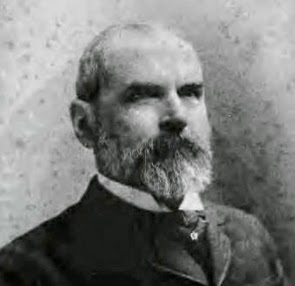

He returned to Charleston in 1860 and took up the post of Professor of Surgery at the Medical College. He  kept the position throughout the War and in 1861 published the first edition of his textbook A Manual of Military Surgery for the Use of Surgeons in the Confederate States Army.


He was one of the few competent surgeons at the start of the War (it was the steepest of learning curves for surgeons on both sides), but his book gave detailed instructions. His experience was based on personal observations of many wounds  treated in both civilian and military hospitals admitted form the battlefields of Europe. The book was updated twice during the War.


I quote from the book.

PUNCTURED WOUNDS, MADE BY THE BAYONET OR SABRE, require similar treatment to gunshot wounds. If the history and appearances clearly indicate the character of the wound, there will be no need of probing for imaginary foreign bodies. Such wounds usually bleed more freely than gunshot wounds, but the haemorrhage is susceptible of control by similar means - pressure being preferred to ligation of arteries. The treatment should be cold water dressings - irrigation preferred. Protect the wound from air, if possible, by covering it with adhesive plaster or collodion, and dress it a seldom as possible, compatible with cleanliness. Once, probing such a wound should satisfy the curiosity of any surgeon. A frequent repetition of this meddlesome surgery, besides the needless pain inflicted upon the wounded man, must end in mischief. 

Simple incised wounds, as sabre cuts, will be closed by adhesive plaster (or sutures, which are preferable, should there be any tendency to gaping), to be followed by the cold water dressing. Should the wound be not of a serious character, it may be left even without after-dressing - the little oozing from its edges, when drawn together by straps or sutures, dries into a scab along the line of the wound, and excludes air with its pernicious influences. This permits of the remodelling process and cicatrisation is effected without suppuration. 

Should a bayonet or sabre wound transfix one of the natural cavities, the internal injury may be rapidly fatal from hemorrhage , or the injury inflicted upon the contained organs may, sooner or later, lead to the destruction of the patient by visceral inflammation. Under ordinary conditions, when such wounds exist in the extremities, where no large vessels are implicated, they require no special treatment. It is a class of wounds not as frequently met with in military surgery as one would suppose. The sabre-bayonet, when plunged into the body among the viscera, leaves but little work for the surgeon. Such cases seldom leave the battlefield alive.

When the ordinary bayonet has buried itself deeply in a limb, suppuration may appear in the course of the wound. Should pus b suspected, and fears exist that it may be pent up under a fascia, it would be necessary to dilate the wound t permit of its free escape. Under no other condition should a punctured wound , made by either a sword or bayonet, be dilated, except to remove foreign bodies or to control serious haemorrhage, where it is necessary to ligate the open mouths of the bleeding vessel. 


[It should, of course, be noted that the book was written before Lord Lister developed the practice of aseptic surgery in the 1870s]

John Sith Pemberton (1831-1888) and the creation of  Coca Cola
We come now to another Confederate veteran, the pharmacist John Sith Pemberton.


Pemberton was born in Knoxville, Georgia and qualified as a pharmacist at the Reform Medical College of Georgia. He eventually set up a drug store in Columbus. 

Doing the Civil War he served in the Third Cavalry Battalion of the Georgia State Guard, part of the Confederate Army. He rose to the rank of lieutenant colonel. 

During the Battle of Columbus he sustained a sabre wound to the chest and survived. He was, however, left with chronic pain and became addicted to morphine.  As a pharmacist he experimented with various ingredients as a substitute for the opiate. 

At first this medicine he came up with contained coca, from which cocaine is derived. He produced Pemberton's French Wine Coca. When a temperance act was imposed the alcohol content had to be removed and so he developed another formula for his medicine. This was in the form of a syrup, which after experimentation he mixed with soda which he sold as a fountain drink rather than a medicine.  This eventually became Coca Cola.

Sadly, due to ill health and the threat of bankruptcy he sold the complete rights to his drink for  what would nowadays be considered a paltry sum. The drink is now iconic around the world. 

******

My latest novel, written under my crime and historical writing name of Keith Moray is an historical crime novel. It is entitled DEATH OF A POET and  is the first in the Ancient Egypt  Murder Mysteries series set in Alexandria in the Ptolemaic era. It introduces Overseer Hanufer of Crocodilopolis 


And for more medicine and surgery of yesteryear, The Doctor's Bag published by Sundown Press.


Thursday, September 23, 2021

Dr J J CHISOLM'S TALISMAN - THE SYRINGE

THE DOCTOR'S BAG
the blog about the medicine and surgery of yesteryear

Keith Souter aka Clay More


Six months ago I wrote a post about the history of the hypodermic syringe. I said it then and I say it again now, it is one of the most important developments in medicine. It eventually also greatly facilitated the process of vaccination. Since I have been vaccinating over those six months I have used and discarded  at least several hundred syringes, because of course nowadays each syringe is used only once. 

In the early days a single hypodermic syringe was a prized possession that would be used multiple times.


A Short recap

Syringes had been used in medicine for centuries, but for introducing fluid into bodily orifices, or to suck out fluids or pus. Some attempts to give drugs by injecting them into the body were made in the early seventeenth century, but they were not successful and fatalities did occur. In those days it would be highly likely that infections would have been directly introduced to the tissues.

The first necessity was to produce a hollow needle. This was done by Dr Francis Rynd (1801-1861) an Irish surgeon in 1843. He successfully develop a technique with a hollow needle for injecting opiates to treat neuralgia.

Dr Thomas Wood (1817-1884) a Scottish physician, who i am proud to say was born in my hometown of Cupar in Scotland invented the first hypodermic syringe in 1853. Apparently he tried to copy the action of a bee sting, so he used a hollow needle that could be attached to a metal syringe.  He used it to inject morphine and other opiates in the treatment of neuralgia, which was at that time  an umbrella label for all manner of painful conditions.


 Dr Thomas Wood (1817-1884)

The Civil War -  missed opportunity to help so many

During the Civil War most surgeons simply dusted morphine into wounds or gave opium pills. Dr John Billings (1838-1913), a Lieutenant Colonel in the Union Army was the first doctor to use a hypodermic syringe in the field. Despite his advocacy of it, however, probably less than a dozen were used during the war in the Union Army. Many thousands of men could have benefitted from its use.


 Dr John Billings (1838-1913)

Dr Billings would go on to become one of the most prominent physicians and librarians in American medicine. Indeed, after the war he developed Index Medicus a bibliographic index of medical articles from journals all over the world. It ran from 1879 until 2004. As a young medical student and then as a hospital doctor I used it extensively to research papers in medical libraries. Medical historians have called it 'America's greatest contribution to medical knowledge.' I think few doctors of my and earlier generation s would disagree with that. 


  A mid-19th century hypodermic syringe

Dr Julian John Chisolm (1830-1903)

I have written several posts about Dr Billing's counterpart during the Civil War.  Julian John Chisolm, often referred to as John Julian Chisolm, or as J.J. Chisolm was born in Charleston, South Carolina in 1830. He obtained his MD medical degree from the Medical College of South Carolina in 1850, then travelled to Europe to study medicine and surgery in Paris and London.


Dr Julian John Chisolm (1830-1903)


He returned to Charleston in 1860 and took up the post of Professor of Surgery at the Medical College, from whence he had graduated a decade previously. He kept the position throughout the War and in 1861 published the first edition of his textbook A Manual of Military Surgery for the use of Surgeons in the Confederate States Army.


Dr Chisolm's 'talisman'

This book is a rich source of information about medical and surgical treatment during the Civil War. In it, Dr Chisolm also advocates the use of the syringe and the injection of morphine. 

Hes says:   " by the use of this simple process, a new and extensive field for doing good is open to the humane military surgeon, and he who is the fortunate possessor of this talisman (a Wood's endermic syringe - see above) will receive daily the thanks and blessings of his suffering patients.'

And he gives several cases as examples, of which this is one.

Captain M was accidentally shot in the neck with a Colt's pocket revolver. His head being turned, the ball entered the skin over the larynx, coursed downward and backward through the posterior triangle of the neck, and was found under the skin of the shoulder over the spine of the scapula, and was removed. 


Posterior triangle of the neck


Considerable swelling and extravasation followed, which, diffusing itself, discoloured that side of the neck. Some branches of the brachial plexus of nerves (the nerve supply to the upper limb) must have been injured by the ball, as the patient was seized with violent  pains shooting down the arm towards the fingers, and which, although never altogether absent, would increase to torture as evening advanced. Toward morning they would remit and allow sleep, after a restless and painful night. Gum opium and morphine in large doses, gave him no relief. the arm was so sensitive that he would not permit its being handled. One fourth of a grain of morphine, in three or four drops of water, was injected under the skin of the shoulder; in five minutes all pain had left him, and his arm could be examined rudely without the slightest suffering. 

Although other cases of gunshot woulds could be detailed in which the endermic use of morphine gave immediate and entire relief from pain, the above recital will suffice as proof of its decided usefulness. 

*****


Wednesday, July 21, 2021

GROW THAT MUSTACHE, SOLDIER! IT MIGHT STOP YOU GETTING SICK

THE DOCTOR'S BAG

Dr Keith Souter aka Clay More


As I continue my research into medical history the medical textbooks that were used by the military of both sides in the Civil War continue to be a fascinating resource. The these  snippets from JJ Chisolm's Manual of Military Surgery for the surgeons in the Confederate States army. 


He does not just talk about surgery, but begins the book in the very first chapter by talking about susceptibility to disease. Indeed, the very first sentence:

"As the strength of an army depends more upon the health and physical development of the soldier than its mere numbers, the hygiene of camps, and the susceptibility of soldiers to disease, has long been a worthy study for military leaders."

After extensively going through all of the equipment and clothing needed for a soldier he then says:

'In the above list we have purposely omitted shaving apparatus, as every soldier in the field should allow his beard to grow. It protects his throat, and often prevents lung diseases, catarrhal affections, etc. A heavy moustache is known to protect the wearer, to a certain extent, from malarial influences, acting as a sieve to the lungs. It also purified from dust the atmosphere inhaled during marches, and thereby prevents many troublesome diseases. Cleanliness dictates that the hair be cut close to the head, and, although the beard be allowed to grow, it should be kept within bounds.'


Malaria - bad air?

Hippocrates, the father of Medicine, writing in the sixth century BC described the condition  beautifully. He actually differentiated the different types of fever associated with it. He thought that it was caused by bad air, which thought persisted until the 19th century in the name 'mal' 'aria', literally meaning 'bad air.'

You can see why JJ Chisolm thought that the heavy moustache might be so beneficial in filtering out this bad air. 


The actual  cause

Malaria is still the most common and serious of all the tropical infectious diseases. It is still endemic in large areas of the Pacific, Southern Asia, Central and Southern America and Africa. If it is not treated promptly it is frequently fatal.


Malaria is caused by protozoal parasites of the Plasmodium group. They are spread by a single bite of an infected Anopheles mosquito. There are many different Plasmodium parasites, but only five of these cause the disease in humans.


Three of these, Plasmodium vivax, Plasmodium ovale and Plasmodium malaria cause a relatively benign illness with tertian (alternate day) fevers, or occasionally quartan (every third day) fever. Plasmodium falciparum causes a more serious  type of malaria, which used to be called 'malignant malaria' or 'blackwater fever.' In this the kidneys are affected and broken down blood appears in the urine to make it appear extremely dark, like black water. This is called haemoglobinuria.


The different types of fever, which Hippocrates described, relate to the life cycle of the malarial parasites in the blood. The condition causes the variable fevers mentioned above, chills, headaches, abdominal pains, muscles pains, vomiting and diarrhoea and general prostration. The spleen can become extremely enlarged, as outlined in Fevers and Pest Houses.


A difficult diagnosis

In the 19th century before the malarial parasite was discovered it was found difficult to differentiate it from typhoid fever, hence it was often called typho-malarial fever. I can attest to the difficulty of distinguishing them on purely clinical grounds, having worked in an infectious disease hospital in India back in the seventies. Fortunately, we now have blood tests, which will distinguish them, as the parasites will be found in the blood.


According to Medicine of the Civil War by Paul E Steiner, publish  by the National Library of Medicine, there were almost 3 million enlistments to the Union Army and between 1.3 - 1.4 million to the Confederacy.


The total deaths in battle amounted to 204,070, compared to 388,586 deaths from disease. Effectively, diseases caused almost twice as many deaths as did  actual battle.


Figures for admissions to hospital for the Union:


DISEASE

CASES

DEATHS

Typhoid

       75,368

     27,050

Typhus

          2,501

           850

Typho-malarial fever

        49,871

       4,059

Acute diarrhoea

 1,155,266

       2,923

Chronic dysentery

       25,670

       3,229

Syphilis

       73,382

          123

Gonorrhoea

        95,833

              6

Scurvy           

        30,714

           383


These sickness figures show that some conditions had an alarmingly high mortality rate. The mortality rate for typhoid was over 35 per cent of cases. Typhus was less common, but had a mortality rate of 34 per cent. Typho-malarial fever, a common diagnosis, which showed the lack of understanding about the conditions of typhoid and of malaria (which are separate conditions) and the non-specificity of diagnosis, had a mortality rate of 8 per cent. Other conditions like acute diarrhoea caused huge numbers of cases, throwing a terrific drain on resources and taking so many men off the field of battle, without having a high mortality rate. 


Drug treatment of malaria


Quinine was used to treat malaria since the 17th century. The bark of the cinchona tree (quina quina) was called Jesuit's bark, Cardinal's bark or Sacred bark. It was discovered by a Jesuit priest in South America in 1630, although their are legends about it being used by the local native population before then. 


The introduction of quinine to Europe involves the Spanish Countess of Chinon, who contracted malaria in Peru.  She was given a draught concocted from the bark of a tree and recovered.  When she returned to Spain she introduced quinine to Europe in 1638. It was known as the Countess's powder. In 1742 the botanist Carl Linnaeus called the tree Cinchona in her honour. 


The Union Naval Blockade

Supplies of quinine were critical during the Civil War. The Union Naval blockade cut off supplies to the Confederacy, who were forced to find alternatives. 


Dr John Chisolm, the inventor of the Chisolm inhaler and the author of The Manual of Military Surgery was tasked with doing this, which he set about quite ingeniously. He  established a laboratory in Columbia, where he developed medicines that were also in  scarce supply because of the Union Naval blockade. The drugs were made from indigenous plants


Members of the public were asked to help the war effort and grow plants, which were sent to Chisolm. There he had in his laboratory 'a series of copper kettles for evaporating.' He recommended  staffing other laboratories with chemists from Europe, skilled in extracting alkaloids from plants. In particular, he gave the example of finding a substitute for  quinine, which was in extremely short supply and which was needed to treat malaria. The normal source of quinine was the  cinchona trees, which do not grow in  the south.  A tincture could be made of willow, dogwood and poplar bark as a substitute.


Science gives the answer - or part of it!


Although there was a  treatment for malaria in the form of quinine, or perhaps the tinctures that JJ Chisolm came up with, yet the cause was still not known.  It would come three decades later.


Sir Ronald Ross (1857-1932) was a British doctor working in India. In 1895 he discovered the Plasmodium parasite in the stomach of the Anopheles mosquito. He conducted research over two years and managed to cultivate mosquitoes from eggs,  effectively elucidating the life cycle of the mosquito. He then had a volunteer patient who already had malaria and managed to get them to bite him. When they did they sucked up blood into their stomachs. He examined them over the following days and was able to see how the parasites developed in their stomach. He had found that the mosquito was an important link in the chain.


 Notebook belonging to Ronald Ross, describing the parasites from the mosquito stomachs he had seen down the microscope


Ross knew that he was on the verge of a discovery that could save countless lives. By attacking the life cycle of the mosquito which develops in stagnant water, the sort of surroundings that hippocrates had thought produced 'mal' 'aria'.


In 1902 he was awarded the Nobel Prize for medicine.


Malarial campaigns targeted the anopheline mosquito. Unfortunately, it is still a major cause of death and morbidity in many parts of the world.