Wednesday, August 17, 2016

PRAIRIE ROSE PUBLICATIONS CELEBRATES THREE YEARS! by Cheryl Pierson


Hey everyone! Please help us celebrate our fantastic third birthday “bash” at Prairie Rose Publications! Yep, this month marks the “big date” for us when we became a company and actually set our dreams into motion.

From our very first publication, WISHING FOR A COWBOY, that made its debut in October 2013, to the present, we have strived to bring our readers the very best stories we could lay our hands on. And, we hope we’ve brought happiness and fulfillment to authors in all stages of their careers—from the newbies to the well-seasoned—who have all joined us and become part of the PRP and Imprints family. Over the past three years, we've expanded to SIX imprints, and have published hundred of novels, short stories, novellas, and boxed sets and anthologies--and we have loved every minute of it!

Our authors work hard to bring their characters and stories to life for readers, and our team at PRP has enjoyed these past three years immensely—I love reading and editing the submissions I receive and coming up with new ideas for boxed sets, anthologies and series. 
Livia and I, along with Kathleen, hash and re-hash what we think would be fun ideas for our authors to participate in, and we’re always open for submissions when our authors come up with their own fantastic tales.

Livia creates some of the most wonderful book covers ever, and is the true guru when it comes to getting all our work up and available for sale. She writes the release blogs for all our projects, and is, in general, like the “Wizard of Oz”, working behind the scenes (remember the curtain?) LOL And she is my hero—did y’all know that when she had a broken arm, she still managed to get a couple of releases up from the hospital? She’s one tough lady! Ok, you guessed it...she is actually...
...NOT a mild mannered author-type at all! Do you recognize her in this picture?

Kathleen is our website queen, among other things. I will never know anything close to what she’s already forgotten about social media, website and blogging issues, general info we need to be aware of in the publishing world, and …wait a minute…I think I just said that Tex is more brilliant than I am! Oh, but just in these areas. Never mind. There are others! (Kathleen—aka Tex—and I do a lot of good-natured sparring with one another since she’s a dyed-in-the-wool Texan who loves to be cantankerous to us Okies.)

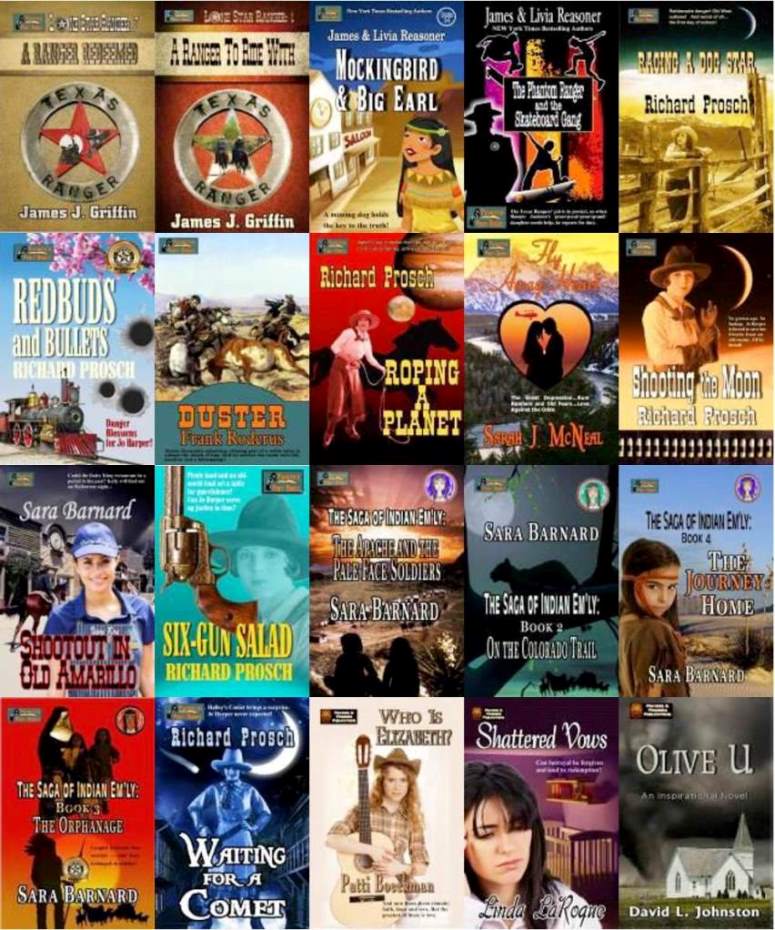
Livia, Kathleen, and I love working together and think so much alike about so many things that it’s easy to “move along” with plans and ideas we have. We wanted to celebrate our third birthday with some new releases, sales, and prizes. So please join us every day at the PRP blog through the 19th of August for a variety showcasing of the talents of our many wonderful authors! We will be doing giveaways, so be sure to leave a comment with contact info on our blogs—your name COULD BE the one we pick! And you're certain to find some fantastic new books to add to your library, no matter what! Just take a look at all these wonderful stories, waiting to be read! Here's our link!
https://prairierosepublications.blogspot.com/


Tuesday, August 16, 2016

THE DECEIVERS by Tom Rizzo

Time proved the best ally of con men who roamed the wide open spaces of the Old West ready to spin their creative schemes on all gullible segments of society.


The families who headed for the frontier usually made the rough journey of four to six months with all their possessions plus an average of about $1,000 in cash—considered a sizable amount of the time since wage earners usually brought home only a few dollars a week.

Hucksters and swindlers awaited the unsuspecting like hungry vultures poised to swoop in for the kill. No one was immune: farmers, soldiers, merchants—anyone who had a buck or two or more for the taking. 

Warnings or alerts about these tricksters traveled at a snail’s pace and usually never reached the frontier until pioneers and others fell victim to con men again and again. Con men were as prevalent as bars of soap throughout the American West.

Soap, incidentally, served as the core of one successful swindle. Although it’s impossible to identify all the con men who traveled the Old West, here are three who made a successful living fooling the unsuspecting. 

SOAPY SMITH


A crowd gathered on a busy street corner in Denver stood spellbound as the man in the dark suit and flat-brimmed hat balanced his valise on a tripod stand and opened it to reveal stacks of ordinary soap cakes wrapped in plain paper. 

Jefferson Randolph Smith II took out his wallet and removed paper bills in denominations of one dollar to $100, wrapped them around several of the money-wrapped soap bars, and mixed them with the others. At that point, he offered to sell the soap for $1 to $5 a bar. A few individuals in the crowd—accomplices of Smith, known as the Soap Gang—quickly bought the soap packets.

After ripping away the wrapping, they excitedly displayed the $100 bills, bragging aloud voices they had pulled a fast one on the soap man and beaten him at his own game. Enticed by the success of these shills, others in the crowd anted up the cash to buy their packets—all which contained only soap, valued at about a nickel.

The scam gave birth to the con man’s nickname—Soapy Smith, who continued the hoax over a twenty-year period.

The “Prize Package Soap Sell Swindle,” as a Denver newspaper dubbed it, proved child’s play compared to the overall criminal pursuits of this American con man. Between 1879 and 1898, Smith played a significant role in the operation of organized crime in Denver, and in Creede, Colorado.

Smith’s last con, bilking a Klondike miner out of a sack of gold, cost him his life on July 8, 1898, in what’s known as the Shootout of Juneau Wharf

JIM MINER


The crowd gathered around the man in the derby hat, and stylish clothes reacted with surprise when he flashed a big smile and snapped open his umbrella, even though he was indoors. 

“Gather 'round, folks, for a chance to double your money,” announced Jim Miner, also called as Umbrella Jim, one of the slickest of Mississippi shell game artists, a master of the short-con. Miner operated under a simple strategy: Get in. And get out.

Not only did he start his infamous shell-and-pea game by opening his umbrella—rain or shine, indoors or out—he immediately segued into a ballad for his eager onlookers and then launched the con.

Miner smiled and placed a small round ball, the size of a pea, under one of three walnut shells and quickly shuffled them around the tabletop. “Who can guess where the little pea is hiding? Double your money,” he announced, reeling out just enough inducement to convince the daring to wager on the location of the pea.

In reality, the only big winner would be Jim Miner. The game had nothing to do with chance. While those who placed bets stood wide-eyed and focused on the back of Miner's hands, they couldn't spot the slight-of-hand wizardry he used to remove the pea between his thumb and second finger.

On occasion, he allowed someone to win, purely to squeeze higher bets out of the mark. And every crowd included someone who believed he was smarter than the game. No one playing had the ability to pick the right shell unless Miner—or another operator—wanted someone else to win.

CANADA BILL JONES


"Suckers have no business with money, anyhow," said Canada Bill Jones, one of the most capable card sharps in history. 

Born in Yorkshire, England, in the early 1800s, Jones immigrated to Canada when he was about twenty and mastered three-card monte, which is not a game but a scam or swindle.
After several years of fleecing suckers in Canada, he crossed the border into the United States and took his game to the pre-war south where he conned passengers on Mississippi riverboats out of enormous sums of money. 

Jones attributed much of his success to playing the rube. 
He spoke in a squeaky voice, draped baggy clothes over his 130-pound frame, and came across as a bumbling greenhorn, a klutz that few people took seriously. But, that's where they made their mistake. Jones was anything but klutzy. He was a master of the con, and a renowned poker cheat.

After the Civil War, he and his card-sharp partner, George Devol, decided to ply their trade on the railroad, targeting passengers who were heading West at the beginning of the country's ambitious expansion. 

The pair enjoyed so much success that Canada Bill wrote the general superintendent of the Union Pacific Railroad offering to pay between $10,000 and $25,000 a year for the exclusive right to operate a three-card monte on the trains. Bill promised to fleece only “the wealthy, and Methodist ministers.” Not surprisingly, the railroad declined to accept the offer. 

Among his most ardent admirers were other gamblers. When Canada Bill died in 1880 in Reading, Pennsylvania, he was penniless. Dozens of his peers showed up at his funeral and raised money to repay the city for the cost of burying Bill, and to erect a gravestone in his honor.

One card sharp at the funeral wagered $100 that “Bill is not in that box.” 

_______


Tom Rizzo invites you to Discover the Historical Westand read about characters and events that shaped the American frontier. Join the StoryTeller Posse and receive occasional dispatches from the High Plains and beyond and receive a FREE copy of "WHEN THE SMOKE CLEARS: GUNSLINGERS AND GUNFIGHTS OF THE OLD WEST. "
_______

SWINDLERS & SCOUNDRELS by Tom Rizzo

Time proved the best ally of con men who roamed the wide open spaces of the Old West ready to spin their creative schemes on all gullible segments of society.


The families who headed for the frontier usually made the rough journey of four to six months with all their possessions plus an average of about $1,000 in cash—considered a sizable amount of the time since wage earners usually brought home only a few dollars a week.

Hucksters and swindlers awaited the unsuspecting like hungry vultures poised to swoop in for the kill. No one was immune: farmers, soldiers, merchants—anyone who had a buck or two or more for the taking. 

Warnings or alerts about these tricksters traveled at a snail’s pace and usually never reached the frontier until pioneers and others fell victim to con men again and again. Con men were as prevalent as bars of soap throughout the American West.

Soap, incidentally, served as the core of one successful swindle. Although it’s impossible to identify all the con men who traveled the Old West, here are three who made a successful living fooling the unsuspecting. 

SOAPY SMITH


A crowd gathered on a busy street corner in Denver stood spellbound as the man in the dark suit and flat-brimmed hat balanced his valise on a tripod stand and opened it to reveal stacks of ordinary soap cakes wrapped in plain paper. 

Jefferson Randolph Smith II took out his wallet and removed paper bills in denominations of one dollar to $100, wrapped them around several of the money-wrapped soap bars, and mixed them with the others. At that point, he offered to sell the soap for $1 to $5 a bar. A few individuals in the crowd—accomplices of Smith, known as the Soap Gang—quickly bought the soap packets.

After ripping away the wrapping, they excitedly displayed the $100 bills, bragging aloud voices they had pulled a fast one on the soap man and beaten him at his own game. Enticed by the success of these shills, others in the crowd anted up the cash to buy their packets—all which contained only soap, valued at about a nickel.

The scam gave birth to the con man’s nickname—Soapy Smith, who continued the hoax over a twenty-year period.

The “Prize Package Soap Sell Swindle,” as a Denver newspaper dubbed it, proved child’s play compared to the overall criminal pursuits of this American con man. Between 1879 and 1898, Smith played a significant role in the operation of organized crime in Denver, and in Creede, Colorado.

Smith’s last con, bilking a Klondike miner out of a sack of gold, cost him his life on July 8, 1898, in what’s known as the Shootout of Juneau Wharf

JIM MINER


The crowd gathered around the man in the derby hat, and stylish clothes reacted with surprise when he flashed a big smile and snapped open his umbrella, even though he was indoors. 

“Gather 'round, folks, for a chance to double your money,” announced Jim Miner, also called as Umbrella Jim, one of the slickest of Mississippi shell game artists, a master of the short-con. Miner operated under a simple strategy: Get in. And get out.

Not only did he start his infamous shell-and-pea game by opening his umbrella—rain or shine, indoors or out—he immediately segued into a ballad for his eager onlookers and then launched the con.

Miner smiled and placed a small round ball, the size of a pea, under one of three walnut shells and quickly shuffled them around the tabletop. “Who can guess where the little pea is hiding? Double your money,” he announced, reeling out just enough inducement to convince the daring to wager on the location of the pea.

In reality, the only big winner would be Jim Miner. The game had nothing to do with chance. While those who placed bets stood wide-eyed and focused on the back of Miner's hands, they couldn't spot the slight-of-hand wizardry he used to remove the pea between his thumb and second finger.

On occasion, he allowed someone to win, purely to squeeze higher bets out of the mark. And every crowd included someone who believed he was smarter than the game. No one playing had the ability to pick the right shell unless Miner—or another operator—wanted someone else to win.

CANADA BILL JONES


"Suckers have no business with money, anyhow," said Canada Bill Jones, one of the most capable card sharps in history. 

Born in Yorkshire, England, in the early 1800s, Jones immigrated to Canada when he was about twenty and mastered three-card monte, which is not a game but a scam or swindle.
After several years of fleecing suckers in Canada, he crossed the border into the United States and took his game to the pre-war south where he conned passengers on Mississippi riverboats out of enormous sums of money. 

Jones attributed much of his success to playing the rube. 
He spoke in a squeaky voice, draped baggy clothes over his 130-pound frame, and came across as a bumbling greenhorn, a klutz that few people took seriously. But, that's where they made their mistake. Jones was anything but klutzy. He was a master of the con, and a renowned poker cheat.

After the Civil War, he and his card-sharp partner, George Devol, decided to ply their trade on the railroad, targeting passengers who were heading West at the beginning of the country's ambitious expansion. 

The pair enjoyed so much success that Canada Bill wrote the general superintendent of the Union Pacific Railroad offering to pay between $10,000 and $25,000 a year for the exclusive right to operate a three-card monte on the trains. Bill promised to fleece only “the wealthy, and Methodist ministers.” Not surprisingly, the railroad declined to accept the offer. 

Among his most ardent admirers were other gamblers. When Canada Bill died in 1880 in Reading, Pennsylvania, he was penniless. Dozens of his peers showed up at his funeral and raised money to repay the city for the cost of burying Bill, and to erect a gravestone in his honor.

One card sharp at the funeral wagered $100 that “Bill is not in that box.” 

_______


Tom Rizzo invites you to Discover the Historical Westand read about characters and events that shaped the American frontier. Join the StoryTeller Posse and receive occasional dispatches from the High Plains and beyond and receive a FREE copy of "WHEN THE SMOKE CLEARS: GUNSLINGERS AND GUNFIGHTS OF THE OLD WEST. "
_______

Friday, August 12, 2016

Old West Patent Medicine

To wrap-up our study of patent medicines, here are a few of the other products your character might have used for various complaints. I've included ingredients and prices when I could find them, and also approximate dates that the brands would have been on the market. Also included are the advertisements promising just about anything!


·  Ayres Diarrhoea Cure: ca 1890 ("Cholera, dysentery, diarrhea")
·  Humphreys' Homeopathic No. 6 Cholera Morbus; ca 1890 ("Promptly curative for Cholera Morbus, with nausea, vomiting, coldness, and even cramps. As preventative of Asiatic Cholera. For Cholera, with coldness, blue surface, vomiting, sudden, profuse, thin, or rice-water stools, cramps, and oppressed respiration. Curative for nausea, or nausea and vomiting from any cause. Morning sickness of expectant women.")
·  Hebe Pills; ca 1880, 2-4 at bedtime
·  Piso's Tablets; after 1894, lycopodium ("For inflammation, leucorrhea, ulceration, sores, or any affections of the skin and mucous membranes capable of being treated locally.")
·  The N.C. (New Century) Stone Root Kidney Cure; after 1895 ("Positive relief and cure for all acute or chronic kidney, bladder or urinary disorders. It is a valuable remedy in Bright's Disease, gravel, stone in bladder, urinary calculi, uric acid deposits, rheumatism, catarrh of the bladder, pain in the back, headache, inflammation of the kidney and liver, bladder and urinary passages, convulsions, incontinence of urine, and all blood, heart, skin and other diseases caused by deranged kidneys.") 50 cents
·  Lydia E. Pinkham's Vegetable Compound; ca 1890, pleurisy root, life root, fenugreek, unicorn root, black cohosh ("A sure cure for prolapsis uterus or falling of the womb and all female weaknesses, including leucorrhea, irregular and painful menstruation, inflammation and ulceration of the womb, flooding, diseases of the kidneys. For all weakness of the generative organs of either sex, it is second to no remedy that has ever been before the public, and for all diseases of the kidneys it is the greatest remedy in the world.")  
·  Emerson's Rheumatic Cure; ca 1898, lithia ("For rheumatism, gout, rheumatic fever, kidney troubles, lumbago, sciatica, pains in small of back.") 50 cents
·  Dr. Swayne's Pills, ca 1880, sarsaparilla and tar ("A prompt purifying medicine; removes all unhealthy bilious secretions of the stomach, liver, bowels, bladder and kidneys; purifies the blood causing a perfect state of health.")
·  Alexander's Liver and Kidney Tonic; 1890-1906 ("Neuralgic or rheumatic pains in the back, side or limbs, sick headache, liver complaint, kidney affections, dyspepsia, jaundice, loss of appetite, debility, giddiness, nervous diseases, weakness, and complaints peculiar to females, and all diseases arising from a disordered stomach or liver.")
·      Dr. Lorraine’s Vegetable Pill (“Mild, certain, safe, efficient. It is far the best cathartic remedy yet discovered”) 25 cents a box (1870 ad)
·      Polk Miller’s Liver Pills: after 1860 (“For constipation, headache, biliousness”) 10 cents per box
·      Dr. Wengert’s Hepatica Pills: 1874 (“For derangement of the liver and secretions. An alternative and cathartic”)
·      Dr. C. McLane’s Celebrated Liver Pills: after 1855 (“For sick headache and in all bilious complaints”)  
·      Dr. T. Reynolds’ Celebrated Virginia Hepatic Pills: after 1863 (no indications on bottle)
·      Holloway’s Pills: 1870 (“sick headache with loss of appetite … dropsical swellings and turn of life … nervous disorders …”) aloe, myrrh, saffron
·      Tamara Larix Bon Bon: 1872-1883 (“For the cure of constipation and liver diseases and thereby for the prevention of headache, dyspepsia, cerebral congestion, biliousness, piles, etc. Etc. Cures constipation and thus prevents congestion of the brain, apoplexy, insanity, convulsions. It is almost a cure for seasickness”)
·      Dr. H.D. Whitlock’s Cathartic Granules: 1872-1883
·      Brandreth’s Pills: after 1868 (“Excellent purgative and anti-bilious pills, warranted purely vegetable”)
·      Ayer’s Pills: after 1840, jalap, ginger, spearmint oil (“Purely vegetable cathartic”)
·      Beecham’s Pills “after 1859 (“The great English remedy, cures bilious and nervous ills”) 25 cents a box
·      Schenck’s Mandrake Pills: after 1869 (“For biliousness and associated conditions due to constipation” “For all bilious complaints. These pills are composed exclusively of vegetable ingredients and, although they entirely supersede the use of mercury, do not have any of its injurious effects. They act directly upon the liver, and are a valuable remedy in all cases of derangement of that organ. Sick headache, indigestion, and all bilious disorders succumb to the free use of them”)  
·      Hall Family Pills: after 1871 (“For sick headache, vertigo or dizziness, constipation”)
·      Rush’s Pills: 1866-1907 (“Purgative”) Compound colocynth extract, mild mercurous chloride (calomel), jalap resin in fine powder, gamboge in very fine powder, diluted alcohol a sufficient quantity - average dose, 2 pills. 4 different laxatives.
·      Dr. Harter's Liver Pills: 1898-1902 ("For the liver, spleen, stomach, bowels, and all the glands of the system. Purifies the blood and prepares the system for other medicines. For fevers, bilious complaints, coughs, colds, sore throat, costiveness, dyspepsia, chronic diseases, croup, sick headaches, rheumatism, breakbone and yellow fevers, eruptions on the skin, pains and aches.")
·      Carter's Little Liver Pills: after 1880, bisacodyl ("For headache, torpid liver, constipation and the complexion.")   
·      Kickapoo Indian Pills; 1881-1906 ("Constipation, sick headache, nervousness and the complexion.") 

J.E.S. Hays
ww.jeshays.com

www.facebook.com/JESHaysBooks

Tuesday, August 9, 2016

HAYBALE HORSES & WOODEN CROSSES By Shayna Matthews


     Someone asked me recently, "How on earth do you get your ideas for these stories of yours?" The truth is, I don't know where they all come from, nor am I always conscious of when an idea strikes. What I do know is this: stories come to me. Not all at once, of course; that would be too easy. But they do come in visual flashes; sometimes quick as a lightning strike, other times more like a slow, steady burn, like glowing coals from a perfect smores campfire. I fly by the seat of my pants when I write, and I begin each session wondering what my characters will reveal to me this time. Often, if the session goes well, I become lost within their world and lose all sense of time and place. Just last night my main character finally decided to reveal her story to a group of eager Texas cowboys, and before I knew it,I had written straight through the night and shut my light off at 5:00 a.m. Sure, I know where I went last night-1880's Texas- but I don't know how I got there. Where did these brand new ideas come from? My MC revealed details of her life I certainly knew nothing about, and I created her. Or, so I as the writer, would like to think. Sometimes I wonder, but that's for another post entirely.

      It's a funny thing, one's subconscious. We writers conjure up all manners of past experiences, conversations, people, places and faces. And yet, details show up we have no recollection of having experienced ourselves, in any sense of the word. So when someone asks me where my ideas stem from, I just smile and murmur an answer about knowing how to look for, and listen for, a good story. You see, my training in listening for stories began when I was three, and has sculpted me throughout my life to become what I am now, a historical fiction writer.

My training? I was essentially born into the world of living history. I suppose not many of us can boast experiencing life's day-to-day adventures of the 18th Century, but my fondest memories still bring me back to my youth...when kids still plugged into their own imaginations.
 

My favorite smells in the world are woodsmoke, leather and horse sweat. Combine the three and I'm a little girl again, running through meadows in moccasins and a little deerskin dress, dodging teepees while catching grasshoppers in tin lanterns and picking ox-eye daisies to decorate my braids. By 1986, (I was seven) I knew how to row a canoe, drive a team of mules, and con absolutely any man with a horse to give me a boost, saddle not necessary. When no horses were available, a bale of hay holding someone's saddle sufficed, and I imagined I was on my trusty steed, gallivanting off into the sunset. Ladder-back chairs made for the perfect train, and when enough of us kids got together around the woodpile, teams were chosen and a very serious game of "Patriots and Lobsterbacks" always followed. We were always the Patriots, and being that I was often the only girl, I was always the one tied up, time and again, waiting for my Patriots to break through enemy lines. Sometimes, the boys fighting over me got a little bit too real. Wielding fire-pokers, they dueled, and I wound up with the tip of a hand-forged fire-poker embedded in my shoulder. I still bear the scar, and it brings me nothing but bittersweet joy for the memories I've gained. I miss those times, terribly. Years have a way of changing things, and I do not often adjust well to change. Lifelong friends have been made and lost over the years. We still reenact, and I still sit around campfires at night, passing the jug, and quietly listen to my friends reminisce over the good old days.
 

In the old days, my solitude during the campfires was two-fold. If I was quiet enough, maybe my parents would forget I was there and I wouldn't have to retreat to the tent for the night. I wanted to stay up, because I wanted to hear the adults tell their stories. One can pick up on grand stories, if one knows how to listen. Over the years I learned to listen intently. To this day I am often labeled as quiet and shy, but usually I'm just listening for a juicy tidbit...a damn good story.

Sometimes, those damn good stories turn into scenes which, no matter how much you love them, you wonder if they are meant for the story. A decision must be reached...do I scrap the scene, or keep it?

One day I came up with the idea for a small, insignificant scene involving a small wooden cross. I could see the cross clearly in my mind. It was handcarved out of a wood with tiny mottled holes, and handwrapped with black sinew. I began jotting down the framework for the idea revolving around this cross to be gifted to my main character, a young woman from Philadelphia. (You’ll hear more of her later). The original scene didn’t seem to blend too well with what was going on in the story at the time, so I had decided, pretty much, to scrap it. Two days later, my uncle had an appointment in town and so he came for a short visit and a crash on our couch. The appointment also took him out of our place long before my husband and I rolled out of bed the next morning. I was going through my morning routine when I heard my husband ask “What’s that on the floor?” and I saw him bend down to pick something up. He carried the unknown object over to me and I held out my hand. He dropped the item in the palm of my hand; I looked down at it and the breath hitched in my throat. I started to quiver and I can only imagine the look on my face. There it was, the very same little wooden cross wrapped in black sinew… the very same mental cross I had written, and thought of scrapping, only days before.


You see, when my uncle found out about his illness, his brother carved that little cross for him, and he has worn it under his shirt ever since. This is why I have never seen it before. I gave the cross back to my uncle, shivering as I told him the story. And in case you are wondering? No, I did not scrap the scene. It will be there, bold as print, in my WIP  novel. I took a picture of my uncle's cross, the cross I envisioned my character wearing days before it fell into my reality...just to remind myself that the stories we write belong to our characters, it's their story as much as ours. Sometimes it pays just to stop, listen, and let them tell it.

Tell me, where do you gather your greatest inspiration for your own stories?

     ~Shayna Matthews