Showing posts with label Black Kettle. Show all posts

Sunday, March 1, 2015

CHIEF BLACK KETTLE, MEET GEORGE ARMSTRONG CUSTER by Steven W. Kohlhagen


If there is a more tragic figure in the 19th Century West than the great Cheyenne Peace Chief Black Kettle, I have yet to find him.
In my earlier blogs, I related how John Chivington and the Colorado Volunteers massacred the Peace Chief's Sand Creek village in November, 1864. Killing over a hundred, mostly women, children, and old men not out on the hunt as they awoke at dawn. Black Kettle's wife, Medicine Woman, somehow survived nine bullet wounds. This despite the fact that Black Kettle had traveled to Denver to seek peace and flew a giant American flag and a great white flag given to him at that peace conference. And that he had moved his village to where he was instructed to keep the peace.


Undaunted, Black Kettle convinced his people to continue seeking peace. He moved his village over the ensuing four years to areas ordered by Indian agents and the Army. November 1868 found them in a village in Indian Territory in Oklahoma roughly 300 miles southeast of the horror that had been Sand Creek.
His village of 50 lodges and approximately 250 Cheyenne was the western-most of a series of five villages of around 6,000 Kiowa, Comanche, Cheyenne, Arapaho, and Kiowa-Apache running for ten to fifteen miles along the Washita River---or, as the Cheyenne called it, the Lodgepole River.
To be fair, whereas many of the Indians had been seeking peace, the Cheyenne Dog Soldiers and many of the young braves who sneaked out of peaceful villages continued to attack the settlers in Kansas and Colorado. General Phil Sheridan was ordered to bring the Indians in and to stop the attacks on the settlers once and for all.
On September 23, 1868 Sheridan reinstated Colonel George Armstrong Custer to active duty and ordered him back to the West to lead one of the three columns against the Indians. Custer had been court-martialed the year before for abandoning his Seventh Cavalry command in the culmination of what at best can be viewed as a failed first command against the Plains Indians.


The characteristically eager Civil War hero kissed his wife, Lilly, good bye, jumped on the first west bound train, and reported to Sheridan one week later at Fort Hays. He rejoined his Seventh Cavalry five days later, and then on November 12, he led them, some 800 strong, south for the march to find the Indians. He drove the Seventh and all its wagons and supplies one hundred miles in six days in the bitter Kansas winter to set up a supply camp.
The Indians knew in general that the Army was coming, but were not aware of any specific plans. Many Kiowas and Comanches had moved their villages to Fort Cobb to be sure that their peaceful intentions were clear. Black Kettle decided to also travel to Fort Cobb to ensure that his peaceful intentions were known to the Indian Agency and the Army. He and several other chiefs rode a hundred miles to meet with the Fort Cobb authorities specifically to ask them if they should move their villages to Fort Cobb. On November 20, they were told "no," they must make their peace with Sheridan. The soldiers told them that moving to Fort Cobb risked the safety of the Indians already there if Sheridan followed and attacked them. Black Kettle's repeated claims of peaceful intent and requests for guidance were denied. He was told to go find Sheridan and make his peace.
Black Kettle's small band rode the hundred miles in the snow back to the Washita, arriving there on November 26th.
Custer's Seventh Cavalry left the supply camp on November 23rd and  marched fifteen miles south in a blinding snow storm. They then marched through feet of snow and bitter cold another forty-five miles in the next two days. At dawn on the 26th they moved out and shortly ran across tracks of a hundred and fifty braves returning from hunting or raiding.
Custer, who had split his command, both columns riding all day through the snow, reunited them at 9:00 pm---at about the time Black Kettle was finishing his council with his Cheyenne village a few miles south. Black Kettle's Cheyenne had decided that, in the morning, they would move their village southwest, away from all the other Indian villages.
In total darkness, as the Indians slept in their tipis, Custer and his scouts crawled on all fours through the snow to look into the Washita valley below. Custer saw and heard nothing. Then what looked like a herd of deer below. Then he heard a dog bark. Then a lone baby cry.
Custer had found his Indians.
He and Black Kettle would meet a few hours later, at dawn on November 27, 1868.
Custer, the Civil War hero and failed Indian fighter, now, characteristically, refused to wait for any reconnaissance. He split his forces into four columns, ordered the taking of horses and women prisoners, and a dawn attack.
At dawn, some of the Indian dogs began barking, and an Indian boy shot his rifle into the surrounding woods. From four directions the Seventh Cavalry charged the sleeping Indians, the band's attempt to play Garryowen thwarted, as their lips froze to their instruments.
By midafternoon, Black Kettle and Medicine Woman, and somewhere between forty and more than a hundred of their village lay dead in the snow. Custer burned the tipis and slaughtered seven hundred of their horses in front of both the fifty-three captured women and children and the hundreds of warriors watching from the hills above. The Seventh had a handful of wounded and one dead in the village, but all of their overcoats had been stolen by the Indians and, unbeknownst to Custer, twenty of his "Grey Company" were being overwhelmed and butchered a few miles to the south.
The growing hundreds of warriors watching from above was evidence of the much larger set of neighboring villages. Whereas Custer had outnumbered Black Kettle 5:1, he now found himself in the reverse situation in the very same village. However, when the Seventh, encircling their captive women, children, and ponies, marched toward, rather than away, from them, the watching warriors retreated to their villages.
Despite the lack of surveillance, proven cavalry tactics, surprise, and "Custer Luck" had, as it always had before for Custer, won the day. He drove the Seventh and his captives back to the supply camp in the freezing snow.
Black Kettle's luck however, and his quest as the greatest of the Cheyenne Peace Chiefs, had run out on the snow-covered banks of the Lodgepole River.

The Sand Creek Battle plays a role in my historical fiction novel, Where They Bury You (Sunstone Press). Both Custer and the Washita Battle play prominent roles in the forthcoming sequel, Chief of Thieves (June 15, Sunstone Press).

www.StevenWKohlhagen.com
http://www.amazon.com/Steven-W.-Kohlhagen/e/B00E5LZ0B4/ref=ntt_dp_epwbk_0
https://www.facebook.com/SteveKohlhagenAuthor
Twitter: @StevenKohlhagen
stevekohlhagen@comcast.net

“Where They Bury You” can be purchased at http://www.amazon.com/Where-They-Bury-You-Novel/dp/0865349398/ref=tmm_hrd_swatch_0?_encoding=UTF8&sr=1-1&qid=1389914377
     

Sunday, February 1, 2015

THE AMAZING STORY OF FORT WICKED by Steven W. Kohlhagen


Where were we? Oh, yes. November 29, 1864. The massacre of Black Kettle's peaceful village at Sand Creek.

The aftermath? Well, it will come as no surprise that the Colorado settlers and ranchers paid a very high price for Chivington's villainy. The Cheyenne and Arapahoes laid waste to the Southern Platte Valley for months, killing and kidnapping whites from Julesberg to the outskirts of Denver City itself, attacking farms, ranches, stage stations, and forts.

I ran across one truly amazing story about these Indian attacks in my research for Chief of Thieves in a little known book by Nell Brown Propst, The South Platte Trail: The Story of Colorado's Forgotten People (Pruett Publishing Company, 1979).

On January 14, 1865, about 130 mounted, painted warriors attacked Holon Godfrey's ranch on the east side of the South Platte, thirty miles southeast of Fort Morgan. Inside were the 52 year old Holon Godfrey, his 42 year old wife, Matilda, two of their daughters, 14 and 21, their six year old son, three month old daughter, and several men (accounts differ on how many and who they were).

But Holon was not unprepared. His ranch would be better characterized as a fortress, surrounded by six foot high adobe walls with one completed tower and one under construction, with port holes all around the compound.

For two days, the Indians laid siege to the ranch, setting the surrounding prairie, the fodder for the animals, and the Godfrey's roofs on fire. They attacked with periodic sorties, raining arrows and bullets down on the defenders for the full two days.

    
Godfrey was a well known, colorful character in the Valley. He was known for his long, disheveled gray beard and hair flying out all over the place as he rode on his and his neighbors' ranches. During the seige he was remembered for racing around the compound, up and down the towers, laughing and cackling and yelling and cursing, hair flying, as he directed the defenses. His wife and family worked at putting out fires, and kept up a continual rearmament of the men, even forging new ammunition in the blacksmith shop.

At one moment, Godfrey even directed everyone to place spare hats along the walls and shoot from odd portholes here and there to give the Indians the impression that they had mysteriously received reinforcements.

When dawn broke on the 16th, the Indians were gone, leaving seventeen dead braves behind. There were no casualties in the compound. Holon Godfrey's resourcefulness and preparedness had saved his ranch, while many of his neighbors were being killed and driven off.

Godfrey went on to be one of the largest cattle ranchers in the West, and built the road from Denver City to Cheyenne around 1870. Matilda died in 1879, while Holon Godfrey died at the age of 88 in 1899.

When Godfrey learned that the Indians had named him "Old Wicked" for his efforts during those two days, characteristically, he cackled and then nailed a sign up over the compound's entrance:

FORT WICKED
Kept by H. Godfrey
         Grocery Store

As is so often the case, there are innumerable versions of the battle if you want to do your own research, but the above version comports pretty closely to the majority. Sadly, the ranch is gone, and, even more sadly, Fort Wicked is long gone as well. But there is still a plaque and a historical marker at the spot of the ranch and the battle on the side of Highway U.S. 6 about three miles southwest of Merino, Colorado.

Holon and Matilda figure prominently as characters in my forthcoming historical fiction novel Chief of Thieves, the sequel to Where They Bury You (both from Sunstone Press). The two day battle, as you might guess, plays an important part in the early action.

Holon Godfrey was, above all else, a hoot!


Sunday, January 4, 2015

When Western History Turns Out, In Fact, Finally To Be WESTERN FICTION by Steve Kohlhagen


Those of us who write (or, at times, TRY) to write engaging western fiction and, in particular, western historical fiction, are at times amused or appalled when facts turn out to be fiction. This should be viewed as quite a different phenomenon than those who claim "life is more amazing than fiction."

Such is the case for the famous, and now rightly infamous, 1864 Sand Creek Massacre. One hundred fifty years ago last November, the commander of the Colorado Volunteers, John Chivington took his troops out after the Cheyenne and Arapaho Indians camped on Sand Creek. Already a Civil War hero for his efforts at Glorietta, the Methodist Minister-turned-soldier marched his troops from Denver City and routed, destroyed, massacred the sleeping Indians whose warriors were out hunting.

In the century and a half since, many Coloradans and descendants of the early settlers held this battle up, oddly, as a great Civil War victory. And plaques to that effect still can be found in Denver and elsewhere in the state.

The problem is, as many soldiers of the times knew (some refused the order to attack), this was not only not a great Civil War battle, but, as has been chronicled in some history books, movies, and historical fiction (including my forthcoming Chief of Thieves from Sunstone Press), it was a massacre of innocent women and children peacefully camped under both an American and a white flag. Furthermore, many of the soldiers committed horrible atrocities and paraded the results of those atrocities through the streets of Denver City.

Last November 29th, on the 150th Anniversary of the massacre, Governor John Hickenlooper of Colorado publicly apologized on behalf of the State of Colorado.

Here is a thorough Denver Westword article on the issues leading up to the public ceremony and the ceremony itself, both from the white and Indian point of view:

http://blogs.westword.com/latestword/2014/12/sand_creek_massacre_apology_colorado_john_hickenlooper.php?utm_source=Newsletters&utm_medium=email

The overriding takeaways from this incident are, of course, horrible: from Chivington's (and some say Governor John Evans') duplicity and bestiality; to the betrayal of Black Kettle's serial attempts at peace with the whites; to the atrocities committed on innocent women, children, and babies by individual soldiers; to the murder of Captain Silas Soule in a Denver City alley after he testified against Chivington; to the enmity and rationalizations that led to the false Coloradan century-long memories and celebrations of an exemplary Civil War victory.

Kudos to Governor Hickenlooper and those responsible for the apology and for setting the facts straight and for putting the fiction irrevocably to bed. And kudos, too, to the patience and grace of the contemporary Cheyenne and Arapaho peoples.


Sunday, December 7, 2014

KIT CARSON vs. JOHN CHIVINGTON: THE TWISTS AND TURNS OF HISTORY by Steven W. Kohlhagen


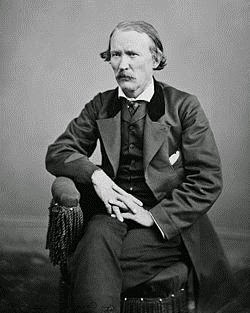
Kit Carson

Flash back 151 years to February 1863.
At that time Kit Carson was a bona fide American hero. It’s right there in Herman Melville’s Moby Dick: frontiersman, mountain man, Indian fighter. He was also a hero of the Mexican-American War, “Father Kit” to his Ute and Apache Indians on his Agency, fictional hero-savior to any number of innocent women and children in distress in the 19th Century “Blood and Thunder” dime novels, and loving Taos father and husband to, over time, three wives, two of whom were Cheyenne Indians.
John M. Chivington was a Methodist Minister celebrated for his role in turning the tide against the Texans in the Civil War Battle of Glorieta in New Mexico Territory, and then helping the citizens of Denver City and the ranchers along the south fork of the Platte River fend off raiding Cheyenne Indians.   
On the other hand, many of the Cheyenne warriors harassed farmers and settlers, while the Navajo Indians---the Dine---were friendless throughout the West. Severely and serially ill-treated by the Spaniards in the preceding centuries, the Navajos evolved into a civilization that discriminated against no one in robbing, pillaging, murdering, and enslaving women and children. The Dine succeeded in the seemingly impossible: uniting Whites, New Mexicans, Pueblo Indians, Cheyenne, Utes, Mexicans, and all manner of Apache tribes in their hatred of marauding Navajo warriors. Even the Navajo headsmen, when confronted with the opportunity to bring peace, admitted that it was beyond their power to stop their young men from raiding. They essentially responded to attempts by the U.S. Army to enlist their support with the 19th Century equivalent of “Kids today!”
What about today? The general view of the Navajo today is one of a venerable, peaceful Native American culture. A spiritual nation inhabiting their reservation on their native lands in northern Arizona. A people that, to this day, largely view Kit Carson as a genocidal murderer of innocent Navajo. And the Cheyenne, astonishingly only around 2,500 people at their peak while fighting the whites? The Cheyenne are arguably viewed as one of the great nomadic tribes of the Plains, begrudgingly held by their opponents as maybe the greatest cavalry ever, and today as a positive force for Native American cultures.
And, if asked to name great American frontiersman, very few Americans get to Kit Carson’s name, even after mentioning Lewis and Clark, Davey Crockett, Buffalo Bill Cody, and maybe Jim Bridger. And virtually nobody has anything good to say about the despicable John Chivington.
What happened during the intervening 150 years to bring about this 180-degree change?

My first introduction to the legend of Kit Carson was by a young Navajo guide on a private tour of Canyon de Chelly. He took me to a medium-high, cylindrical hill covered with brush and small trees deep in the canyon and said, “That’s where Kit Carson brought the Navajo women, children, and elderly and massacred them.” Years later, a friend told me of his tour of the Canyon and the story he’d been told of the massacre at that same spot. But his guide’s version was that the culprits were the Spaniards, centuries before Kit Carson. And then I read Hampton Sides wonderful Blood and Thunder. That book launched me into research into the history of the Southwest. A passage in it inspired me to write my own novel, Where They Bury You, Sunstone Press, a murder mystery based on the actual 1863 murder of Carson’s U.S. Marshal.

Six or seven generations of Navajo oral history about the, in fact, horrible 1860’s “Long Walk” to Bosque Redondo has left many, if not the majority, of living Navajo believing that Carson was responsible.


General James Henry Carleton

The actual fact is that Bosque Redondo was the misguided vision and policy of one General James Henry Carleton, head of the Union Army in the Territories. When the Civil War battles ended in the New Mexico and Arizona Territories in 1862, the Navajo and Mescalero Apaches continued raiding and killing, and, in the case of the Navajo, enslaving the New Mexican people and tribes. Carleton decided the only answer was to round them up and deport them to Bosque Redondo, a totally inappropriate section of land along the Pecos River in eastern New Mexico.
Carson objected to the policy as untenable and tried to retire to his family and his Ute and Jicarilla Apache Agency. But Carleton insisted that the famous frontiersman carry out his last military orders.
First, Carson induced the Mescalero to surrender and delivered them to Bosque Redondo.
The Navajo turned out to be a bigger challenge. They simply vanished into the deserts and canyons of their homeland. Carson, frustrated by his inability to find the Navajo and their previous refusals to stop raiding and killing the other neighboring tribes and New Mexicans, implemented a scorched earth policy throughout the Dine homeland. It took nine months, but the Navajo people began trickling in and surrendering. Carson, objecting to the 9,000 person four hundred mile walk without adequate provisions, returned home to Taos for several months. He then insisted on being the Indian Agent at Bosque Redondo in a failed attempt to help the Navajo adjust to their new home.
Carleton’s Bosque Redondo was a colossal failure. The Mescalero just up and left one night in 1865 to return to what continues to be their home near Ruidoso, New Mexico. The Navajo negotiated their departure and walked the four hundred miles back home in June 1868, one month after the 55 year old Carson died in Taos.
At the time, General Carleton was blamed for the failure and, in 1878, returned to his Texas home to die in relative obscurity. The Navajo, though, have never stopped blaming Carson for their hardships and deaths. Today, the Navajo story and memory of Carson’s culpability resonates better in the public American culture, while the numerous Navajo depredations and Carleton’s miserable failure have long faded into history. In contrast to modern New Mexicans, some modern Native American tribes still do retain a very negative cultural memory of the Navajo history.
Justifiable or not, reaction to the Navajo oral tradition had caused Carson to lose his chance to be remembered alongside Davy Crockett and Buffalo Bill Cody and Lewis and Clark as a first string All-American legend.


John Chivington

Chivington, for his part, until recently had been celebrated for over a century by Coloradans for his part in defeating the Cheyenne at the Battle of Sand Creek. That “battle” took place one hundred fifty years ago last month. Over the recent decades, historians, Native Americans, and Chivington’s own family have more accurately portrayed the “battle” as it in fact was, namely the massacre of innocent women and children.


Black Kettle

How Carson actually felt about the Indians is best expressed by Carson himself about Chivington. The Cheyenne under Black Kettle had disarmed and relocated their village at Chivington and Governor Evans’ direction. While their warriors were out hunting, the truly despicable Methodist Minister and commander of the Colorado Volunteers massacred and mutilated the defenseless elderly, women, and children of the village. Carson was asked to testify at the resulting Congressional inquiry. He testified:

“Jis to think of that dog Chivington and his dirty hounds, up thar at Sand Creek. His men shot down squaws, and blew the brains out of little innocent children. You call sich soldiers Christians, do ye? And Indians savages? What der yer 'spose our Heavenly Father, who made both them and us, thinks of these things?
“I tell you what, I don't like a hostile red skin any more than you do. And when they are hostile, I've fought 'em, hard as any man. But I never yet drew a bead on a squaw or papoose, and I despise the man who would.”

It is said that the winners write the history books. But it is often more complicated than that. Respect and pride should, and does, go out to the surviving, constructive cultures of both the Navajo and Cheyenne Indians. Chivington is now properly remembered for the horrific person he was. The public jury is still evolving on Kit Carson. The final chapter may not yet have been written. We’ll see.

Carson and Chivington figure prominently in my historical fiction novel, “Where They Bury You,” 2013, Sunstone Press.

Chivington, Black Kettle, and George Armstrong Custer carry the story in the sequel, “Chief of Thieves,” following the survivors of the first novel from 1863 Colorado to June 25, 1876 at the Little Bighorn. “Chief of Thieves,” Sunstone Press, is coming out this winter.
  
I’m not hiding, and can be found at:


An earlier discussion of some of these subjects can be found both on my blog and on Andrea Downings’s: http://andreadowning.com/2014/01/30/kit-carson-great-american-hero-or-villain-of-navajo-history/#more-903 . Thank you, Andrea.