Showing posts with label george armstrong custer. Show all posts

Wednesday, January 26, 2022

THEY SERVED UNDER CUSTER


THE DOCTOR'S BAG
the blog about the medicine and surgery of yesteryear

Keith Souter aka Clay More


The name of George Armstrong Custer (1839-1876) is indelibly written in the history of the United States. The Battle of the Little Bighorn in which he died along with five companies that he had led was romanticised as 'Custer's Last Stand' and has been depicted in art, film and all manner of literature.

I certainly would not have the temerity to comment on his qualities as a soldier or leader, other than to say that he undoubtedly had personal charisma. In this blog I am going to talk about three men who proudly served under Custer in different capacities. And since this is a blog about medicine and surgery of yesteryear I shall begin with a doctor.

The Brave Doctor - The only Doctor to survive Little Bighorn

Dr Henry Renaldo Porter was not soldier, but a contract surgeon. As such he had served under General Cook in his Apache Campaigns in Arizona in 1872 and 1873. Cook rated him highly and cited him for conspicuous gallantry in the closing campaign in March 1873.
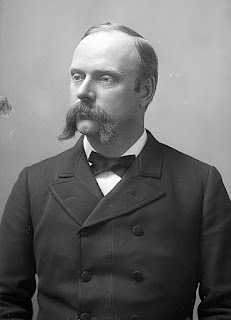


Dr Henry Renaldo Porter (1848-1903)


In May 1876 at the age of twenty-eight he entered a three month contract for the Sioux campaign. He was about to step into history. After the battle of the Little Bighorn, he returned to civilian life and set up a practice in Bismarck. He wrote an account of the battle in the Bismark Tribune, which they published under the heading The Brave Doctor :

At six o'clock we started. It was Custer's purpose at this time to charge the Indians in a body, he supposing that our presence had not been discovered by them. In a short time the scouts reported that we had been seen by the Indians. Custer then decided to divide the command. He sent Colonel Benteen with three companies to the left; Major Reno with three companies in the center; and he took three companies and was to go to the right, his idea being to surround the Indian camp. Captain McDougal was left in charge of the pack train. It was about ten o'clock when the command was divided. Just as we were ready to start, Custer came to me and said: 'Doctor, I would like to have you go with me, as you are younger and more robust and Dr. Lord, the chief surgeon is not feeling very well.' I replied, 'All right. I would much prefer going with you.' Custer then said, 'I will see Dr. Lord and ask him to consent.' We rode over to where Dr. Lord was, and Custer spoke to him about the contemplated arrangement. The Doctor replied: 'Not much. I am going with you.' The poor fellow in those few words saved my life and sealed his own doom. I went with RenoWe had proceeded but a short distance when Captain Cook [Lt. W.W. Cooke], Custer's adjutant, came up and said: 'The Indians are right ahead of you, and you are ordered to charge them as fast as possible.


For two days Porter was the only doctor left alive and he cared for around thirty wounded men in an improvised field hospital in the Reno-Benteen defence. All this time he was under continuous fire from Sioux and Cheyenne rifles. 


With limited medical supplies, he used laudanum, operated to remove projectiles and performed two amputations.

He was considered one of the heroes of the campaign. He was called to testify at the Reno Court of Inquiry in 1879. He died on a world tour in Agra, India at the age of 54 in 1903.

Old Neutriment

The second man to have served under Custer was John Burkman, his orderly for nine years up to the Battle of the Little Bighorn. His nickname was because of his raids on the kitchen at Fort Lincoln in his younger days.
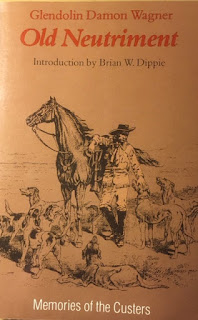


He was devoted to both George Armstrong Custer and to his wife Libby Custer. In his own words some years after the battle, " Seems like they want no use me goin' on."

John Burkman was illiterate, but he shared his memories of living and working with the Custer's with his friend I.D. 'Bud' O'Donnell and all of this, complete with photographs, Gwendolyn Damon Wagner wrote in her book, suitably titled Old Neutriment in 1934. It gives some wonderful insight into his relationship with Custer and his personal views on the battle and the actions of the other major participants.
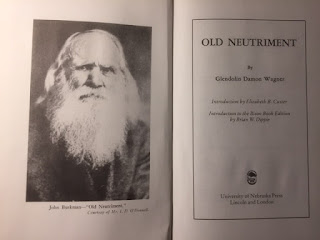

John Buckman (1839- 1925)


Buckman looked after Custer's two horses and his string of hunting dogs. He did so with love and meticulous care.

Like Dr Porter he had a fortunate escape from fate, albeit he bitterly regretted that he could not be at the end with Custer. This is a letter he dictated to an amanuensis to Mrs Custer in 1910:

"[Custer] turned to me with 'Burkman, saddle up my war horse, Vic: and you will have to remain with the pack train as I issued orders that there were to be no led horses in the front." 

The men were all in good spirits when they passed me. Then was the time I begged his nephew, Arthur Reed, to remain back with me for i would rather have taken my chances in the front, but you know, I had to over orders. I could tell you word for word, Mrs Custer, if I were beside you. That was the last I saw of the General as they left the pack train."


Of Dr Henry Porter, John Buckman had only good things to say.


"Don't git me wrong, Bud. We want all cowards. A lot o' gallantry was showed that day. Some men volunteered to go down right in the face o' Indian fire, to rescue the wounded that was strung here and thar 'long the side o' the cliff. We was all cravin' water. The wounded suffered most.Doctor Porter - he was a good one and a brave fellow -- he worked like a beaver, easin' the sufferin' best he could. What with the heat, blood pizen set in quick. I seen him, one time in partic'lar, amputize a fellow's leg. I seen the man lay thar, his face white's a sheet, his lips set tight, not a moan out o' him, nothin' but his eyes tellin' how it hurt. Doctor Porter says, `My wounded has got to have water! Who'll volunteer to go arter it?'

"Bud, thar was the river jist below us, millions o' gallons of water a-ripplin' and a-sparklin' along, but betwixt us and it was the Indians, shootin' any one that made toward it. A deep ravine led from our hill and men could crawl down through it almost to the river but then there was a short stretch of open space and to dash across it to the water meant death, sure's sartain. Our hankerin' fur a drink got terrible. We sucked raw potatoes. We held pebbles in our mouths. Nothin' helped much. We'd all of us, horses and men, 've sold our souls fur a drink o' that water we could see flowin' along; but the wounded, o' course, was in the worst fix. When Doctor Porter spoke up some men volunteered and crept down the ravine carryin' buckets and kettles and canteens. I started with them. My horse got hit in the flank and I come back, figgerin' I'd jist as soon die of thirst as an Indian bullet. Some of 'em made it. One fellow was hit jist as he stooped over to fill his bucket and the pail was shot away and his leg was shattered. He hung on to another fellow's stirrup and was dragged back up the hill. Arterwards that leg had to be amputized. Most o' them that went down brung back a leetle water, jist enough so' the doctor could trickle it into the mouths of the wounded. Arter that from time to time men kept slippin' down through the ravine to the river, but I didn't try it agin.


Sadly, in 1925, having lived long after the battle he was found dead on the porch of his boarding house in Bilings, Montana, a gun in one hand and a bag of candy in the other. 


Dog Kelley

The third man to have served under Custer had left the 7th Cavalry before Little Bighorn, but had also been an orderly under George Armstrong Custer. His name was James H (Dog) Kelley, who was the mayor of Dodge City from 1867 to 1871. As such, he worked with and supervised several of the most famous lawmen of the Old west, including Bat, Ed and James Masterson and Wyatt and Morgan Earp. His name is also linked with one of the most infamous episodes in the Old West, the tragic death of Dora Hand.


James Kelly was born in Manchester, England in 1834. He was Custer's orderly and served under him until they came to Fort Dodge in 1872. Like Custer he loved horses, hunting and racing dogs, especially greyhounds. He was honourably discharged in 1872. As a parting gift Custer gave him a dozen greyhounds, hence the name 'Dog Kelley.'

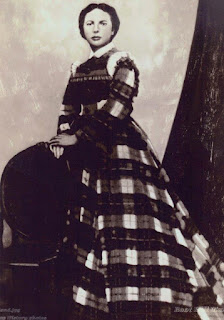
James H (Dog) Kelley (1834-1912)

Dodge City was a place that many people drifted into. One person who had apparently travelled west because of her consumption (Tuberculosis), was the dance hall singer and actress Dora Hand. She went to Dodge City in 1878 and became extremely popular. She was romantically linked to Dog Kelley. 


Dora Hand (1844-1878)


Sadly, she was shot to death when a cowboy named Spike Kenedy fired into the cabin she was sleeping in, because he believed that the mayor, 'Dog' Kelley was sleeping there. A posse was formed, the members including Wyatt Earp, Bat Masterson and Charlie Bassett. They caught him, wounding him in the process, but he was later acquitted, because there was deemed to be insufficient evidence. His father, Mifflin Kenedy had come to the young cowboy's rescue, as he had done before.


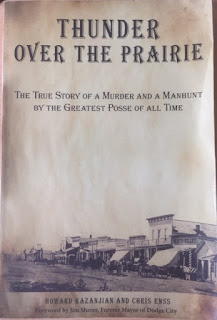
The story of this whole tragic episode is told in Howard Kazanjian and Chris Enss's excellent book Thunder Over the Prairie.

Dora Hand was interred in Boot Hill.

As for Dog Kelley, his fortune came and went. He ran the Kelley Opera House in Dodge for several years, but lost his property in the Panic of 1884. He saw his last years in Fort Dodge, and himself died from consumption in 1912. He was buried in Fort Dodge cemetery.

Ned Buntline


The famous King of the Dime Novelists, Edward Zane Carroll Judson (1821-1886) was a fascinating character. He was a prodigious writer of popular literature who had clearly led an adventurous and very full life, and who saw no problem in aggrandizing himself and his achievements. He has been described by as The Great Rascal, which is not far off the mark, in my opinion. Yet that is not to denigrate him, for he produced a body of work that influenced and entertained millions of people. He introduced Buffalo Bill and Wild Bill Hickok to the wider world.

One of the fascinating things about him was the fact that not only did he create his own history (for example, he bestowed the rank of Colonel upon himself, although he had never been more than sergeant), but myths followed him.

He wrote hundreds of dime novels and is credited with having more or less created the mythic Wild West. Most western enthusiasts know about the Buntline Special, the extra long Colt revolvers that he allegedly had made for Wyatt Earp, Bat Masterson and a few other famous lawmen who were involved in the posse that tracked down Spike Kenedy. Yet the historical records of the Colt Manufacturing Company fail to record their order, let alone their manufacture. It seems that this myth may have been created by Stuart N Lake, in his novel Wyatt Earp: Frontier Marshal, published in USA by Houghton Mifflin in 1931 (and published as He Carried A Six-Shooter in the UK in 1952). William Shillingberg wrote a detailed, scholarly paper debunking this in 1976.

My own short biographical novel The Dime Novelist about Ned Buntline, published in the West of the Big River series by Western Fictioneers includes, with some poetic licence, the episode about Dora Hand and the fabled Buntline Specials.


Tuesday, June 21, 2016

June 21, 1876: THE LAST DISPATCH by Tom Rizzo

The ground under Mark Kellogg trembled like an earthquake. In the distance, he watched Indian warriors swarm over the horizon at full gallop, their horses thundering across the Great Plains.


The 45-year old newspaper reporter struggled to stay in the saddle, shocked by the surprise attack, reeling in confusion amid the crack of gunfire and the sound of steel-tipped arrows slicing through the air.

In a split-second of clarity, Marcus Henry Kellogg no doubt realized the futility of his situation.
Nowhere to turn. No safe place to run. No means of escape. A few minutes earlier, Kellogg had been riding in formation just behind Lt. Col. George Armstrong Custer, flanked by the colonel's two brothers, Tom, and Boston. 

The sudden impact of the attack caused soldiers to break ranks and scatter in panic, seeking shelter on the open Montana Plains of the Little Bighorn.  

Kellogg, the only reporter to accompany Custer, represented the Bismarck Tribune, New York Herald, and served as a correspondent for the Associated Press

He provided the only press dispatches in the days leading up the epic battle. Ironically, it was pure coincidence that Kellogg rode along with the 7th U.S. Cavalry Regiment in June 1876.

A Canadian by birth, his family settled in La Crosse, Wisconsin. He worked as an editor and a reporter, traveling throughout the upper Midwest. In 1873, he made his way to Bismarck, North Dakota, where he helped editor Clement A. Lounsberry found the Bismarck Tribune


When Lounsberry heard Custer’s 7th Cavalry Regiment was heading into the Montana Territory, he worked out an agreement to ride along and provide news coverage. Before he left, his wife became ill, and he asked Kellogg to take his place.

On June 21, 1876, four days before the epic battle, the regiment neared the mouth of the Rosebud River, and Kellogg wired what would be his last dispatch: 

"We leave the Rosebud tomorrow and by the time this reaches you we will have met and fought the red devils with what result remains to be seen. I go with Custer and will be at the death."

The term “at the death” was merely a phrase  borrowed from a fox-hunting term meaning, "present at the kill."

When Col. John Gibbon and his men arrived at the scene of the Custer Massacre the following day, they discovered bodies scattered across the Little BighornWhile helping bury the dead, Gibbon found Kellogg's body in a ravine, scalped, and an ear was missing. The colonel recovered a blood-stained diary from Kellogg's clothing. 

On July 6, 1876, Lounsberry published a special edition of his newspaper with the first full account of the battle. 


He also telegraphed Kellogg's correspondence to various eastern newspapers, including the New York Herald, which also published, posthumously, two letters Kellogg had written.

The Associated Press considers Kellogg the organization's first correspondent to die while covering a military engagement.

The North Dakota Heritage Center has Kellogg's diary and notes rescued from the battlefield. A display at the Newseum in Washington, D.C., showcases Kellogg's satchel, pencil, and eyeglasses.


Kellogg's notes and news dispatches were among the historical sources of information used to recreate the days leading up to the battle, even though he never got the opportunity to write and telegraph news of a great military victory—or defeat—from the Battle of the Little Bighorn.


_______


Sunday, March 1, 2015

CHIEF BLACK KETTLE, MEET GEORGE ARMSTRONG CUSTER by Steven W. Kohlhagen


If there is a more tragic figure in the 19th Century West than the great Cheyenne Peace Chief Black Kettle, I have yet to find him.
In my earlier blogs, I related how John Chivington and the Colorado Volunteers massacred the Peace Chief's Sand Creek village in November, 1864. Killing over a hundred, mostly women, children, and old men not out on the hunt as they awoke at dawn. Black Kettle's wife, Medicine Woman, somehow survived nine bullet wounds. This despite the fact that Black Kettle had traveled to Denver to seek peace and flew a giant American flag and a great white flag given to him at that peace conference. And that he had moved his village to where he was instructed to keep the peace.


Undaunted, Black Kettle convinced his people to continue seeking peace. He moved his village over the ensuing four years to areas ordered by Indian agents and the Army. November 1868 found them in a village in Indian Territory in Oklahoma roughly 300 miles southeast of the horror that had been Sand Creek.
His village of 50 lodges and approximately 250 Cheyenne was the western-most of a series of five villages of around 6,000 Kiowa, Comanche, Cheyenne, Arapaho, and Kiowa-Apache running for ten to fifteen miles along the Washita River---or, as the Cheyenne called it, the Lodgepole River.
To be fair, whereas many of the Indians had been seeking peace, the Cheyenne Dog Soldiers and many of the young braves who sneaked out of peaceful villages continued to attack the settlers in Kansas and Colorado. General Phil Sheridan was ordered to bring the Indians in and to stop the attacks on the settlers once and for all.
On September 23, 1868 Sheridan reinstated Colonel George Armstrong Custer to active duty and ordered him back to the West to lead one of the three columns against the Indians. Custer had been court-martialed the year before for abandoning his Seventh Cavalry command in the culmination of what at best can be viewed as a failed first command against the Plains Indians.


The characteristically eager Civil War hero kissed his wife, Lilly, good bye, jumped on the first west bound train, and reported to Sheridan one week later at Fort Hays. He rejoined his Seventh Cavalry five days later, and then on November 12, he led them, some 800 strong, south for the march to find the Indians. He drove the Seventh and all its wagons and supplies one hundred miles in six days in the bitter Kansas winter to set up a supply camp.
The Indians knew in general that the Army was coming, but were not aware of any specific plans. Many Kiowas and Comanches had moved their villages to Fort Cobb to be sure that their peaceful intentions were clear. Black Kettle decided to also travel to Fort Cobb to ensure that his peaceful intentions were known to the Indian Agency and the Army. He and several other chiefs rode a hundred miles to meet with the Fort Cobb authorities specifically to ask them if they should move their villages to Fort Cobb. On November 20, they were told "no," they must make their peace with Sheridan. The soldiers told them that moving to Fort Cobb risked the safety of the Indians already there if Sheridan followed and attacked them. Black Kettle's repeated claims of peaceful intent and requests for guidance were denied. He was told to go find Sheridan and make his peace.
Black Kettle's small band rode the hundred miles in the snow back to the Washita, arriving there on November 26th.
Custer's Seventh Cavalry left the supply camp on November 23rd and  marched fifteen miles south in a blinding snow storm. They then marched through feet of snow and bitter cold another forty-five miles in the next two days. At dawn on the 26th they moved out and shortly ran across tracks of a hundred and fifty braves returning from hunting or raiding.
Custer, who had split his command, both columns riding all day through the snow, reunited them at 9:00 pm---at about the time Black Kettle was finishing his council with his Cheyenne village a few miles south. Black Kettle's Cheyenne had decided that, in the morning, they would move their village southwest, away from all the other Indian villages.
In total darkness, as the Indians slept in their tipis, Custer and his scouts crawled on all fours through the snow to look into the Washita valley below. Custer saw and heard nothing. Then what looked like a herd of deer below. Then he heard a dog bark. Then a lone baby cry.
Custer had found his Indians.
He and Black Kettle would meet a few hours later, at dawn on November 27, 1868.
Custer, the Civil War hero and failed Indian fighter, now, characteristically, refused to wait for any reconnaissance. He split his forces into four columns, ordered the taking of horses and women prisoners, and a dawn attack.
At dawn, some of the Indian dogs began barking, and an Indian boy shot his rifle into the surrounding woods. From four directions the Seventh Cavalry charged the sleeping Indians, the band's attempt to play Garryowen thwarted, as their lips froze to their instruments.
By midafternoon, Black Kettle and Medicine Woman, and somewhere between forty and more than a hundred of their village lay dead in the snow. Custer burned the tipis and slaughtered seven hundred of their horses in front of both the fifty-three captured women and children and the hundreds of warriors watching from the hills above. The Seventh had a handful of wounded and one dead in the village, but all of their overcoats had been stolen by the Indians and, unbeknownst to Custer, twenty of his "Grey Company" were being overwhelmed and butchered a few miles to the south.
The growing hundreds of warriors watching from above was evidence of the much larger set of neighboring villages. Whereas Custer had outnumbered Black Kettle 5:1, he now found himself in the reverse situation in the very same village. However, when the Seventh, encircling their captive women, children, and ponies, marched toward, rather than away, from them, the watching warriors retreated to their villages.
Despite the lack of surveillance, proven cavalry tactics, surprise, and "Custer Luck" had, as it always had before for Custer, won the day. He drove the Seventh and his captives back to the supply camp in the freezing snow.
Black Kettle's luck however, and his quest as the greatest of the Cheyenne Peace Chiefs, had run out on the snow-covered banks of the Lodgepole River.

The Sand Creek Battle plays a role in my historical fiction novel, Where They Bury You (Sunstone Press). Both Custer and the Washita Battle play prominent roles in the forthcoming sequel, Chief of Thieves (June 15, Sunstone Press).

www.StevenWKohlhagen.com
http://www.amazon.com/Steven-W.-Kohlhagen/e/B00E5LZ0B4/ref=ntt_dp_epwbk_0
https://www.facebook.com/SteveKohlhagenAuthor
Twitter: @StevenKohlhagen
stevekohlhagen@comcast.net

“Where They Bury You” can be purchased at http://www.amazon.com/Where-They-Bury-You-Novel/dp/0865349398/ref=tmm_hrd_swatch_0?_encoding=UTF8&sr=1-1&qid=1389914377