Showing posts with label Fort Smith. Show all posts

Tuesday, November 17, 2015

"LET NO GUILTY MAN ESCAPE" by Tom Rizzo


The journey from Missouri to Arkansas aboard the steamboat Ella Hughes left the newly-appointed judge for the Western District of Arkansas exhausted and uncomfortable. 


Judge Isaac Parker  sat on the wooden bunk in his spartan passenger cabin thinking about the monumental challenges awaiting him. The court was considered disorganized and corrupt, a situation created by his predecessor William Story, impeached for bribery and forced to resign.

Parker arrived at  Fort Smith on May 4, 1875,  where he would spend more than two decades as head of the U.S. Court for the Western District of Arkansas. Wasting no time in establishing his presence, Parker appeared on the bench for the first time less than a week later.

On that day, May 10th, eight men were judged guilty of murder. Each received a federally-mandated death sentence. Less than four months later, six of the men were hanged at the same time—a clear, unambiguous message of Judge Parker’s hardline attitude when it came to law and order.


Born October 15, 1838, Isaac Charles Parker grew up just outside Barnesville, in Belmont County, Ohio. 


At 17, he decided to pursue a legal career. He passed the bar exam in 1859 and moved to St. Joseph, Missouri. Two years later, he opened his own law firm and earned a wealth of experience in the municipal and court criminal court system.

His political experience included winning election to the post of city attorney. He also served as a member of the Electoral College in the fall of 1864 and cast a vote for Abraham Lincoln. 

Parker won appointment as a judge for the Twelfth Missouri Circuit. In 1870, he won a Congressional seat. With no chance for re-election, he parlayed his loyalty to the Republican Party into an appointment as judge of the Western District. 

Because of the heavy migration of settlers into the vast Indian Territory, crime spiraled. 


Most US district judges spent their time on civil cases. Parker, on the other hand, dealt with thousands of criminal cases, many of which involved disputes and violence between Indians and non-Indians.

In his book, Isaac C. Parker: Federal Justice on the Frontier, author Michael J. Brodhead wrote that Parker, toward the end of his life, told a reporter: “The Indian Race is not one of criminals. There have been sporadic cases of crime among them it is true, but as a people they are good citizens.” Brodhead points out that in 1895, Parker told a congressional committee that “white intruders were largely responsible for lawlessness in the Indian Territory…”

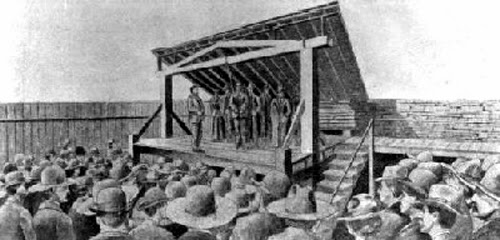
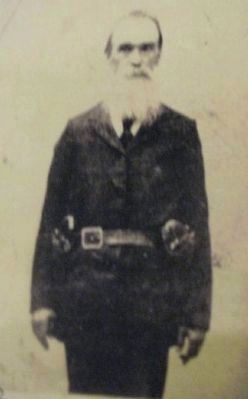
During his more than twenty-one years on the bench at Fort Smith, he sentenced 160 people to death. For fourteen of those years, he did so while the condemned had no right of appeal. Parker appointed George Maledon as Lord High Executioner.

Seventy-nine were executed, 43 were commuted to life in prison or lesser terms, two won presidential pardon, 31 filed appeals and were either acquitted or had their convictions overturned, two were granted new trials and set free, one was shot and killed trying to escape, and a couple of men died in jail while awaiting execution.

In 1896, Parker wrote, “I am the most misunderstood and misrepresented of men. Misrepresented because misunderstood." 


He also emphasized his concept of justice was singular in nature: “Do equal and exact justice,' is my motto, and I have often said to the grand jury, 'Permit no innocent man to be punished, but let no guilty man escape.'"


Although Parker has often been referred to as the Hanging Judge, the term didn't appear until the 1920s—nearly thirty years after he died.

_______

A novelist, storyteller, and naturally curious amateur historian, Tom Rizzo's new three-volume collection, TALL TALES FROM THE HIGH PLAINS & BEYOND, features more than 180 true stories. Featuring characters and events of the Old West, the stories are created with a fictional technique that eases readers into the middle of the action.

For more stories like this at Western Fictioneers, and for a FREE SAMPLER of all three volumes, visit Tom's Blog. If you enjoyed the story above, please share it with friends.

Rediscover the Historical West!
_______


Tuesday, October 20, 2015

THE GOINGSNAKE MASSACRE by Tom Rizzo


In the spring of 1872, a posse of ten lawmen from Fort Smith rode into a clearing in front of a schoolhouse in Indian Territory to monitor the trial of a Cherokee named Ezekiel, or Zeke, Proctor—a trial that would turn deadly minutes later.   

Proctor faced charges for shooting at an American named Jim Kesterson and for killing Kesterson’s Cherokee wife, Polly Beck, at the Hildebrand Mill in what is now Adair County, Oklahoma. 

Procter maintained the shooting was an accident.
The details of the February 13, 1872, shooting vary, depending on what account you read.  


According to Cherokee Nation,  Kesterson was married to Proctor’s sister, Susan, and abandoned her. Proctor “discovered that her husband had left her and her children, and they were hungry,” and escorted them to another sister’s home. 

Proctor then headed out to find Kesterson, who moved in with the widow. Beck had been married to Stephen Hildebrand, who owned a share of the mill, and who was killed during the the Civil War.

Whether Kesterson was even married to Susan Proctor isn’t quite clear. 


Cherokee Nation reports that when Proctor found the Kesterson and Beck together, he became enraged and tried to shoot his brother-in-law, “but Polly jumped in the way and was killed by the bullet meant for Jim.”


Another account points out bad blood was already flowing because Kesterson accused Proctor of stealing stock. 

 Hildebrand Mill

Yet another version suggests Proctor may have rode to the mill in his capacity as deputy sheriff in the Goingsnake District to warn Polly Beck to control her livestock, which was straying onto other people’s properties.

Ironically, the two families had once been close. Until the Civil War. The Becks aligned themselves with the Confederacy while some of the Proctors, including Zeke, went to war for the Union.


The shooting triggered a firestorm of political maneuvering involving jurisdictional issues. Indian courts, at the time, handled all legal issues involving Indians, while American courts conducted proceedings of white settlers. 

The Beck family and Kesterson, who survived the shooting, feared the Cherokee court would acquit Procter. 


In an effort to assure justice, the Becks and Kesterson sought help from the local government. 

The Becks vowed that if the courts failed, they were prepared to exact their own revenge. 

The U.S. commissioner issued an arrest warrant stipulating it be served only if Procter won an acquittal. 


What happened next is open to dispute because two different versions exist. 

According to the United States Marshal Service, Deputy U.S. Marshals Jacob Owens and Joseph Peavy led eight deputy marshals into Tahlequah on April 15th. 


They dismounted and started walking toward the makeshift courtroom to takes seats in the rear and await the verdict. 

The warrant specified that if Proctor was acquitted, he and others identified in the warrant would be brought to Fort Smith.

Before reaching the entrance, several armed Cherokees swarmed out of the front door and began shooting at the lawmen. 


With nowhere to hide in the prairie clearing, deputies returned fire, trying to get back to their horses. 

The marshals killed three Indians and wounded about six others.

But Cherokee firepower proved too daunting, and eight marshals fell dead. 

Former agency historian Ted Calhoun called the killings, ”…the worst slaughter of marshals in history.”

Cherokee Nation contends the lawmen didn’t wait for a verdict and charged the schoolhouse where the trial was being held. The posse, “led by the Becks burst in and opened fire…”


The Cherokee court found Proctor not guilty. Although arrest warrants were issued for Proctor and everyone supporting him, Proctor disappeared. Relatives and neighbors banded together to protect from from white authorities. 

In October 1873, the United States District Court dismissed the case of U.S. v Zeke Proctor two months after announcing it would not proceed with prosecution of the others involved in the shootout.

The Cherokee National Council passed an amnesty act in February 1874 preventing legal action against anyone involved in the case. 


Proctor eventually held offices in the Cherokee Nation, including Senator and sheriff, and lived as a law-abiding citizen.  Zeke Proctor is said to be the only single individual to have a treaty with the United States.


_______


Tom Rizzo blames the The Lone Ranger, Durango Kid, Randolph Scott, Tim Holt, and Paladin for triggering his lifelong obsession with the American Frontier—and for convincing him that outlaws must face justice, no matter how many guns they carry or how high the odds. 
A novelist and naturally curious amateur historian, Tom’s new three-volume collection, Tall Tales from the High Plains & Beyond, features dozens of quick-read true stories featuring characters and events of the Old West, crafted with a fictional technique that drops readers into the middle of the action. If you enjoyed the story above, please share it with your friends. And visit Tom's Blog and rediscover the Old West. 


Friday, March 7, 2014

Not Every Good Deed Goes Unpunished

by Phil Truman

Crawford "Cherokee Bill" Goldsby
It could be said, the only good thing Crawford Goldsby did in his short, miserable existence was to aid a fellow inmate in getting a presidential pardon.

Maybe in today’s society some folks would say he didn’t have much of a chance in life, but I’ve always felt one’s personal destiny is a matter of choice, not chance. Some contemporaries of Goldsby, men with perhaps even worse starts in life, stand as shining examples of rising to personal greatness by choice: Bass Reeves, Quanah Parker, George Washington Carver come to mind.

Crawford was born in 1876 to mixed race parents. His father, an ex-slave from Alabama, was a Buffalo Soldier with the 10th Cavalry in Texas. His mother was a Cherokee “freedman” with Indian, African, and European ancestry. Early in his childhood Crawford’s parents split-up, and his mother moved to Fort Gibson, IT. The boy was sent off to “Indian schools” in Kansas and Carlisle, Pennsylvania, but formal education didn’t take with him, and he returned to Fort Gibson. The rest of his short life he remained functionally illiterate.

At age twelve, Crawford killed his first man. In an argument over doing some chores, the boy grabbed a gun and shot his brother-in-law, although he was never prosecuted due to his age. Having already committed murder, Crawford didn’t have anywhere to go but down, so he fell in with a bad crowd, started drinking, and actively took up the life of an outlaw.

By the time he was eighteen, Goldsby shot another man, and joined up with the notorious Cook brothers, Jim and Bill, running whiskey into Indian Territory, which was, of course, illegal. After recruiting other outlaws into their gang (one of whom was the young rookie outlaw Henry Starr), the Cooks and Goldsby, who by then had acquired the moniker “Cherokee Bill,” advanced their outlawry into bank and other armed robbery with a ruthless touch—shooting anyone they felt like.

While still eighteen Goldsby, a.k.a. Cherokee Bill, shot and killed his second brother-in-law, this one in the back. By then he also had another killing to his credit, a lawman who’d been part of a posse chasing the Cooks and Goldsby.

The coldblooded Cook Gang continued to terrorize eastern Indian Territory robbing mercantiles,
Cherokee Bill with some say the Cook gang, some say his captors
banks, trains, and depots. In one instance, while robbing a store in the town of Lenapah, an innocent passerby stuck his head in the door to see what was going on only to have Goldsby shoot him between the eyes.

The law finally caught up with Cherokee Bill in January, 1895 and shipped him off to the federal court and jail in Fort Smith, Arkansas whereupon his crimes--most notably the murders--got him convicted, and promptly sentenced to hang by Judge Isaac Parker. That’s where he did his one good deed in his life…sort of.

Cherokee Bill planned an escape from the infamous Fort Smith jail. It was a simple plan: to shoot his way out. He had an accomplice. History isn’t certain who, but he or she somehow snuck a pistol to the killer. The plan got as far as Bill killing one of the guards, then it became a standoff. That’s where Henry Starr came in. It so happened at the time he was in the jail, too, and because he and Goldsby had once been trail mates, Starr volunteered to try to disarm Bill. The deal was, he’d see if he could get the killer to give up, if the guards would promise to not shoot Bill afterward. Starr succeeded. They didn’t shoot Cherokee Bill that day, but they did hang him six months later, as appointed.

Several years later, when Starr was serving time in a federal prison in Ohio, the story of his heroic intervention at the Fort Smith jail with Cherokee Bill made it to President Theodore Roosevelt’s desk, and for his actions, the president gave Starr a pardon.

Fort Smith Gallows
The day twenty-year-old Crawford “Cherokee Bill” Goldsby stood at the gallows in Fort Smith, the U.S. Marshal asked him if he had any last words. Bill looked out at the crowd who usually gathered for these executions, and said, “I come here to die, not make a speech.” And he was then hung until dead.


You can read the fictionalized account of the Ft. Smith jailhouse meeting between Cherokee Bill and Henry Starr in Phil's award-winning novel,  Red Lands Outlaw, the Ballad of Henry Starr. Other novels by Truman include GAME, an American Novel, a sports inspirational about small town schoolboy football, and Legends of Tsalagee, a mystery/adventure in a small town. His western short story “Last Will for an Outlaw” appears in LaFrontera Publishing’s anthology, Dead or Alive, released June 2013. 
 
Phil’s website is: http://philtrumanink.com/