Showing posts with label Kissinger. Show all posts

Tuesday, January 21, 2014

The Western: A European Perspective by Tom Rizzo


A few weeks ago, I agreed to an interview with Joachim Mols of Germany who established an international platform for literature he dubbed: bestreaders.de. My interview can be found at Good against evil, law against outlaw in its purest form.

After providing my own perspective on the Western Genre, I thought turnabout was fair play and asked Joachim to answer questions revolving around the same topic. 

Born 1967 in Germany, Joachim studied Politics, East European History and Slavonic Languages in Cologne. Later he worked in advertising.

In addition to the founder of bestreaders.de, he publishes ebooks by various authors, including:  Dudley Buffa, Tanja Vu, and Jean DuMont--all which are available on Amazon. 

Joachim, with a sense of humor, apologized for his English skills, explaining that, "My english is not always the best, because my old teacher in school was ugly and boring and I often was forced to take a nap, and therefore there may occur difficulties."


1. The Western has succeeded in crossing national boundaries. How popular were these stories among German readers?

If we are talking about books, I am not sure whether the Western is still popular in Germany. At least in the libraries I not so often found books of this kind.

Of course, the well-known James Fenimore Cooper was available, but I'm not sure about others. But if we are talking about movies, then I can tell you this genre was and, in my opinion, still is very popular in Germany.

Just for fun I went to Google and searched for Western Clubs or Country Clubs in Germany. I got 330 000 matches. Looking for Western Associations I got even more. At carnivals you will see many Germans dressed as Indians or Cowboys.


2. Two German authors come to mind when it comes to stories of the Old West. The first is Karl May. As I understand it, his books have outsold all other German authors, but he is relatively unknown in the United States. What can you tell us about May and his perspective of the American West?

Karl May was born 1842 and he died 1912. He wrote adventure novels set in the Near East and in the American West. He had never visited these countries, but since he was an excellent writer, the youth would read him. It is said, that American soldiers were astonished to see young Germans play cowboys and Indians after the war.

His idea of the American West is formed by an undogmatic Christian view. His most important hero is the Indian Winnetou who became blood brother of Old Shatterhand (a German traveler, later said to be Karl May himself). 

Winnetou behaves as a gentleman, as a Christian. He fights against evil and his religious beliefs are shaped after the example of Christianity. For example Winnetou believes in Manitou. This means he is monotheist. After death he will gain the afterlife. In his case, we only speak of the happy hunting ground (ewige Jagdgründe)--that is the difference.

As a child of nature, he has wisdom and he is more intelligent as the “palefaces” (the Indian word for the white man). Winnetou is the old European dream of the primitive man, which is more European than the Europeans themselves. Untouched by civilization he has really found the sense of life.


3. One of the most prolific German western writers is G. F. Unger who, according to at least one source, wrote more than 740 western novels. What can you tell us about him? 

I have never heard about G.F. Unger. But this is not a surprise. In Germany we have a very strong separation between light fiction and serious literature.

Serious literature is Thomas Mann, Bert Brecht or Hemingway. Of course kids are able to read literature for kids. Therefore Karl May is well-known. 

But adult German intellectuals - and everyone wants to be intellectual - would never say in public that they would read light fiction. They are forced to buy this kind of literature under the counter as Al Bundy is forced to buy his beloved nudie magazines under the counter.

The publisher of G.F. Unger happens to be a popular publisher of light fiction. 


4. Western novels often reflect the so-called Code of the West, an unwritten set of guidelines for fair play, respect for the land, hospitality, and loyalty. While this concept plays well in Western novels, what is the German perspective of this Code as it applies to present-day America?

In Germany, and I would say also in Europe, there were always two kinds of America. The beloved one is the one, where the people spend their holidays (vacations), where great movies are made, where good music is played.

In this America there you can find hospitality and loyalty. There, the people help each other. For example the Germans were astonished how well the city of New York managed to survive the hardships connected with the big hurricane of the last year. 

The other side is that Europe was always skeptical about capitalism. In this view, America - as the inventor of capitalism - is a land without solidarity. And, of course, loyalty and hospitality do not exist there. The only guideline there is money.

The third point is actual policy making. With regard to the Kyoto Protocol, nobody believes the Americans love nature. (Of course everyone knows that there are National Parks, but logic thinking is not always and not everywhere popular).

With respect to fair play, there surely exists the first America in German minds, but today in public more often is spoken about Edward Snowden.


5. The Western novel--which often blends elements of different genres--has long been underrated in American literary circles. Where does the Western rank in terms of popularity among German readers and how have they shaped the typical German viewpoint of Americans, in general?

If we are speaking about the German reader, we have again the problem of light fiction. Looking in libraries for something in between light fiction and serious literature, I very often find criminal stories or legal thrillers. So I would say there is a market for the Western Genre, but this market is smaller than the market for criminal stories. 
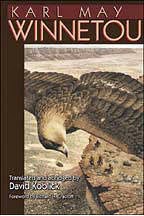
The most important German Western is Karl May, as I mentioned. He had several effects. First: Since Winnetou is our hero, the Americans are seen as people who stole the land from the Indians.

Second, since the Indian friends of Winnetou are more intelligent than the “palefaces,” the Indians have nowadays a better image.

Third, and this is of course also connected with the influence of the movies and very important, since Karl May and his epigones wrote adventure stories. 

The time of the American Frontier is always seen in the light of fighting, of conflicts. The normal hardships of settlers are seldom seen. Therefore the Cowboy is very often seen as the man with the gun. Of course there is also the idea of freedom connected with the cowboy. At least the Marlboro Man was successful also in Germany. But nevertheless I would say the image of the cowboy formed by German adventure stories and by American movies is more negative.


6. In a 1972 interview with Oriana Fallaci, former Secretary of State Henry Kissinger said: "I've always acted alone like the cowboy … the cowboy entering the village or city alone on his horse … He acts, that's all." This comment, for the most part, reflects the myth, or tradition, of the American cowboy. But how does it play among Europeans in their perspective of American politics?

This is a very difficult question. It is clear that the picture of the American Cowboy is, in the political sense, negative in Germany. George Bush, for example, was often portrayed as a Cowboy and this was of course not a compliment.  It was a form to criticize the Iraq War.

Generally speaking, in Europe, negotiating is always better than the use of force. We have survived two big wars and many smaller ones and therefore Europe tends to some kind of pacifism, and therefore also to some kind of collective action. But, there is also another problem. 

The American Frontier is referred to in German as the Wild West. I guess this has something to do with our history. In short the European history develops around the question how to make the government and the state more effective. Already Platon (Plato) thought about this. In his Politeia, justice can be observed in the state (Republic). The state is the one that guarantees the moral strength. Living without a state, in his view, would be the end of civilization.

Acting as if still living in the wilderness is for Europeans something they don`t like. Therefore Kissinger argued in a fatal way.


7. Euro-Westerns (Spaghetti Westerns) - such as Sergio Leone's "Once Upon a Time in the West" (1968) - provided a new perspective for the Western, and on the West, in general. They forced a new level of viewing of the Western tradition. How did the German audience react to this new reality?

I said that there are two Americas in the German mind; the good and the bad one. After the war America was idealized, but during the era of Vietnam War and Flower Power, the balance shifted to a more critical view of the United States. 

After the war, the Western Genre with John Wayne for example idealized the American Frontier, idealized the hardships of the settlers, their hospitality, loyalty, your codes of guidelines.

The Spaghetti Western was more critical of the American Frontier. To Leone, the Frontier was an irony. Therefore I think the Spaghetti Western came in time. At least I know that Leone and others were very popular in my generation.

* * * *


Tuesday, September 17, 2013

MAKEOVER FOR WESTERN GENRE? By Tom Rizzo


Do you know who said: "I've always acted alone like the cowboy . . . the cowboy entering the village or city alone on his horse . . . He acts, that's all."


John Wayne? Ronald Reagan? Alan Ladd?

Nope. Henry Kissinger made this remark to the late Italian journalist Oriana Fallaci, during a 1972 interview, although her style more closely resembled an interrogation, which often prompted intriguing answers.

Nevertheless, Kissinger's remark, in his own way, perpetuated the myth of the lone cowboy as the reality of the west.

Much of the perception of the American West was shaped by stories that presented a mostly romanticized view, pitting cowboys against Indians, and lawmen against outlaws. Even though most writers today offer more compelling and realistic views of the Old West, it's difficult to breakdown the barriers of perception.

Novelist Jory Sherman, the Western Writers of America's 2013 recipient of the Owen Wister Award for Lifetime Contributions to Western Literature, contends that "As long as they label our books westerns" publishers are "locking us into a sub-genre that does not appeal to wider markets."


He believes such stories should be called American novels, and many labeled as mainstream.


"We are the only country in the world that has a West. The western is our Native American literature. We have an exclusive on the West and it’s the richest part of American history. And, the books should not be confined to a certain locale or time period."

Using Jory Sherman's comments as a benchmark, several authors and author-publishers were asked to respond to three questions:


  • How limiting is the Western classification in attracting new readers to the genre?
  • How much merit is there to changing, or re-defining, the name of the genre and would it make a difference in attracting new readers?
  • Would expanding the appeal of the Western involve more than changing the genre classification?

-0-

Rebecca J. Vickery, Author & Publisher, Western Trail Blazer


In the minds of most new readers, if you say Western they think only of gunfights, Indian wars, or trail drives. 

This in itself is pretty limiting as to which new readers would be attracted.

And in using the same style covers and the same style blurbs, how are new readers to know that these Westerns are exciting, well told, and worth their time?


Parents, many teachers, and politicians often discourage young people from reading Westerns because the stories contain guns and violence, can be racist toward Native Americans and blacks, are often a bit religious, and most contain some lessons on morality.

At Western Trail Blazer, we've had some success in attracting new readers by adding sub-genres to the classification of Western - Western Romance, Paranormal Western, Contemporary Western, Historical Western, Western Adventure, Traditional Western, etc.

But as a publisher, when we upload books, the classification choices are limited and we are often stuck with Western as the only choice, which fits.

Changing the name of the genre Western as a whole might help, but readers might also feel misled, or that it was another publishing marketing trick, and it could backfire.  My recommendations to expand the appeal of the Western to new readers are fairly simple:


·       Be honest with the readers about what they are getting by using sub-genre classifications and tags when possible
·       Make the covers and blurbs stylish and as true to the story as possible
·       Offer blogs, discussions, and interviews which will be interesting and draw from outside your normal followers
·       Use social networks to make "virtual" friends who often will become customers
·       Cross-promote with other Western authors, publishers, and organizations for the good of the entire genre
·       Don't be such a "traditionalist" that you can't see the merit in the Western sub-genres which are actually drawing in new readers.


Nik Morton, Author / Editor


One part of me abhors labels. It's as if authors have to be pigeonholed. That's why some resort to pen names. Some publishers don't want their crime authors to be seen to write westerns etc.

The publishers and critics are to blame, I suspect: western literature isn't - literature, that is, in their view.

Yet labels do appeal to readers who want that type of book. If a reader lives by the credo 'I don't read westerns', simply removing the label isn't going to win him over, unless he's particularly dense, as the blurb alone will tell him what the story is about.

Although I write westerns, they're aimed at any reader, not only a western aficionado; a very few of my readers who haven't read a western before have been pleasantly surprised. So what am I saying? Would those readers have picked up my western if it had been labelled differently? I don't think so - the blurb tells them it's a western, and they don't read westerns...

It's not the classification; it's the public perception of the genre that needs work. There are plenty of readers out there who don't read crime, or sci-fi, or mysteries, or romance. They have set ideas, set perspectives, and it's difficult to shake them.

All we writers can do is strive to produce a quality product that can stand up against any other genre in storytelling, style, appeal and narrative flow. Word of mouth can sometimes help. Occasionally, a book becomes a breakout novel - it transcends its genre. If it happens to be a western, then maybe that will help others too.


Cheryl Pierson, Author,  & Publisher, Prairie Rose Publications 


What an interesting perspective from one of the masters! I never thought about it this way until Jory put it in these particular words.

American Novels—what an all-encompassing term that does justice to our writing about OUR COUNTRY!

When you think about it, novels that take place in other parts of our country aren't labeled as such.

What WOULD you call a story that takes place in the 1800's in Boston, New York or Philadelphia? A "patriotic" novel? An "Eastern"? What about a novel that takes place in the 1800s in New Orleans?

These are all "American" novels, and so should the story of the western history of our country be called, as well!


Johnny D. Boggs, Author


The perception can be limiting. For most people, and quite a few publishers, Western brings to mind Louis L'Amour, Matt Dillon and Randolph Scott. If you write those kinds of stories, great. It depends on how you want to market yourself.

You can say, 'I write Westerns,' or 'I write historical novels set in the American West.' When I'm introduced as an historical novelist, the reaction can range from 'Cool' to 'Boooring.' Yet when someone introduces me as a 'Western' writer, the most common reaction I get is eyes-open-wildly-curious-WOW!

So there is immediate name recognition there. Like Jory Sherman says, 'We are the only country that has a West,' and people everywhere know what the West is."
An attempt was made several years ago to use the word Americana. It went nowhere. They have tried Novels of the West, which did a little better.

But you have to be careful about changing a brand, a known commodity. If nobody knows what the label means, you're doomed to obscurity and remainders.

Good or bad, people know what Western generally means. I think the best thing writers can do is write the best story they can, be it contemporary, historical, frontier, literary, mystery, young adult, romance, horror, crossover, whatever.

I was just talking to a couple of editors and an agent—none who represent me —while in New York recently about that very thing. Bottom line seemed to be you have to write something that will appeal to mass audiences, particularly female, and definitely not just the older male Western reader.

You have to have great blurbs from powerful people on the cover. You have to have a publisher that will release it in hardback and do some promotion for it. And you have to have a tremendous amount of luck and timing. None of which comes easy.

But there is a tremendous amount of popularity and sales in Western nonfiction, which seems to be intriguing publishers in Western fiction. Best-selling nonfiction writer Jeff Guinn (Go Down Together, The Last Gunfight, Manson) has signed a three-book deal with Putnam for Western fiction. I'll be interested to see how those novels will be marketed. But if they do well, the exposure should be good for all of us.


Robert Vaughn, Author


During an interview for this blog's StoryTeller's 7, novelist Robert Vaughn addressed this same topic:

Jory Sherman once wrote a brilliant piece about the Western, and how it is the true American art form, a morality play of good verses evil. 

And, and there is nothing I could say that could possibly add a thing to that.

I know this: The Western is Americana, but it is certainly not limited to Americans. 

I met fans of the genre when I was in Germany, I know there are fans in Great Britain, and I have sold them in England, France, Spain, Portugal, Italy, and Japan, so they are there too.

I think a lot of readers, who haven’t read Westerns, may not understand the scope and richness of the stories.

Some may remember the “B” Western Saturday Matinees and equate them with Western novels.

But anyone who has read Frederic Faust (who wrote as Max Brand, and was killed in Italy during WWII) Owen Wister, Louis L’Amour, or Jory Sherman, knows that a well-written Western can have the depth and richness equal to any work of literature.