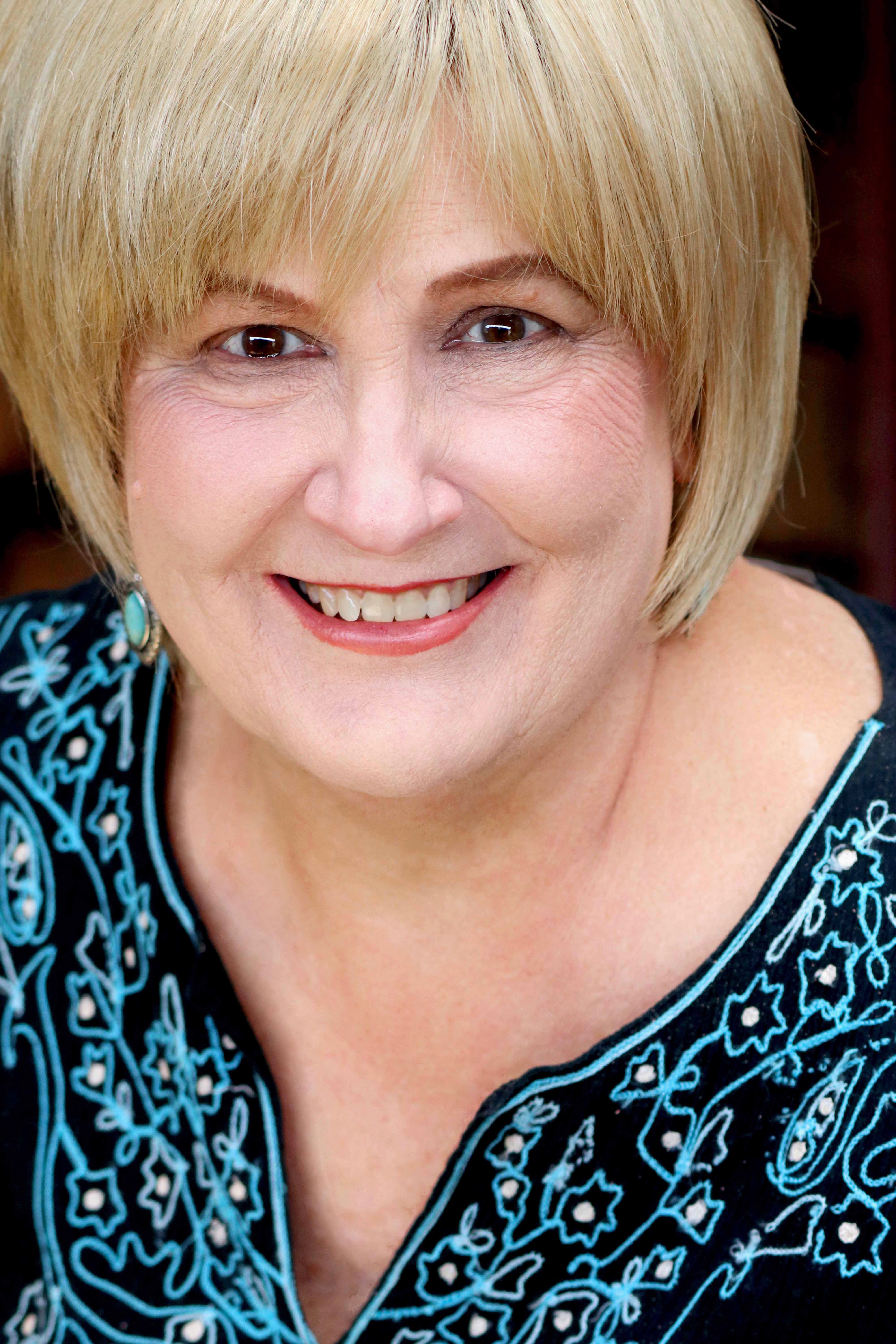
Hi everyone! I'm back to talk about MORE western movies--faves, and not-so-faves. This is Part 2 of this blog series, so if you missed Part 1 last month, I hope you'll look it up and see what we were talking about in June!
Last month, we talked about The Man Who Shot Liberty Valance, Purgatory, The Magnificent Seven, and El Dorado--all favorites! And...the not-so-favorite, which was The Searchers.But gosh, there’s a lot more ground to cover! I know a lot of you mentioned Tombstone, with Kurt Russell, Val Kilmer, Michael Biehn, and Sam Elliot. What’s not to love, in this re-telling of one of the most famous gunfights that ever happened—the OK Corral. Kurt Russell is just simply wonderful as Wyatt Earp, and he and Val Kilmer have spectacular chemistry together in this movie. I don’t think there’s ever been a better Doc Holliday than Val Kilmer’s portrayal. The casting was wonderful in this movie, and though it’s a story we are already familiar with, the actors involved bring it to life in a fresh, exciting way that has stood the test of time. One of my favorites, and when I’m scrolling on TV, I cannot ever pass it up.
Another favorite, though much different than most westerns, is Cowboys and Aliens. Now, some may disagree with this one, and at first, I wasn’t so sure about it, but by the end of the movie, I was loving it. Even my husband, a die-hard western fan, enjoyed this one and recorded it to watch it again. (Color me SHOCKED!) Cowboys and Aliens boasts and all-star cast including Daniel Craig, Harrison Ford, Adam Beach, and Olivia Wilde.
Because they do it so much better than I do, here’s the Google synopsis of the film:
Bearing a mysterious metal shackle on his wrist, an amnesiac gunslinger (Daniel Craig) wanders into a frontier town called Absolution. He quickly finds that strangers are unwelcome, and no one does anything without the approval of tyrannical Col. Dolarhyde (Harrison Ford). But when Absolution faces a threat from beyond Earth, the stranger finds that he is its only hope of salvation. He unites townspeople, outlaws and Apache warriors against the alien forces in an epic battle for survival.
There is so much more to this movie, though—the development of the interpersonal relationships is one theme that, of course, can’t be allowed enough space in the synopsis to go into, but this is really worthy of watching, and in our house, watching more than once.
One of my favorites for many years is the original True Grit with John Wayne, Kim Darby, Dennis Hopper, and Glen Campbell. The original movie stays very true to the book by Charles Portis—and in my opinion, that book was a real masterpiece. I will say the same for the movie, even though Glen Campbell was not the best actor that ever graced the screen. But the other characters, and the scenery, as well as the close detail to the actual book, overcame Campbell’s (at times) wooden acting abilities.
True Grit is the story of Mattie Ross, a young teenage girl, who shoulders the responsibility of going after her father’s killer and seeing him brought in to face what he’s done. She is definitely no-nonsense and determined to see justice done.
After hired hand Tom Chaney (Jeff Corey) murders the father of 14-year-old Mattie Ross (Kim Darby), she seeks vengeance and hires U.S. Marshal "Rooster" Cogburn (John Wayne), a man of "true grit," to track Chaney into Indian Territory. As the two begin their pursuit, a Texas Ranger, La Boeuf (Glen Campbell), joins the manhunt in hopes of capturing Chaney for the murder of a Texas senator and collecting a substantial reward. The three clash on their quest of bringing to justice the same man.
My not-so-favorite candidate this week is Once Upon a Time in the West. I know, I know. It was very artsy and very well-received and highly acclaimed. But…it just went on and on and on forever. I honestly tried to watch this about three times and never could make it completely through in one sitting. It bored me to tears, and just seemed to go on forever. Stars include Henry Fonda, Charles Bronson, Jason Robards and Claudia Cardinale.
What’s your favorite “outside the box” western? I mentioned Cowboys & Aliens this week, and last week I talked about Purgatory. I love these kinds of stories. Anyone else got one to talk about? If not—just talk about one of your favorite westerns. And remember it doesn’t have to be famous, just one YOU liked.
Showing posts with label Tombstone. Show all posts
Wednesday, July 17, 2024
Thursday, May 25, 2017
A SHORT HISTORY OF NOSE SURGERY FROM EGYPT TO THE OLD WEST
THE DOCTOR'S BAG
the blog about the medicine and surgery of yesteryear
Keith Souter aka Clay More
You may think that Plastic Surgery only started in the twentieth century. Well, it is true that it advanced dramatically, but its origins go back to antiquity and surgeons over the centuries gradually pushed back its frontiers.
Ancient Egypt
The Ebers papyrus, which was reputedly written by a physician called Hesy-Ra in about 1550 BC, contains 110 pages about diseases and treatments known to the Egyptians.
The Ebers papyrus
It contains methods for removing wrinkles and correcting squints.
Ancient India
In 600BC the Indian surgeon Sushruta wrote his book the Samhita, which describes the operation of nasal reconstruction, using the 'forehead method.'
Sushruta - father of plastic surgery
Cutting off the nose was the official punishment for adultery and other transgressions and crimes. It was because of this that Indian surgeons developed the technique.
The forehead method of nasal reconstruction
In Susruta's operation a flap of skin from the forehead was made and brought down to cover the deficit. Nostril tubes were left in place until the skin flap healed.
He also described a method of repairing torn ears by rotating a cheek flap of skin.
The first actual rhinoplasty
In Italy in the early 15th century Antonio Branca developed the first real nasal reconstruction rhinoplasty). The method was described in a book by Heinrich von Pfolspeundt, 'Buch der Bundth-Ertznei,' published in 1460.
He used several stages:
1) A model of the nose was constructed from parchment of leather.
2) This model is laid on the forearm and a line drawn around it.
3) The marked area is then cut and separated from the underlying tissues in such a way that the bottom of the nose flap remains attached to the arm.
4) The arm is raised to the head with the nose flap positioned on the face and is then stitched in place.
5) The arm is bound to the head .
6) After 8-10 days when the skin has healed to the defect, the lower part of the skin flap is cut, freeing the arm and allowing for the reconstruction of the nostrils.
Although Antonio Branca had developed it, in the 15th century, it was not until Gasparo Tagliacozzi published his book De Curatorum Chirurgia in 1583 that the method was picked up and used by surgeons throughout Europe. The reason for the operations were mainly injury, but also the ravages of diseases like syphilis or cancers.
The Old West
We come now to Tombstone and my surgical hero, Dr George Goodyear, thee renowned 'physician to the gunfighters.' One of his best friends was George Whitwell Parsons, a licensed attorney who kept a diary from 1869 until 1929. It gives a detailed picture of life during the Earp era.
George Whitwell Parsons
On June 22, 1885 a fire erupted at the Arcade Saloon, which spread until half of Tombstone's business district was on fire. Fortunately no-one lost their life in the blaze, but George Parsons was badly injured. While trying to fight the fire he was on a balcony that collapsed when the beams fell. He sustained injury to his head, nose and jaw.
Over a period of several months Dr George Goodfellow performed a series of innovative operations to rebuilt his smashed nose.
He describes it himself in his diary:
"I was knocked senseless by a dislodged beam and a large splinter had entered just under the skin glancing upward and just missing the eye, face quite flattened and nose all over it. Dr Goodfellow made a plaster cast, cut away the deformity in the cast and then cut my nose loose from the bone and tacked it up in place so that the case, with the aide of a wire run through my nose, held it in place. I eventually recovered emerging with a fine Roman nose, free from disfigurement."
Dr George Emory Goodfellow
Dr George Goodfellow was a truly pioneering surgeon. Throughout his career he established a reputation as the foremost expert on gunshot wounds, as well as being the first surgeon to perform a perineal prostatectomy (he actually performed 78 prostatectomies and compiled statistics about them), along with other 'first' operations. His work on George Parson's nose fits in there.
He wrote and published many medical papers in the journals of the day. His work on the impenetrability of silk would lead to the actual bulletproof vests of the future.
It probably took a special sort of man to be a physician-surgeon in the Old West. Goodfellow seems to have been a very complex man. Apart from being a doctor, he was a scientist, geologist, rancher and gambler. He was pugnacious, short- tempered, but also exceedingly kind. He also had a wry western sense of humour, as evidenced by his autopsy report on a gambler who was shot during a card game. He reported that he had 'done the necessary assessment and found the body so full of lead, but too badly punctured to hold whiskey.'
***
THE DOCTOR'S BAG - MEDICINE AND SURGERY OF YESTERYEAR has been published by Sundown Press, available in ebook or paperback.
Clay More's novel about Dr George Goodfellow is published in the West of the Big River series by Western Fictioneers.
Tuesday, March 17, 2015
HIS LAST GAME OF POOL by Tom Rizzo
Morgan Seth Earp chalked the tip of his cue and scanned the table top looking for the best shot. Seconds later, on Saturday night, March 18, 1882, gunshots shattered the glass windows on the door at the rear of Campbell & Hatch’s Saloon and Billiard Parlor.
![]() |
| Morgan Earp |
One of the bullets drilled into the right side of the 30-year old lawman’s abdomen, ripped through his spinal column, and came out the left side and lodged in the thigh of a bystander, George A.B. Berry.
A second bullet slammed into the wall above Wyatt Earp’s head where he sat watching the pool game.
When Earp saw his younger brother collapse, he and two other men hurried across the room, picked Morgan up and carried him to the doorway of the adjoining card room
Three Tombstone doctors were summoned. After examining the younger Earp, they shook their heads, indicating the hopeless nature of the injury.
A few minutes later, brothers Wyatt, Virgil, James, and Warren surrounded Morgan. When they tried to help him to his feet, he whispered, “Don’t, I can’t stand it. This is the last game of pool I’ll ever play.” He took his last breath around midnight.
Eventually, Morgan’s body was transported home to Colton, California, where his parents buried him.
The previous December, Virgil took a bullet when he was ambushed by unknown assailants while making his way home from a saloon. But he survived.
![]() |
| Wyatt Earp |
The attacks against the Earp were no doubt triggered by the shoot-out at the OK Corral, October 28, 1881, against members of an outlaw gang known as The Cowboys.
During the confrontation, the Earps and Doc Holliday shot and killed Frank and Tom McLaury, and Billy Clanton.
“I did not intend to fight unless it became necessary in self defense, and in the performance of official duty,” Earp said. “When Billy Clanton and Frank McLaury drew their pistols I knew it was a fight for life, and I drew and fired in defense of my own life and the lives of my brothers and Doc Holliday.”
On March 20, the day following Morgan Earp’s funeral, Deputy U.S. Marshal Wyatt Earp headed up a federal posse on what became known as the Earp Vendetta Ride.
Certain that Cowboys would strike again, Earp, youngest brother Warren, Doc Holliday, and two other members of the posse escorted Virgil and his wife, Allie, from Tombstone to the train depot in Contention where they boarded a train to Benson and then to Tucson.
The plan was to make sure Virgil and wife reach Colton, California, so they would be safe.
![]() |
| Ike Clanton |
Earp was tipped off that Ike Clanton and Frank Stilwell and others were waiting to take revenge. When his brother and his wife boarded the train, Earp saw two men hiding in the dark, armed with shotguns and headed their way.
Spotting Earp, Clanton and Stilwell turned and ran. Stilwell, however, tripped. When he scrambled to his feet, Wyatt fired both barrels of his shotgun from a few feet away and killed him.
A day or two later, Earp and his posse tracked Florentino Cruz into the Dragoon Mountains and killed him. Cruz had been identified as one of the men in the alley outside the billiard parlor where Morgan was gunned down.
On March 24, the Earp posse engaged in a shootout with Curly Bill Brocius and Johnny Barnes at Iron Springs, where both men were killed.
| Curly Bill |
When the posse returned to Tombstone, Sheriff Johnny Behan tried to arrest them on murder warrants but they refused and rode out.
When Earp learned a large posse had been formed to pursue them, they disbanded and left Arizona Territory.
Earp, his brother Warren, and Doc Holliday ended up in Colorado for a time. Holliday died from Tuberculosis at Glenwood Springs, Colorado.
The Earps eventually traveled to California. Wyatt and his wife, Josie, then headed for Nome, Alaska where he went prospecting for gold and worked as a gambler.
# # #
Tuesday, January 6, 2015
Western Trail Blazer -New (and Recent) Releases
Western Trail Blazer has prepared some exciting books for you in the last quarter of 2014 (and the first week of 2015)... with many more right around the corner. We've been blessed with some truly talented authors who have entrusted us with sharing their creative visions... and we're passing the blessings on to you. If you love westerns (and of course you do!) you'll want to check these out.
Click on the images to see a bigger (readable!) version of the description.
kindle: HERE
smashwords: HERE
paperback: HERE
kindle: HERE
smashwords: HERE
paperback: Coming Soon
kindle: HERE
smashwords: HERE
paperback: HERE
kindle: HERE
smashwords: HERE
paperback: Coming Soon
kindle: HERE
smashwords: HERE
paperback: Coming Soon
kindle: HERE
smashwords: HERE
paperback: Coming Soon
And some great short fiction...
kindle: HERE
smashwords: HERE
kindle: HERE
smashwords: HERE
Get 'em now, we're makin' more.
Tuesday, December 17, 2013
Tombstone to Toad Suck by Tom Rizzo
The names of some frontier towns are uniquely American, often romantic, and always visual --cowboy towns, cattle towns, gold rush towns, logging communities and, of course, ghost towns.
Some of the names hold a certain fascination and bring to mind visions of cattle drives, and shootouts.
The more popular ones are legend: Tombstone, Deadwood, Abilene, Bandera Pass, Dodge City, Cochise --names synonymous with the 19th century Old West.
But, there were others – not as notorious – equally visual, and often humorous.
The founders of these towns followed no particular pattern. Sometimes, names changes occurred because there were other towns with the same name. Forest City, Colorado, for example, got changed to St. Elmo. One of the founders based the new name on the title of a novel he was reading at the time.
Here are a few examples of towns with unusual names. Some are still inhabited. Others stand as dusty, out-of-the-way ghost towns.
- Total Wreck, Arizona. Now a ghost town in Pima County, the site got its name when miners discovered silver. John Dillon, who owned the claim, gave the settlement the name because he thought the mine was on a ledge that looked like “a Total Wreck.”
- Bridal Veil, Oregon. Establishing during the 1880s during a logging boom. According to legend, a steamboat passenger on the Columbia River spotted a waterfall that she said looked like a “delicate, misty bride’s veil.” The town took the name when its first post office opened.
- Crowheart, Wyoming. In 1866, Chief Washakie of the Shoshones, and Chief Big Robber of the Crow tribe agreed to a duel with the winner claiming the rights to the Wind River hunting grounds. Chief Washakie won the fight and, according to legend, was so impressed with the courage of the Crow chief that, rather than scalping the fallen warrior, he cut out his heart. What a relief! A couple of miles from the mesa where the fight took place, settlers founded a town, and named it Crowheart.
- Miner’s Delight, Wyoming. This was one of the state’s first communities, founded during the mining boom in 1868. Also known as Hamilton City, the name Miners Delight came about after discovery of a golden lode – a miner’s delight – on a ridge above town. Today, the ghost town consists of 17 structures, salvaged through historic preservation, and provides a glimpse of early Wyoming life, and the gold mining culture.
- Big Bug, Arizona. Prospector Theodore Boggs founded the town in 1862, during the Civil War, along Big Bug Creek. He named the town after the large, brown beetles that lived in the area. As a side note, his mother was the granddaughter of Daniel Boone, which made Boggs a descendant.
- Cripple Creek, Colorado. The town got its name supposedly because of a series of accidents. One story says drovers named the town when a cattleman building a shelter near a creek accidentally discharged his gun. The bullet hit another man in the foot. The sound of the gunshot frightened a calf, which broke its leg trying to leap over the creek. Cripple Creek is the site of the richest gold mine ever discovered on earth. Between 1897 and 1916, it gave up $340 million in gold.
- Ten Sleep, Wyoming. Located at the base of the Big Horn Mountains, Ten Sleep is a small ranching community that got its name because it was ten sleeps – nights – from Fort Laramie –a method Indians used to measure distance. Ten Sleep was also the site of the Spring Creek Raid, in 1909, one of the last feuds of the West’s Sheep and Cattlemen’s War.
- Baby Head, Texas. One of the more grisly names for a town, it got its name based on an incident in which Indians killed an infant, decapitated her, and placed her head on a pole on Babyhead Mountain as a warning to settlers. Founded in the 1870s, settlers named it Baby Head to commemorate the event. Baby Head Cemetery stands as the last physical reminder of the settlement.
The “most unfortunate” name for a town in the U.S., according to a poll across seven English-speaking countries, is Toad Suck, Arkansas.
I don’t really know whether this qualifies as an “Old West” town. I couldn’t pinpoint the exact date of its founding. Nevertheless, the name intrigued me. Located in central Arkansas, the town got its name “long ago” when steamboats traveled the Arkansas River.
If the water wasn’t at the right depth, the captains, and their crews, tied up to wait, and refreshed themselves at the local tavern. Locals said these men “suck on the bottle ’till they swell up like toads.”
The tavern is gone. But, the legend lives on.
# # #
Subscribe to:
Posts (Atom)


