Showing posts with label newspaper. Show all posts

Thursday, November 20, 2014

Railroads, Silver, and Weddings #western #history @JacquieRogers


November in the Old West
by Jacquie Rogers

I can’t help myself—just keep poring over those old newspapers. There’s no better way that I know of to get the genuine flavor of post-Civil War daily life west of the Mississippi than to read contemporary reports of the day. Of course, we know they printed what sold papers, just as now. Old-time editors weren’t above sensationalizing, or throwing in an editorial comment here and there—and sometimes even made a joke of one of the esteemed residents.

These snippets all come from The Owyhee Avalanche, first established in Ruby City, Idaho Territory, and then moved to Silver City (as did everyone else—they even moved the hotel). They began publishing in 1864 and still have a going concern today, so this is their 150th year in business.

With the war over, the United States concentrated on building the infrastructure we enjoy today. Every move the railroads made was news and reported in every newspaper in the territory—and usually the adjacent states and territories as well. Here’s an example from November 4, 1865.

The Owyhee Avalanche, November 4, 1865

In a mining camp (Silver City was always called “camp” and locals call it that to this day), a good share of the articles concerned who dug up how much of what ore and who came up empty—that sort of thing. This article, dated November 22, 1873, gives us an insight into what all those numbers mean. How much is a ton ore worth?
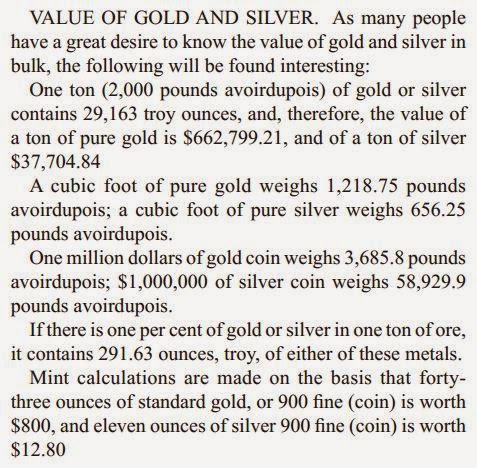
The Owyhee Avalanche, November 22, 1873

The Paiute hadn’t quite come to terms with being ousted from their homeland, and few of the immigrants had any idea why the Indians were in a toot about moving on (not that they had anywhere to move to). Articles in The Owyhee Avalanche and other newspapers in the Pacific Northwest aren’t kind, to say the least, and definitely not politically correct by today’s standards.

The Owyhee Avalanche, November 11, 1865

When a man takes off into the wild country to find his fortune, in his zeal for riches he sometimes forgets his family. But working alone on top of a mountain is a good way to remember. Here’s an item about a man who did just that.

The Owyhee Avalanche, November 4, 1865

Life can get a little barren when there are no supplies to be had, but entrepreneurs were always ready to fill the void. Generally the storekeepers made more money than the miners. In fact, just about everyone made more than about 90% of the miners—poor fellows. Anyway, Silver City definitely was excited when a new shopkeeper came to town bringing wagons full to brimming with goods, as reported in the same issue.

The Owyhee Avalanche, November 4, 1865

Nineteenth Century newspaper editors weren’t a bit afraid to make light of important persons. In fact, if they didn’t make fun of you, you just weren’t important enough. So it was a dubious honor to be mentioned. This item was published in the November 11, 1865 issue.

The Owyhee Avalanche, November 11, 1865

And of course we can't forget the local gossip.

The Owyhee Avalanche, November 8, 1873

That's it for now!  See you next month with more news from the Old West.

Muleskinners #1: Judge Not


Elsie Parry and her eight mules survived the war, but can they escape the wrath of the Danby Gang? She lived alone for five years after the Recent Unpleasantness and was overcome with happiness to be reunited with her father. Now, his fondest desire is to leave all the bad memories behind and see the Pacific Ocean, so she agreed to head west. All’s well until they approach Wolf Creek, where they’re set upon by the notorious gang of ex-Confederate guerrillas… intent on proving the war is not over, after all.


Thursday, November 21, 2013

Bad Roads, Indians, & Roller Skating by @JacquieRogers #western #oldwest

This month in the Old West
by Jacquie Rogers

By November, the weather makes a decided turn for the worse in the northern climes.  We prepare for winter now, but in the Old West, they had a lot more to do.  Besides that, there was the ongoing fight for the land — new settlers considered the land free for the taking, and the existing population was a might perturbed by the invasion.

All articles cited are from The Owyhee Avalanche, which is still in business and publishing in Homedale, Idaho.

November 10, 1866
INDIANS IN FLINT. Last Saturday night two horses were stolen from a ranch in Flint District, and some other devilmint transacted, the character of which we are not informed. For pure cussedness, these red men are unrivaled. They come into the Owyhee settlements occasionally and, when there is a dearth of horse-flesh for stealing purposes, they break up agricultural implements, slosh round and fix things that as A. Ward would say. O, the gentle cues so to speak.
Silver City and surrounding boomtowns were, of course, in the mountains.  The toll road, privately owned and only route to the area, was rugged in good weather, and nigh to impassable when the rain and snow entered the equation.  (Still that way, although now a public road.)

November 10, 1866
ROADS. Teamsters landing goods in Owyhee have more trouble in getting here after having apparently a arrived at their destination, then they had all the balance of the trip. When persons here of their freight on Reynolds Creek or in Jordan Valley, seven or eight miles distant, they anticipate its reception in a day or two at far best, but in nearly every case teams seem to be a week to days in a accomplishing the feat. The road to Jordan Valley or more particularly the part between Boonville and Wagontown, has been a source of great deal A to the heavy teams coming from California. The heavy rain last Sunday rendered the grade, which is too narrow most every where, and gives great trouble to teams and passing, dangerous and the extreme. Major Biggs had trouble enough for a dozen of man, his wagons being large and very heavily loaded came pretty near never making that few miles. Skinner & Co. should endeavor to have the road improved by early spring, though the road as it is has been a great blessing to the people. The travel over in it next year will amply justified the proprietors for further improvements.

The Owyhee Avalanche had been established in Ruby City, then moved to Silver City when residents of Ruby got tired of the yearly flood. The newspaper was only a couple years old when the original owner sold out. But those years were hard-scrabble, and I'm sure the editors deserved a fine vacation on their way to new adventures.  The new editor sent them off with a fine piece of purple prose.

November 9, 1867
JNO. & JOS. WASSON, former into tears and proprietors of the Avalanche, departed this week from this vale of tears. They are "God's own men," and with but few exceptions take with them the best wishes of our whole community. They established the first newspaper in all why he, and carried it on for two years; in doing so they did more than anyone else for the prosperity and development of our mines. John left here on the morning of the sixth, and goes of the Columbia River route to 'Frisco. He will visit the Puget Sound country on his way thither. He is now special correspondent for the New York Tribune and Alta California, in whose columns he has acquired a distinguished reputation as a spicy and elegant writer.
Joseph Wasson has been out all summer with Gen. Crook, and in his letters to the Avalanche has given an interesting account of the Campaign. He is a practical printer and writer of more than average ability. He left here this morning on the Humboldt Stage for San Francisco. The brothers will meet at the metropolis of the Pacific, compare notes, and enjoy a city life after a four years' sojourn in the mountains. They will write to the Avalanche occasionally. Now we must say: "Farewell, a word that must be and hath been, a word that makes as linger, yet farewell."
I included a piece about roller skating before, but their enthusiasm for the new pastime was so great, I just had to show you another article.  I've searched the archives and maps, but can't find the actual location of the skating rink.  

November 25, 1871
ROLLER SKATING. The gayest amusement, to which our people have yet been treated, is McKay's Roller Skating Rink now in operation at Jones & Bonney's Hall. For particulars as to time, &c., see advertisement in another column. Although the rink has only been running about a week, it is quite extensively patronized and already there are many quite proficient in the art. Besides being one of the most innocent of pastimes, it is exhilarating, healthful and pleasant in the highest degree. Our word for it, go to the rink annual have a jolly time. Old and young, parents and children, lads and lassies—and in fact everybody goes.
And a bit of tongue-in-cheek was always welcome.

November 25, 1871
JEFFERSON'S TEN RULES. A friend of sends us "Jefferson's Ten Rules," which he says cannot be too often published. He has ridden them down from memory, and it seems to us that he has got them quite right:
1. Never do to-day what you can put off till tomorrow.
2. Never do yourself what you can get any one else to do for you.
3. Never spend ready money when you can get credit.
4. Always buy anything that is cheap. If you don't want it now, you may by and by.
5. If you only have proper pride you can endure hunger, thirst and cold.
6. We seldom repent having eaten all really good dinner.
7. A man should not be too willing to put himself to trouble.
8. It is better to be troubled about imaginary evils then real ones.
9. When angry, pitch in at once.
NOTE: only nine of the 10 rules were printed.

On a more serious note, where there's gold and silver, there'll also be competition for who gets it, whether the ore is still in the ground or out of it.  And so it happened amongst greedy men in 1872 when The Owyhee Avalanche reported this incident.


November 23, 1872
A MINE JUMPED. Yesterday morning, or sometime during the previous night, Col. Fogus took possession of the Illinois Central mine which has been worked by the Sands Brothers and H. S. Cheasbro for nearly two years past. They had not been working at night but went to the mine as usual in the morning and found Fogus and some other parties on guard with Henry rifles. We know nothing in relation to the title to the mine. Fogus may have a just claim to it, and he may not, but we cannot, nor shall we countenance any such high-handed proceedings. If his claim is right and just, he should have sought redress in our law courts, instead of taking forcible and armed possession of the mine. In this matter the general sentiment of the community is against Fogus and the quicker he leaves the Illinois mine, the better in it will be for him.

Later, Col. Fogus arrived at the Idaho Hotel, at two o'clock this morning, and has probably given up the idea of holding the mine.
Even with all the mine jumping about, Silverites still loved their entertainment.  I included some of these tricks in my book, Sleight of Heart, in which the hero is a thoroughbred gambler and sleight-of-hand artist.

November 23, 1872
CARL BOSCO. This world-renowned sleight-of-hand performer and illusionist gave one of his wonderful entertainments in Good Templar Hall last night. The Hall was crowded, and everybody present was immensely delighted. Among other incomprehensible tricks performed were the following: The Enchanted Cards; Candles and Handkerchief; Wreath and Rings; Coin and Decanter; Aerial Bell and Frame; Mystic Clock; Demon Hat; or how is that for high? Floating Stick; Mysterious Water; The Hindoo Chain; Lessons in Legerdemain; Mystic Ball; Turkish Handkerchief; Treasures in the Air. Mr. Bosco will give another performance at the same place of this evening and we advise everybody to attend, as it is decidedly the best "show" that Silver City has ever had.

Local Happenings

  • Morality is still triumphant. Fans are getting fashionable. Raffles are all the goal here now. Iced lemonades ain't just the things now.
  • Father Mesplie christened seven babies during his recent visit to our town.

November in the Old West

  • November 16, 1821: William Becknell arrived in Santa Fe, taking the route now known as the Santa Fe Trail.
  • November 4, 1835: Nueces River, Texas—seventy Texans commanded by Adjutant Ira J. Westover fought ninety Mexicans led by Capt. Nicolás Rodríguez at the Battle of Lipantitlán.
  • November 13, 1835: The Lone Star Republic is established as Texas officially claimed independence from Mexico.
  • November 6, 1858: The Territory of Jefferson, which became Colorado, adopted its first constitution.
  • November 2, 1861: President Abraham Lincoln removed General John Charles Fremont as commander of the Western Department.
  • November 4, 1862: The US Patent Office granted a patent for a rapid-fire gun to Richard Gattling.
  • November 13, 1863: Chipita Rodriquez, convicted of killing John Savage, was hanged. She’s the first legal hanging in Texas.
  • November 14, 1863: Henry Tilden, riding across Horse Prairie, Montana Territory, was set upon by Harry Plummer and his gang, and robbed.
  • November 15, 1867: For the first time, a train rolls into Cheyenne, Wyoming.
  • November 6, 1869: Residents of Evans, Colorado Territory, hanged Jack Carr after an impromptu trial. He’d shot Daniel Steele because he didn’t like the food he’d purchased at the victim’s hotel.
  • November 4, 1870: The Central Pacific Train No. 1 was held up by gambler Jack Davis, who got away with $40,000 in gold.
  • November 5, 1871: Apaches attacked the Wickenburg-La Paz stage, killing six, severely wounding another woman who died later. Only one survivor, a man named Kruger.
  • November 10, 1875: Three men robbed the Silver City stagecoach just outside of Boise City and made off with the strongbox.
  • November 5, 1877: Canada Bill, considered the best at three-card Monte, died in Cheyenne, Wyoming.
  • November 4, 1879: William Penn Adair Rogers was born near Oologah, Indian Territory. He became known as Will Rogers and entertained all with his rope tricks and cowboy philosophy.
May your saddle never slip.
Jacquie
Website | Facebook | Twitter | Pinterest


Thursday, April 18, 2013

Billiards, Butter, and the Anti-Dude Club by @JacquieRogers #western

April in the 
Old West

April brought spring flowers as well as a thirst for color of a different sort in the boom towns of the West, and Owyhee County, Idaho Territory was no different.  Unless otherwise stated, all articles are taken from The Owyhee Avalanche, which was established in Ruby City, Idaho Territory, in 1865 and moved to Silver City a year later.  This weekly newspaper is still in business, now in Homedale, Idaho — the longest running newspaper in the state, and rightfully proud of its history.

Some things never change.  Take email, for instance.  It’s both handy and a distraction, and we put up with nuisance messages because overall, email’s got us spoiled for instant communication.  We also receive a lot of unwanted solicitations in our snail mail.   News flash: Junk mail is nothing new!  Here’s a grumbling piece in the April 20, 1867 edition:
AGREEABLE.  To sit up till twelve o’clock at night waiting for the mail; then go to bed; get into a bully sleep; then have a mail carrier rushing and waking you up with the cry of “letters.”  After sifting over a pack of correspondence, he throws you a single envelope containing the highly important information in bold type — “How to get a sewing machine free of cost!”  To have that done oftener than once a week would cause some swearing in these parts.  We don’t want a machine at any price.

I don’t know why the reporter headlined that with “Agreeable” when he clearly found it disagreeable.

Lots of skirmishes with the Paiute, Shoshone, and Bannock tribes took place at this time, and there were three temporary forts or cavalry camps in Owyhee County.  In the April 20, 1867, issue of The Owyhee Avalanche, the reporter is rallying the citizens to make a little money from the government.
ARMY SUPPLIES are wanted at Camp Lyon and C. F. Smith.  Fine opportunities are offered for large or small contracts.  Laboring men can do well by taking contracts for providing a portion of these supplies — and can rest assured of prompt payment upon fulfillment of their contracts.

Nearly every issue of the newspaper contained at least one substantial article about suffrage.  Idaho voted in favor of women’s suffrage in 1896, the fourth state to do so.  Wyoming was first, in 1869, followed by Colorado and Utah.  Even though there was considerable support for bestowing the right to vote on the fairer sex, reporters still poked fun at the whole situation.  Here’s a snippet from an article that The Owyhee Avalanche republished April 10, 1869.

MRS. E. CADY STANTON’S DREAM.  (Republished from the Chicago Tribune)  “... I think some of your fellow-citizens are unnecessarily disturbed at the prospect of “woman suffrage.”  They seem to imagine that with enfranchisement, marriage would be speedily abrogated, cradles annihilated, and the stockings, like Governor Marcy’s pantaloons, mended by the State.  Pray suggest to these sorrowing gentlemen that maternal love and conjugal devotion do not depend on statue laws of the State Constitutions.  As the affections existed before governments, they will no doubt continue, even should all Eve’s daughters go to the polls once a year to choose wise rulers.”  Elizabeth Cady Stanton.

People traveled a lot more than we think.  When I studied the families of Owyhee County, I found that as soon as the transcontinental railroad was in place, many visited their families back East.  Actually, there was quite a bit of travel back East even before the Golden Spike was driven May 10, 1869.  Mr. Leonard traveled a month earlier.  This item was in the April 24, 1869, issue:

MR. R. H. LEONARD returned a few days ago from a short visit to the home of his boyhood in the forests of Maine, looking as fat and jolly as ever.  We learn, that on his way coming back, he narrowly escaped with his life.  The train of the Union Pacific, in which he was traveling, broke through a bridge, precipitating the entire string of cars into the depths below.  One man was killed, and several others wounded.  Mr. Leonard sustained a slight contusion.

Railroad travel had a few little safety issues to work out.  Can you imagine the media frenzy should something like this happen today?  We’d have finger-pointing and studies for the next forty years.

People headed east too — from China.  Most were looking for that mountain of gold, especially after the transcontinental railroad was completed.  They swarmed to gold strikes just like everyone else did.  In the same Avalanche issue, the reporter wrote:

THE DALLES MOUNTAINEER says that there is a steady stream of Chinamen pouring through that valley, on their way to the mines.  They come like locusts, and should the deluge continue long they are quite sure to overstock the labor market and drive white workingmen out of the country.

Even in a wide open country, people were worried about their piece of the pie.  Politics and border issues don’t change much.  And speaking of butter, this was in the April 1, 1871, issue:

A KEG OF BUTTER.  One evening this week as Dave Dorsey was on his way to Fairview with a load of freight, he was compelled to lighten his load by leaving two kegs of butter about halfway up the Oro Fino gulch.  Next morning he returned and found one keg missing.  Two nights afterwards, as Ben. Cook and Ike Culp, who reside on the Mountain, were going home late, they met two Chinamen carrying what appeared to be quite a heavy load.  Up-on making enquiries of the celestials, they were told it was a barrel of salmon.  Proceeding on their way, Ben and Ike talked the matter over and began to suspect that the Chinamen, whom they had just met, were making away with Dorsey’s butter.  Their suspicions were strengthened by observing some hoops near where something apparently had just been dug out of the snow.  They turned and began a pursuit of the thieves who, being on the look out, dropped their burden, and, favored by the darkness, made good their escape.  It is scarcely necessary to state that the barrel of salmon proved to be the missing keg of butter.

The Avalanche editor and the “News” (I think from Boise City) editor had quite a good time trading jabs.  Billiards was becoming more and more popular in Idaho, and of course each town wanted bragging rights.  This was in the April 22, 1871, issue:

NEWSPAPER PLEASANTRIES.
Friend M’Gonigle became pregnant with facetix the other day and, while in that happy condition, gave birth to the following pleasant paragraphs, which we find in the News of last Tuesday:

Judging from the playing at the late billiard tournament in Boise City, we assume the responsibility of saying that there are at least three Silver City billiardists who could easily get away with the Boise Championship.  Frank Hunt, Gus Simondi, or French at Sommercamp’s could walk off with the champion cue, &c., without much trouble.  (Avalanche)

We infer from the above wild statement, that the Avalanche is not aware, that the rules governing the tournament alluded to, barred push and crotch shots.  We opine that if the Silver City champions were placed under similar restrictions, their average would be sort of slender, too.

Many Idaho Territory residents were from Texas, but whether from Texas or not, all Idahoans were fiercely independent.  This is from the April 13, 1872, issue:

BORDER TROUBLES.  There is going to be trouble on the Texan border.  It is not in human nature for the people resident there to tamely submit to the constant inroads and robberies of the Mexicans.  The telegraph informs us that the Texan Rangers are organizing for defense.  They are a class of persons who know how to maintain their rights, and if the government does not interpose for the security of life and property in that region, the first thing we will hear is that they have overrun one or two Mexican States and “annexed” them to the United States.

Local Happenings:

  • Alex. Frazer and Pat. McCabe made a novel bet of $5 on “hair,” the other night.  Wonder what those mountain boys will be up to next?  “Not a spear.” [Note: I don’t have a clue what they’re talking about.  Do you?]
  • Mr. Farneman, of Jordan Valley, informs us that he is now plowing 18 acres per day on his farm.  Mr. F. is a very enterprising gentleman and the most extensive farmer in that part of the country.
  • A shooting match took place at the Shoenbar Mill yesterday at three P.M.  Stakes, $25 cash and one basket of champagne.  Distance, 100 yards.  Shots, off-hand, with muzzle loading rifle, and decision by string measure.  The result of the match was unreported at the hour of going to press.
  • Thanks to Sam. Heidelberger for Mark Twain’s burlesque Autobiography and First Romance.

April Events

  • April 5, 1859: The state of Jefferson (now Colorado) was formed from the western part of Kansas Territory. 
  • April 3, 1860: The first Pony Express rider left St. Joseph, Missouri, for Sacramento, California. It took twelve days (or eleven, depending on which account you read) to get there.  
  • April 17, 1865: Bread riots in Virginia City, Montana, were caused by the exorbitant price of flour.
  • April 2, 1868: A Topeka, Kansas newspaper reported, “W. F. Cody, government detective, and Wm. Haycock, Deputy U. S. Marshal, brought eleven prisoners and lodged them in our calaboose.” 
  • April 5, 1867: Benjamin Bickerstaff and his gang rode into Alvarado, Texas, guns blazing and ready to party.  The residents were waiting for them and killed nearly all of them, including Bickerstaff, who took a shotgun blast to the face. 
  • April 21, 1871: John Boyer was the first man to be legally hanged in Wyoming Territory.
  • April 1, 1877: Ed Schieffelin strikes silver in Arizona Territory.  He names his mine “Tombstone.” 
  • April 9, 1878: Jack Wagner killed Dodge City Marshal Edward Masterson at the Lady Gay Dance Hall.  Ed’s brother, Bat, shot both Jack and his friend Alf Walker. 
  • April 5, 1879: One of the few gunfights later portrayed by Hollywood actually took place in Dodge City, Kansas, between Frank Loving and Levi Richardson.  Richardson shot five times and missed.  Loving shot three times and didn’t miss.  
  • April 3, 1882: Robert Ford shot Jesse James
  • April 10, 1883: Teddy Blue (E.C. Abbot) and the FUF Ranch outfit set out on a cattle drive from Texas to the Yellowstone River in Montana. 
  • April 16: 1884: Annie Oakley receives her first billing as a markswoman at Columbus, Ohio, for the Sells Brothers Circus
  • April 6, 1886: An “anti-dude” club is formed in Newton, Kansas, and set these fines: $5 for carrying a cane, $10 for wearing kid gloves and a plug hat, and $20 for parting one's hair down the middle. 
  • April 3, 1898: 88 men died in an avalanche on the Chilkoot Pass in the Yukon Territory. 

May your saddle never slip.

Jacquie Rogers 
WebsiteFacebook
TwitterGoodreads
Romancing The West
Hearts of Owyhee series
#1: Much Ado About Marshals
#2: Much Ado About Madams
#3: Much Ado About Mavericks

Tuesday, February 19, 2013

The Frontier Editor: Moralist and Antagonist, by Tom Rizzo


Henry Graham looked up from the conversation with his daughter when three men walked through the door. This trio was trouble—especially hotheaded Milt Ferris—and he felt almost offended by the intrusion. One of the men pulled down the window shade to block the view into the office from the street. 

"Hey!" Graham called out, and turned to his daughter and whispered. "Stay back here. If something happens, get out through the back and get Tim." He thought about retrieving a small handgun he kept in the desk drawer, but decided against it. 

"I'd prefer keeping the shade up," said Graham, wiping his hands on an ink-stained cloth he kept in his back pocket as he approached the trio. 

"No need to get all riled about a little privacy," Ferris said, grinning. 

"We run a newspaper, not a confessional. What do you want?" 

"Look, we're not lookin' for trouble," Ferris said. "We're here sort of unofficial-like, askin' you to tone down some things you been writin'." 

"Lucas send you here?" Graham said, common knowledge this trio worked for him. 

"Everybody thinks you're puttin' the town in a bad light." The man's eyelids fluttered rapidly as he spoke. 

"No one ever mentioned to me how they feel. I can't imagine Lucas Cameron, or any other business owner, hiring you on as their mouthpiece. None of you strike me as the chamber of commerce types."

--Excerpt from the novel, Last Stand At Bitter Creek

Frontier newspapers served as strong voices for the communities in which they operated.

Just before the war, Graham scraped together enough money for a Washington Hand Press. He and his wife filled a wagon with the press, and the rest of their belongings, and journeyed from Colorado Springs into the Dakota Territory. They agreed to put down roots at the first community not served by a newspaper, and launch the Public Opinion

Their arrival in Bitter Creek coincided with the Union Pacific's recent completion of a railroad depot. The presence of a railroad also helped lure settlers crossing the vast territory west of the Missouri to communities that sprang up along the rail line. 

Our fictional Henry Graham, like other frontier newspaper editors, often assumed the role of moral compass for the public. If those who broke, or skirted the law, went unpunished, Graham and his counterparts had no problem admonishing them, even to the point of publishing names and crimes. Public officials, who declined to react to such lawlessness, weren't spared negative publicity either. They often saw their names in print too, including town council members, mayor, sheriff, or judge. 

In addition to satisfying an appetite for news - local, national, and world - newspapers also functioned as a resource for advertising and basic information, such as stage and train schedules, announcements of various meetings, church services, names of new residents, and more. 

Aside from the morality role, newspapers played a key role in populating the West. In many cases, they functioned as the marketing arm of the community, helping to lure new residents and business enterprises. Editors tried to position their particular community as one of stability and growth, with a demonstrated respect for law and order. 

Many editors, however, tried to proceed with caution and sensitivity when it came to allocating space about injustice. Too much focus on criminal activities could possibly discourage potential relocation. 

As a result, despite all their preaching about law and order, some didn't hesitate in suggesting vigilanteism in cases where the law was weak to follow through in solving crime.  

Operating a newspaper, aside from its moral obligation, was a tough and challenging business. Editors with antiquated presses often fell short of type and printing supplies because of erratic delivery schedules. 

Some editors faced competition from rival newspapers operating in the same community. In many cases, the competition deteriorated into a war of words. Neither side was shy about the kind of words they used to characterize each other. 

Dee Brown, in discussing the competitive invective between rival editors in his book, Wondrous Times on the Frontier, wrote that the record for the "largest number of derogatory adjectives in a one-paragraph editorial" probably belonged to the editor of the Watonga (Oklahoma) Republican, who attacked the editor of the rival Rustler, on Nov. 29, 1893:

"The ignorant, egotistical, scrawny, miserable, contemptible, disgusting, measly, mangy, depraved, lying, hypocritical, blear-eyed, dough-faced, idiotic, dwarfed, pinched-up, quaking old numbskull of the ex-Rustler ghost still continue to impose himself upon a people who are even more completed disgusted with him than were the Nebraska people who compelled him to make a premature and hasty exit."

Obviously, this editor had no problem expressing himself.  

For the most part, editors gave frontier readers what they wanted: entertainment. As a result, truth and accuracy were sometimes at a premium. 

Despite the inherent hardships, it's estimated that thousands of newspapers populated the frontier. Some succeeded, and even carry on today. Others didn't last long, closing either because of a lack of financial resources, or lack of courage.

Among the more successful were these newspapers: