Showing posts with label western romance. Show all posts

Thursday, August 2, 2018

The Crash at Crush


Have you ever heard of the Crash at Crush? It started as a publicity stunt. Crash two locomotives together and sell tickets. They’d done it before to the accolades of  spectators.


William G. Crush, agent for The Missouri-Kansas-Texas “Katy” (MKT) Railroad knew that the public was fascinated by train wrecks. They seem to be the California Police pursuits of the 19th century. People would travel from miles away just to get a look at the twisted metal and destruction, the victims scalded by the explosion of the engine’s boiler.


[This is Mr. Crush as sketched for the Galveston Daily News on September 16, 1896.]


So, William pitched an idea to Katy Railroad officials: intentionally crash two trains in full view of spectators. It had been done successfully a few months earlier in Ohio, to the delight of spectators.


Needless to say, his superiors loved the idea.


The town of Crush, Texas, complete with a depot, was constructed just for the event. A special branch line of tracks was laid about 4 miles outside of the town of West. Wells were dug, water was run, food and drinks were available for purchase, and a huge tent was borrowed from Barnum & Bailey Circus to serve as a grandstand and protect the elite guests from the weather and the common spectators.
Rather than charge admission to the event, the railroad decided to make the event free—and charge $2 round-trip for a ride to site of the crash.


Everything was ready when dawn came on September 15, 1896. The train engines, #999 and #1001, were painted bright green and bright red, respectively. Both had been stripped down to ensure nothing went wrong. Six cars were attached to each engine to enhance the crash.


The organizers expected around 20,000 spectators to show up and planned accordingly. By the time the event started, more than twice that number jammed the small valley. Every inch of ground was jammed with people waiting to see two trains smash each other into scrap metal. A carnival atmosphere prevailed, complete with medicine shows, game booths, politicians and souvenir stands. The men, women and children were given until late afternoon to listen to speeches and spend their money.


At 5pm, the two trains nosed together as if shaking hands and posed for pictures. They then backed up the low hills to opposite ends of the four mile track, and at ten minutes after 5pm, as Mr. Crush sat on horseback and waved a white hat as a signal, the engineers opened the steam to the predetermined setting and put the trains into motion before jumping off.


I’ll let the reporter for The Dallas Morning News describe what happened:


      "The rumble of the two trains, faint and far off at first, but growing nearer and more distinct with each fleeting second, was like the gathering force of a cyclone. Nearer and nearer they came, the whistles of each blowing repeatedly and the torpedoes which had been placed on the track exploding in almost a continuous round like the rattle of musketry. ... They rolled down at a frightful rate of speed to within a quarter of a mile of each other. Nearer and nearer as they approached the fatal meeting place the rumbling increased, the roaring grew louder ...


      "Now they were within ten feet of each other, the bright red and green paint on the engines and the gaudy advertisements on the cars showing clear and distinct in the glaring sun.


      "A crash, a sound of timbers rent and torn, and then a shower of splinters.

      "There was just a swift instance of silence, and then as if controlled by a single impulse both boilers exploded simultaneously and the air was filled with flying missiles of iron and steel varying in size from a postage stamp to half of a driving wheel ...


      "All that remained of the two engines and twelve cars was a smoking mass of fractured metal and kindling wood, except one car on the rear of each train, which had been left untouched. The engines had both been completely telescoped, and contrary to experience in such cases, instead of rising in the air from the force of the blow, were just flattened out. There was nothing about the cars big enough to save except pieces of wood, which were eagerly seized upon and carried home as souvenirs." 


The plan was for the trains to reach approximately 10mph by the time they met in the middle. Instead, they were traveling closer to 45mph. The impact sent shrapnel flying more than 100 feet into the air—and into the crowd. Miraculously, considering the size of the crowd, only three people were killed.


William Crush was fired the evening of the crash, but Katy Railroad officials rehired him the very next day, and he worked for the company until he retired.


The "Crash at Crush" was immortalized by famed Texas ragtime composer Scott Joplin in his march, "The Great Crush Collision March." Click here to listen to the music  – complete with crash and scream:  http://www.perfessorbill.com/covers/crush.htm


It was a publicity stunt that will never be attempted again – but the stories remain, told over and over by those who were there for the Crash at Crush.


Tracy Garrett
UNDER A WESTERN SKY

Thursday, July 5, 2018

Who Knew There Were Stock Detectives?


I love research. Story ideas, setting, even characters can come from one of those tidbits I discover when I fall down the rabbit hole of research.


The other day I was reading an article by Dennis Adler in Guns of the Old West magazine. The article talked about a revolver that is engraved with more than 50 cattle brands. A line in the article mentioned stock detectives, men who were employed by ranchers to sort out an “discussions” that came up about which cattle belonged to which rancher.

I’ve never heard of a stock detective. So, of course, I started digging through cattlemen’s association articles, the Anti Horse-Thief Association website (that’s another blog, right there), books and some Oklahoma history publications. Fascinating stuff.

When the problem of cattle rustling grew bigger than a town’s law could handle, ranchers often hired their own enforcers. Retired lawmen, like Retired Special Texas Ranger Augustus Judson Votaw, became livestock inspectors. They had to recognize the dozens of brands at a glance and ensure the men in possession of the stock were actually the legal owners. 

I can already imagine a hero whose job was to ride into danger with nothing but his wits and weapons, can’t you?


Until next time,

Tracy


Thursday, April 5, 2018

The Legations of Texas


From the day I began researching for my first manuscript set in Texas, I’ve been fascinated by the history of Texas. [Those of you born in Texas know by that statement that I wasn’t—though I got there as fast as I could!]

Much has been said about the Republic of Texas - but did you know it only existed for ten years? The Republic of Texas was a sovereign nation that existed from 1836 to 1846.

The first Congress of the Republic of Texas convened in October 1836 at what is now West Columbia. Stephen F. Austin, often referred to as the Father of Texas, served as Secretary of State for the new Republic for only two months before his death on December 27, 1836.

In 1836, five sites served as temporary capitals of Texas: Washington-on-the-Brazos, Harrisburg, Galveston, Velasco and Columbia before President Sam Houston moved the capital to Houston in 1837. In 1839, the capital was moved again, this time by President Mirabeau B. Lamar, to the new town of Austin, where it remains today. And during the time of the Republic, Texas had embassies.

Technically they were Legations, not embassies, since Texas was a Republic, not a recognized country. There were Legations of the Republic of Texas in London, Paris and Washington D.C., serving to improve diplomatic ties--and to beg for loans.

In 19th-century diplomacy, a legation was a diplomatic representative office lower than an embassy. Whereas an embassy was headed by an Ambassador, a legation was headed by an Envoy Extraordinary and Minister Plenipotentiary.

The Legation in France was housed at 1 Place Vendome 75001, rue de la Paix, Paris, where the famous Vendome Column, was erected in 1810, torn down in 1871, and rebuilt, with Napoleon again depicted as Caesar, three years later. There’s a plaque there, showing its location.


The London Legation building was at 3 St. James Street, near Buckingham Palace. The building now houses Berry Brothers Wine Merchants, with a plaque recognizing its former tenants.

And according to Answer Man with The Washington Post, the State Department’s official register from the period does not list the addresses of diplomatic missions, nor could he locate entries for the Texians in directories of the period.

Ministers Plenipotentiary to Washington
William H. Wharton-appointed in November, 1836
Memucan Hunt- appointed in February 1837
Anson Jones- appointed in August 1838
Richard G. Dunlap- appointed in March 1839
Barnard Elliott Bee, Sr.- appointed in April 1840
James Reily- appointed in March 1842
Isaac Van Zandt- appointed in August 1842

The Legations weren’t needed for long. After the annexation was approved by a joint resolution of the U.S. Congress in February, 1845, the last president of the Republic of Texas, Anson Jones, presented two propositions to the Congress of the Republic of Texas: one for annexation to the U.S., the other for Mexican recognition of the Republic provided annexation did not take place. The Texas Convention of 1845 chose annexation.

On October 13, 1845 a large majority of voters in the Republic approved the annexation and The Lone Star State bypassed the territorial phase to become the 28th U.S. state on December 29, 1845.

See you next month!
Tracy


www.Facebook.com/TracyGarrett.author
www.Twitter.com/TGarrett_Author
www.PrairieRosePublication.com

Saturday, July 25, 2015

Fandango 'til the cows come home with Prairie Rose Publications' Christmas in July book event

Put on your dancing shoes
and
break out your party duds,
because
 Prairie Rose Publications
is throwing a party!!!


Follow this link to “Join” the Facebook Fandango fun:
https://goo.gl/MW1wlG

24 stories - 24 great reads

Christmas in July 2015

For more information
 regarding purchase links and book teasers,
click HERE

then click the BOOKS  tab & click on Christmas in July 2015.


 My short story contribution for this event is
A Gift of Christmas Hope,
which was originally published in the 2014
Wild Texas Christmas anthology.


Until next time,

Kaye


Saturday, February 28, 2015

New Mexico’s Rio Grande Gorge Bridge by Kaye Spencer


Taos, New Mexico is one of my favorite places to visit. ('X' marks the Taos-spot on the map.) From where I live in the southeastern corner of Colorado, it’s just a long day trip, so I’m fortunate to be able to go there every few years. The history of the area draws me. With each visit, I make sure to find a new and different place to see.

 www.infoplease.com/atlas/state/newmexico.html
At any given time of the year in Taos, you’ll find “artsy” activities going on around town, which are always entertaining experiences. During the summer and early autumn, especially in the early morning, the skyline will be dotted with hot air balloons in flight.

Taos of the 1880s is one of the settings in my western historical romance (Gunslingers & Ghostriders – currently out-of-print for 2nd edition revision). A block from the Taos Plaza is an old church, Our Lady of Guadalupe, which I will talk about in a future blog.


My most recent trip to Taos was on October 1, 2014. After my usual drive around the historic downtown area, my destination was the Rio Grande Gorge, which is northwest of town about 12 miles. Having never been there nor having researched anything about the gorge, it was quite a surprise to one minute be driving over nondescript, flat prairie with the San Juan Mountain range off to the northwest and the Sangre de Cristo Mountain range on the east and the next minute to come upon a bridge out in the middle of nowhere. Really. Nowhere.

Rio Grande Gorge, Taos, NM - flat prairie view

Rio Grande Gorge Bridge - south side view from rest area
…the Rio Grande Gorge Bridge is the second highest bridge on the U.S. Highway System. The bridge is a three-span steel continuous-deck-truss structure with a concrete-filled steel-grid deck. It was called the "bridge to nowhere" while it was being built because the funding did not exist to continue the road on the other side.

At 650 feet (200 m) above the Rio Grande, it is the fifth highest bridge in the United States. The span is 1,280 feet; two 300-foot-long approach spans with a 600-foot-long main center span. The bridge was dedicated on September 10, 1965 and is a part of U.S. Route 64, a major east-west road.


In 1966 the American Institute of Steel Construction awarded the bridge "Most Beautiful Steel Bridge" in the "Long Span" category. The bridge has appeared in several films, including Natural Born Killers, Twins, She's Having a Baby, Wild Hogs, and Terminator Salvation.

http://taos.org/art/historic-landmarks?/item/2/Rio-Grande-Gorge-Bridge

 
Kaye Spencer fall 2014

There is raised concrete walking path along both sides of the bridge. A four-foot-high steel railing keeps the observer from toppling over the edge, but if you have vertigo, a dislike of looking down from a high vantage point, or you don’t particularly care for feeling the bridge move under your feet from the traffic (especially trucks) crossing the bridge, you won’t be a happy camper here. There are "look-out points" on both sides that allow you to step farther out over the edge of nothingness. From these places, you get a good view of the gorge floor. Even without binoculars or a zoom lens on your camera, you can see the white water rapids. Apparently over the years, these lookout stations have been the jump off point for suicides.


Rio Grande Gorge - rapids


On the west end of the bridge you'll find a dirt parking area and a plethora of roadside vendors, who have touristy wares to sell. A state park rest area, with additional parking, is a short walk up a slight slope. In March 2013, President Obama designated 242,455 acres, which includes the Rio Grande Gorge as the Rio Grande del Norte National Monument.

Geologically…

  • The Rio Grande Gorge is a “rift valley”, which is a separation in the earth’s crust due to fault activity some 29 million years ago.
  • The valley appeared before the river, which is not typical as rivers tend to create valleys, canyons, gorges, and similar geologic features.
  • The gorge has many ancient petroglyphs along its walls.
  • There are hidden hot springs and ancient ruins along the river.
  • The river and immediate surrounding area offers camping, fishing (brown and rainbow trout and northern pike), boating, and rafting opportunities (Class II to Class V white water rapids).
  • The gorge is approximately 50 miles long running northwest to southeast of Taos.
Rio Grande Gorge from the bridge looking southerly

Rio Grande Gorge from the bridge looking northerly


For more information about the Rio Grand Gorge and the bridge:
http://www.discovernewmexico.com/articles/rio_grande_gorge_geology/index.htm

Having had more than my fill of the bridge trembling under my feet, I wandered away from the highway and walked along the canyon rim as far as the safety fence allowed. As the highway noises faded, and I took in the sight of the vast, wide-open scenery, I imagined standing here a hundred and fifty years ago. I thought of cowboys searching for cattle and wild horses or outlaws hiding from the law. From the petroglyphs and ancient ruins that tell their tales 650 feet below, it wasn't difficult to imagine Native Americans engaged in spiritual prayer and ritual in this hidden sanctuary. I thought of the animals that sought shelter, food and water, and protection from predators down in the bottom of the gorge.

My husband tells stories of a favorite fishing spot in the southern end of the gorge. He also says there are places that have a reverence about them—places where ancient memories still linger. Maybe it was the coming dusk, and maybe it was just my writer's imagination, but there was a mystical feel in the air as I stood there on the canyon's rim watching the shadows lengthen and obliterate all traces of the gorge. Perhaps Mother Nature was drawing the blanket of serenity over the secrets that lay between the canyon's walls.


Until next time,

Kaye


Note: Photographs are Kaye’s – permission granted to use and redistribute

Wednesday, January 21, 2015

INDIAN BOARDING SCHOOLS-FOR INDIANS ONLY--PART 1 by Cheryl Pierson


It’s interesting to me to read the different viewpoints on old Indian boarding schools and orphanages—and even hospitals—that were in operation to accommodate Indians, and assimilate them into white society. Living here in Oklahoma, we have a few of the now-defunct facilities scattered around our state—one, Concho Indian School, not more than about an hour’s drive from my house. Let’s take a look at the beginnings of these schools and how they came into existence.

Richard Henry Pratt was the man who came up with the idea of boarding schools for Indian children. These schools would remove children from the reservations when they were very young, send them to a place run by whites, and immerse them in white culture. This would obliterate their “Indian-ness” and encourage them to cope with and join into the world as it had become—white.


Mr. Pratt founded Carlisle Indian Industrial School in1879 in Carlisle, Pennsylvania, and compared to genocide—which was a much-discussed option—seemed to be the only “reasonable” alternative in those days to annihilation of the Indians that remained after the Indian wars were over.

Some Indian parents willingly sent their children, but many (I would venture to say most) were threatened with imprisonment and loss of their food rations. Eventually, they understood there was no choice, and said tearful goodbyes to their children as they were shipped off. The boarding schools at that time were hundreds of miles away—Carlisle being the flagship school, located in Pennsylvania. One of Oklahoma’s most celebrated Indian athletes, Olympian Jim Thorpe of the Sac and Fox Nation, was sent there.

Once the children arrived, everything was taken from them. Their clothing was burned, in many cases, and they were provided uniforms. Their hair was cut short. Even their names were changed. And, they were forbidden to speak their native tongue—for most of them, the only language they knew.


In many boarding schools, everything was done by bells. No talking was allowed among the children—even among brothers and sisters. Punishment for doing so was beating or confinement.

By 1902, twenty-five federally funded boarding schools in fifteen states and territories had been built, with more being planned. Over 6,000 students were enrolled in these institutions. But only seven years later the system was coming under fire. Though graduates had been trained for factory or farm work, neither could be found on the reservations they returned to. No jobs for these young adults waited once their schooling was finished, and so returning to the reservations meant dependence on the U.S. Indian Agency rather than taking jobs that allowed them to provide for themselves.

Boarding schools were there to stay, though, and remained open for over 100 years, into the 1980’s.
The Concho Indian School I mentioned earlier, opened in Darlington, Indian Territory, in 1887. It was replaced in 1932, and again in 1969, until its doors were closed for good in 1981due to budget cuts and defunding.


According to many, it was a horrible place—and it wasn’t the only one. Stories of abuse of all kinds—physical, sexual, and emotional—run rampant. In fact, there is a psychological condition called CSDT or Constructionist Self Development Theory that has been identified for survivors of these schools, wherein they develop their own theories as to why this kind of upbringing was “good” for them—it made them stronger; it made them a “fighter”, and so on.

Survivors’ descendants tell of some of the horrifying experiences their relatives endured, and the abandoned Concho Indian School building is said to be haunted by the spirits of some of the young victims, hoping for justice after all these years.

One woman writes: I’m an Indian and my grandmother told me bad stories of this place…many children from my tribe were taken and some were never heard from again. I hate the thought of this place.”

This post barely scratches the surface, and I will continue next month with more about orphanages and hospitals “for Indians only.”

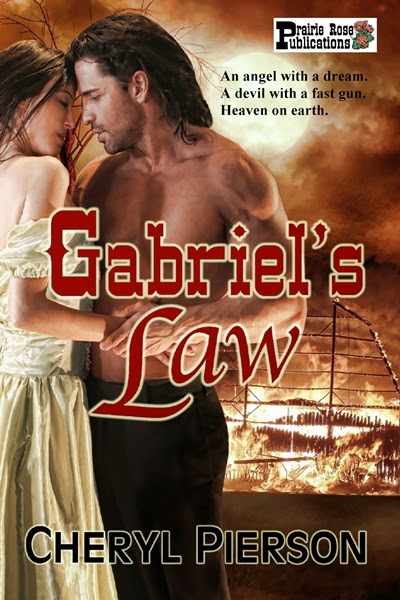
In my novel, GABRIEL’S LAW, Brandon Gabriel and Allison Taylor first meet in an orphanage run by a ruthless headmaster. Though it was not a place strictly for Indians, the unhappy circumstances Brandon and Allie are faced with here forges the beginnings of trust, with love to come in the future.


I will be giving away a signed print copy of GABRIEL’S LAW today to one lucky commenter!


Here’s the blurb:
When Brandon Gabriel is hired by the citizens of Spring Branch to hunt down the notorious Clayton Gang, he doesn't suspect a double-cross. When Allison Taylor rides into town for supplies, she doesn't expect to be sickened by the sight of a man being beaten to death by a mob. When Spring Branch's upstanding citizens gather round to see a murder, nobody expects to hear the click of a gun in the hands of an angel bent on justice. Life is full of surprises.

Brandon and Allie reconnect instantly, though it's been ten years since their last encounter. She's protected him before. As Brandon recovers at Allie's ranch, the memories flood back, and his heart is lost to her. He also knows staying with her will ruin everything. She's made a life for herself and her son. She's respectable. She has plans * plans that don't include him. But could they?

Trouble is never far away, and someone else wants Allison Taylor and her ranch. Danger looms large when a fire is set and a friend is abducted. Allie and Brandon discover they are battling someone they never suspected; someone who will stop at nothing to destroy anyone who stands in his way. As Brandon faces down the man who threatens to steal everything from him, he realizes he is desperately in love with Allie and this new life they are making for themselves. Has Brandon finally found everything he's ever wanted only to lose it all? Can Brandon and Allie confront the past, face down their demons, and forge their dreams into a future?


If you just can’t wait to see if you won, here’s the Amazon link!
http://www.amazon.com/Gabriels-Law-Cheryl-Pierson-ebook/dp/B00K2I2JRM/ref=sr_1_1?ie=UTF8&qid=1421794538&sr=8-1&keywords=Gabriel%27s+Law+by+Cheryl+Pierson

Saturday, April 26, 2014

Kaye Spencer, western romance author – New to Western Fictioneers

Hello everyone.

I'm romance author Kaye Spencer, and I'm a new member with Western Fictioneers. Since today is the first of my regular blogging contributions for Western Fictioneers, which will occur on the fourth Saturday of each month, I thought it appropriate to share a little about myself and where my fascination with the American Old West came from.

I'm a native Coloradoan, and I also write under the pen name, A.L. Debran. I grew up on a cattle ranch in northeastern Colorado and, during those childhood and teenage years from the mid-1950s through the early 1970s, I spent hour upon hour reading Louis L'Amour's westerns and listening to Marty Robbins' gunfighter ballads. I watched all the *classic* television westerns when they were the primetime shows, and I didn’t miss a western movie when it came to the downtown theater or to the double-feature drive-in.

I loved the 'Sons of Katie Elder' so much (well... maybe I had a teeny-weeny crush on Dean Martin), that my grandfather carved a wooden pistol for me and carved in the name 'Tom Elder'. I had a bucking-barrel in my backyard so I could pretend to be a rodeo cowboy. I used my allowance to buy candy and gum cigarettes and roll caps for my pistols and rifle so I could run around the yard pretending to be whichever Hollywood cowboy I was currently obsessed with.

I was nine years old when I got my first horse—a black and white Welsh pony named Corky. It was Katie bar the door after that. I couldn’t get a saddle on Corky, but bareback was okay with me. Since he rode with a hackamore, I didn’t have to struggle with getting a bit in his mouth. All I had to do was sidle him up to the rail fence and hop on.

When I needed a new storyline to act out in my sibling-less imagination, I wrote my own, even though they were clearly retellings of episodes of the Virginian, High Chaparral, or even Yancy Derringer. This is where my writing began. I believed early on in my life that I was born in the wrong century. I’ll even confess that I named my oldest son Heath (after Heath Barkley) and my youngest son’s name is Cameron (after Cameron Mitchell – Uncle Buck on High Chaparral). My daughter, the middle child, is named Robyne—oops! A story there, just not a 'western' one. :-) 
 
I can, and often do, get lost in historical research of just about any time period, but it’s the Old West that I love the most—myths and truths alike.

My first novel, Lonely Places, published in June 2006,is a western romance that I started some 27 years before I finally decided to polish it up and submit it for publication. My western novella, Gunslingers & Ghostriders, followed in October. While my choice of story-writing genre is historical, particularly westerns, I’ve penned a vampire and a couple of contemporary stories—cowboys included.

My latest western is in an anthology from Prairie Rose Publications, which will release in a couple of months. The anthology is called Lassoing a Mail-Order Bride, and my story is A Permanent Woman.

I retired June 1, 2013 from a long career in public education that included administration and teaching English and history. I am loving every writing minute of retirement. ;-) I'm a review editor for the romance review site, Joyfully Reviewed, and I take on occasional manuscript editing projects.

I’m excited to be a member of Western Fictioneers, and I’m looking forward to sharing my love of the American Old West here on the fourth Saturday of each month. I’ve been reading the WF blog for a year or so, and I’ve learned so much from the wealth of Old West history that many of you have shared in your blog posts.

To read reviews of my books, watch my book videos, or download my old family recipes, visit my website and blog – http://www.kayespencer.com

You’ll find me on Twitter – @kayespencer – sharing daily history trivia, and I’ve recently started a recurring blogging topic on my blog called “Spotlight on History”.
Until next time,

Kaye

Fall in love…faster, harder, deeper with Kaye Spencer romances

Saturday, January 5, 2013

SIX SENTENCE SATURDAY--FIRE EYES BY CHERYL PIERSON


I’ll start off the “SIX SENTENCE SATURDAY” feature here at our new and improved Western Fictioneers blog. I had to go ahead and include the rest of the paragraph for it to make sense, so I guess we can call it “SIX SENTENCE OR FIRST PARAGRAPH SATURDAY” to make it fit.

This is from my debut novel, FIRE EYES. Here’s the story of what happened: Three years ago in May, 2009, my debut western historical romance, FIRE EYES, was published by The Wild Rose Press. I was thrilled! Finally, my dream had come true, with the help of a wonderful editor and publishing company.

When I got my first box of books, I sat and gazed at the covers—just like any first time author would. My husband teased me about “rubbing off the paint”—but I was so proud of them, and justifiably so. A lot of very hard work had gone into that story, not just from my perspective, but also from many other people. My editor at The Wild Rose Press, Helen Andrew, was wonderful. She really explained in detail why certain things couldn’t stand and had to go or be changed.

But part of what ‘had to go’ was important to the story, in my mind. Still, there were company guidelines to be followed, and neither of us could do anything about that. So we worked together to find a way to take out the parts that made it more “western” than “romance” and still came out with a fine story.

However, in the spring of 2012, I asked for my rights back for FIRE EYES and got them. I submitted the story to WESTERN TRAIL BLAZER. I was able to re-edit the book and add in much of what I’d had to take out or rewrite in the first version, and it was released with a brand new Jimmy Thomas cowboy cover and lots of renewed interest.

The book is available now at Amazon, Lulu, Monkeybars, Barnes and Noble, Sony and Apple and many other retailers.

I’m very happy about breathing new life into this wonderful story. Once again, when my print copies arrived, I sat on the floor and ‘rubbed the paint off’ all over. I’m so grateful that I’ve had two chances to get my story out there—another thrill, a second time around!


The set up: Kaed Turner, U.S. Deputy Marshal, has followed a younger, more inexperienced deputy, Mitch Beckley, who had set out to pursue a ruthless gang of border raiders in Indian Territory. He’s caught up with him, all right. The gang has captured Beckley and is killing him slowly and mercilessly. From where Turner sits, he can also see something else—the green deputy isn’t the only captive. Andrew Fallon’s gang has stolen two young Choctaw girls Turner knows well—the granddaughters of the chieftain who raised him. Alone with no backup, there’s not much he can do for Beckley. His focus has to be on the two young children.


"Don't kill me! Please!"
God, Beckley, don't beg.
The other marshal's tortured screams ripped through Kaed Turner like a war lance. And he couldn't do one damn thing to save Mitch Beckley. Right now, he had no choice but to sit where he was and listen to the young marshal's pleas, knowing that Beckley was going to die, no matter how he begged. Even though Kaed was tempted to do something, walking into Andrew Fallon's camp would be suicide for him. He had to wait. Hunker down here in this damn undergrowth, hide, and wait.


Blurb:
Marshal Kaed Turner is given a rare second chance at love with the mysterious woman the Choctaw call “Fire Eyes.” But can he quiet the ghosts from his past and protect the love that was stolen from him once before? There’s only one way: Kill outlaw Andrew Fallon, along with the murdering band of men he leads.


FIRE EYES


Cheryl’s Amazon Author Page