Showing posts with label Oklahoma Territory. Show all posts

Sunday, March 25, 2018

MIND YOUR STATES, AND DATES! by Vonn McKee


When plotting a new story or book idea, one of the western writer’s most important decisions is LOCATION. Will the story take place in the high deserts of Arizona or New Mexico? The Front Range of Colorado? The rolling plains of Wyoming? The geography can dictate the types of characters, weather, architecture, landscape, and historical events you intend to include.

But wait a minute. Is it Arizona you’re writing about . . . or Arizona Territory? Texas . . . or the Republic of Texas? The western “states” straggled into the Union, a few at a time, between the years of 1845 (Texas) and 1959 (Alaska). To make things even more confusing, much of the Midwest and some of the West once lay within the borders of the Louisiana Purchase. As a native Louisianian, I like to rib my Texas and Alaskan friends that my state was biggest, once upon a time. And what do you know? My current home state of Tennessee was once called the Southwest Territory!

The period of American history known as “the Wild West” lasted roughly thirty years . . . from 1865 to 1895. Several western states were admitted to the Union in the very late 1800s: North and South Dakota, Montana, and Washington (1889), Idaho and Wyoming (1890), and Utah (1896). It wasn’t until the 1900s that the United States admitted Oklahoma (1907), New Mexico and Arizona (1912), and Alaska (1959).

Advertisement for anti-slavery meeting
For some states, the journey to statehood came with great difficulty and sacrifice. The Kansas-Nebraska Act which became law on May 30, 1854, established Nebraska Territory and Kansas Territory. The region was attractive to both the slave and free states, where tensions were building to a fever pitch. Settlers from both sides began pouring into Kansas, hoping to swing the vote when Kansas citizens decided where their loyalties lay. When the so-called “Border Ruffians” from Missouri arrived (planning to stuff the ballot boxes with pro-slavery votes), a period of extensive violence began, lasting until 1858. At the end of these “Bleeding Kansas” years, the Wyandotte Constitution was adopted, assuring the anti-slavery status of the future state of Kansas.

Oklahoma is another state with an eventful history leading up to its statehood. Always a Native American stronghold, the U.S. government’s relocation of several tribes to this region created an expansive “Indian Territory” adjoining Oklahoma Territory. The tribes agreed to let the government open up “Unassigned Lands” for settlement in 1899. As discussions of statehood escalated, executive officers of the “Five Civilized Tribes” proposed that Indian Territory be name the new state of “Sequoyah,” separate from Oklahoma Territory. However, the U.S. government ultimately decided to combine both territories and President Teddy Roosevelt signed a proclamation naming “Oklahoma” as the nation’s 46th state in 1907.

Of course, every state has its own unique and fascinating history. Fiction writers can develop plotlines and characters that correspond with those historic events, making for a more authentic experience for readers. For the research convenience of those writers, here’s a list of all fifty states, along with their dates of admission to the Union, year of first settlement, and former territorial names.


State
Entered Union
Year Settled   Formed from:
Delaware
Dec. 7, 1787
1638                Colony of Delaware
Pennsylvania
Dec. 12, 1787
1682                Proprietary Province of Pennsylvania
New Jersey
Dec. 18, 1787
1660                 Crown Colony of New Jersey
Georgia
Jan. 2, 1788
1733                 Crown Colony of Georgia
Connecticut
Jan. 9, 1788
1634                 Crown Colony of Connecticut
Massachusetts
Feb. 6, 1788
1620                 Crown Colony of Massachusetts Bay
Maryland
Apr. 28, 1788
1634                 Proprietary Province of Maryland
South Carolina
May 23, 1788
1670                 Crown Colony of South Carolina
New Hampshire
June 21, 1788
1623                 Crown Colony of New Hampshire
Virginia
June 25, 1788
1607                 Crown Colony; Dominion of Virginia
New York
July 26, 1788
1614                 Crown Colony of New York
North Carolina
Nov. 21, 1789
1660                 Crown Colony of North Carolina
Rhode Island
May 29, 1790
1636                 Crown Colony of Rhode Island
Vermont
Mar. 4, 1791
1724                 Vermont Republic
Kentucky
June 1, 1792
1774                 Virginia; District of Kentucky (part)             
Tennessee
June 1, 1796
1769                 Southwest Territory
Ohio
Mar. 1, 1803
1788                 Northwest Territory (part)                
Louisiana
Apr. 30, 1812
1699                 Territory of Orleans
Indiana
Dec. 11, 1816
1733                 Indiana Territory
Mississippi
Dec. 10, 1817
1699                 Mississippi Territory
Illinois
Dec. 3, 1818
1720                 Illinois Territory (part)
Alabama
Dec. 14, 1819
1702                 Alabama Territory
Maine
Mar. 15, 1820
1624                 Massachusetts; District of Maine
Missouri
Aug. 10, 1821
1735                 Missouri Territory (part)
Arkansas
June 15, 1836
1686                 Arkansas Territory
Michigan
Jan. 26, 1837
1668                 Michigan Territory
Florida
Mar. 3, 1845
1565                 Florida Territory
Texas
Dec. 29, 1845
1682                 Republic of Texas
Iowa
Dec. 28, 1846
1788                 Iowa Territory (part)
Wisconsin
May 29, 1848
1766                 Wisconsin Territory (part)
California
Sept. 9, 1850
1769                 Unorganized territory (part); California Republic
Minnesota
May 11, 1858
1805                 Minnesota Territory
Oregon
Feb. 14, 1859
1811                 Oregon Territory (part)
Kansas
Jan. 29, 1861
1727                 Kansas Territory (part)
West Virginia
June 20, 1863
1727                 Virginia (Trans-Allegheny region)
Nevada
Oct. 31, 1864
1849                 Nevada Territory
Nebraska
Mar. 1, 1867
1823                 Nebraska Territory
Colorado
Aug. 1, 1876
1858                 Colorado Territory
North Dakota
Nov. 2, 1889
1812                 Dakota Territory (part)
South Dakota
Nov. 2, 1889
1859                 Dakota Territory (part)
Montana
Nov. 8, 1889
1809                 Montana Territory
Washington
Nov. 11, 1889
1811                 Washington Territory
Idaho
July 3, 1890
1842                 Idaho Territory
Wyoming
July 10, 1890
1834                 Wyoming Territory
Utah
Jan. 4, 1896
1847                 Utah Territory
Oklahoma
Nov. 16, 1907
1889                 Oklahoma Territory & Indian Territory
New Mexico
Jan. 6, 1912
1610                 New Mexico Territory
Arizona
Feb. 14, 1912
1776                 Arizona Territory
Alaska
Jan. 3, 1959
1784                 Territory of Alaska

Hawaii
Aug. 21, 1959

1820                 Territory of Hawaii; Republic of Hawaii;
                         Kingdom of Hawai’i


All the best,

VonnMcKee                                                                                          
“Writing the Range”
2015 Western Fictioneers Peacemaker Award Finalist (Short Fiction)
2015 WWA Spur Award Finalist (Short Fiction)


Website vonnmckee.com

From WOLFPACK PUBLISHING
Now available on Amazon


Wednesday, January 21, 2015

INDIAN BOARDING SCHOOLS-FOR INDIANS ONLY--PART 1 by Cheryl Pierson


It’s interesting to me to read the different viewpoints on old Indian boarding schools and orphanages—and even hospitals—that were in operation to accommodate Indians, and assimilate them into white society. Living here in Oklahoma, we have a few of the now-defunct facilities scattered around our state—one, Concho Indian School, not more than about an hour’s drive from my house. Let’s take a look at the beginnings of these schools and how they came into existence.

Richard Henry Pratt was the man who came up with the idea of boarding schools for Indian children. These schools would remove children from the reservations when they were very young, send them to a place run by whites, and immerse them in white culture. This would obliterate their “Indian-ness” and encourage them to cope with and join into the world as it had become—white.


Mr. Pratt founded Carlisle Indian Industrial School in1879 in Carlisle, Pennsylvania, and compared to genocide—which was a much-discussed option—seemed to be the only “reasonable” alternative in those days to annihilation of the Indians that remained after the Indian wars were over.

Some Indian parents willingly sent their children, but many (I would venture to say most) were threatened with imprisonment and loss of their food rations. Eventually, they understood there was no choice, and said tearful goodbyes to their children as they were shipped off. The boarding schools at that time were hundreds of miles away—Carlisle being the flagship school, located in Pennsylvania. One of Oklahoma’s most celebrated Indian athletes, Olympian Jim Thorpe of the Sac and Fox Nation, was sent there.

Once the children arrived, everything was taken from them. Their clothing was burned, in many cases, and they were provided uniforms. Their hair was cut short. Even their names were changed. And, they were forbidden to speak their native tongue—for most of them, the only language they knew.


In many boarding schools, everything was done by bells. No talking was allowed among the children—even among brothers and sisters. Punishment for doing so was beating or confinement.

By 1902, twenty-five federally funded boarding schools in fifteen states and territories had been built, with more being planned. Over 6,000 students were enrolled in these institutions. But only seven years later the system was coming under fire. Though graduates had been trained for factory or farm work, neither could be found on the reservations they returned to. No jobs for these young adults waited once their schooling was finished, and so returning to the reservations meant dependence on the U.S. Indian Agency rather than taking jobs that allowed them to provide for themselves.

Boarding schools were there to stay, though, and remained open for over 100 years, into the 1980’s.
The Concho Indian School I mentioned earlier, opened in Darlington, Indian Territory, in 1887. It was replaced in 1932, and again in 1969, until its doors were closed for good in 1981due to budget cuts and defunding.


According to many, it was a horrible place—and it wasn’t the only one. Stories of abuse of all kinds—physical, sexual, and emotional—run rampant. In fact, there is a psychological condition called CSDT or Constructionist Self Development Theory that has been identified for survivors of these schools, wherein they develop their own theories as to why this kind of upbringing was “good” for them—it made them stronger; it made them a “fighter”, and so on.

Survivors’ descendants tell of some of the horrifying experiences their relatives endured, and the abandoned Concho Indian School building is said to be haunted by the spirits of some of the young victims, hoping for justice after all these years.

One woman writes: I’m an Indian and my grandmother told me bad stories of this place…many children from my tribe were taken and some were never heard from again. I hate the thought of this place.”

This post barely scratches the surface, and I will continue next month with more about orphanages and hospitals “for Indians only.”

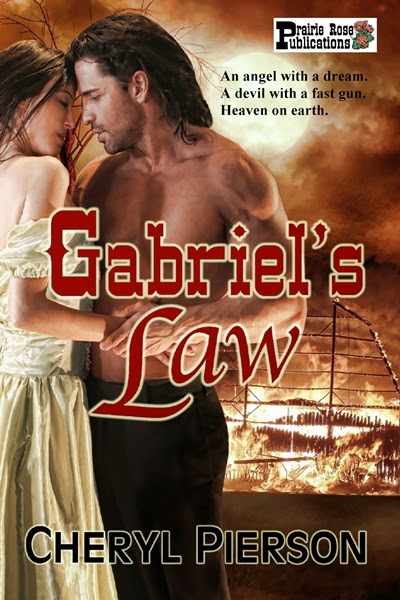
In my novel, GABRIEL’S LAW, Brandon Gabriel and Allison Taylor first meet in an orphanage run by a ruthless headmaster. Though it was not a place strictly for Indians, the unhappy circumstances Brandon and Allie are faced with here forges the beginnings of trust, with love to come in the future.


I will be giving away a signed print copy of GABRIEL’S LAW today to one lucky commenter!


Here’s the blurb:
When Brandon Gabriel is hired by the citizens of Spring Branch to hunt down the notorious Clayton Gang, he doesn't suspect a double-cross. When Allison Taylor rides into town for supplies, she doesn't expect to be sickened by the sight of a man being beaten to death by a mob. When Spring Branch's upstanding citizens gather round to see a murder, nobody expects to hear the click of a gun in the hands of an angel bent on justice. Life is full of surprises.

Brandon and Allie reconnect instantly, though it's been ten years since their last encounter. She's protected him before. As Brandon recovers at Allie's ranch, the memories flood back, and his heart is lost to her. He also knows staying with her will ruin everything. She's made a life for herself and her son. She's respectable. She has plans * plans that don't include him. But could they?

Trouble is never far away, and someone else wants Allison Taylor and her ranch. Danger looms large when a fire is set and a friend is abducted. Allie and Brandon discover they are battling someone they never suspected; someone who will stop at nothing to destroy anyone who stands in his way. As Brandon faces down the man who threatens to steal everything from him, he realizes he is desperately in love with Allie and this new life they are making for themselves. Has Brandon finally found everything he's ever wanted only to lose it all? Can Brandon and Allie confront the past, face down their demons, and forge their dreams into a future?


If you just can’t wait to see if you won, here’s the Amazon link!
http://www.amazon.com/Gabriels-Law-Cheryl-Pierson-ebook/dp/B00K2I2JRM/ref=sr_1_1?ie=UTF8&qid=1421794538&sr=8-1&keywords=Gabriel%27s+Law+by+Cheryl+Pierson

Friday, September 5, 2014

The Bill & Bill Show with a Heck of an Ending

 by Phil Truman

A man once said to me, "Destiny ain't about chance, son; it's about choice." 

He'd spoken that jewel after I'd made a particularly stupid mistake in my young life. At the time I had to think on that one for a spell, but my long and winding journey since has taught me it's true enough for the most part.

You take, for example the outlaw Bill Doolin. Doolin made a long string of bad choices to complete his destiny, but in December of 1895 if he hadn't decided to visit a particular spa for a hot mineral bath in Eureka Springs, Arkansas, maybe he wouldn't have been gunned down near Lawton, Indian Territory in August, 1896.

In the spring of 1895 Doolin and his gang had robbed a train cutting through the I.T. and had gotten away with a $50,000 army payroll. Rumor had it that Bill had in mind to retire after that big haul to spend more time with his young wife and son. But first he wanted to take a sojourn to the reputed Eureka Springs therapeutic baths to soothe some residual aches and pains from old gunshot wounds he'd collected over the years.

Another man of destiny, Deputy U.S. Marshal Bill Tilghman, had been in pursuit of Doolin for some time, and getting wind of the outlaw gone off to Eureka, followed up on the lead. But no sense traveling all that way, Tilghman must've thought, without partaking in one of the famous hot baths himself, so that's what he decided to do, Bill Doolin could wait. When he entered the bathhouse he was surprised to see Doolin in another room sitting on a couch reading a newspaper. Well, no time like the present.

The lawman pulled his Peacemaker and approached Doolin rapidly, pointing the revolver at the reclining outlaw's ear. "Bill Doolin," Tilghman announced. "You're under arrest."

Startled, the outlaw started for his own gun under his coat, but Tilghman grabbed Doolin's sleeve pulling it tight and preventing the fugitive from unbuttoning his coat to get to his gun. Tilghman held him there and Doolin continued to resist until the marshal allowed as how he'd go ahead and blow Bill's brains out if he didn't give it up. Doolin complied.

Tilghman telegraphed back to the Oklahoma Territory capital of Guthrie that he'd captured Bill Doolin and was bringing him in. Heck Thomas and several other deputy marshals met Tilghman and his prisoner at the Guthrie train station. Word had gotten out about Doolin's capture, so a crowd of about 2,000 crowded around the depot and along the streets to get a glimpse of the renowned outlaw. Many citizens stopped by the marshal's office that afternoon to meet Doolin and congratulate Tilghman.

Bill Doolin
Nobody ever figured the notorious Bill Doolin would ever be brought in alive, but if anybody could it'd be one of the three "Oklahoma Guardsmen" as the deputies were known--Tilghman, Chris Madsen, and Heck Thomas. Later that same evening Doolin was taken to the finest restaurant and hotel in Guthrie for dinner then returned to his jail cell.

During the months' long stay in the Guthrie jail awaiting trial, Doolin's celebrity status wore off, as did the outlaw's patience with being locked up. In June of 1896 an old gang mate of his, "Dynamite Dick" Clifton, was brought in and became Doolin's cellmate. The two started hatching a plan for an escape, and in July Bill feigned an illness and when he got to the infirmary, stripped the guard of his firearm, broke out his pard Dynamite Dick along with seven other inmates, and took off.


The jailbreak had occurred on Deputy Thomas' watch, which he apparently took personal, making it his mission to haul Doolin back to the Territory capital jail dead or alive.

By late August word came around that Doolin was spotted in the vicinity of his father-in-law's store in Lawton down near Ft. Sill. Thomas formed a posse and lit a shuck southward.

On the evening of August 24th, some young boys who knew Doolin told him they'd come across a group of lawmen camping outside of town, and one of them was asking if they knew the whereabouts of Bill. Around midnight Doolin saddled his horse and made provisions for a long ride. He led his horse down a quiet moonlit lane wary and jumpy at every shadow. He'd armed himself with two pistols; he carried a Winchester.

Heck Thomas
Deputy Heck Thomas stood behind a tree in the dark shadows at the edge of the lane, holding a 10-gauge coach gun, awaiting Doolin's approach. His men were spread out on both sides.

"Stop right there, Doolin," Thomas shouted. "U.S. Marshals, you're under arrest."

Another deputy across the road shouted, "Put your hands up, you're surrounded."

Doolin fired his rifle wildly in Thomas' direction then drew a pistol aiming toward the other voice. But before he could get off that second shot, Thomas let loose with the shotgun, the double aught slugs striking Doolin in the chest. A fusillade from the possemen followed, but Heck Thomas' buckshot had been sufficient. The bullet-riddled body of the outlaw Bill Doolin lay dead in the moonlight, the last choice made to reach his destiny.

Phil Truman is the author of the award-winning historical western novel,  Red Lands Outlaw, the Ballad of Henry Starra sports inspirational about small town schoolboy football entitled GAME, an American Novel; and Treasure Kills (formerly Legends of Tsalagee), a mystery/adventure in a small town.

He's currently working on a series of western shorts put together in a volume called West of the Dead Line, the first five stories of which are available on Amazon in e-format only for 99 cents each. Volume I - eight stories in all - will be available in electronic format in the Fall of 2014.


Tuesday, August 20, 2013

The Failed and Flawed Exploits of the Jennings Gang - by Tom Rizzo


On the night of August 16, 1897, three members of an outlaw gang, hidden behind the tender of a southbound Santa Fe locomotive, climbed into the cab and ordered the engineer to stop.


When the passenger train lumbered to a halt, a few miles outside Edmund in Oklahoma Territory, four other gang members who were hiding in the tall brush alongside the tracks rushed the express car to rob the Wells Fargo safe. All attempts at opening the safe however, failed. They even tried dynamiting it—twice. The train robbers gave up and rode away, empty-handed.

Mugshot: Al Jennings

The Jennings Gang, as it was called, included Frank and Al Jennings, Little Dick West, and the O'Malley brothers.

A couple of months later, they struck again—this time, the southbound Rock Island passenger train near Chickasha, Indian Territory. Again, they were unable to crack the safe and, instead, blew up the express car.
Rather than leave  empty-handed this time, they robbed passengers of about $300, and managed to get away with a jug of whiskey and bunch of bananas.


Third time's a charm, so the saying goes. But not with these guys. On the next attempt, they stacked railroad ties across the track, but the engineer merely coaxed more speed out of the locomotive, smashed through the barrier, and kept going.


US Marshal, Oklahoma TerritoryThe gang then turned its attention to an express office, then a bank, but found the places surrounded by authorities each time they showed up to rob them.

You only get so many chances to prove your skills at being a successful outlaw and the gang's comedic attempts to practice outlawry ended a few months later when US Marshal Bud Ledbetter took Al Jennings into custody outside Muskogee after a shootout at the Spike S Ranch, an occasional hideout for outlaws.

Newspapers described the gang as "penniless, hungry, and wearing tattered clothing."

Others dubbed Jennings the worst outlaw in the West. But, even though he lacked the skills to succeed as an outlaw, Jennings wasn't a total bumbling fool. He ended up being a shrewd self-promoter.


Jennings was born in 1863 in Virginia. He and his brothers followed in the career footsteps of their father - who served as a judge - got law degrees and began practicing in the Oklahoma Territory in 1889.


Attorney Temple HoustonSix years later, his brother Ed was shot to death by another lawyer—Temple Houston, son of famous Texas General Sam Houston. Temple was eventually acquitted. But Al and Frank Jennings, bitter about the verdict, vowed payback. They pursued Houston, but never caught him.

It was then the brothers made their decision to give up law and turn criminal.

Following his capture at Spike S Ranch, Jennings was convicted in May 1898 of assault with intent to kill, and given a life sentence at the federal penitentiary in Columbus, Ohio.
But his exploits didn't end there.


Serving time in the same facility was William Sidney Porter, later known to readers as short story writer, O. Henry, who was imprisoned for embezzlement.


O'HenryIn three years behind bars, Porter collected enough material from fellow prisoners to write stories that would rank him among the country's most famous literary personalities.

In 1904, Porter published a couple of stories based on fictionalized exploits of Al Jennings, who the writer alluded to as an expert in train robbery.

His association with Porter enabled Jennings to pump up his own image and credibility despite the lack of actual facts.

President William McKinley, in 1902, released Jennings, reducing his life sentence to five years with allowance for good behavior and, ultimately restored full citizenship. Jennings returned to Oklahoma and established a law practice in Lawton with his brother, John.


Ironically, crime paid off for Al Jennings.


Beating Back, the Film
He ran for public office, unsuccessfully, including a bid for the  Democratic gubernatorial nomination in Oklahoma in 1914.

The next year, his life story appeared in the Saturday Evening Post, followed by a motion picture, Beating Back, in which some scenes featured Jennings playing himself.

Jennings moved to Hollywood, California, and served as a consultant on films about the West. Although he regaled folks with tales of his wild outlaw years, most all of it amounted to complete fabrication.

"Old Al Jennings was around California for years," said Sheriff Jim Herron of Oklahoma, ". . . stuffing dudes with nonsense and telling them wild yarns about himself in the early days."
Jennings died December 21, 1961, at his home in Tarzana, California.