Showing posts with label #PrairieRosePublications. Show all posts

Monday, February 10, 2020

Anniversaries

Anniversaries.
Life is full of them. (Even for pirates!) Anniversaries of births, deaths, marriages, (and sometimes divorces) as well as holidays. So for this post, I decided to research the origin of anniversaries.
It seems calendars were invented for keeping up with anniversaries, not just for planning into the future. An early account of memorializing dates for future recognition can be found in Shakespeare’s Henry V.
This story shall the good man teach his son;
And Crispin Crispian shall ne'er go by,
From this day to the ending of the world,
But we in it shall be remember'd;
We few, we happy few, we band of brothers;
For he to-day that sheds his blood with me
Shall be my brother; be he ne'er so vile,
This day shall gentle his condition:
And gentlemen in England now a-bed
Shall think themselves accursed they were not here,
And hold their manhoods cheap whiles any speaks
That fought with us upon Saint Crispin's day.
Some of you fellow adorers of Western arts and literature will recognize this speech from the Birdcage Theatre scene in the movie Tombstone. This speech also refers back to the the feast day of Saint Crispin – which takes us even earlier in our search for the origin of the celebration of anniversaries –the Christian liturgical calendar.  
Catholicism especially reveres in anniversaries – with each day of the year attributed to a specific Saint of that was either martyred or otherwise died on that day. This is said to be their Feast Day and even non-Catholics celebrate many of these Feast Days. Two examples are St. Valentine’s Day, which is coming up, and St. Patrick’s Day!
Another special anniversary which is the root cause of this post today, is that it is ours. My husband’s and mine. On one hand, it seems like we’ve been married forever (in a good way!) though it’s just year number two, and on the other hand, it feels that forever as Wesley’s wife isn’t long enough. I've included a couple of pics of us through the years (I can officially say years -- not just year!) I think my favorite is Wesley getting attacked by the giant fake spider. Love is funny that way.  

Tuesday, July 23, 2019

ANTHOLOGIES AND WRITING SHORT

Post by Doris McCraw
writing as Angela Raines

Photo property of the author
First I'll get the joke out of the way, yes I write short because I am. Well, maybe not a short as some, but when I go to the market I always have to find someone to reach things from the back of the top shelf.

All joking aside, I love the challenge of writing a short story, and to be truthful, some stories are better told in short form. There were some masters of the short I loved to read. Harlan Ellison, Ray Bradbury, Louis L' Amour, and Elmore Leonard. While I may never reach their level, it is something to strive for. Of course, you notice, they are all no longer with us. There are some wonderful authors now who are also an inspiration.

Probably the best thing I've done recently is to judge short stories. I am so in awe of the talent writing today. You learn so many things when judging and it helps to improve your own writing, at least it did mine. (Or so I want to believe).

This leads me to Anthologies. Unless you have a large enough following for a collection of your shorter work, most short stories find their home in anthologies or in the few magazines left that accept the Western genre. I'm thrilled that both options are available to writers today. My four authors learned and perfected their craft in those magazines of yesterday. Now, for many of us, it's the online and anthologies that are our training ground.


The other wonderful advantage of an anthology is you share the pages with other authors. By default, your audience expands. There is nothing wrong with that, especially in the market today.

Personally, I love reading anthologies and short stories. The exposure to new authors is exciting to me. I also enjoy the shorter stories when life is so busy I don't have time for the longer form. I get a great complete story and can finish it in one or two sittings. That is a win-win for me.

Lately, I've been reading the short stories of Peter Dawson, T.T. Flynn and others from that earlier time. Who is your favorite short story writer?

Of course, I would be remiss if I didn't do a short piece about the current anthology I have a story in. If you haven't heard of "Hot Western Nights", edited by Cheryl Pierson and published by Praire Rose Publications,  you are about to. There are six stories to this anthology, each different, yet all taking place in the early West.  Below is a short excerpt from my story, 'Duty':


Miranda Foster climbed the hill overlooking the ranch her stepfather left her to run for his heirs. Clouds flew across the sky. Standing on the hilltop, she watched a storm building, its track headed toward the ranch house. She didn't begrudge her duty, but by the time her step-brother Byron was old enough to take over, she'd be an old maid.
No one knew she wasn't the owner. It was her step-father's way of keeping the ranch safe. She remembered their conversation. "I know I'm asking a lot of you, but you'll be taken care of."
Miranda thought back on that conversation as she caught movement near the leading edge of the storm. Watching, she saw five specks detach and draw closer. The wind was pushing her back the way she'd come, trying to guide her to safety.
Miranda would not be moved. "You may threaten, cajole, or do me harm, but I will not be swayed from my duty," Miranda sent back to the wind as she waited for the oncoming riders, shotgun in hand. She never left the ranch house without it since the coming of Tate Browning. She stood, a calm determination not to give in.
"A woman can't hold such a place as this," the old man said as he rode up, almost on top of Miranda.
Miranda stood her ground, looking each of the men in the eye. "I've been charged with keeping this land safe, to never sell for any reason. Tell Tate Browning, it's a duty I shall discharge to the best of my ability."
The man glared back, looking for a way to pierce Miranda's armor. The wind whipped by the men and Miranda. Thunder sounded in the distance.
Miranda stood firm as the wind spent its fury. The old man growled, his anger a living thing, pressing on her as was the wind.

Purchase book from Amazon here


Doris Gardner-McCraw -
Author, Speaker, Historian-specializing in
Colorado and Women's History
Angela Raines - author: Where Love & History Meet
For a list of Angela Raines Books: Here 
Angela Raines FaceBook: Click Here

Thursday, December 6, 2018

Loading a Cap and Ball Revolver


Cap and ball weapons were all “the thing” during the Civil War and later—right up until Smith & Wesson’s patent ran out on the bored-through cylinder and Samuel Colt could get in the self-contained cartridge game. Numerous models of cap and ball revolvers were produced until 1873.

If your character is using a cap and ball weapon, there are limitations. For instance, a muzzle-loaded long gun gives you one shot; a cap and ball revolver with six shots is just that—six shots. And  it can’t be reloaded quickly. Your characters won’t be reloading it while running from the bad guys or riding to the rescue. Keep reading and you’ll understand why.

Unlike a modern cartridge, where the bullet, powder and primer are enclosed in a brass case, reloading a cap and ball revolver takes 6 steps for each chamber. That’s six steps times six chambers to fully reload a revolver.

I took most of these pictures of my friend and fellow cowboy action shooter, “Major Misalot”, reloading his cap and ball revolver cylinder. The reloading can be done while the cylinder is in place on the revolver, too.

The loading is done in reverse order of the firing process, from the barrel side of the cylinder:

1. Add powder


In this picture of “Major Misalot”, he used a reloading “station”. Another cowboy friend “Noz” used a powder flask to measure the powder for each cylinder.

2. Place a lead ball on the powder in each cylinder


3. Ram the ball home, all the way down into the chamber. 


“Major Misalot” is using his modern reloader, but this can be done using the ramming rod on the revolver, as in the next picture. The rod is firmly pressed into the chamber then the cylinder is rotated until all six lead balls have been rammed pushed into place.


4. Grease the cylinder to prohibit chain firing – where the burning powder from one shot ignites the others in the cylinder. Obviously not a good thing!


5. Cap the nipple (think blasting cap here)


Another method to “cap” the chamber is to use a capper, a spring-loaded brass disc that presents the cap. Above, “Major Misalot” hand capped his. “Noz” uses a capper. He pressed a cap into position six times then went back over all six chambers to be sure the caps seated properly.

NOW its finally ready to fire.

With practice, it doesn’t take all that long to reload the six chambers in a cylinder, but you really can’t pour powder, ram a ball, cap the nipple and grease the chamber at a gallop. I can certainly see why many who relied on a cap and ball revolver carried fully loaded spare cylinders.

And, just to remind you why someone shooting black powder can’t hide…


Tracy Garrett

Thursday, November 1, 2018

The King of Texas


When researching locations for my second novel, Touched by Love, I visited the famed King Ranch in south Texas, between Corpus Christi and Brownsville--and fell in love with the rugged terrain and equally hardy people.

 “The story starts in the mid-1830s with an eleven-year-old boy indentured by his destitute family to a jeweler in New York City.”

Sounds like one of our novels, doesn’t it? But it’s the start of the amazing story of Richard King, the King of Texas. After stowing away on a ship bound of the south of the United States, he worked his way to captain and finally steam boat owner, moving goods and passengers along the lower Rio Grande River.


Sometime in the middle of the 1800s, Captain King crossed a region of Texas known as the Wild Horse Desert. When he came upon the sweet water of the Santa Gertrudis Creek, he’d found home. King and his business partner purchased 15, 500 acres of Mexican land, a land grant known as Rincon de Santa Gertrudis. This acreage was the start of what is now the legendary King Ranch.

Based on a melding of the Southern Plantation and Mexican Hacienda styles of management, King built a dynasty near what is now Kingsville, Texas. When a terrible drought struck South Texas and Northern Mexico, King bought all the cattle from the townspeople of Cruillas, Mexico. Realizing he’d also taken their livelihood, King offered to hire all those who would move to his ranch. These expert stockmen and horsemen became known as Los Kineños--King’s people. Descendants of Los Kineños still live and work on the ranch today.

By the end of the Civil War, King’s ranch had grown to more than 146,000 acres, supporting thousands of head of his domesticated longhorn cattle. When he ran into a problem, such as the lack of quality saddles and tack for his vaqueros, he simply hired the finest craftsmen and moved them onto the ranch. [The Saddle Shop is still in operation: http://www.king-ranch.com/saddle_shop.html]

“Richard King's sense of adventure was rivaled only by his vision and ability to seize on new business opportunities. In addition to tirelessly working to improve the ranch, he invested in building railroads, packinghouses, ice plants and harbor improvements for the port of Corpus Christi.”

And things didn’t stop after Captain King’s death in 1885. In 1899, King’s son-in-law, Robert J. Kleberg (he married King’s daughter, Alice) was drilling for water when he discovered a huge underground river, bringing an end to the decade long drought known as “the great die-up.”

“During this era, Robert J. Kleberg and King’s widow continued to improve and diversify the assets of King Ranch with agricultural development, land sales, and town building projects. In 1904, their efforts were instrumental in helping to build the St. Louis, Brownsville & Mexico Railway -- as well as several towns along the newly laid track, including Kingsville. Before her death in 1925, Henrietta King had donated land and funds toward the construction of churches, libraries, and school projects (creating an oasis of community development) in this previously untamed land.”

The ranch’s innovations didn’t stop there. The number one registration in the American Quarter Horse Association Stud Book was from the King Ranch Quarter Horse program. They also produced the youngest horse ever to be inducted into the National Cutting Horse Association Hall of Fame, Mr. San Peppy. Assault, the 1946 winner of the Triple Crown, and Middleground, the 1950 winner of the Kentucky Derby and the Belmont Stakes, both came from King stock.

Today, the King Ranch is a huge operation, with more than 825,000 acres in multiply states and countries, and Running W brand appears on tens of thousands of the King Ranch’s Santa Gertrudis cattle, recognizable by their distinctive black-cherry colored hide.

If you want to know more, visit www.King-Ranch.com. Or better yet, plan a trip to the ranch. You’ll be very glad you did.


Thursday, September 6, 2018

1848 Colt Dragoon Revolver


In my short story, WANTED: THE SHERIFF, the hero, Sheriff Matthew Tate, carries a matched pair of 1848-Model 3 Colt Dragoons.


The Dragoon grew out of the problems with the Colt Walker revolver, a 4.5 pound, 15” long hunk of steel. The Dragoon was only 4 pounds, 2 ounces. And, where the Walker’s barrel was 9” long, the Dragoon’s was only 7.5”.  The Walker was a powerful weapon, but its size meant it was used mostly as a saddle-mounted weapon. It was just too long and too heavy to wear around your waist.


And there was the propensity for the Walker to explode when users put in too much powder. Where the Walker held 60 grains of powder, the Dragoon held only 50 grains—less powder, less danger.


Also, the Walker’s loading lever tended to fall during firing, locking up the revolver and rendering the weapon useless. Not a good thing when you need a working gun. The Dragoon added a lever latch to hold it in place. Problem solved.


“Three major-production Dragoon models were produced between 1848 and 1860. The First Model had oval-shaped cylinder notches, no wheel on the rear of the hammer and no pins between the nipples. Colt produced about 7,000 First Models between 1848 and 1850. The Second Model had rectangular cylinder notches and a "wheel" on the hammer. First and Second models both had square-back trigger guards. The company made about 2,550 Second Models in 1850 and 1851. Approximately 10,000 Third Model Dragoons were made from 1851 through 1860, with many variations. All Third-Model Dragoons had a round trigger guard. Records show 8,390 Dragoons were ordered by the U.S. government.” (from http://www.cabelas.com/category/Civil-War-Colt-Dragoon/110215980.uts)


The Dragoon revolver transformed Samuel Colt's young pistol-making business into one of the most dominating forces in firearm history.

Tracy


Thursday, June 7, 2018

Home Tiny Home


Tiny homes. It’s the latest craze to hit the housing industry--though families have been kiting around the country in “mobile homes” since the pioneer days. 


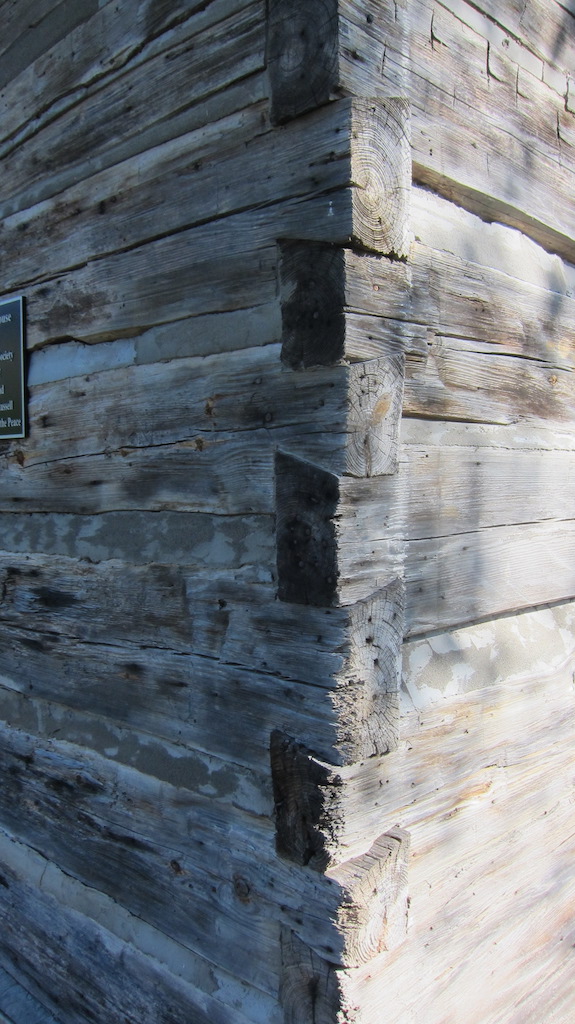
A recent family discussion about the need for growing boys to have their own bedroom reminded me of a recent trip with my dh to explore and photograph an ancestral cabin in northern Arkansas.


James Garfield Finis & Phoebe Trimble built their first cabin on their farmland in Izard County, near Dolph, Arkansas, in 1815-1816. The exterior of the cabin measure 20x20’—so the inside would be 19x19’--and they raised ten (yes, TEN) children in the space.


The cabin is built without nails, the boards dovetailed to stay put and the cracks stuffed full of chinking. The cabin in these pictures is actually the second one built, though they made it exactly the same size. Don’t ask me why. 


The main floor had the single fireplace, a table used for dining, repairs, school work, cooking, sewing…  A spinning wheel probably held a permanent place near a window, too, as might a desk, a piano or a rocking chair. 


Mr. & Mrs. Trimble probably had their bed in a corner of the room, too, away from the fireplace and windows. And up those stairs in the back of the room was the loft, where all of the children would sleep. No kid had their own room in this cabin! In fact, looking at it, I had to wonder how on earth they managed to find the privacy to conceive ten kids in there.


In my novel, TEXAS GOLD, my heroine lives in a cabin about the size of the Trimble cabin. When the hero literally trips over it, the cabin is inhabited by Rachel, her brother Nathan, and a goat and a few chickens are sheltering inside against a freak snow storm.


EXCERPT

Where am I? Jake lay still and took stock of his surroundings. He was definitely inside a structure. Though the air was ripe with the scent of animals, he didn’t think he was in a barn.

Something lay across his body, holding him in place. He listened for the sounds of people, footsteps, whispered words. Nothing. The silence was broken only by the shifting of a log in the fire. If anyone stood watch, he couldn’t hear them.

Taking care not to give away the fact he was awake, he opened his eyes a slit. He could see out of the right one, but the left eye was blurry and swollen nearly shut, thanks to a lucky punch from that murdering pack of thieves that jumped him.

How had he gotten here? The last thing he remembered was dragging himself through a raging blizzard after Harrison and his men had beaten the holy hell out of him. Now the scents of animals, wood smoke, and lavender surrounded him.

Glancing down, he found the source of the lavender. A woman lay stretched out on top of him. Silky blond hair the color of the summer sun ran in a river across her shoulder and onto his bare chest. Her forehead was smooth and she had a small nose that turned up a little at the end. Long lashes a little darker than her hair fanned across the milky skin of her cheeks. In spite of his battered body, he had a sudden strong desire to taste that skin.

He shook his head to clear it and bit back a curse as the movement shot pain through his skull. In a rush, the memories of the previous day returned. And so did the agony. Besides his head and face, they must have landed a few boots to his ribs. His side burned like hell-on-fire.

Taking shallow breaths to ease the pain, he looked around. The rising sun glowed around the edges of the window shutters. He couldn’t see a guard, but he hadn’t really expected to find one. If Harrison was around, a half-dozen guns would have finished the job they’d started last night.

He turned his head a little to one side and located the source of the smoke. A poorly built red-stone chimney staggered in drunken lines all the way to the whitewashed ceiling. Whoever had built it must have been working his way through a jug of moonshine at the same time. The floor was probably plank since he didn’t smell dust, but all he felt beneath his fingers was wool and the give of a straw mattress.

He rolled his head to the other side, stretching aching muscles. The room wasn’t large, but it was well kept. There was a curtained doorway behind him and stairs in the far corner led to an attic or second floor. Plenty of places for someone to hide. He’d check them out, as soon as he could coax his battered body to move.

A sturdy rocker was pulled up close to the warmth of the fire. There weren’t any fancy things lying around. A small plank table with benches down both sides separated the kitchen from this side of the room, but the table was bare except for a couple of books and a guttered candle. Nothing to give a hint of where he was or who’d taken him in.

He looked to the other side of the room and blinked his good eye to clear his vision. It didn’t help. In the far corner, he thought he saw two goats, four chickens in dilapidated cages, and his horse. There were animals inside the house.

Where was he? If Harrison or his men had found him, he’d be toes down in the snow. He must have stumbled on this place and whoever lived here had taken him in. By the feel of it, he’d been stripped down to what God gave him. His gaze returned to the woman lying across him.

A smile curved one corner of his mouth. Wherever here was, he liked the company. He reached for her, but his left arm wouldn’t move. Concerned, he tried again. If he could only draw one weapon, he needed to know. Of course, since he was stark naked on the floor, it didn’t matter a whole hell of a lot at the moment.

Giving up, he used only his right hand. Careful not to wake her, Jake searched for more of her softness and found cotton. She had a sweetly feminine shape buried under layers of cloth. Running his hand down the silken hair, he found her rounded bottom exactly where he’d hoped. He pressed her center to his rapidly hardening one, and couldn’t resist shifting his hips a little.

The groan of pain slipped out before he could stop it. Everything hurt, even his skin. A tiny sound brought his gaze back to the woman. Brilliant blue, the color of a clear mountain lake reflecting the sky, stared back at him.


TEXAS GOLD ~ Available now from Amazon


Thursday, May 3, 2018

You're Invited to a Gunboat Tea


On my first trip ever to Charleston, SC, I wanted to see as much history as we could squeeze into the few days we were there.  On our trip to the Fort Sumpter Visitor’s Center, I spotted a partial French porcelain tea set from the 1830s.


Seeing cups and saucers that would have been part of Charleston life wasn’t unexpected. However, the reason these artifacts were included in the museum was.  The set had been donated for a Gunboat fair. Families gave up their prized possessions to be sold or raffled off to raise money for the war effort, in this case, to raise funds to build a gunboat for the Confederate Navy.


Items such as a tea set, a linen fan, even a string of pearls—anything that might bring in some needed cash. Mary Boykin Chestnut, raised the daughter of a planter and married to Brigadier General James Chestnut, Jr., an aide to Confederate President Jefferson Davis, the frivolousness of such heirlooms when lives were at stake:  “Our silver and gold, what are they?—when we give up to war our beloved.”


Here’s the picture I took through the display case so you can see the colors of the tea service. Pretty, isn’t it?


For more information, check out “Stolen Charleston--The Spoils of War” by J. Grahame Long.

Tracy


Thursday, April 5, 2018

The Legations of Texas


From the day I began researching for my first manuscript set in Texas, I’ve been fascinated by the history of Texas. [Those of you born in Texas know by that statement that I wasn’t—though I got there as fast as I could!]

Much has been said about the Republic of Texas - but did you know it only existed for ten years? The Republic of Texas was a sovereign nation that existed from 1836 to 1846.

The first Congress of the Republic of Texas convened in October 1836 at what is now West Columbia. Stephen F. Austin, often referred to as the Father of Texas, served as Secretary of State for the new Republic for only two months before his death on December 27, 1836.

In 1836, five sites served as temporary capitals of Texas: Washington-on-the-Brazos, Harrisburg, Galveston, Velasco and Columbia before President Sam Houston moved the capital to Houston in 1837. In 1839, the capital was moved again, this time by President Mirabeau B. Lamar, to the new town of Austin, where it remains today. And during the time of the Republic, Texas had embassies.

Technically they were Legations, not embassies, since Texas was a Republic, not a recognized country. There were Legations of the Republic of Texas in London, Paris and Washington D.C., serving to improve diplomatic ties--and to beg for loans.

In 19th-century diplomacy, a legation was a diplomatic representative office lower than an embassy. Whereas an embassy was headed by an Ambassador, a legation was headed by an Envoy Extraordinary and Minister Plenipotentiary.

The Legation in France was housed at 1 Place Vendome 75001, rue de la Paix, Paris, where the famous Vendome Column, was erected in 1810, torn down in 1871, and rebuilt, with Napoleon again depicted as Caesar, three years later. There’s a plaque there, showing its location.


The London Legation building was at 3 St. James Street, near Buckingham Palace. The building now houses Berry Brothers Wine Merchants, with a plaque recognizing its former tenants.

And according to Answer Man with The Washington Post, the State Department’s official register from the period does not list the addresses of diplomatic missions, nor could he locate entries for the Texians in directories of the period.

Ministers Plenipotentiary to Washington
William H. Wharton-appointed in November, 1836
Memucan Hunt- appointed in February 1837
Anson Jones- appointed in August 1838
Richard G. Dunlap- appointed in March 1839
Barnard Elliott Bee, Sr.- appointed in April 1840
James Reily- appointed in March 1842
Isaac Van Zandt- appointed in August 1842

The Legations weren’t needed for long. After the annexation was approved by a joint resolution of the U.S. Congress in February, 1845, the last president of the Republic of Texas, Anson Jones, presented two propositions to the Congress of the Republic of Texas: one for annexation to the U.S., the other for Mexican recognition of the Republic provided annexation did not take place. The Texas Convention of 1845 chose annexation.

On October 13, 1845 a large majority of voters in the Republic approved the annexation and The Lone Star State bypassed the territorial phase to become the 28th U.S. state on December 29, 1845.

See you next month!
Tracy


www.Facebook.com/TracyGarrett.author
www.Twitter.com/TGarrett_Author
www.PrairieRosePublication.com