Tuesday, June 10, 2014

Cooking Wild & Wonderful – Blog 9

DEEP PIT'n

Kern County, California, where I was born, the first prune picker in my family who hauled out of the dust bowl in 1936, is the Oklahoma and Texas of California.  She lays in the south end of the world's most productive agricultural valley which provides ½ the country's fruits and vegetables, and Kern is the state's number one producer of cattle and sheep.  She also, at least until the Bakken field in Montana and No. Dakota was developed, harbored four of the ten most productive oil fields in the U.S. 

When I would travel a hundred miles south to Los(t) Angeles, usually in cowboy boots, I would often be asked "Where in the south do you come from, country boy?"  A funny question coming from a city which a century and a half before enlisted 3,000 in the Confederacy including one general and six colonels, and only 3 in the Union.  My, how times have changed. 

A fellow I wrote about, Edward Fitzgerald Beale (see Rush to Destiny), was instrumental in keeping California from going with the south during the "recent unpleasentries," when he convinced Lincoln that if he imposed the draft (conscription) in California that she would bolt and join the south. He didn't, she didn't.  Consequently California was the ONLY Union state not to have conscription.  Beale was the most unsung hero from the Manifest Destiny period…but I digress.  However, if you'd like to learn more about a fellow about whom Kit Carson said, "I can't believe this guy Ned Beale," take a look here: http://amzn.to/RAnz1G

This blog is about cooking, however no cooking is more indigenous to the south than deep pit, and probably none is more delicious.

Kern County has some of the great BBQ traditions which came via Model A's, along with lots of displaced folks, directly from the south during that dust bowl.  It vies with Santa Maria in Santa Barbara County for great BBQ and deep pit tradition, so I grew up with it, and am damn glad I did.

That said, how many of us have the time to dig a pit in the back yard, build an oak fire and let it burn down to coals, season then wrap, wrap, wrap a chunk of beef (or whatever) in wet burlap, and drop it in the pit, cover it up, and let it cook overnight…then dig it up, unwrap it, try to keep the ashes, dirt, and rock chips out of it, and only then serve it up.

I am here, riding to your rescue.

In this recipe your oven becomes that deep pit…no shovel required.

8          lb chuck roast
½         cup liquid smoke
1          tblsp ground pepper
1          tblsp sea salt (or any old salt)
1          tblsp mixed spices (I like to use Italian)
1          tsp cayenne pepper
2          cups your favorite BBQ sauce

Mix all the dry seasonings together.  Mix the liquid seasonings together.  Apply dry seasonings and place seasoned meat atop the first of a generous piece of aluminum foil large enough to wrap the meat.  Pour on the liquid seasonings.  Wrap, then wrap again in another generous piece of aluminum foil.  Then wrap in a brown paper bag, or more than one if one won't cover. Wrap in two more pieces of aluminum foil.  You should now have a minimum two layers of foil, a layer of brown paper bag, and two more layers of foil.  Place on a rack over a tray or pan in the center of a 200 degree oven and slow cook for 21 hours.  I've had folks—men, women, and children—average over a pound of meat apiece when they dig into his succulent, fall-apart, deep pit chuck.  Don't plan on leftovers.  I serve with beans, crusty bread, and a green salad.

See you soon for more from The Kitchen at Wolfpack Ranch and Cooking Wild & Wonderful.

Here's a link to my cookbook:  http://amzn.to/VusuAW


And here's the deep pit being served:


Monday, June 9, 2014

Review Roundup: Riding with the Rangers


Lone Star Ranger 1: A Ranger to Ride With
By James J. Griffin
Painted Pony Books, April 2014
$8.09 paperback, ISBN 1497514045
$2.99 Kindle, ASIN B00JJ8NWOU
$2.99 most other e-formats, ISBN 9781310568404
120 pages

When fourteen-year-old Nate Stewart’s father uproots his family and moves them all from Delaware to a small farm and ranch in Texas, Nate doesn’t rebel. Instead, he mourns the loss of friends and the city life he understood. He was just discovering girls. He knew where he belonged in the pecking order, and everyone was safe in their homes.

Nothing is the same in Texas. The family lives in a dog-trot cabin far from the closest small town. They struggle to raise their own food, they have only one another for company, and the threat of outlaw and Indian raids looms on the outskirts of their existence. Even worse, Nate has no skills for living off the land and even less innate ability. Though his friends expressed excitement about the cowboy life—and his older brother lives it—Nate feels inept and useless.

All that changes when a surprise attack by some very bad men leaves Nate the sole survivor. When he balks at returning to Delaware to live with an aunt, uncle, and eight cousins he’s never admired, a company of Texas Rangers bends the rules and recruits him, promising more than a chance to avenge the death of everyone Nate held dear. The Rangers offer him a chance to become an honorable man.

Lone Star Ranger 1: A Ranger to Ride With, James J. Griffin’s first young-adult novel, offers few surprises to those familiar with the author’s work. The Rangers are tough as rawhide, the outlaws are as evil as they come, and the hero is a good-hearted man-to-be forced into a role he never intended to play. The tale is a throwback to the westerns of yore, when good and evil were easy to identify, tough frontier hombres had soft hearts, and villains always got their just desserts. Griffin is a master of the form.

Nate’s adventure is full of the gunfights, primitive living, and aw-shucks-ma’am joshing typical of Griffin’s stories. (Also typical is the way shirts disappear with reckless abandon.) As expected of this author’s work, the good guys possess unerring moral compasses and horses play a central role. Griffin, through the Ranger characters, spends quite a bit of time teaching Nate and readers how to care for and ride a cowboy’s best friend. The author also is crafty about imparting Texas Ranger history and lore, a subject about which he is an expert. Under the Rangers’ patient, protective tutelage, Nate grows into the cowboy he never thought he could be—and an estimable human being, to boot.

Texans will enjoy the book. Young readers will enjoy the book. Adults will enjoy it, too, thanks to a style that never condescends. The conclusion may be too open-ended for some, but if kids and their parents have half as much fun reading as Griffin evidently had writing, the cover price is a bargain.


Kathleen Rice Adams is a Texan, a voracious reader, a professional journalist, and an author. She received a review copy of Lone Star Ranger 1: A Ranger to Ride With from the publisher. Her opinions are her own and are neither endorsed nor necessarily supported by Western Fictioneers or individual members of the organization. Links in the review are for convenience only; they do not produce affiliate revenue.


Sunday, June 8, 2014

Writing into the Sunshine


The first stories I made up were not written down. 

 
I’m betting you were the same way. What is now a professional endeavor to spin wild west yarns started with a thread of imagination woven through summer tapestries. Maybe, like me, you were Lucas McCain or Annie Oakley or Roy or Dale, making it up as you went along, writing in your head, not so much into the dark, as into the sunshine.

I was also lucky enough to own a few MARX Wild West toys, and I had a pal  with the figures and accessories I didn’t have.  Saturdays and weekday afternoons, we’d combine our sets for B-matinee style adventure. 

Forty years later, Johnny West and Geronimo are comparatively still, content to perch on my bookshelf and watch over my son Wyatt, as he constructs his own series of tales.  I’m not as complacent. When, more than a year ago, he showed me the series of Lone Ranger tie-in playsets available from LEGO, I wanted one of everything. So did he. We did the math and realized, with other responsibilities already budgeted in, it would take close to a year to get it all. Maybe less if we put some stuff on the Christmas and birthday list. So before the movie came out (and this post is not about the Lone Ranger movie, but about the toys), we made our plans.

A few weeks ago, with the Comanche Camp, we finished our collection.  LEGO blocks being what they are, and with the planned obsolescence of sub-atomic sized accessories, we probably don’t have a 100% complete set even now. But collecting it all for the sake of a collection, for simply putting it on display wasn’t the point. The point was to use it to create our own adventures, or reinvent scenes from Lone Ranger books, comics, TV shows, or yes, even the 2013 movie.  (And in that sense, I guess this post is about the movie. Whatever was wrong with the Disney production, we quickly came home and fixed it through our own restaged efforts.)

I won’t run through the list of Lone Ranger LEGO playsets here. That’s for Amazon or Lego.com if you’re interested. 

Just wanted to share with you two things this day, one week before Father’s Day. The first is that young people can and will enjoy all the tropes of the old west, and they’ll be eager to make up their own. Yep, even without dirty jokes or references to current pop culture. I know because I’ve seen it with my son and his friends. They simply need someone to show them the way. 

Second, my guess is that LEGO overestimated the success of The Lone Ranger and produced more than it sold. Like the Dick Tracy licensing glut of 1990, the movie was less than its hype. That said, there’s no danger of this stuff being hard to find.  So if you see the Stagecoach Escape playset, pick it up. If you see the Silver Mine Shootout, tap into it. Share them with somebody who’s young enough to reinvent the old west in new ways. Once more, you’ll be writing into the sunshine.

Friday, June 6, 2014

West of the Dead Line #3

by Phil Truman 

Last month we took a look at the story series, West of the Dead Line, with excerpts from  Episodes 1 & 2. Number 3 came out this month - "Runaway" so I thought we'd take a look at it.

Here's the story line:
  
Bass Reeves defies the commands of his master with a fist to the jaw. Knowing he’d be hung without question for such an offense, the young slave flees into the night eventually ending up in Indian Territory where he is taken in and adopted by the Creek people. One night on the trail Bass and his newfound friend Jud Coldstone are set upon by a gang of thugs led by the outlaw Dick Glass. Robbed, beaten, shot, and left for dead, Reeves manages to carry his gravely wound friend back to town. While recovering Reeves is filled with a firm resolve to get the outlaw who nearly killed him, and hires on as a scout for the U.S. Marshals to seek his revenge against the desperado Dick Glass. In this excerpt, Bass and Jud have stopped to camp for the night before taking their load of fresh-made moonsine into town; here they have their encounter with Glass.

At dusk fire lights from the town started to pop up. Jud figured them to be a mile or so out, and had turned to tell Bass that when three horsemen stepped into the light of their campfire.

“Evenin’, Jud,” the middle rider said. He was a big man and black with a pink scar that cut across his left eyebrow and cheek. From his seat in the saddle the man looked to be even bigger than Bass. He sat astride a large white-faced paint and wore two Colts strapped to his thighs, but one of them he held unholstered, loosely aiming it at the campfire where Jud and Bass sat. One of his companions was a white man; the other an Indian.

“Glass,” Jud acknowledged the rider, a look of aggravation on his face. “Cap’n Turtle Moss send you out lookin’ for me?”

The man pushed the brim of his hat upward with the gun barrel, turned to look at the man on the left, then right, and laughed. The other riders joined in. “Last I seen Sam,” the man called Glass said. “He was passed out in the stable back of Dooley’s store.

“Naw, Jud, I’m out here on my own accord. Seen your fire, and come to investigate. I figured it was
one of you whiskey makers.”

Jud stared at Glass, looking pissed. Bass looked on with uncertainty. “You come out here to steal my whiskey?” Jud asked.

“You got whiskey?” Glass asked. He got off his horse and came toward the fire. Motioning the pistol at Bass he asked, “This that young nigguh run-away I been hearing about? The one Sugar George give ya?”

Bass stood, the fire reflecting in his eyes. “Ain’t nobody give me to nobody,” he said. “I’s free a nigguh as you are.”

Glass stopped and turned to look at Bass full-on. Sizing the young man up and down, he said, “Is that
a fact?” He turned to look at the other riders, then back at Bass. “Well, out here in the Territory a man don’t get free by running away and just sayin’ so, especially no slave nigguh.” As he talked, he walked up to Bass, stopping two feet in front of the younger man. The taller Glass looked down at Bass who glowered back at him.

“You got to earn that distinction, boy,” Glass continued. “You got to prove you man enough to be called a freedman.”

“How I got to do that?” Bass asked.

“Well, lots of ways, boy, lots of ways. It ain’t just one thing. First I see for you is to take this gun away from me so’s I don’t kill ya. Course, if you do that, then there’s my boys. You’d have to take care of them, too.”

“Back off, Glass!” Jud said. He’d stood by then, too, holding his rifle by the barrel. “This boy ain’t done nothin’, he’s igernant.”

Glass ignored Coldstone, looked down at Bass’s rope cinched waist where he had the Yankee Colt wedged. “’Nother way is you grab holt of that pig iron you got stuffed in your pants, and shoot all uh us before we shoot you.

“You reckon you be fast enough to do that, boy?”

Bass looked around, considering his chances.

“You could also try runnin’ off into them woods, like you thinkin’ now. You go on if you wants. I give you a minute head start. Course, that only show what a cowardly-ass run-away you really is. Once a run-away nigguh, always a run-away nigguh,” Glass said. He turned and looked at his boys with a grin. They laughed on cue.

“Yeah, I ’spect you done some runnin’ away a few times, yourself,” Bass said.

The laughter stopped. Glass turned to face Bass again, his black eyes narrow and steely. “Make a move, boy,” he said with flint in his voice.


Click Here
Click Here
Like number 3, tales number 1 & 2 are available at Amazon for 99 cents.

Three more tales to be included in Volume I of the West of the Dead Line series will be released this summer:"Redemption Along the Red," "The Getaway of Cross-eyed Jack Dugan," and the signature story "West of the Dead Line."


Phil has also authored three other novels: the award-winning historical western novel,  Red Lands Outlaw, the Ballad of Henry Starra sports inspirational about small town schoolboy football entitled GAME, an American Novel; and Treasure Kills (formerly Legends of Tsalagee), a mystery/adventure in a small town.  


Wednesday, June 4, 2014

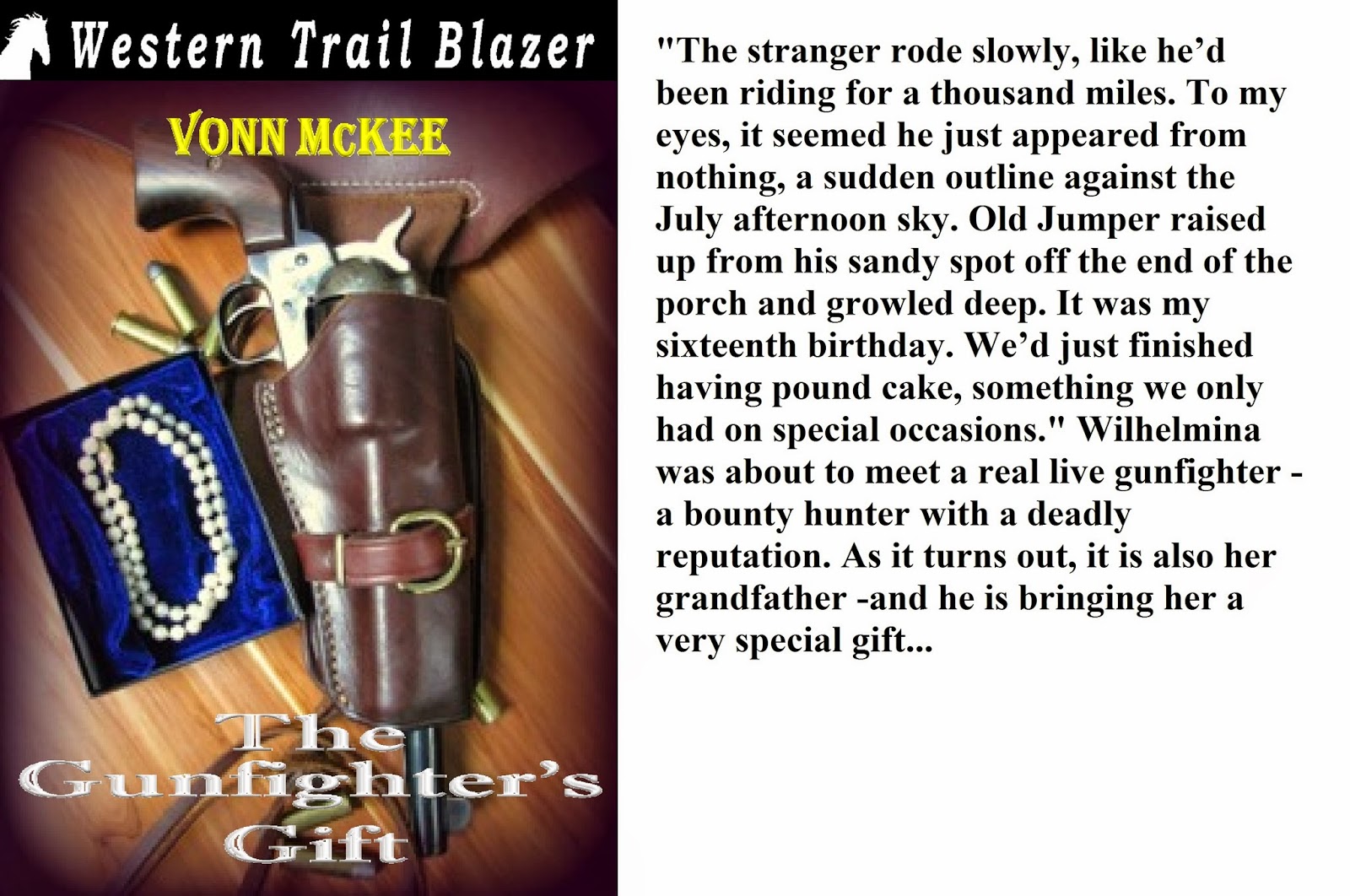
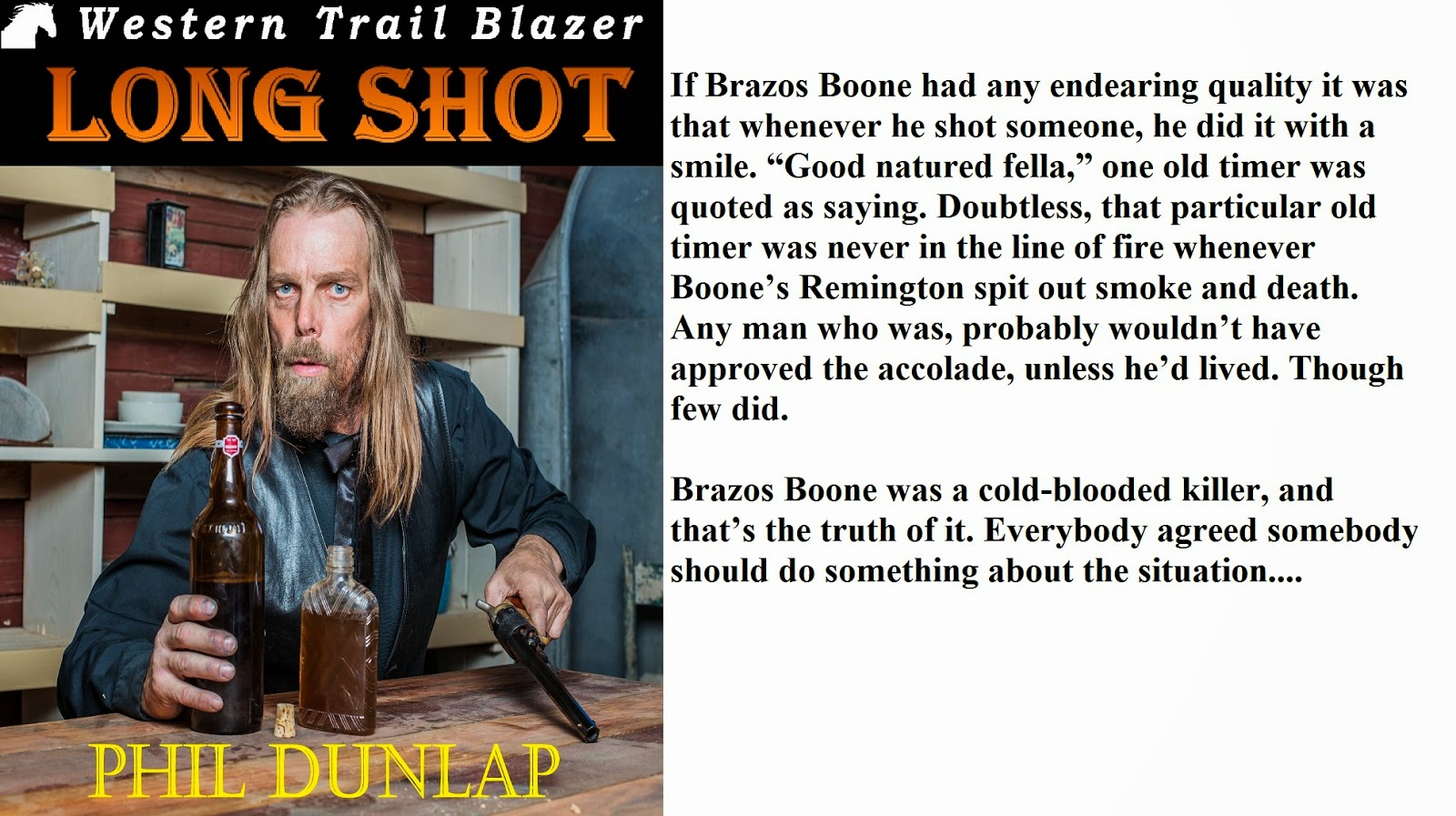
Western Trail Blazer -New Releases


Howdy, y'all! Here is our monthly roundup of WTB titles... we have some good'uns.


NOVELS:


SHORT STORIES:


ANTHOLOGIES:


And finally, from our sister imprint EBENEZER PRESS, we have two books that are not westerns but that we are quite proud of and think you would enjoy. The first is brand new, the other has been out a little while:


With much more to come. Onward and Upward!

Troy D. Smith,
Western Trail Blazer


Tuesday, June 3, 2014

American Indians and the Law Part 3


Troy D. Smith

Welcome to part three of this series dealing with American Indians and the courts. If you missed them, you can go back and check out PART ONE and PART TWO.

As promised, from this point I am going to discuss some especially important legal cases that took place in the post-Civil War American West. Most of these cases are at least partially linked to precedents set in the Marshall decisions in the era leading up to the Trail of Tears, but further refined legal concepts introduced in those earlier rulings. We will begin with one of those (unfortunately) rare cases that has kind of a happy ending for the indigenous people involved.

STANDING BEAR v. CROOK, 1879

If you are familiar with Western history and particularly the Indian Wars, you might immediately wonder if the "Crook" in question was General George Crook, who at various times opposed the Sioux and fought against Geronimo's Apaches. The answer is yes, THAT Crook. But who was Standing Bear?


Standing Bear was a Ponca Indian- a small tribe who had long lived in what would later be Nebraska. In 1877 they were forcibly removed to Indian Territory (Oklahoma.) About a third of the tribe perished upon arriving, many of starvation, including Chief Standing Bear's son. Standing Bear had promised his son that he would bury him in their Nebraska homeland, so when his son expired the chief and a Ponca contingent left the reservation and traveled north to do just that. General Crook was ordered to Nebraska to arrest them.


The general, however, was sympathetic to their plight, especially after he heard about the abysmal conditions on the reservation to which they had been removed. He arranged to get legal counsel for the chief, and they agreed to work pro bono. Susette La Flesche also agreed to help, serving as interpreter; La Flesche was a well-educated Native American woman who was married to an Omaha newspaper editor. Soon Standing Bear's story was being spread around the country, to mostly sympathetic ears.


Standing Bear's counsel sued for a writ of habeas corpus -that is, to have a hearing to be released from unlawful detention without evidence or cause. General Crook, even though he was sympathetic to Standing Bear's cause, was named as defendant because technically he was the government agent holding him under arrest. The case was heard in district court in Omaha.

Standing Bear was allowed to testify on his own behalf, and -raising his right hand -said: "That hand is not the color of yours, but if I prick it, the blood will flow, and I shall feel pain. The blood is of the same color as yours. God made me, and I am a man."   

The judge ruled in Standing Bear's favor. These were the five principle points of the judge's decision:

"First. That an Indian is a person with the meaning of the laws of the United States, and has therefore the right to sue out a writ of habeas corpus in a federal court and before a federal judge, in all cases where he may be confined, or in custody under color of authority of the United States, or where he is restrained of liberty in violation of the constitution or laws of the United States.

Second. That General George Cook, the respondent, being the commander of the military department of the Platte, has the custody of the relators [the Poncas] under color of authority of the United States, and in violation of the laws thereof.

Third. That no rightful authority exists for removing by force any of the relators to the Indian Territory, as the respondent has been directed to do.

Fourth. That the Indians possess the inherent right of expatriation as well as the more fortunate white race, and have the inalienable right to 'life, liberty and the pursuit of happiness,' so long as they obey the laws and do not trespass on forbidden ground. And

Fifth. Being restrained of liberty under color of authority of the United States, and in violation of the laws thereof, the relators must be discharged from custody, and it is so ordered."


In other words, Standing Bear and his contingent were free to go, and free to bury his son.

On a larger level, though, there were much broader implications. The biggest one was: An Indian is a person, according to law.  As a person, even though not American citizens (that didn't come until 1924, despite the Fourteenth Amendment stating that anyone born on American soil was an American citizen), Indians therefore have "natural rights" such as "life, liberty, and the pursuit of happiness." And individual Indians, if detained for no justifiable reason, have recourse to the courts.

Of course, there was still a long way to go, and a lot of legal points to be decided. One of them -one of the biggest, in fact -is: who has jurisdiction on an Indian reservation, the Indians or the federal government? Next time we'll look at a couple of cases that helped refined the court's official approach to that question.

You might also enjoy reading my blog series "Writing About Indians When You're Not One," which I will be adding to soon. Here are the topics we've covered there:

KINSHIP
BALANCE
INDIANS ARE PEOPLE
LEADERSHIP
PROPERTY
GENDER
SPACE AND TIME
SPORTS
THE ENVIRONMENT

You might also want to check out these fictional works with American Indian themes, available at amazon, smashwords, and barnes and noble...


TROY D. SMITH is an assistant professor of history at Tennessee Tech University, where he teaches American Indian History, American Indian Law, Environmental History, and Cherokee History.


Sunday, June 1, 2014

Kane’s Chance—Coming of Age

I was a judge of the Best Novel category of the 2014 Peacemaker Awards. There were so many good ones, it’s tough to choose what’s “best.” All of you who have read “The Hardest Ride” will see it is a kind of coming of age story. And a good one.

Another one of the entries that pulled me in was Cheryl Pierson’s Kane’s Chance.

You’d never know it by the cover, but the narrator is Will Green, and he’s only 13 years old. While he tells a story of Jacobi Kane, who rescued him from the Apaches when Will was only 10, the part of the story that grabbed me was how you could see Will grow as he told Kane’s story. Here’s how he introduces the book:

My name is Will Green and I have to share the story of how I met Jacobi Kane or I'll bust from holding it in. Apache renegades murdered my family and took me prisoner when I was ten. I never believed I'd live to see another sunrise, but Kane appeared as if from nowhere and fought to save me. Never saw a man so determined before, but I did have to step in and help a bit.
I didn't know at the time that Kane kept a secret from me, one which might change my high opinion of him. Then he met Laura, and she helped both of us heal in different ways.
Later on, once we settled down on a place of our own, Kane led a band of lawmen in their mission to annihilate the renegades responsible for killing my folks – and Kane's first wife and children. Laura sent me along after them, just to be sure Kane stayed safe. It turned out to be good planning on her part.
Once I turned thirteen, my own doubts crept in as to whether I actually should be with the Kane family. Then my wealthy grandfather showed up from back East, determined to take me to Boston. Took some doing for me to learn the true meaning of family and just where I belonged.
In the end, my grandfather and I faced a fight for our lives and, once more, our survival relied on Jacobi Kane and me. Now, I've got a family fortune to deal with – one I never knew about or wanted – one someone else wants bad enough to kill me for.
But I've found my place in life, with Kane's help, and I don't plan on giving it up anytime soon...

Then the story jumps back to the night Will, captive of Red Feather and his band of warriors. And from there to the massacre of Will’s folks at their homestead. Will must endure things no 10-year-old should. Then Kane comes to pluck him out of Red Feather’s camp. For some reason, leaving Red Feather alive.

Then he finds out Jacobi Kane, the man who rescued him, watched while Red Feather’s band killed his folks.

"I know how you're feelin' right about now."
No, I thought. You don't know the very first thing about how I'm feelin'.
"You're stomach's twisted up in knots – and I know it ain't 'cause you're afraid. You're the strongest boy I think I ever clapped my eyes on. I saw the way Red Eagle treated you…and the things he did to your folks."
How would he know about any of that, unless he'd been trailing Red Eagle's band for several days? Had he come by the home place just afterward? A thought shot into my head like a jagged bolt of lightning that burned and wouldn't turn a-loose. Had he seen it happen? Been there in the shadows of the woods, watching, and not helping?
He turned around to look at me, and he could see the dark path my thoughts had taken by the look on his face. His eyes took on a sorrowful light. "Wasn't anything I coulda done, young 'un. Too many of 'em. All I could do was follow you, and wait my chance to jump Red Eagle. But tryin' to save your pa and ma – they were killed so quick I couldn't've got from where I was to them before he got 'em anyhow. Then, the girl came runnin' out – I sure wasn't expectin' that." He shook his head, almost as if he felt responsible for Lisbeth gettin' shot.

Cheryl Pierson knows what goes on inside a boy’s head. Don’t know why, unless she’s a mother of some son. At any rate, this story of a young man finding himself, finding courage, finding sympathy, finding companionship, is a rare story indeed. Cheryl gets it right.

Almost everything Will thinks he can trust breaks that trust. Except Kane, and sometimes he wonders about that. You see, Will’s dad was the son of a rich man. A man who owned a large ocean shipping company. A man of the sea. But Will’s dad didn’t want anything to do with the sea. He wanted a family and some good earth to till. That yearning got him killed.

Will finds out Kane is a half breed. But Kane teaches him the ways of self protection. Kane says the marshal is trustworthy. But he isn’t. In fact, few of the people in Will Green’s life are trustworthy. Not the marshal. Not the captain. And maybe not even Kane.

Nevertheless, he finds a home with Kane and Laura and a soon-to-be-born baby. It would seem all was well, until Will’s grandfather shows up on the scene. A crafty old man who’s out to find his heir. Will doesn’t want him to know, but is not apt at fooling folks. And he was afraid his grandfather was going to force him to go to Boston with him. Here’s what Kane said:

Jacobi reached out to lay a reassuring hand on my arm. "You've no reason to be afraid, son. He'll have to come through me to get to you. You're just going to have to reach down inside and hold on to your faith."
"Is that all?" I asked stiffly.
"No. Let go of your fear, Will." He said it real gentle, and I felt my eyes sting. It was a hard thing to accept, that Jacobi knew just how I felt. It could only mean one thing – that he had felt the same as me, at some point. And I didn't want to think on that.
Anger was my best defense against understanding what I didn't want to know. I wanted to shout for him to go to hell. I wasn't afraid of an old man, a Yankee who didn't know how to get along in this rough country we called home. But I didn't say it. I didn't speak a word, because I knew what Jacobi said was true.
I was scared down to my soul.

I’m not going to tell you what happens. But believe me, the tears will come and the goosebumps will run up and down your arms as you read this fine coming of age novel by Cheryl Pierson.


My own coming of age story takes place in Yuma Prison. 


Announcing the Winners of the 2014 Peacemaker Awards

Western Fictioneers is proud to announce the winners of the 2014 Peacemaker Awards for excellence in Western fiction.

Best Western Novel: THE HARDEST RIDE, Gordon Rottman (Taliesin Publishing)

Best First Western Novel: MUNDY'S LAW, Monty McCord (Five Star Publishing)

Best Independently Published Western Novel: SONGBIRD, Bill Crider writing as Colby Jackson

Best Western Short Fiction: "Charlie's Pie", Livia J. Washburn, WISHING FOR A COWBOY (Prairie Rose Publications)

This year's Lifetime Achievement Peacemaker Award goes to best-selling author Frank Roderus. In addition to his many critically acclaimed novels, Frank was also the first president of Western Fictioneers and helped mold the organization into what it is today.

Congratulations to all the winners and finalists, and as my final act as awards chair, I'd like to thank all the authors, editors, and publishers who submitted books and stories to the competition, as well as the judges for all their hard work in determining the results. The Peacemaker Awards have grown every year of their existence, and I look forward to them continuing to do so.

Western Fictioneers (WF) was formed in 2010 by Robert J. Randisi, James Reasoner, Frank Roderus, and other professional Western writers, to preserve, honor, and promote traditional Western writing in the 21st century. Entries were accepted in both print and electronic forms. The Peacemaker Awards will be given out annually. Submissions will be open in July, 2014 for stories and novels published in 2014. Submission guidelines will be posted on the WF web site in July. For more information about Western Fictioneers (WF) please visit: