Showing posts with label western writers. Show all posts

Tuesday, June 28, 2022

WHAT A LIFE! Interview with 'BIG' JIM WILLIAMS


What a life! In putting this interview together I was struck by how writing and creativity have no age restrictions. Big Jim Williams, and he is quite tall, has led such an interesting life. I hope you feel as inspired by him as I have been. Read on!


Photo Provided by Big Jim Williams


* Where did you get the idea for your latest release? What is the elevator pitch for it?


GALLOWS JUSTICE, my fourth Jake Silverhorn novel, was released on Amazon in April 2022. The story: Jake and three other Texas Rangers make a long ride through hostile weather-warped lands from Texas to Arizona’s Territorial Prison in Yuma to bring back three killers for execution in Texas. They face deadly troubles from landslides and explosions to storms, floods, fires, shootouts, angry mobs, and endless attempts by gang members and the leader’s beautiful girlfriend to save the killers. Have also added twists and turns and subplots to make it more interesting.


Amazon


*  Are you a plotter or a pantser?


I generally create one or two characters and then start writing to see what they will do. That works when writing short stories. However, after writing several novels, I’m beginning to outline the plots and scenes before writing. In the past, I’ve ended up wasting time by getting lost in my own story. I’m now outlining my next novel. This should avoid a lot of rewriting, and speed up the process.


* Is there a writing routine you follow or do you write when the muse strikes?


I’m an early riser, often up by 5:30 a.m. and working at my computer. Also, write during the day and often during evenings and weekends since I live alone. However, I’m also known to kick back and not write for several days to recharge my batteries. I’m also good at goofing off when needed.

I wrote publicity copy for years, so try to write “tight” to say what I want in as few words as possible when writing fiction.


Amazon


* Is there anything else you feel people would like to know or would be surprised to learn about you?


I’m a great fan of “The Golden Age of Radio,” when dramas, action, music, and other programs were broadcast on radio before TV came along. I’ve spent most of my life working in radio as an announcer, morning DJ, interviewer, and newscaster. I’ve also been a “news stringer” for the Voice of America, the U.S. Information Agency’s shortwave broadcast service, narrated and acted in industrial, sales, and motivational films, and sang in amateur musicals. Did press releases for years––some bordering on fiction––but prefer writing Westerns and short stories.

Fortunately, I’m in pretty good health and will continue to write as long as I can. I may be the oldest member of the Western Fictioneers. I recently turned 90. I’m also an Army veteran (worked in Army TV), later was in the U.S. Coast Guard Reserve, have two adults sons, four grandkids, and one great-grandson. My wife, Joan, and I were fortunate to travel in Europe and the Pacific before her passing in 2015. Hope to do more traveling.


* Do you write in other genres?


I’ve written many short stories, including those dealing with crime, humor, California’s gold rush, and ghost stories, which have been a kick to write, several published in Suspense Magazine. My radio drama, “Close Encounters of The Confederate Kind,” aired on over 100 NPR Radio Stations.


* Research, do you find it important?


Now writing a novel featuring a Black Mountain Man, an escaped slave from America’s south prior to the U.S. Civil War. Have read much about wilderness survival, and the Mountain Men seeking beaver pelts in America’s frontier around 1820-40 and beyond. So I continue researching this historic time and the men who lived it. My central character marries a Cree Indian woman and eventually fights in the Civil War to help free his mother and family. The book is not a biography but is loosely based on the life of James Beckwourth, a mixed-race real Mountain Man and former slave.

Also working on a first-time juvenile book that is also fun to write.


* Do you have unique ‘marketing’ tips you are willing to share?


I’m a novice regarding the marketing of books. However, to help sales, I’ve recently hired a publicist. We worked together before. He was a big help. Will see how it goes this time.

I’m a realist. With all the thousands of books published, one does need to be a famous person or household name to get the right media exposure and sell books. If you’re a famous actor, politician, or crook, it all helps. But if you’re a new writer trying to get established you need help. I don’t have an agent, but wish I did.

I now have nine books posted on Amazon. I also have numerous short story credits in online and print magazines, and in anthologies. I’ve been getting published since 1998.


Amazon


* What advice would you give to those who dream of writing, or what advice would you give your younger self?


Keep writing and never give up. Also, get to know other published writers in your area, take writing classes at your local junior college, and join a writers’ group. I’ve found that most writers love to talk shop, and are also willing to provide help and advice.


* What books or authors that you grew up with that inspired you to take pen to paper?


My favorite fiction writers are Mark Twain, Robert Louis Stevenson, Jack London, O. Henry, and Guy de Maupassant. Their stories, with countless twists and turns, are the best. My favorite Western authors are Zane Grey, William MacLeod Raine, Max Brand (Frederick Faust), Ernest Haycox, and Jack Schaefer, especially for his great novel, MONTE WALSH.

I have wonderful memories of being exposed to great writing when I was in grammar school in Ojai, CA. My sixth-grade teacher, Mrs. Herman, read wonderful stories to us every day: TREASURE ISLAND, KIDNAPPED, TOM SAWYER, IN A DARK GARDEN, and so many other books. During those years the teachers would march our class across our one-block town to the library where Miss Harding and other librarians would read to us while we sat on the large Spanish floor tiles. I loved those times, and the great adventure stories that have inspired me to also become a writer.


* If it were possible would you choose to go forward in time or back?


I love the pioneers, the men, women, and children, who had the guts and courage to move West in frontier America. Can you imagine joining a wagon train and traveling (mostly walking) across the U.S. to a new life in California, Oregon, or Texas? What brave souls they were. Would loved to have met those people. However, would miss today’s conveniences of good food, running water, indoor plumbing, electricity, computers, cars vs. horses, etc. So I’ll stick with living in today’s confused world.

But what great stories we could have gathered while living in frontier America, as many writers did.


* Have you considered writing a series, either by yourself or with a group?


I have been writing a series of novels for DS Productions featuring Jake Silverhorn, a young Texas Ranger. GALLOWS JUSTICE was released in April 2022 on Amazon. Other books in the series are BORDER JUSTICE, TEXAS JUSTICE, and, SEEKING JUSTICE. I’m now outlining a fifth book in the series.

I’ve never collaborated with anyone on writing. Have always worked alone, but, under the right circumstances, might try writing with someone on a book or movie.


To learn more and find all the wonderful books along with the anthologies Jim is a part of, check out his Author Page: Big Jim Williams author page


A huge thank you for a fascinating look into your life as a writer, Jim. I look forward to your upcoming stories and I also read William MacLeod Raine when younger. (Hey, he lived in Colorado for a bit.)  


Saturday, February 19, 2022

Interview- Author Jeffrey J. Mariotte


This month the interview is with Jeffrey J. Mariotte. An author, like most of us, writes across genres. He co-wrote a story about Joaquin Murrieta and has a new series he has started. I do hope you enjoy Jeff's interview, I know I did.


*. What decided you to start writing for publication?

I’ve aspired to writing for publication since early, early days. I was rejected a couple of times in high school. In college I took third place in a San Francisco Bay Area short-story competition, earning my first money—a big $30—for writing. I also had some journalism published, which only whetted my appetite. My first actual fiction sale didn’t come until I was in my thirties, though, to a science fiction anthology. After that, I wrote some comic books and graphic novels, and my first novel was published when I was 44. Since then, I’ve stayed busy.


Amazon

*. Do you like to write short or longer stories?

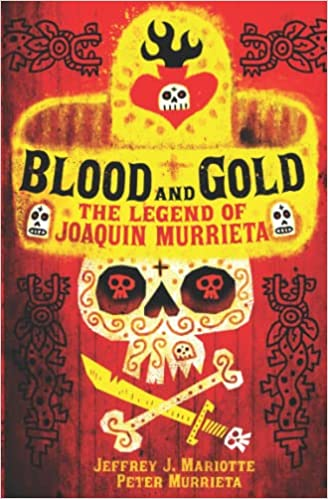
I lean toward novel length. I’ve written a handful of novellas and maybe a couple dozen short stories, but more than fifty novels. I like to have the space to stretch out and tell a big story that a reader can get lost in for a while. My longest book was published last year by Sundown Press. Blood and Gold: The Legend of Joaquin Murrieta, which I wrote with Peter Murrieta, a direct descendant of the Gold Rush-era bandit, clocked in at nearly 600 pages. I don’t anticipate going that long again any time soon, but anything’s possible.


*. Where did you get the idea for your latest release? What is the elevator pitch for it?

Inside a Confederate prison camp, a dying man tells a young Union soldier is told where a cache of stolen Confederate gold is and asks him to deliver it to the man’s beloved after the war. He finds the gold and—12 years later—finally finds the woman. But in doing so, he walks into a town at war with itself and discovers that the woman has taken up with the mysterious figure at the heart of that war. If he’s going to do his dead friend’s bidding and deliver the gold, he’s got to bring the war to an end—if he can survive it.

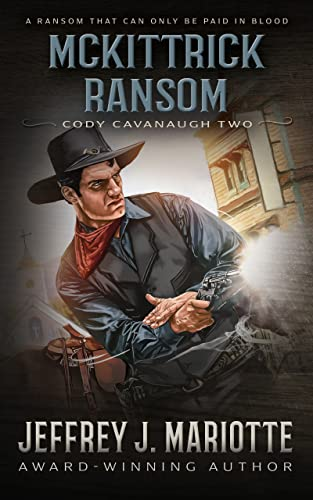
I don’t remember where the initial impulse came from. All I had was the young man in the camp and the promise to a friend. I was on a long car ride with Bob Boze Bell, the publisher of True West Magazine, and I told him that part. He said, “What happens next?” I didn’t know. So I had to sit down and figure that out, and that became O’Meara’s Gold, the first book in the Cody Cavanaugh series from Wolfpack Publishing.


Amazon

*. Are you a plotter or a pantser?

I’m definitely a plotter. I’ve written a lot of tie-in fiction, in which you’re writing in an established fictional universe owned by somebody else, and you have to have an outline approved by the license-holder before you can write. Then you have to stick pretty close to that outline. I have written a few books without an outline, but it’s harder going for me. I’m much more comfortable with a roadmap that tells me where I start, where I’m going, and the main points of interest along the way.


*. Do you ‘interview’ your characters before or at any time while telling their story and what do you do if they don’t cooperate with your story idea?

I have done that. I first learned about it in a writing book by my friend David Morrell, and it’s helped me out of a number of tight spots. That said, I don’t do it as a regular practice, just when I can’t figure out what comes next and need my characters to tell me.


*. Do you write in other genres?

I love many different genres—mystery, thriller, horror, western, fantasy, science fiction--and have written in all of them, as well as having written for different media, including comics and graphic novels, games, newspapers, magazines, and the backs of trading cards. I’ve been a member of writer’s organizations for just about all of those genres, but I’ve let some of those memberships lapse. I’m currently a member of Western Fictioneers, the Western Writers of America, the Horror Writers Association, Sisters in Crime, the International Thriller Writers, and the International Association of Media Tie-in Writers because I still occasionally write in all those genres. At the moment, I’m working on a series called Major Crimes Squad: Phoenix, a police-procedural series for Wolfpack Publishing. I don’t know that I could ever pin myself down to just one genre.


*. Research, do you find it important?

Research is definitely important to everything I write. When possible, I like to stand where my characters will, so I can see what they’d be able to see, smell what they’d smell, etc. When writing in a historical era, I need to know what the technology was like, what the prices of things were, what the characters would wear, and so on. Some writers who’ve written lots of western fiction might know those things cold by now, but I’ve fooled around in so many genres that I have to do a lot of reading and a lot of digging, and traveling when I can, to get it right. Or close enough to right that I can tweak it as the story demands.


*. What books or authors you grew up with that inspired you to take pen to paper?

I’ve always been surrounded by books, from Dr. Seuss and the Hardy Boys to today. I’ve managed and owned bookstores and been a publishing executive. I have a massive collection of thousands of books, mostly first edition hardcovers, many of which are inscribed to me thanks to my decades in the book biz. The single book that was most influential in my youth was Mystery of the Haunted Mine, a juvenile novel by Gordon D. Shirreffs. That’s the book that introduced me to Western fiction (though I had been a fan of western TV, movies, and comics since my earliest days), and steered the direction of my life and career.


Jeffrey Mariotte

www.jeffmariotte.com

Amazon Author Page


Saturday, November 20, 2021

EXPRIENCE & ENVIRONMENT - MICHAEL R. RITT

For this interview, I get the chance to share Michael R. Ritt's story. Although some may consider him a late starter, his stories have made a big impression. Since interviewing Michael, he has gone on to win the 2021 Will Rogers Medallion First Place Award in Western Fiction for his novel "The Son's of Philo Gaines".  

It's hard to believe it has been a year since these interviews began. 

Michael R. Ritt
photo provided by Mr. Ritt


 When did you realize you wanted to be a writer?

As best as I can remember, I started writing when I was a freshman in high school. I wasn’t a “popular” person in school. I wasn’t involved in sports at all. I was more academic, and, being socially awkward, I did a lot of reading. Reading was a way for me to escape to faraway places and have adventures that my own life would never provide me with. Writing was a natural extension of reading. I think anyone who spends all of their time with their nose in a book is either a writer or secretly desires to be a writer. While in school I wrote some short stories, but I mostly wrote poetry and essays.


Amazon

Did you choose the genre you write in or did it choose you?

This is about as easy to answer as the debate between free will and determinism. I think that my experiences and my environment both collaborated to make me who I am. They helped me to develop a set of values and ideas that are important to me and which inform the writing that I do. Values and ideas such as second chances, family, hard work, independence, personal responsibility, and justice. So, in one sense, I guess that I choose to write Westerns because these are all popular themes in the Western genre. But in another sense, who I am and what’s important to me is a big determining factor in what I write.


I think that it’s interesting that I have a brother who is also an author. He writes under the name of Dean M. King. Although we had the same basic childhood experiences and environment, and we’ve developed almost the same identical set of values, he writes in the horror genre. Maybe that indicates that personal choice is a bigger part of the equation.


What was the nudge that gave you faith that you could and wanted to be published?

I was very fortunate to have made some good friends in the Western writing community who were all very encouraging and very helpful to me when I was trying to get my first short story published. Not the least of these was Brett Cogburn, who is one of my top three favorite contemporary Western authors. Back in 2013, I shared a link with Brett to a story that I had posted online. He read it and saw some potential in me. At the time, he was working on editing a collection of stories for High Hill Press and he worked with me to get a story in shape to be included in the anthology. So, my first story was titled The Conversion of Boze Carter and was included in the anthology Rough Country.


Amazon

Where did you get the idea for your latest release and tell a bit about the story?

My latest release is my first novel, The Sons of Philo Gaines. It was a finalist for two Peacemaker awards in 2020 – Best First Western Novel, and Best Western Novel. It has also been nominated for a Will Rogers Medallion Award.


It’s the story of three brothers who are the sons of a legendary figure named Philo Gaines. Each brother is as different from the other as can be, but each of them is trying to escape their father’s shadow and become their own man. The eldest is a soft-spoken, socially awkward school teacher. The middle brother is a carefree, easy-going gambler, and the youngest one is a gunman with a highly developed sense of justice but a deep distrust of lawmen. The book is rather uniquely formatted as three interconnected novellas with each brother having his own story. Then, at the end of the book, the three brothers all come together to confront the book's main antagonist.


I got the idea for the book one night as I started to think about what my own three sons would be like if they had lived in the old west. So, each of the brothers in the book is actually based on the qualities and characteristics of my own sons.


Are you a plotter or a pantser?

I am very much a pantser. Whether I am writing a book or a short story, I usually only have a vague idea of where the plot will go. I like the idea of discovering what my characters are up to as they move the story forward. However, I find this is a very slow process for me and I am trying to be at least a little more organized when I start a new project.


Amazon


If you had a choice, which is your favorite to write, short stories, novellas, or full-length novels?

Writing a novel is very demanding, and there is a lot of work that goes into it. Before you even start writing, there is research to do. Even if you are writing fiction, you want to be historically accurate with details of clothing, mannerisms, language, and weapons that are mentioned in your book. If you describe places, cities, towns, mountains, rivers; all of these have to be described accurately. If I mention a flower on a cactus in my book, you can be assured that it existed in the location I am writing about, and it was blooming at the time I’m writing about. I even checked astrological calendars to make sure that the moon phase was correct for the day and year that I wrote about.


After the research is the writing and the endless edits. And then, when the book is finally finished and published and, on the shelf, you still have to spend a lot of time in marketing and promoting it.


All of this is to say that I do not have the time to write short stories like I used to, but I will always be a short story writer at heart. I enjoy the challenge of telling a complete story in five thousand to fifteen thousand words, and of creating characters that the reader will connect with when you don’t have the time or space to fully develop them.


Do you write in other genres?

I’m primarily a Western writer, but I will occasionally write in other genres, such as frontier fiction and faith-based fiction (both contemporary and historical). I also write for two blogs that are Western and general historical non-fiction and one faith-based blog.


Are there authors you grew up with or inspired you to take pen to paper?

As far as writing Westerns goes, like many in my generation, I grew up reading Louis L’Amour and Zane Grey. Larry McMurtry and Robert B. Parker were also big influences on me.


Amazon link: https://www.amazon.com/gp/product/143287103X/ref=dbs_a_def_rwt_bibl_vppi_i8


Personal website link: https://michaelrritt.com/home/

Tuesday, July 27, 2021

Is It True, Mr. Adams? (Andy Adams)


Post by Doris McCraw
writing as Angela Raines

Many people talk about Andy Adams and his writings. Many speak in fond terms about his book, "The Log of a Cowboy". Manly Dayton Ormes (yes, that's his real name) in his book, "The Book of Colorado Springs" wrote the following about Adams:

            Andy Adams, another of our own, came to Colorado during the Cripple Creek gold excitement, after his Texas cowboy life. He took up mining and story writing; he lost a fortune in the first venture but retrieved at least part of it in the second; after he wrote "The Log of a Cowboy", his work was sought far and wide. His insight into cattle life "was not obtained from a Pullman car window, but close to the soil, and from the hurricane deck of a Texas horse." These are his words. He tells of seeing one night after his money was gone, Charles H. Hoyt's "A Texas Steer." The opera house was crowded with a delighted audience. With his 20 years in the West, 12 of them in the saddle, he told Henry Russell Wray, who was a great friend of his, that he felt he could contribute something of the real romance of the cattle trail which should please the public even more than the sensationalism of "A Texas Steer." So being encouraged by his friend, he tried his hand and one. He has since lived here, an interesting figure connecting present and past.

Andy Adams
photo from Wikipedia

Yes, the iconic book, "Log of a Cowboy", if not written, was probably finished in Colorado Springs, Colorado, and published in 1903. The play of Hoyt's he spoke of played in both Pueblo and Leadville around 1900. In 1903 he was rooming in the St. James Hotel. He later moved to The Albany Hotel, which was built in 1902, where he remained until his death in 1935.

Photo Property of the Author

The local papers would note when Mr. Adams was writing another book. He was a celebrity in what was then a modest-sized town. Yet, almost all speak of Adams with great affection. Of Scotch/Irish heritage, Adams was six foot tall and was said to have a kindly smile and modest manner. The biographical/obituary articles after his death had this to say:

             He did not give the impression that he was one of the world's greatest literary figures either. With his rather wide-brimmed Stetson, his black string tie, and slightly oversized caller, he seemed more the big ranch owner or foreman than one who had written the finest novel of the cowboy and the trail that has ever been written. Like his friend Rhodes, he did not regard the writing of a good book as constituting any greater distinction than the writing of a good horse or the capable driving of a trail herd.
            And he rarely "talked literature." He alluded once in a while to the novels by Rhodes and Hough, as he mentioned now and then the paintings by Russell and Charles Craig, because he admired them and saw in them true portrayals of the West and the cattle range as he knew them. But literature as a thing separate from reality met little if anything to him.
            "I don't know anything about fancy writing," he said once, "any more than I know about this fancy writing you see in the pictures. When I sit down and write I go about it the best I can, tell what I have to say and quit. That's the way I did when I wrote a horse. I leave the fancy stuff to the fancy fellows."
            Which is one of the reasons why Andy Adams was a great — a great writer and a great cowman.


Photo of Adams from The Colorado Springs Gazette
around 1926

In 1923 Adams received a letter from a Mr. B. Youngblood from the Texas Agricultural  Experiment Station in College Station, TX. requesting some biographical information as they were using his books to teach about Texas ranch life. Adams reply read:


Adams had joined the Masons after moving to Colorado. He is buried in Evergreen Cemetery in Colorado Springs.  He died on September 26, 1925, of a heart attack, the following was posted in the biography/obituary that appeared in the paper:

            Andy Adams, the last of the great cowmen who abandoned the cattle drives and roundups to travel the trails of Western literature and art, has gone to join the other members of that noble brand — Emerson Hough, Charlie Russell, an old Gene Rhodes. Andy headed down the last trail early yesterday morning.
            "Just get an early start, well before sunup, as any good cowboy out to do," he himself would probably have said that had he known that the bars were down for the last, lone trek.
            Though his death was unexpected by his friends, he himself seemed to of had a premonition that the end was near. Only a few days ago, when informed in the course of one of those short walks he was in the habit of taking daily, that his health appeared to be improving, he smiled and asked, "Do you really think so?" Then he shook his head. "The old pump's worn out," he said. "I'll have to junk it one of these days."
            But he didn't look as if the "old pump" was worn out. Large of body, full of determination to keep going, he did not give the impression of a man who stood at the brink of the grave.

Thus ended the days of Andy Adams, a writer many know, and an unknown to so many others. Yet, like all writers, his words live on in the stories he told. 

Photo property of the Author

For those who might be looking for an ebook copy of "Log of a Cowboy". There are also newer versions and paperbacks.

Doris Gardner-McCraw -
Author, Speaker, Historian-specializing in
Colorado and Women's History
Angela Raines - author: Telling Stories Where Love & History Meet

(c) Doris McCraw  All Rights Reserved.

Saturday, March 6, 2021

EVERYONE NEEDS A 'HERO' - INTERVIEW WITH CAROLINE CLEMMONS

 In honor of National Women's History Month, the next interview will be with Caroline Clemmons, another Woman who Writes stories that take place in the West, mostly the Old West. We hope you are enjoying this short series. 

And now we give you Caroline Clemmons. 

            Did you chose the genre you write in or did it choose you?


I think it chose me. My first book was contemporary, but then I wrote a couple of western historical romances for Kensington. I felt and still feel so comfortable with post-Civil War historical settings. My dad used to tell stories about his family’s adventures after they came to Texas in 1876. He didn’t mention the year, but I learned that when I became interested in genealogy. I loved hearing the stories no matter how many times I’d heard them before.


What was the nudge that gave you faith that you could and wanted to be published?

Oddly enough, my mother-in-law gave me a grocery bag (remember the large brown bags?) filled with romance novels and told me I could write them. I always thought she didn’t like me so that was a BIG surprise. I used to write long, long letters detailing everything my Hero or our precious children did. She said she could tell from my letters that I could write books. Hero agreed. Up until then, I’d only written newspaper articles. Soon after that, I had pneumonia. While I was ill and recovering, I came up with a plot. My sister complained that once I started writing books, she never got nice, long letters again. That’s true.


Did your life experiences influence or hinder your writing?


In my opinion, our life experiences influence our writing in many ways. I don’t mean I take a real event and use it per se. We are the sum of all we have seen, hears, read, or experienced. When writing, we draw on our inner well and pour out the necessary emotions and events to convey what we want our readers to experience.


Where did you get the idea for your latest release and tell a bit about the story?


For a while now I have been participating in multi-author projects (MAPs) in which the MAP creator sets a parameter and each author sets her story within the context. The one I’m writing now is for the Proxy Brides series. Thinking of reasons for a woman to become a proxy bride or mail-order bride is difficult. There were not enough eligible men in the East after the Civil War and that left many women unable to marry unless they did something drastic. I love marriages of convenience such as mail-order brides or proxy brides or Pinkerton Matchmaker brides. Having the husband and wife getting to know one another while forced to battle an assailant adds complexity to the story. The current story is A BRIDE FOR HOUSTON, and V. McKevitt of Black Widow Cover Designs created the gorgeous cover.


Is there a writing routine you follow or do you write when the muse strike?


I write every day. I’m NOT a morning person, so the first thing I do when I sit at the computer is answer email, comment on blogs, and check my groups on Facebook. By then I’m awake and can dive into my work in progress. I usually take a break with my husband and watch a movie on television at about six. Often, I go back and work a while afterward.


            If you had a choice, which is your favorite to write, short stories, novellas or full-length novels?


Ah, I DO have a choice because I’m indie-published. I choose novellas of 30K-50K. With that length, there is room for secondary characters and their stories. My second choice would be full-length novels. I do enjoy writing the longer story but have become used to writing novellas. I’ve tried but don’t like writing short stories.


            Is there anything else you feel people would like to know or would be surprised to learn about you?


I’m an introverted homebody. However, I love to travel with my husband, whom I call Hero but am not one who enjoys huge conventions. The Western Fictioneers conference I attended was a perfect size and my husband could attend with me without feeling out of place. Jacquie Rogers “nudged” me to attend and I’m glad she did. She’s a great “nudger” and a great writer—and not an introvert!


Do you write in other genres?


Yes, I have written a couple of mysteries and have a third ¾ complete. Our youngest daughter and I are considering writing a duet where we each write a cozy mystery set in the same small Texas town with overlapping characters and businesses.


What are your favorite areas of research and why they are important to you?


Having details right are important to make the story credible. Many people who read historical novels are familiar with the history. An error in one place makes them suspicious of other details. A friend and I stopped reading one author because of her anachronisms. The friend’s mother insisted she didn’t care and kept reading the author’s books.

Even if only part of a sentence appears in the book, it’s worth researching to be certain it’s correct. In addition, I love learning the unusual facts of each locale. Getting sidetracked by research is all too easy for those who love history.


When do you start to ‘market’ your new release?


Thank you for that opening—I already have. A BRIDE FOR HOUSTON will be released in April of 2021. It will be available in e-book for $2.99 and in print (I don’t yet know the print price). Where available, it will be free on Kindle Unlimited. 


To follow Caroline or learn more, check out the following links:

 Website

Amazon Author Page


Saturday, January 9, 2021

500 Hundred Manuscripts - Interview with Charlie Steel

This time around Western Fictioneers is interviewing Charlie Steel. What an interesting perspective Charlie has given on writing, research, and how he became a writer. Read on. I'm sure you'll find something you can relate to as you take your writer's journey.


Charlie, when did you realize you wanted to be a writer?


At age 8, when I started reading, I thought, "I can write too." I had broken into my father's library and quickly devoured Zane Grey, Max Brand, William MacLeod Raine, Jack London, Gene Stratton Porter, and James Oliver Curwood. Thank goodness for Webster's Dictionary ( I still mispronounce the words I learned on my own at that early age). Secondary to that, and ever since I can remember, I have always had stories in my head.


Did you choose the genre of Westerns or did it choose you?


I knew so much about the WEST, and it felt comfortable to write in that genre. (I hate the word genre, as a good story is a good story no matter time or place.)


What was the nudge that gave you faith that you could and wanted to be published?


In the early '60s, my first vignette was published in a college paper at age 17. It was well-received. Then I did two plays that earned both Pitt & Balcony Theatre and Michigan State University tens of thousands of dollars.

I didn't write a good query letter, didn't edit very well, and after a hundred or so rejections, I gave up submitting for some 40 years. But I kept on stockpiling hundreds of short stories, some plays, and enough material for over 80 books. In 2002, I met an editor who read some of my work and began to help me. I was published in 2003 and haven't stopped. I don't self publish, and I like smaller publishers; they are much kinder to a writer.

All of my 500 plus manuscripts from over 50 years of writing have to be edited and some rewritten. That takes 3 months to 2 years. Editing is horrible and my worst enemy. I will never submit a story to a publisher until it is as good as I and other professional editors can make it.


Do you think your life experiences influence or hinder your writing?


Yes, my experiences have definitely influenced my writing in many, many ways. To begin with, I was precocious as a kid, living in a very small town. I burned down a barn (accidentally) at age four and was the first four-year-old to be arrested for arson. The police eventually took me out of lockup and turned me over to Dad. My father levitated me and performed extreme discipline, yelling, "Four years old and already arrested and in jail." (Lucky I lived through that.) At age 19, I joined the Army, was lifted out by the government because of my test scores and personality traits. Then I trained and served behind the Iron Curtain monitoring Russian activity. After discharge, I went back to Berlin as a civilian with higher pay and performed the same functions for several more years. I then worked my way through eight universities, earning five degrees, including a Ph.D. Later I was hired as a Child Protection Worker in a high-risk city. In that capacity, facing drug-dealers and guns while trying to remove children, with or without police assistance, was in many ways more dangerous than being behind the Iron Curtain. It forced me to see the "belly of the beast" and nearly destroyed my health. I don't understand my proclivity for dangerous jobs, but I did them to the best of my ability.

Writers write based on what they know and have experienced. Going back to my childhood, I worked beginning at age six doing chores around the house. My parents were stern taskmasters, and I was responsible for helping keep the much-needed garden weeded and watered. Later, I worked for others. I was hired as a grocery store worker at age 10 to help purchase my own clothes. Among many other jobs were oil field worker, construction, foundry work, and salvage diver. (Nothing really out of the ordinary as all of us born in the '40s worked from childhood on. We had to; most of us were poor.)


I understand you have an upcoming release. Where did the idea spring from?


STRONG WOMEN OF THE WEST Anthology is my latest and will be released by Condor Publishing, Inc., in January 2021. I wrote this book as a tribute to my mother and all strong women wherever they may live. My mother was tough and did everything she could to keep me on the "straight and narrow," and sometimes not so gently. She would have won World War II if they had put her in charge. She declared war on dirt and on bad behavior in our house—she won. I admire strong, intelligent women. To me, intelligence is a beautiful thing and lasts a lot longer than good looks, which, of course, is superficial and overrated. The idea of writing about strong women came naturally, and some of the stories in this work were written decades ago. Women make up half the population or more and should have been running this world ages ago. (Look what a mess men have made of it.)


I have to ask are you a plotter or a pantser?


All my life stories came into my head—beginning, middle, and end. The majority I never wrote down, and they are lost forever. But some 500 or more, long or short, were written as they came to me, nearly fully composed. (Of course, they all needed rewrites and further research.) My best books or short-stories are those I wrote non-stop within a few days as fast as I could type. But as stated before, the editing takes forever…


Do you follow a routine or write when the muse strikes?


I used to write every day. I am old, and now I take my time. Besides, I have those many manuscripts that are finished and need editing.

I also have many other stories that are not complete. It is a terrible thing not to finish a manuscript. I am currently attempting to work on some of them. In my conversations with other writers, I am not alone in this.


Which is your favorite to write, short stories, novellas, or full-length novels?


SHORT STORIES capture a world and define it, mesmerize, and end with a concise conclusion. The short story is my favorite because it makes the reader think, wonder, and fill in the unwritten details.


Is there a process where you find your next story, or does the idea just hit you?


It smacks me in the face…and pleads to be written down.


We all have something that makes us unique. Is there anything else you feel people would like to know or would be surprised to learn about you?


Reading saved my life when I was a child. I started school too early (four-years-old) and was in a fist-fight nearly every day throughout grade school. Books were my world, along with avid fishing and hunting. What fish and game I brought home, the family ate. There is no better meat than venison.


Do you write in other genres?


(Science Fiction, don't tell anyone. A book of short stories will come out someday.)


What are your favorite areas of research, and why are they important to you?


Any credible book, article, or interview helps a writer. Most research material available to a writer is endless. Details sometimes on a rarified subject are hard to find.

The Indian experience (my Indian friends do not like the term Native American) and their decimation, for example, has never really been told as to how gruesome it was. The deliberate elimination of Indians, tribe by tribe, from the East Coast to the West Coast is our shame and our holocaust. Historians didn't tell the truth (and often still don't) and did not document exact details, and they participated and exulted in the Indian's demise. We are fortunate that any tribe exists today. In this very present time, treaties and promises have not been kept. Indians still live isolated and in abject poverty; treaties are still broken, and land is still stolen. Wish I could write about it in more detail, but it is such a horrible history, beyond human understanding.

Research is essential; we try to get it right. All writers make mistakes, but hopefully, we do the best we can.


Thank you Charlie for the interview. Wishing you the best on the upcoming release.  For those who would like to know more about Charlie and his books, check out the following links.


Amazon Author Page - Charlie Steel


Charlie Steel - Website


Sunday, July 29, 2018

WESTERN FICTIONEERS CONVENTION COUNTDOWN! By Vonn McKee


I can’t believe that in only SEVEN weeks (September 14-16), we will be gathered in Oklahoma City for the 2018 Western Fictioneers convention! By request, we have more time scheduled for plain old socializing—a great opportunity for catching up with old friends and meeting new ones.
Here are a few highlights:


FRIDAY

     Enjoy several discussions led by our very own Fictioneers experts! A discussion of horses in western literature, straight from the horseman’s mouth (Jim Griffin). Diane Garland, Jacquie Rogers, and Ron Schwab will advise on keeping your fiction worlds spinning (very helpful when writing a series). We’ll take a look at the role of women lawyers and doctors in the West (Doris McCaw, Ron Schwab).


ROBERT VAUGHAN
JAMES REASONER


ROBERT VARDEMAN
A LIVING LEGENDS panel, where you’ll hear writing anecdotes from Western literature heavyweights James Reasoner, Robert Vaughan, and Robert Vardeman. Q&A follows.


     Later, we'll be treated to a docent-guided group tour of the NATIONAL COWBOY & WESTERN HERITAGE MUSEUM, followed by a down-home western buffet at our host hotel, Best Western Saddleback Inn. 

Best Western Saddleback Inn - OKC
SATURDAY

     Learn about Economics of the Old West from Edward Massey. Robert Vaughan will lead the Custer session (as well he should!). And Westerns can get be weird; just ask Troy Smith, James Reasoner and friends.


     “Legal Labyrinths: The Rights Side of the Law” was so popular at the last convention that we’ve asked Nashville attorney W. Michael Milom to encore. Expect a lively Q&A for this session! Tom Rizzo, JES Hayes, and Cheryl Pierson will reprise the Social Media panel, and Troy Smith will expound on “The Politics of Violence in Indian Territory.” Hopefully, Courtney Joyner will drop in with an update on the Western movie industry. We’ll close with an evening of entertainment and fine food.


SUNDAY

     We’ll gather for a Cowboy Church meeting, followed by an optional visit to the H&H Shooting Range.
     So how do you get in on all this fun?


REGISTER HERE AT THE WESTERN FICTIONEERS WEBSITE. Then, pay registration fees either by check or PayPal (instructions are also on the website). Book your hotel room by calling BEST WESTERN SADDLEBACK INN at 800-228-3903 and be sure to mention you are with WESTERN FICTIONEERS. (Unfortunately, hotel rooms for our block cannot be booked via the hotel’s website.)


     As your convention chair, I look forward to seeing you soon in OKC! I know you’ll have an amazing time.


All the best,


Vonn McKee

“Writing the Range”
2015 Western Fictioneers Peacemaker Finalist (Short Fiction)
2015 Western Writers of America Spur Finalist (Short Fiction)


vonnmckee.com
Like Vonn on Facebook!


Have you read "AN ASTONISHING HOST OF CURIOSITIES?
"Fast moving and entertaining..."
"Twists and turns galore."
AVAILABLE HERE