Saturday, February 19, 2022

Interview- Author Jeffrey J. Mariotte


This month the interview is with Jeffrey J. Mariotte. An author, like most of us, writes across genres. He co-wrote a story about Joaquin Murrieta and has a new series he has started. I do hope you enjoy Jeff's interview, I know I did.

*. What decided you to start writing for publication?

I’ve aspired to writing for publication since early, early days. I was rejected a couple of times in high school. In college I took third place in a San Francisco Bay Area short-story competition, earning my first money—a big $30—for writing. I also had some journalism published, which only whetted my appetite. My first actual fiction sale didn’t come until I was in my thirties, though, to a science fiction anthology. After that, I wrote some comic books and graphic novels, and my first novel was published when I was 44. Since then, I’ve stayed busy.

Amazon

*. Do you like to write short or longer stories?

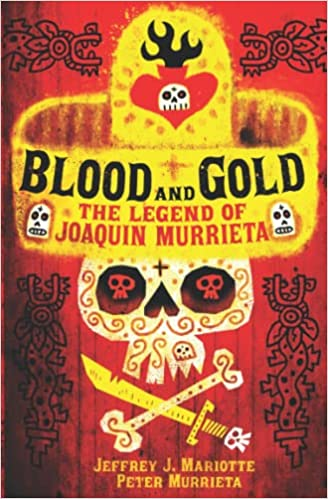
I lean toward novel length. I’ve written a handful of novellas and maybe a couple dozen short stories, but more than fifty novels. I like to have the space to stretch out and tell a big story that a reader can get lost in for a while. My longest book was published last year by Sundown Press. Blood and Gold: The Legend of Joaquin Murrieta, which I wrote with Peter Murrieta, a direct descendant of the Gold Rush-era bandit, clocked in at nearly 600 pages. I don’t anticipate going that long again any time soon, but anything’s possible.


*. Where did you get the idea for your latest release? What is the elevator pitch for it?

Inside a Confederate prison camp, a dying man tells a young Union soldier is told where a cache of stolen Confederate gold is and asks him to deliver it to the man’s beloved after the war. He finds the gold and—12 years later—finally finds the woman. But in doing so, he walks into a town at war with itself and discovers that the woman has taken up with the mysterious figure at the heart of that war. If he’s going to do his dead friend’s bidding and deliver the gold, he’s got to bring the war to an end—if he can survive it.

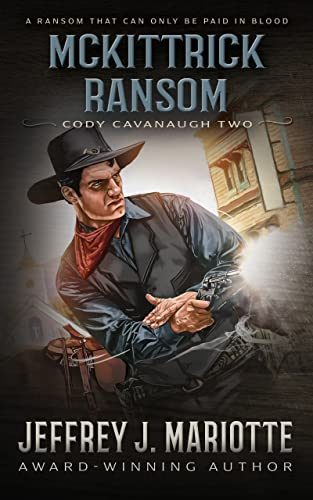
I don’t remember where the initial impulse came from. All I had was the young man in the camp and the promise to a friend. I was on a long car ride with Bob Boze Bell, the publisher of True West Magazine, and I told him that part. He said, “What happens next?” I didn’t know. So I had to sit down and figure that out, and that became O’Meara’s Gold, the first book in the Cody Cavanaugh series from Wolfpack Publishing.


Amazon

*. Are you a plotter or a pantser?

I’m definitely a plotter. I’ve written a lot of tie-in fiction, in which you’re writing in an established fictional universe owned by somebody else, and you have to have an outline approved by the license-holder before you can write. Then you have to stick pretty close to that outline. I have written a few books without an outline, but it’s harder going for me. I’m much more comfortable with a roadmap that tells me where I start, where I’m going, and the main points of interest along the way.


*. Do you ‘interview’ your characters before or at any time while telling their story and what do you do if they don’t cooperate with your story idea?

I have done that. I first learned about it in a writing book by my friend David Morrell, and it’s helped me out of a number of tight spots. That said, I don’t do it as a regular practice, just when I can’t figure out what comes next and need my characters to tell me.


*. Do you write in other genres?

I love many different genres—mystery, thriller, horror, western, fantasy, science fiction--and have written in all of them, as well as having written for different media, including comics and graphic novels, games, newspapers, magazines, and the backs of trading cards. I’ve been a member of writer’s organizations for just about all of those genres, but I’ve let some of those memberships lapse. I’m currently a member of Western Fictioneers, the Western Writers of America, the Horror Writers Association, Sisters in Crime, the International Thriller Writers, and the International Association of Media Tie-in Writers because I still occasionally write in all those genres. At the moment, I’m working on a series called Major Crimes Squad: Phoenix, a police-procedural series for Wolfpack Publishing. I don’t know that I could ever pin myself down to just one genre.


*. Research, do you find it important?

Research is definitely important to everything I write. When possible, I like to stand where my characters will, so I can see what they’d be able to see, smell what they’d smell, etc. When writing in a historical era, I need to know what the technology was like, what the prices of things were, what the characters would wear, and so on. Some writers who’ve written lots of western fiction might know those things cold by now, but I’ve fooled around in so many genres that I have to do a lot of reading and a lot of digging, and traveling when I can, to get it right. Or close enough to right that I can tweak it as the story demands.


*. What books or authors you grew up with that inspired you to take pen to paper?

I’ve always been surrounded by books, from Dr. Seuss and the Hardy Boys to today. I’ve managed and owned bookstores and been a publishing executive. I have a massive collection of thousands of books, mostly first edition hardcovers, many of which are inscribed to me thanks to my decades in the book biz. The single book that was most influential in my youth was Mystery of the Haunted Mine, a juvenile novel by Gordon D. Shirreffs. That’s the book that introduced me to Western fiction (though I had been a fan of western TV, movies, and comics since my earliest days), and steered the direction of my life and career.


Jeffrey Mariotte

www.jeffmariotte.com

Amazon Author Page


Monday, February 14, 2022

Medicine in the Old West


This week::Hygiene or lack of

By Jesse J Elliot    (aka Julie Hanks, Ph.D)


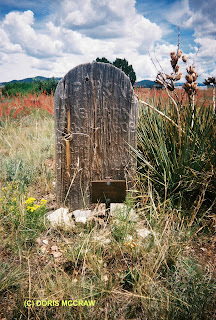
Photo by Doris McCraw

Here it is, Valentine’s Day, and I happen to choose the topic of HYGIENE for my new blog on Medicine in the Old West. Not very romantic, but a great starting place to discuss medicine and medical practices in the 19th Century. 

The practice of medicine in the Old West was primitive at best—especially in communities where there were no trained doctors. Although the Europeans (Pasteur and Lister 1852) had already discovered that microscopic creatures caused disease and infections, the idea didn’t catch on quickly for many doctors and the general population. Even in the teaching universities, doctors would go directly from their teaching labs--working on cadavers, to another operation or the delivery of a child without washing their hands. Though patients died, there remained a “disconnect” between the idea of bacteria and the onset of disease—the need for proper hygiene.  

Now, picture yourself in a country made up of peoples from Europe and Africa, each bringing in their unique diseases, conditions, and habits. Now put them on a crowded wagon train, in a busy brothel, and/or using the same outhouse—if they used it at all.  The chances of having a major medical outbreak are definitely possible, mostly probable, and most of these diseases could have been prevented with proper hygiene.

Personal hygiene was challenging in the West. Lack of water, modesty, strong lye soaps, the fear of bathing too often, and the laborious task of heating and carrying water were deterrents that made bathing inconvenient and undesirable. 

Men were worse than women. Their jobs entailed a lot of physical labor, and the availability of a bath was often inconvenient let alone impossible.  Some men who worked in mines, who drove cattle, or served in the military, would bathe, if available, in a stream or river.  But, it wasn’t unusual to go an entire season or longer without a bath. Besides, the belief that too many baths were dangerous to one's health was still prevalent. 

Women would, if they could, bathe more frequently, but lack of accessible water often made a bath out of the question. One woman settler on a wagon train described bathing in her clothes due to modesty. As she stood in the moving waters of the river, she undid her belt and peeled back the waistline of the skirt she had worn for the duration of the trip. In it were minute, moving insects and their eggs. In her hair, she had to use the small comb and remove lice and their progeny. She washed herself as well as she could, using a lye soap that burned her skin. She had refused to use the yucca root soap that a group of Indians had given the settlers to use for their hair. 

Unlike the good old lye soap, the root of the yucca left hair soft and didn’t dry it out. The Native Americans and the Mexican women used the yucca root. Some men, for lack of anything else, used whiskey. Later, egg whites, perfumes, and oils were added to enhance shampoos. But since one didn’t bathe too often, the problem of washing one's hair wasn’t a major concern.

Once people were settled, bathing was generally relegated to Saturday night, a day before church. The tub was filled, and the adults went first, then the older children, then the infants. Thus, came the old adage: “Don’t throw the baby out along with the bathwater.”  Sometimes, the same water would be used to wash clothes or even be kept for the following week’s baths. Once again, hygiene was not a priority.

Oral hygiene was also a challenge.  Although the toothbrush was invented years ago by the Chinese, Americans generally employed cloth and knives as cleaning utensils. Bristled tooth brushes, from as early as 1800 were excavated in the West, so they were available, but not frequently bought and used.  

Instead of toothpaste, early Americans brushed (if they brushed at all) with tooth powders. To clean teeth, these powders contained abrasives like alum, ground seashells, bone, eggshells, brimstone, baking soda, and even gunpowder. To freshen breath, powders included cinnamon, musk, or dragon’s blood (a plant).

Fillings were either lead or gold. Although there were schools of Dentistry (Doc Holiday went to Pennsylvania College of Dental Surgery in Philadelphia), often the local dentist was the town’s blacksmith or barber. Tools were primitive—a small plier was used to pull the teeth.

Rotten teeth were not unusual, and serious bacterial infections could travel to the eyes or even the brain, causing serious infections, blindness, and even death.

Cholera was a major cause of death during the Civil War and later the Western Movement. Overcrowded areas with outhouses leeching into the drinking waters or the groundwater and other diseases caused more deaths than bullets in the Civil War. In the settlements or on the large wagon trains, cholera reared its ugly head, and other than ginger or tea, no one knew how to stop the virulent diarrhea that it caused. Cholera was spread through contaminated water and caused severe dehydration and diarrhea. It could be fatal within days or even hours of exposure to the bacteria.

And talking about outhouses: Since toilet paper was not available, everything from soft leaves to corncobs were used to “clean” one’s self. The outhouses themselves were never cleaned, and under the wood that comprised the toilet, a host of flies and black widow spiders often awaited the unsuspecting user. Though lime and other agents were thrown in to cover the smell, the pile of waste often mixed in with the groundwater, causing serious diseases like cholera.

Dishes were washed, but apparently, the effort to keep things clean wasn’t enough to prevent dysentery. Dysentery is a digestive problem characterized by loose and watery stool containing blood. It is accompanied by intestinal inflammation and stomach cramps. Even today 1.1 million people die of dysentery in the world. The most common cause of dysentery is poor sanitary conditions. Stale food, contaminated water, and exposure to human excreta are other causes of dysentery.

All right.  Enough about hygiene! The next article is a list of what you would pack in your medicine kit if you were heading out on a wagon train or a pony express ride.  Lots of surprises there! Oh, yes, HAPPY VALENTINES DAY!


Thursday, February 10, 2022

On This Day in the Old West: February 11

 On this date in the Old West (or thereabouts), a couple of fuel-related events occurred. In 1808, anthracite coal was first burned as an experimental home fuel in Wilkes-Barre, Pennsylvania. Sure, it’s not exactly the West, but it was a major turning point in American fossil fuel history.

Anthracite, also known as hard coal or black coal, is a hard, compact variety of coal with “a sub-metallic luster.” It has the highest carbon content (between 86% to 97%), the fewest impurities, and the highest energy density of all types of coal and is the highest ranking of coals. It ignites with difficulty and burns with a short, blue, smokeless flame. The word anthracite comes from the Greek anthrakites or “coal-like,” Other terms for this coal are stone coal, dark coal, coffee coal, blind coal (in Scotland), Kilkenny coal (in Ireland), crow or craw coal, and black diamond. One particular term, “blue coal,” is used to denote a once-popular, trademarked brand of anthracite, mined by the Glen Alden Coal Company in Pennsylvania. They sprayed their anthracite with a blue dye at the mine before shipping it to northeastern US markets, to distinguish it from its competitors.


Anthracite has been burned as a domestic fuel in Wales since at least medieval times, but in the United States, anthracite history began in 1790 in Pottsville, Pennsylvania, with the discovery of the coal by hunter Necho Allen, in what is now known as the Coal Region. Legend has it Allen fell asleep by his campfire at the base of Broad Mountain and woke to the sight of a forest fire because his small flame had ignited an outcrop of anthracite. By 1795, an anthracite-fired iron furnace had been built on the Schuylkill River.


However, anthracite was not used as a residential heating fuel until 11 February 1808, when Judge Jesse Fell experimented with the fuel in Wilkes-Barre, Pennsylvania on a open grate in a fireplace. Anthracite differs from wood in that it needs a draft from the bottom, and Judge Fell proved with his grate design that it was a viable heating fuel. 


In the spring of 1808, John and Abijah Smith shipped the first commercially mined load of anthracite down the Susquehanna River from Plymouth, Pennsylvania, marking the birth of commercial anthracite mining in the United States. The use of the fuel was inhibited by the difficulty in igniting it—a particular concern in smelting iron using a blast furnace. With the invention of the hot blast in 1828, which used waste heat to preheat combustion air, anthracite became a preferred fuel, accounting for 45% of American pig iron production within 15 years. From the late 19th Century until the 1950s, anthracite was the most popular fuel for heating homes and other buildings in the northern US (until it was supplanted by oil-burning systems and, more recently, natural gas). Many large public buildings such as schools were still heated with anthracite-burning furnaces through the 1980s.


An interesting side note: during the Civil War, Confederate blockade runners used anthracite as a smokeless fuel for their boilers to avoid giving away their position to the blockaders.


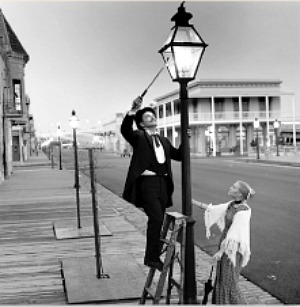
On 11 February 1854, another fuel-related event occurred, this one about as far West as you can get. For the first time, coal gas was used to light major streets in San Francisco. Though only about three miles of mains had been laid and only few streets and leading homes were lit, the lines were extended every day.


In the 1850s, manufactured gas was introduced to the United States for lighting purposes. Larger cities in the East built gasworks, but the West had no such industries. At that time, San Francisco had only oil streetlamps, and those only on Merchant Street. Three brothers—Peter, James, and Michael Donahue—were running the foundry that became the Union Iron Works (largest shipbuilding operation on the West Coast) when they became interested in manufacturing gas. They enlisted the help of an engineer and clerk at their foundry, Joseph G. Eastland, and began gathering information.


In July, 1852, James received a franchise to build a gasworks, lay pipes in the streets, and install street lamps to light the city with “brilliant gas.” The Common Council of the City of San Francisco specified that the gas should be supplied to households “at such rates as will make it to their interest to use it in preference to any other material.” The Donahue brothers and Eastland incorporated the San Francisco Gas Company on 31 August 1852. This became the first gas utility in the West.


The official seal of the San Francisco Gas Company bore the inscription “Fiat Lux,” which means “Let there be light” (the same slogan later adopted by the University of California). They had eleven original stockholders and the three Donahue brothers subscribed for 610 of the 1,500 shares. The company charged fifteen dollars per thousand feet for the gas at a time when coal brought thirty-five to forty dollars a ton and labor rates were six to seven dollars a day. 


To celebrate the first lighting, the company held a gala banquet at the Oriental Hotel. During this, it was pointed out that James Crooks had erected the first streetlamps in the city in October, 1850. These were the oil lamps along Merchant Street and were paid for by subscription. Within a few months, similar oil lamps were erected on Montgomery, Washington, Clay, and Commercial Streets. All except four were destroyed in the Great Fire of May, 1851. Crooks continued to install more oil lamps until the Donahues introduced gas lighting.


Gas lighting quickly gained public favor. In the first year of operation, the San Francisco Gas Company had 237 customers, This number more than doubled the next year, to 563. By the end of 1855, the company had laid more than six and a half miles of pipe and had 154 streetlamps in operation. The growing popularity of gas lighting led to rival companies, including the Aubin Patent Gas Company and Citizens Gas Company. The San Francisco Gas Company quickly acquired most of its smaller rivals, however the City Gas Company (founded by the Bank of California in 1872), initiated a price war. In 1873, the two companies negotiated a consolidation as a compromise, and the Bank of California gained part ownership of “the most lucrative gas monopoly in the West.” On 1 April 1873, the San Francisco Gas Light Company was formed, representing a merger of the San Francisco Gas Company, the City Gas Company, and the Metropolitan Gas Company.


If your characters lived in the Northeast during the early 1800s, they might have purchased “blue coal” to heat their home. If they were in San Francisco during the 1850s, they might have witnessed the beginning of gas street lighting. Of course, after 1854, your characters in San Francisco would have noticed the many gas streetlamps illuminating the City by the Bay. Hopefully, these fuel facts will help you add a bit of extra flavor to your Western novels. Stay tuned for more history factoids next month.


J.E.S. Hays

www.jeshays.com

www.facebook.com/JESHaysBooks


Wednesday, February 2, 2022

5 Funny Cowboy Commercials - #westernfictioneers #cowboycommercials ##funnycommercials

It's never a bad day when we can find something to laugh about. I mean really laugh. To that end, here are five funny cowboy commercials that will bring you, collectively, 3 minutes and 15 seconds of smiles and laughter.

IRN-BRU - Tastes Like Magic (https://youtu.be/vjrI_Tw9kpo) 

Public Service Announcement - Anti-Smoking (https://youtu.be/NsPmrhpZf6U)


GEICO - Words Can Hurt - Version 1 (https://youtu.be/o9CnX9bnwe4)


GEICO - Words Can Hurt - Version 2 (https://youtu.be/JsAVeYM8jo0)


EDS, an HP Company - Cat Herding (https://youtu.be/m_MaJDK3VNE)


Until next time,

Kaye Spencer

writing through history one romance upon a time
www.kayespencer.com


Wednesday, January 26, 2022

THEY SERVED UNDER CUSTER


THE DOCTOR'S BAG
the blog about the medicine and surgery of yesteryear

Keith Souter aka Clay More


The name of George Armstrong Custer (1839-1876) is indelibly written in the history of the United States. The Battle of the Little Bighorn in which he died along with five companies that he had led was romanticised as 'Custer's Last Stand' and has been depicted in art, film and all manner of literature.

I certainly would not have the temerity to comment on his qualities as a soldier or leader, other than to say that he undoubtedly had personal charisma. In this blog I am going to talk about three men who proudly served under Custer in different capacities. And since this is a blog about medicine and surgery of yesteryear I shall begin with a doctor.

The Brave Doctor - The only Doctor to survive Little Bighorn

Dr Henry Renaldo Porter was not soldier, but a contract surgeon. As such he had served under General Cook in his Apache Campaigns in Arizona in 1872 and 1873. Cook rated him highly and cited him for conspicuous gallantry in the closing campaign in March 1873.


Dr Henry Renaldo Porter (1848-1903)


In May 1876 at the age of twenty-eight he entered a three month contract for the Sioux campaign. He was about to step into history. After the battle of the Little Bighorn, he returned to civilian life and set up a practice in Bismarck. He wrote an account of the battle in the Bismark Tribune, which they published under the heading The Brave Doctor :

At six o'clock we started. It was Custer's purpose at this time to charge the Indians in a body, he supposing that our presence had not been discovered by them. In a short time the scouts reported that we had been seen by the Indians. Custer then decided to divide the command. He sent Colonel Benteen with three companies to the left; Major Reno with three companies in the center; and he took three companies and was to go to the right, his idea being to surround the Indian camp. Captain McDougal was left in charge of the pack train. It was about ten o'clock when the command was divided. Just as we were ready to start, Custer came to me and said: 'Doctor, I would like to have you go with me, as you are younger and more robust and Dr. Lord, the chief surgeon is not feeling very well.' I replied, 'All right. I would much prefer going with you.' Custer then said, 'I will see Dr. Lord and ask him to consent.' We rode over to where Dr. Lord was, and Custer spoke to him about the contemplated arrangement. The Doctor replied: 'Not much. I am going with you.' The poor fellow in those few words saved my life and sealed his own doom. I went with Reno. We had proceeded but a short distance when Captain Cook [Lt. W.W. Cooke], Custer's adjutant, came up and said: 'The Indians are right ahead of you, and you are ordered to charge them as fast as possible.


For two days Porter was the only doctor left alive and he cared for around thirty wounded men in an improvised field hospital in the Reno-Benteen defence. All this time he was under continuous fire from Sioux and Cheyenne rifles. 


With limited medical supplies, he used laudanum, operated to remove projectiles and performed two amputations.

He was considered one of the heroes of the campaign. He was called to testify at the Reno Court of Inquiry in 1879. He died on a world tour in Agra, India at the age of 54 in 1903.

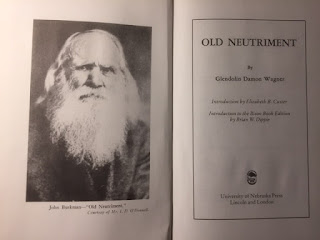
Old Neutriment

The second man to have served under Custer was John Burkman, his orderly for nine years up to the Battle of the Little Bighorn. His nickname was because of his raids on the kitchen at Fort Lincoln in his younger days.


He was devoted to both George Armstrong Custer and to his wife Libby Custer. In his own words some years after the battle, " Seems like they want no use me goin' on."

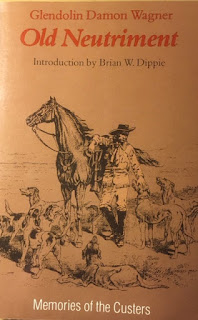
John Burkman was illiterate, but he shared his memories of living and working with the Custer's with his friend I.D. 'Bud' O'Donnell and all of this, complete with photographs, Gwendolyn Damon Wagner wrote in her book, suitably titled Old Neutriment in 1934. It gives some wonderful insight into his relationship with Custer and his personal views on the battle and the actions of the other major participants.


John Buckman (1839- 1925)


Buckman looked after Custer's two horses and his string of hunting dogs. He did so with love and meticulous care.

Like Dr Porter he had a fortunate escape from fate, albeit he bitterly regretted that he could not be at the end with Custer. This is a letter he dictated to an amanuensis to Mrs Custer in 1910:

"[Custer] turned to me with 'Burkman, saddle up my war horse, Vic: and you will have to remain with the pack train as I issued orders that there were to be no led horses in the front." 

The men were all in good spirits when they passed me. Then was the time I begged his nephew, Arthur Reed, to remain back with me for i would rather have taken my chances in the front, but you know, I had to over orders. I could tell you word for word, Mrs Custer, if I were beside you. That was the last I saw of the General as they left the pack train."


Of Dr Henry Porter, John Buckman had only good things to say.


"Don't git me wrong, Bud. We want all cowards. A lot o' gallantry was showed that day. Some men volunteered to go down right in the face o' Indian fire, to rescue the wounded that was strung here and thar 'long the side o' the cliff. We was all cravin' water. The wounded suffered most.Doctor Porter - he was a good one and a brave fellow -- he worked like a beaver, easin' the sufferin' best he could. What with the heat, blood pizen set in quick. I seen him, one time in partic'lar, amputize a fellow's leg. I seen the man lay thar, his face white's a sheet, his lips set tight, not a moan out o' him, nothin' but his eyes tellin' how it hurt. Doctor Porter says, `My wounded has got to have water! Who'll volunteer to go arter it?'

"Bud, thar was the river jist below us, millions o' gallons of water a-ripplin' and a-sparklin' along, but betwixt us and it was the Indians, shootin' any one that made toward it. A deep ravine led from our hill and men could crawl down through it almost to the river but then there was a short stretch of open space and to dash across it to the water meant death, sure's sartain. Our hankerin' fur a drink got terrible. We sucked raw potatoes. We held pebbles in our mouths. Nothin' helped much. We'd all of us, horses and men, 've sold our souls fur a drink o' that water we could see flowin' along; but the wounded, o' course, was in the worst fix. When Doctor Porter spoke up some men volunteered and crept down the ravine carryin' buckets and kettles and canteens. I started with them. My horse got hit in the flank and I come back, figgerin' I'd jist as soon die of thirst as an Indian bullet. Some of 'em made it. One fellow was hit jist as he stooped over to fill his bucket and the pail was shot away and his leg was shattered. He hung on to another fellow's stirrup and was dragged back up the hill. Arterwards that leg had to be amputized. Most o' them that went down brung back a leetle water, jist enough so' the doctor could trickle it into the mouths of the wounded. Arter that from time to time men kept slippin' down through the ravine to the river, but I didn't try it agin.


Sadly, in 1925, having lived long after the battle he was found dead on the porch of his boarding house in Bilings, Montana, a gun in one hand and a bag of candy in the other. 


Dog Kelley

The third man to have served under Custer had left the 7th Cavalry before Little Bighorn, but had also been an orderly under George Armstrong Custer. His name was James H (Dog) Kelley, who was the mayor of Dodge City from 1867 to 1871. As such, he worked with and supervised several of the most famous lawmen of the Old west, including Bat, Ed and James Masterson and Wyatt and Morgan Earp. His name is also linked with one of the most infamous episodes in the Old West, the tragic death of Dora Hand.


James Kelly was born in Manchester, England in 1834. He was Custer's orderly and served under him until they came to Fort Dodge in 1872. Like Custer he loved horses, hunting and racing dogs, especially greyhounds. He was honourably discharged in 1872. As a parting gift Custer gave him a dozen greyhounds, hence the name 'Dog Kelley.'


James H (Dog) Kelley (1834-1912)

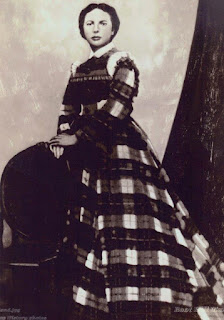
Dodge City was a place that many people drifted into. One person who had apparently travelled west because of her consumption (Tuberculosis), was the dance hall singer and actress Dora Hand. She went to Dodge City in 1878 and became extremely popular. She was romantically linked to Dog Kelley. 


Dora Hand (1844-1878)


Sadly, she was shot to death when a cowboy named Spike Kenedy fired into the cabin she was sleeping in, because he believed that the mayor, 'Dog' Kelley was sleeping there. A posse was formed, the members including Wyatt Earp, Bat Masterson and Charlie Bassett. They caught him, wounding him in the process, but he was later acquitted, because there was deemed to be insufficient evidence. His father, Mifflin Kenedy had come to the young cowboy's rescue, as he had done before.


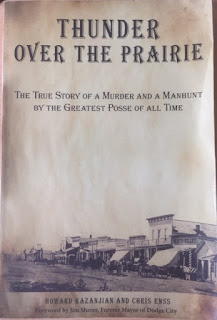
The story of this whole tragic episode is told in Howard Kazanjian and Chris Enss's excellent book Thunder Over the Prairie.


Dora Hand was interred in Boot Hill.

As for Dog Kelley, his fortune came and went. He ran the Kelley Opera House in Dodge for several years, but lost his property in the Panic of 1884. He saw his last years in Fort Dodge, and himself died from consumption in 1912. He was buried in Fort Dodge cemetery.

Ned Buntline


The famous King of the Dime Novelists, Edward Zane Carroll Judson (1821-1886) was a fascinating character. He was a prodigious writer of popular literature who had clearly led an adventurous and very full life, and who saw no problem in aggrandizing himself and his achievements. He has been described by as The Great Rascal, which is not far off the mark, in my opinion. Yet that is not to denigrate him, for he produced a body of work that influenced and entertained millions of people. He introduced Buffalo Bill and Wild Bill Hickok to the wider world.

One of the fascinating things about him was the fact that not only did he create his own history (for example, he bestowed the rank of Colonel upon himself, although he had never been more than sergeant), but myths followed him.

He wrote hundreds of dime novels and is credited with having more or less created the mythic Wild West. Most western enthusiasts know about the Buntline Special, the extra long Colt revolvers that he allegedly had made for Wyatt Earp, Bat Masterson and a few other famous lawmen who were involved in the posse that tracked down Spike Kenedy. Yet the historical records of the Colt Manufacturing Company fail to record their order, let alone their manufacture. It seems that this myth may have been created by Stuart N Lake, in his novel Wyatt Earp: Frontier Marshal, published in USA by Houghton Mifflin in 1931 (and published as He Carried A Six-Shooter in the UK in 1952). William Shillingberg wrote a detailed, scholarly paper debunking this in 1976.

My own short biographical novel The Dime Novelist about Ned Buntline, published in the West of the Big River series by Western Fictioneers includes, with some poetic licence, the episode about Dora Hand and the fabled Buntline Specials.


Tuesday, January 25, 2022

Wild Towns of Colorado?

 Post by Doris McCraw

writing as Angela Raines


We always hear about the 'wild towns' of the Old West; Dodge City, Abilene, and Wichita. Each state has its wild town. Since I live in Colorado it seemed appropriate to take a look at some of the towns where things could and did get out of hand.

Boston, Colorado. A town in Baca County in the Southeast portion of the state. It's close to the border with Oklahoma. It was founded in 1885 and the post office closed in 1893. Its growth was fast and the end even faster. This piece from the newspaper will give you an idea of what was going on.  


The Aspen Weekly Chronicle
April 15, 1889

Tin Cup, Colorado. A mining town located north of Gunnison in Gunnison County began its life as Virginia City. The town was not easy to access and the railroad never arrived there. In an article from 1975, they mention 'Frenchy's Place' as the type of saloon most think of as an Old West saloon. It was noted as having the fanciest women in Colorado. This opening paragraph illustrates some of the issues the town had.

Pitkin Independent
July 15, 1882

Creede, Colorado. Named for former Army scout Nicholas C. Creede, was one of the last silver boomtowns in the state. It was the home for some of the well-known names in the Old West, Randolph 'Soapy' Smith, Bat Masterson, and Bob Ford. The following article speaks of the death of Bob Ford, who shot and killed Jesse James. 

Aspen Weekly Times
June 11, 1892

There are more stories from towns in Colorado whose history is begging to be explored, but that is probably for a future post. 


Friday, January 21, 2022

Who Is This Guy, and How Did He Get In Here?


I’m not particularly new to Western Fictioneers, but I might be new to a lot of our members, so I thought my first blog post might serve as a kind of introduction. I’ve been a member for a few years now, originally invited by Troy Smith, to whom I remain indebted for letting me know about this great organization.

The story actually begins decades earlier, though, in the late 1950s, when I watched Roy Rogers and Hopalong Cassidy and all the other TV cowboys. I did my best to emulate them (see photo in full Hoppy gear, with my late big brother Michael). But when I was six years old, my father, a defense department civilian, was transferred to Paris, France—which he’d wanted to get back to since WWII.
And it was there that the story takes off. In Paris, my dad, brother, and I all had our hair cut by a Russian barber who had a shop inside the DOD building my father worked in. It was Paris in the early 1960s, Cold War days, so he was probably a spy, but he was also a barber. And for the kids and the GIs, he kept comics in the shop along with magazines. In his shop, I picked up the first comic book I can remember having my hands on, featuring my favorite cowboy star, Roy Rogers.

That was one of the events that set me on the trail my life followed. I started reading and collecting comics, and I’ve done so ever since.

The trail led me to Virginia, where I discovered the book that truly changed my life: Mystery of the Haunted Mine, a 1962 juvenile novel by Gordon D. Shirreffs (originally titled The Haunted Treasure of the Espectros). I got the Scholastic Book Club paperback edition in 1965 and devoured it. This book had it all—western action and adventure, suspense, seemingly supernatural horror, and puzzling mystery. Even at that age, I knew that Shirreffs’ “Espectros” were a stand-in for the Superstitions, and that the treasure Gary, Tuck, and Sue are hunting for was really the Lost Dutchman Mine.
Historical aside: on January 10, 1932, the headless corpse of Adolph Ruth was found in Arizona. His head had turned up in December of ’32, with what looked suspiciously like a bullet hole in it. Ruth had disappeared while hunting for the Lost Dutchman Mine. I never met Shirreffs to ask him about it, but these events made national news, and I’m convinced that they’re what planted in his head the seed for the story that would become Mystery of the Haunted Mine.
A short while later I read my second western, Clay Fisher’s War Bonnet. I was hooked for life.

After Virginia, I lived briefly in Worms, Germany, a city with a huge Roman wall still standing in the middle of it—real history you can reach out and touch. From there I headed to San Jose, CA, where I saw my first comic shops (and worked in one, briefly). At San Jose State University I won third place in a regional short-story contest and made $30—my first money from writing.

A few years after college, I got into the book biz, as a bookseller at local chain Books Inc. Our store was the South Bay hot spot for sf, fantasy, and mystery books and author events, but we had other genres well represented, too—one of these days I’ll tell you about our Louis L’Amour signing and the Louis L’Amour complete works box set we created.

Books Inc. had a few stores in southern California, and after three years at the San Jose store, I was sent down to manage the La Jolla store. La Jolla’s a beautiful and pricey resort town on the coast, and our store was a regular stop for visiting celebrities. On one occasion I sold a huge volume of Western art paintings to Phoebe Cates, as a birthday present for her father, Gil Cates—the man who produced more Academy Awards telecasts than anyone else.

While working there, I made my first fiction sale, to a prestigious science fiction anthology called Full Spectrum. I also met superstar comic artist Jim Lee—his then-wife had become my assistant manager. When Books Inc. closed its southern California stores, Jim hired me at his new publishing company, part of the fledgling Image Comics brand. It was there that I started writing comics and graphic novels, and then actual novels—my first being a collaboration with a friend on a novel about one of our company’s superhero teams.

At one point, after we started an imprint of non-superhero comics, Jim—knowing of my fondness for westerns—asked me to create a western comic series. But he wanted it to have a supernatural angle; to be what’s now called a weird western. I happily obliged and came up with Desperadoes. That’s the work that brought me to Troy’s attention, and it’s still my most popular comics creation more than 20 years later.
I became a pretty prolific novelist, with more than 50 novels published in the last 23 years, and more than 70 books altogether. Many of those novels were tie-ins—licensed fiction based on existing characters like Buffy the Vampire Slayer, Superman, Spider-Man, Conan, or properties like CSI, Star Trek, and Narcos. But I was also writing original novels—all of them in the genres suggested by the Shirreffs book I’d loved so much. But my then-agent told me now to bother with westerns, because they didn’t sell. So I shied away, despite my ongoing love of the genre.

But thanks to Desperadoes, I got the occasional chance to write some western short stories—some weird, others not—and to appear in anthologies with such personal heroes as Elmer Kelton, Loren Estleman, Louis L’Amour, Johnny Boggs, and others. I was also introduced to the weird western role-playing game Deadlands and wrote a story for one of its earliest fiction anthologies.

Much later, I was able to broker a book deal between Deadlands owner Pinnacle Entertainment, Tor Books, and Visionary Comics, which had the Deadland print license at the time, for three novels. I wrote the second one, Thunder Moon Rising, and that became my first published western novel, albeit a weird western.

Despite my lifelong love of western fiction, comics, movies, and TV shows, I kind of thought it would remain my only published western novel. I was able to write weird westerns and had developed somewhat of a reputation in that area, but nobody was clamoring for traditional westerns from me. Then Livia Reasoner issued a call for stories for the Western Fictioneers anthology The Untamed West. I had recently written a somewhat offbeat novella called “Byrd’s Luck”—not a weird western, but not entirely traditional, either. I didn’t know what to do with it, but when I saw that call, I submitted it, and it went into the book. In fact, it was the lead story, and it wound up being a finalist for both the Peacemaker and Spur Awards.

That was the moment when I thought maybe I could make a go of this western thing, after all.

Last fall, Sundown Press published my first actual, straight western novel—the doorstop-sized historical epic Blood and Gold: The Legend of Joaquin Murrieta, which I wrote with Peter Murrieta, a fifth-generation descendant of the Gold Rush-era bandit. It has, to my great relief, been well received and earned attention in such disparate places as True West Magazine, Deadline: Hollywood, People en Espanol, and the Los Angeles Times.

And on January 26th, Wolfpack Publishing is releasing O’Meara’s Gold, the first in a traditional western series featuring Cody Cavanaugh and Freeman Douglas. I had more fun writing these than any other of those 50-some novels.
All these years and moves later, I’m living with my wife and occasional co-author Marsheila (Marcy) Rockwell and our family, in a home from which we can see my beloved Superstition Mountains. I’ve finally made my way into the world of writing westerns, and I’d like to stay for a while.

But it’s a safe bet I wouldn’t be here—or part of this esteemed organization—if it hadn’t been for Mystery of the Haunted Mine. If there’s a book that you feel changed your life in a significant way, please let us know in a comment!

Tuesday, January 18, 2022

HOW TO WRITE GOOD--by Cheryl Pierson

Since I ran out of time to come up with a wonderful new post for today, I thought I would put up something funny--yet meaningful in some ways. (Tongue in cheek.) It's a re-run from a few years back, but might give you a chuckle.

(Number 6 should say, "Writers" not "Writes")

What do you think? Have any others to add? After years of editing, the one that comes to mind for me is, "Be care of using too many descriptive, detailed, pointed, modifying adjectives and adverbs all together, separated by so many commas that your run on sentence can only be halted in mid-stride by a semi-colon; then, it plunges on down the mountain and around the curve toward the oblivion that it was destined for because no one can even remember or, by this point, care about what you were trying to relate in the first place."

Pet peeves anyone? It's your turn to talk about Writing Good!

Thursday, January 13, 2022

On This Date in the Old West: January 14


On this day in the Old West, January 14, in 1873, prominent African American Pinckney Benton Stewart Pinchback was elected to the US Congress. P.B.S. Pinchback was born near Macon, Georgia in 1837 to a white father, William Pinchback, and African American mother, Eliza Stewart, a freed slave of his father. Upon his father’s death in 1848, his mother moved her ten children to Ohio, fearing that her husband’s family would try to re-enslave them. Pinchback’s early education was at the public schools of Cincinnati. He entered politics in 1867, serving as a delegate to the Louisiana Reconstruction Convention. He also served as a member of the Louisiana State Senate from 1868 to 1871. 


When Lieutenant Governor Oscar Dunn died in 1871, Pinchback, who was serving as president of the senate at the time, assumed the duties of the office. He served in this capacity until the impeachment of Governor Henry C. Warmoth in December 1872. Pinchback assumed the office of governorship and served for thirty-six days. He was the first African American who ever served as a state governor. During his short tenure, several appointments were granted, and ten legislative bills were sanctioned. After leaving the governor’s office in January of 1873, Pinchback was elected to the US Congress, but his Democratic opponent contested the election and Pinchback was denied the seat. A year later, he was elected to the US Senate, but again, was denied the seat due to charges of election irregularities—although some said it was the color of his skin that counted against him. 


At the age of 50, Pinchback decided to study law and entered Straight University in New Orleans, Louisiana. He was admitted to the bar in 1886 and moved to Washington, DC, where he remained active in politics until his death in December 1921. 


On the same date that Pinchback was elected to the US Congress, in 1873, inventor John Wesley Hyatt registered a trademark for his new creation: celluloid, the first artificial plastic. He had patented this invention previously, and was currently manufacturing such items as false teeth, billiard balls, and piano keys.


In the late 1860s, while searching for a substitute for ivory in billiard balls, Hyatt combined nitrocellulose, camphor, and alcohol, and heated the mixture under pressure to make it pliable for molding. In addition to creating the new plastic material, Hyatt also invented the machinery needed to work it. One of the first uses of the new plastic was, not billiard balls, but denture plates, although Hyatt’s company, the Albany Dental Plate Company, also manufactured billiard balls and piano keys. Hyatt continued to invent new devices and materials throughout his life, ending with nearly 238 separate patents to his name. He is included in the National Inventor’s Hall of Fame.


Hyatt was born in Starkey, New York in 1837. He began working as a printer when he was 16, first in Illinois and later in Albany, New York. There, billiard ball maker Phelan & Collander were offering a $10,000 reward for a suitable substitute for ivory, the growing shortage of which was threatening the company. Hyatt spent several years seeking such a material, eventually coming up with celluloid, but there is no evidence that the reward was actually ever paid out.


The plastic was actually invented in 1856 by another scientists, Alexander Parkes, but he was unable to manufacture and produce the substance, which he called Parkesine. He took Hyatt to court over the patent, and the courts decided that Parkes had indeed been the first to invent the substance, but that Hyatt’s production could continue. 


Initially, construction of Hyatt’s billiard balls involved coating the composition balls in a colored layer of almost pure cellulose nitrate. However, in his experiments, Hyatt discovered the solvent action of camphor on cellulose nitrate under moderate heat and pressure, and this was the basis of his 1870 patent. In addition, he also developed machinery for working his new material—something his unsuccessful predecessor, Parkes, had failed to do. In 1870, the Albany Dental Plate Company changed its name to the Celluloid Manufacturing Company and in 1873, the company moved to larger premises in Newark, New Jersey. Hyatt was awarded the Perkin Gold Medal in 1914.


Your characters may have heard of P.B.S. Pinchback if they followed politics, but they would likely have heard of or encountered celluloid if they were around late enough in the century. Perhaps they noticed a difference in the quality of billiard balls when they changed from ivory to celluloid. Or perhaps Grandpa Joe got a pair of those new plastic dentures!


I hope everyone has a very Merry Christmas and Happy New Year! See you in 2022.


J.E.S. Hays

www.jeshays.com

www.facebook.com/JESHaysBooks