Saturday, March 20, 2021

One Brick at a Time - Interview with Cheryl Pierson

I'm excited to be showcasing the women writers of Western Fictioneers for National Women's History Month. Let me introduce you to Cheryl Pierson. What a career Cheryl has and the knowledge she is sharing with us. Grab your coffee or tea and have a read.


Amazon ebook


1. When did you realize you wanted to be a writer?

Hi Doris, and thanks for interviewing me!  I think I always knew I wanted to from the time I got in trouble for writing my name all through my Little Golden Books. At church, when I was little, my mom would give me a little notepad and pen to write my letters on—before I could really spell words. I would make up my own words and write them, and my mom would pretend she was reading them. LOL But I wrote a LOT of stories from the time I was able to string words together.


2. Did you chose the genre you write in or did it choose you?

In the beginning, I knew I wanted to write what I most liked to read—historical romance. And I did that, but as time went on, I branched out into other genres. I loved doing that because it let me spread my wings a little bit and try writing in new areas that were interesting to me, as well. I started out writing feature articles for newspapers, then progressed to very short stories for Adams Media’s Rocking Chair Reader books and various Chicken Soup for the Soul books. Meanwhile, though, I was working on my western historical romance novels and submitting those. I had one agent who asked, “Can you write contemporary?” So I tried my hand at that—and then paranormal. But my first love(s) have always been historical romance and westerns. 

Amazon ebook


3. Do your life experiences influence or hinder your writing?

I do think my life experiences influence my writing to a great extent. I’m very empathetic, a trait I got from my mother. Growing up, she’d always say, “Just think how you’d feel if that happened to you.” Or some variation of that, and of course, I did try to think how I would feel if faced with that particular situation. So, when I write, it’s easy for me to put myself in the other person’s shoes and write their feelings.


4. Are you a plotter or a pantser?

I’m definitely a pantser. I plot when the story gets to a certain point, but even then, it’s not plotting. It’s a timeline I make so I will know I haven’t made a pregnancy last only 6 months, or have them celebrating Christmas a month early. I’ve always made a lot of lists, so this is part of that—a timeline “list” to keep everything straight within the story.


5. If you had a choice, which is your favorite to write, short stories, novellas, or full-length novels?

I love to write full-length novels because I have a chance to develop the characters more and give the plot several twists and turns. But I love writing short stories because it flexes those mental muscles and makes me have to say more in less time/space. 

Amazon


6. Is there a process where you find your next story or does the idea just hit you?

No, I really don’t have a “process”—but I usually come up with my ideas when I have quiet time to think about the different possibilities that “might have been” and go from there. When my kids were younger and in school, I spent a lot of time waiting for them after school and would always carry a notebook with me in the car “in case”—and that sure came in handy. These days, time for daydreaming is a lot scarcer. But I still keep coming up with one idea after another, somehow! 


7. Do you write in other genres?

I do. I write contemporary romantic suspense, western, historical romance, and have written a young adult western novel, RIDE THE WILD RANGE, and some middle grade and YA short stories that were contemporary.

Amazon


8.  What advice would you give to those who dream of writing, or what advice would you give your younger self?

Don’t be so hard on yourself when you don’t sell the very first thing you submit. 


Start small and build your portfolio one brick at a time instead of hoping you’ll hit that “grand slam home run” the first time you submit something. Writing a best-selling first novel doesn’t happen all that often.


Don’t sabotage your writing efforts by setting yourself up for failure.


Celebrate the small wins and achievements.


Don’t give up—keep writing. Even if it doesn’t sell, it improves your skills, your mental abilities, and your critical thinking. And it’s entertaining!


Write for yourself. Write what makes YOU happy.


Don’t quit your day job.


Remember to always lift other authors up. Putting out someone else’s candle doesn’t make yours shine brighter.


Thank you, Cheryl. For those who would like to follow or know more about Cheryl and what she does, check out the links below.


Cheryl Pierson

Editor-in-Chief and Co-owner
Prairie Rose Publications

PRAIRIE ROSE PUBLICATIONS WEBSITE:
http://prairierosepublications.com

E-mail: prairierosepublications@yahoo.com 


Amazon: www.amazon.com/author/cherylpierson


Wednesday, March 17, 2021

THE BATTLE OF NEW ORLEANS--LEARNING HISTORY THROUGH SONGS #1--by Cheryl Pierson

When I was growing up in the 1950’s and 1960’s, “story songs” were very popular. Even though radio stations had their “3-minute limit” for song length back then, there were some exceptions. And many of these songs were amazingly concise, able to tell the story, and also evoke emotion from the listener. It didn’t hurt to have a catchy melody to keep us all tuned in, or to be certain we’d run out and buy a 45 single record to have for our very own!


Many of these ballads were connected to movies—whether the theme or other music that was used in conjunction with a movie release. Marty Robbins and Johnny Horton were two of the most prolific balladeers of those times, and two of my favorite singers. I’m not sure in this case what came first—the “chicken or the egg”—because I was just a tyke when many of these songs gained popularity, so of course, I loved those singers and the songs, as well.

One of the most popular songs of this type was The Battle of New Orleans by Johnny Horton. If you’ve ever tried to sing along, you will know this is not the easiest song to perform!

The importance of the Battle of New Orleans (January 8, 1815) was not in the outcome of the War of 1812, but in the morale of the American forces as they were able to push back the British and keep them from gaining control of a major American port. This song contains the “high points” and is fun to sing (or TRY to sing!)—and easier to remember than memorizing names and dates from a history book. It was the battle the propelled Major General Andrew Jackson to national fame, and the last major battle of the war of 1812.

The song was written by Jimmy Driftwood, and received the Grammy for Best Song of the Year (1959) and Best C&W Song. Who was Jimmy Driftwood, you ask? According to Wikipedia, here’s the scoop on the melody and the lyrics, and a school principal who wanted to make learning history more interesting:

The melody is based on a well-known American fiddle tune "The 8th of January," which was the date of the Battle of New Orleans. Jimmy Driftwood, a school principal in Arkansas with a passion for history, set an account of the battle to this music in an attempt to get students interested in learning history. It seemed to work, and Driftwood became well known in the region for his historical songs. He was "discovered" in the late 1950s by Don Warden, and eventually was given a recording contract by RCA, for whom he recorded 12 songs in 1958, including "The Battle of New Orleans."

The Battle of New Orleans has been covered by many other artists, including Johnny Cash and Dolly Parton, but none achieved the level of success that Johnny Horton’s version did. With a rasp in his voice, a twinkle in his eye, and his enthusiasm for the song, it’s easy to understand why The Battle of New Orleans skyrocketed, where it spent six weeks at number one on the popular charts, and ten weeks at the top spot on the country charts!

"The Battle Of New Orleans"

In 1814 we took a little trip
Along with Colonel Jackson down the mighty Mississip’
We took a little bacon and we took a little beans
And we caught the bloody British in the town of New Orleans

We fired our guns and the British kept a-comin'
There wasn't nigh as many as there was a while ago
We fired once more and they began to runnin'
On down the Mississippi to the Gulf of Mexico

We looked down the river and we seen the British come
And there must have been a hunnerd of 'em beatin on the drum
They stepped so high and they made their bugles ring
We stood beside our cotton bales 'n' didn't say a thing

We fired our guns and the British kept a-comin'
There wasn't nigh as many as there was a while ago
We fired once more and they began to runnin'
On down the Mississippi to the Gulf of Mexico

Old Hickory said we could take 'em by surprise
If we didn't fire our muskets till we looked 'em in the eye
We held our fire 'till we seed their faces well
Then we opened up the squirrel guns and really gave em
Well we

Fired our guns and the British kept a-comin'
There wasn't nigh as many as there was a while ago
We fired once more and they began to runnin'
On down the Mississippi to the Gulf of Mexico

Yeah they ran through the briars and they ran through the brambles
And they ran through the bushes where a rabbit couldn't go
They ran so fast that the hounds couldn't catch 'em
On down the Mississippi to the Gulf of Mexico

We fired our cannon till the barrel melted down
So we grabbed an alligator and we fought another round
We filled his head with cannonballs and powered his behind
And when we touched the powder off the gator lost his mind

We fired our guns and the British kept a-comin'
There wasn't nigh as many as there was a while ago
We fired once more and they began to runnin'
On down the Mississippi to the Gulf of Mexico

Yeah they ran through the briars and they ran through the brambles
And they ran through the bushes where a rabbit couldn't go
They ran so fast that the hounds couldn't catch 'em
On down the Mississippi to the Gulf of Mexico

Hup, 2, 3, 4
Sound off, 3, 4
Hup, 2, 3, 4
Sound off, 3, 4
Hup, 2, 3, 4
Sound off, 3, 4

This song is included (of course!) in the 1960 album by Johnny Horton called Johnny Horton Makes History, containing all his other story-songs about different actual historical events and those that “might have been”—a wonderful collection.

Here’s a video of Johnny Horton performing his chart-topping song, and having a little fun with it.

https://youtu.be/mjXM6x_0KZk

Monday, March 15, 2021

1955 – a good year for the Ballad of Davy Crockett by Kaye Spencer #classicpop #Disneysongs #classictelevision


March 26, 1955—

Bill Hayes’ version of The Ballad of Davy Crockett reached the No. 1 position in Billboard magazine on March 26th and stayed there through April 23rd. Bill Hayes, b. June 5, 1925, has an impressive musical, Broadway, Hollywood, and daytime soap opera career. Read about Hayes HERE.

The Ballad of Davy Crocket was the theme song for the Disney five-part miniseries Davy Crockett, which aired on December 15, 1954. The first episode was a major Disney success and by February 1955, singers were scrambling to record and release their versions of the song.

Image: Amazon.com

Four other versions of the song made it to Billboard magazine charts in 1955, but none of them reached No. 1. Fess Parker, Tennessee Ernie Ford, Burl Ives, and Mac Wiseman had the other renditions.

The ballad is listed in the Top 100 Western Songs of all Time by Western Writers of America.

I have a 45 rpm of The Ballad of Davy Crockett by the Sons of the Pioneers. The “B” Side is The Grave Yard Filler of the West. Due to a basement flood a few years ago, I lost the covers to all my vinyl records, but I salvaged the records themselves. Since I don’t have a record player anymore, I’m thankful for YouTube when musical nostalgia kicks in.

Fess Parker played Davy Crockett for the live-action Disney television miniseries, and he also sang the song as the show’s theme. Buddy Ebsen was his co-star. The show had five episodes:

Davy Crockett Indian Fighter
(aired December 15, 1954)

Davy Crocket Goes to Congress
(aired January 26, 1955)

Davy Crockett at the Alamo
(February 23, 1955)

Two more episodes aired, despite Crockett dying at the Alamo. In Disney’s alternate version, this episode fades to the ballad music with Crockett, the last survivor, shooting at Santa Ana’s soldiers.

Davy Crockett’s Keelboat Race
(November 16, 1955)

Davy Crockett and the River Pirates
(December 14, 1955)

Davy Crockett, King of the Wild Frontier
Buena Vista Distribution Movie Poster
Fair Use


With the success of the miniseries under their production-belts, Disney forged onward and released the movie Davy Crockett, King of the Wild Frontier, which is a compilation of the first three television episodes. It released on May 25, 1955.

George Bruns, a Disney legend, wrote the music. His film scores include Johnny Tremain, One Hundred and One Dalmatians, The Sword in the Stone, The Jungle Book, The Aristocats, and Robin Hood, to name a few.

Thomas W. Blackburn was an American author, screenwriter, and lyricist, who worked in the Disney story department. Writing the lyrics to The Ballad of Davy Crockett were his first musical lyrics. He wrote several novels and screenplays for movies and television: Raton Pass, Colt .45 The Adventures of Wild Bill Hickok, Cattle Queen of Montana, Johnny Tremain, Davy Crockett (King of the Wild Frontier), Maverick (several episodes), and single episodes for other popular television westerns of the time.

The Ballad of Davy Crockett was covered by a host of artists, and it ultimately sold ten million copies. The television show became wildly popular the world over thanks to Disney’s targeted marketing campaign in the UK to piggyback on the show’s U.S. popularity. It was called the “Crockett craze” in the U.S., particularly the Davy Crockett’s signature coonskin cap.

This image is from the television show Daniel Boone, starring Fess Parker. Apparently, if the coonskin cap was good enough for Davy Crockett and Fess Parker, it was good enough for Daniel Boone and Fess Parker. 


'Daniel Boone' 1966 Wikipedia

Here is Bill Hayes singing The Ballad of Davy Crockett. If the video doesn’t show on your device, click HERE. 


Until next time,
Kaye Spencer
writing through history one romance upon a time


Saturday, March 13, 2021

Persistence & Patience - An Interview with Vicky Rose

This week we interview author Vicky Rose aka Easy Jackson in our continuing series of Women Writers in Western Fictioneers. The journey to being a writer/storyteller is unique to each author. At the same time, there is so much to be learned from the sharing of their journey.

When did you realize you wanted to be a writer?  


I think a better question would be “when did I start writing without being forced to?” In sixth grade, I wrote a play about Jesse and Frank James. I was enamored with the whole bad boy mystique at that time. Thankfully, I grew out of it—sort of.  


In my twenties, I got serious about writing a novel. But I realized that in order to produce something of value, I needed to get more wisdom. 


I began again in my forties. Not really any wiser, but more desperate. I didn’t want to spend a lifetime doing jobs I hated. This time, I realized I needed to get a better grounding in the mechanics of writing. I enrolled in college, eventually earning a degree in journalism. The classes I took in history and photography have been a tremendous help to me. Knowing how to research and do the basics of photography are important for writing and promoting.  I wish I had taken classes in marketing, too. Today's authors are expected to be masters of the language and have a flair for promotion. 


Amazon
 

I always have to ask, did you choose the genre you write in, or did it choose you? 


I grew up in a small Texas town with a history of violence, cowboy gangs, rowdy saloons, vigilantism, and hangings. I loved its rich history, and there is no escaping love.  


What or who was the nudge that gave you faith that you could and wanted to be published? 


My sixth-grade classmates liked the James play I wrote, but not the second one I did. That taught me an important lesson. You really have to dig deep each time you sit down to write. A professor at Sam Houston State University would put encouraging notes on papers I turned in. “Excellent,” “I love your tart wit,” things like that. I kept those papers and every time I doubted my writing skills, I would drag them out and reread her comments.   


Do you think your life experiences influence or hinder your writing? 


Every life experience any author has influences how he or she sees the world and what he or she writes about. However, I’m a firm believer that every person is unique and views the world in entirely different ways. My older sister hated where we grew up and used those feelings to build a life as far removed from a small town as she could get. I embraced it and used it as a base to expand my horizons.  


That’s why authors can take a cattle drive, a gunfight, a battle, anything in history, and come up with a different way of telling it. The possibilities are as endless as the people weaving the stories.  


Tennessee Smith 1 & 2
Amazon

Where did you get the idea for your latest release and tell a bit about the story?  


I’m producing a movie from an original screenplay I wrote, Lost Pines. It is an incredible challenge, and I’m still working on getting it off the ground. My latest novel is Muskrat Hill.  


My golden retriever had died, and people who live alone with one pet will understand the grief I felt. I had always wanted to do summer work in a national park, so before getting another dog, I got a job in the Grand Tetons. It ended up being a disaster. We had to room with other workers, and the girl I roomed with did everything she could to make my life so miserable I would leave so she could have the room to herself. On my days off, I would go to motels in the boondocks of Wyoming to begin a completely fictionalized novel, but one that captured the essence of a small western town.  


Eventually, I did leave and let her have the room, came home, and got another dog. It took a long time for me to finish Muskrat Hill and a long time to get it published, but I think it is the best thing I’ve done so far. The misery I felt in the Grand Tetons no doubt spurred me to write about a place in my heart.  


I’m not sure how the concept of Lost Pines got started. It’s about a sheriff who had an affair, regrets it, and is allowing his wife to beat him up over it, although she is no angel herself. One of the characters is a spoiled rich girl who decides she is going to champion the cause of an arrested killer. It eventually comes to light that her father is having an affair out of town, and she is subconsciously hoping that by raising a stink, he’ll come home for Christmas. It suddenly hit me like a ton of bricks—once I had done something stupid that embarrassed my father (well, probably more than once) that I always regretted and wondered why I had done it. It made me realize he had probably been doing something that was drawing him away from the family, and in my childish way, I was trying to let him know that I needed him. It brought a lot of healing and enlightenment to me, and I hope it does the same for audiences who see it.  


Amazon

What is your favorite to write, short stories, novellas or full-length novels? 


Always before, I would say novels. But I’ve produced two short stories recently for editor Richard Prosch, president of the Western Fictioneers, that I found very satisfying. Novels, screenplays, short stories, they all have a place in my repertoire.  Novellas, not so much. That’s like falling between two chairs. Not a short story, but not a novel. In any case, I haven’t attempted one yet.  


Do you ‘interview’ your characters before or at any time while telling their story and what do you do it they don’t cooperate with your story idea? 


My characters have a life of their own and drive the story. I’m just the person who writes it down.  


I’d like to interject here how important names are to characters. If the author finds just the right names for the characters, it is much easier to let them tell their own story. It is the emotion a name triggers in the author’s brain every time that name is typed that is important. 


What advice would you give to those who dream of writing, or what advice would you give your younger self? 


My advice to young people considering a career in novel writing is to get a degree in law or medicine. In those two professions, you are working in the depths of human drama, and at the same time, can make money. Lawyers especially have more free time to hole up and write without really having to answer to anybody while keeping afloat financially. Policemen and firemen are the same; they just don’t make as much money or have quite as much leeway in their schedules.  


If a young person wants to write nonfiction, I would suggest going to college with the intention of becoming a professor. Not only will you be encouraged to write, it is almost mandatory. The only bad thing about teaching is that it is fishbowl living with a rather de rigueur mindset, and you’ll have to reach out in different ways to break out of that if you want to add depth and understanding to your writing.  


Of course, I didn’t do any of those things and just manage the best I can, juggling between earning a living, savoring life experiences, and trying to write about them.  


So many people think they want to write a book because they have a story they want to tell. My advice is, “Just do it.” Persistence and patience are what separates the wannabes from the doers. 


For more information check out the following links:

Website Links:


Thursday, March 11, 2021

St. Patrick's Day in the Old West

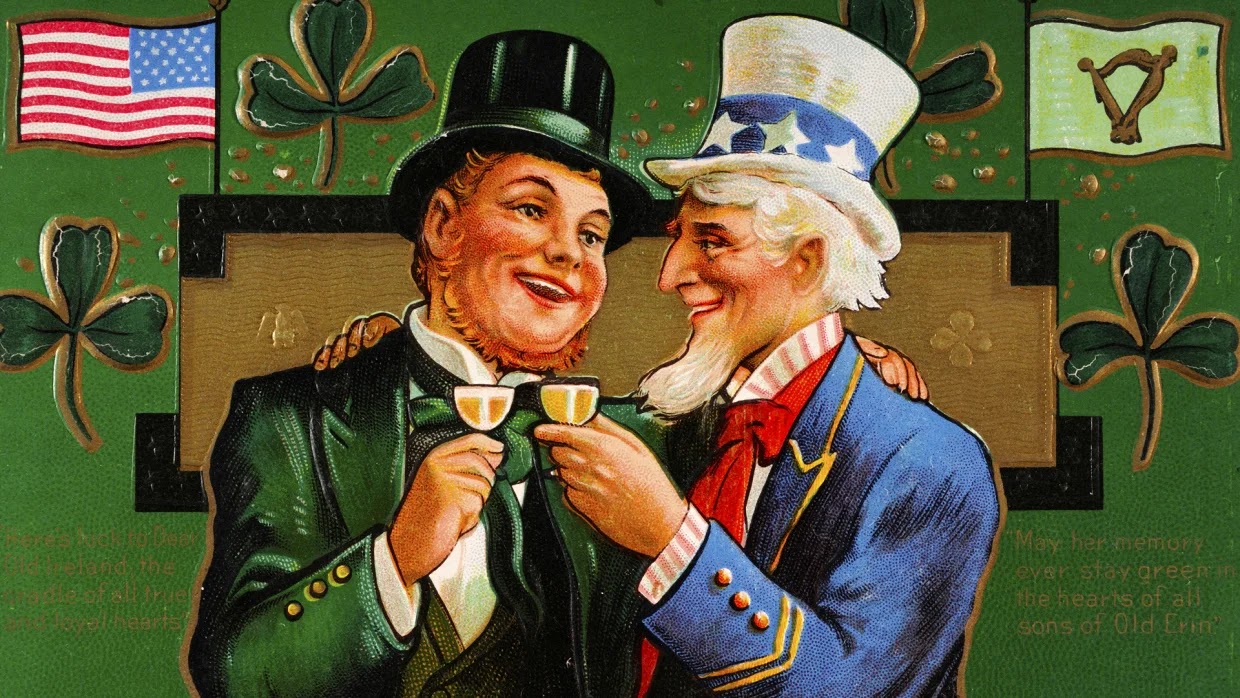
 Saint Patrick’s Day marks the death of the patron saint of Ireland. The Irish have observed this holiday for over 1,000 years, so if any of your characters are of Irish descent, they’d have celebrated it. You probably know at least one of the myths about the man—that he drove the snakes out of Ireland (there weren’t any to begin with … shhh!). And I’m sure you’re familiar with that most flamboyant of traditions, the St. Paddy’s Day parade. Believe it or not, the first St. Patrick’s Day parade wasn’t held in Ireland at all, but in America—and before the country was even officially founded.


Records show that on March 17, 1601, Irish Vicar Ricardo Artur organized a St. Patrick’s Day parade in the Spanish colony later to become St. Augustine, Florida. Then, in 1772, homesick Irish soldiers in the English army marched in a parade in New York City. Enthusiasm for the St. Patrick’s Day parade only grew from there. Over the next 35 years, Irish patriotism also grew, prompting the rise of so-called “Irish Aid” societies like the Hibernian Society and the Friendly Sons of St. Patrick. In 1848, several of these societies in New York banded together to organize one official parade. Today, it is the world’s oldest civilian parade and the largest in America.


The St. Paddy’s Day parades were often political in nature. The Fenian Brotherhood often took front stage in organizing the parades, and would-be political leaders marched or observed the celebrations. In 1866, for example, in Montana Territory, the Irish settlers focused much of their attention on acting-governor Thomas Francis Meagher, who was presented with a medallion badge by the Nevada Fenians in Virginia City. Meagher delivered a well-received oratory entitled “The Land of Our Birth and the Land We Live In,” followed by a poetry reading “elucidating the fervent patriotism of the Irish peasantry.” An amateur chorus closed out the first part of the celebration by singing a tune to the melody of St Patrick’s Day and that evening, the People’s Theatre was packed with celebrants eager for the play, The Colleen Bawn (first performed in 1860 and still popular today).


In California, celebrations ranged from the reading of poetry to marches and dances, organized by the Fenians. They were justifiably proud of their Grand Ball, held at Union Hall in San Francisco and open to any member of the brotherhood. They even took out advertisements in the San Francisco Chronicle in the days leading up to the event. On the day itself, a parade began at Union Square at 10:00 am, led by the Jackson Dragoons and including a host of Irish groups and societies. Represented were the Fenian Brotherhood, the Hibernian Society, the Irish-American Benevolent Society, the Sons of the Emerald Isle, and St. Joseph’s Benevolent Society (to name a few). Each society was accompanied by a band and members donned bright regalia and carried banners promoting their group. The march ended at Union Hall and was followed by an oration and High Mass at the Cathedral at 11:00 am. Celebrations only truly ended at 7:00 pm, when folks separated to attend their respective balls.


One of the better descriptions of St. Patrick’s Day in the Old West came from a correspondent with the New York Irish-American. Naming himself only “A Boherbuoy Boy,” (which suggested he might be from the city of Limerick), the correspondent described the celebrations at Fort Union, New Mexico. The post’s isolation didn’t stop the Irishmen from celebrating, as his article showed. “There were over three hundred persons on the occasion to witness and participate in our ball—the only St. Patrick’s ball ever given in Fort Union, or, I may say, in this Territory, where, indeed, it has astonished the natives. Our ballroom (75 feet by 25) was most tastefully decorated with American flags and a beautiful assortment of paintings, and our own Irish flag, painted in magnificent style for the occasion by R.H. Davis, artist. There was also a transparency tastefully decorated with the Sunburst, the Harp without the crown … All the officers of the garrison and all the most influential settlers of the country for miles around were present by invitation, together with over one hundred and fifty ladies (not one of them Irish, there being none such as yet in these parts), sat down to as well supplied a table as any the States could furnish, and plenty of the best wines and liquors.” Unfortunately, their Mexican band was unable to perform any Irish tunes, not even Patrick’s Day or Garryowen, but the festivities lasted until Sunday morning even without the proper music.


Some other traditions your characters might have noticed were:

·      The Shamrock: the three-lobed leaves were supposedly used by St. Patrick to explain the holy trinity to the pagan Celts, who had considered the plant sacred because it symbolized Spring. Later, it came to stand for Irish Nationalism. 

·      Corned Beef & Cabbage: although cabbage has long been an Irish staple, corned beef is an American (and fairly modern) addition. The traditional meal consisted of lamb or Irish bacon. Irish Americans in New York City’s Lower East Side learned of the cheaper cut of meat from Jewish neighbors, and began eating it around the turn of the century.

·      The Leprechaun: probably originating as a Celtic fairy, the leprechaun (lobaircin in the original tongue) is the shoemaker to his fellows. The original clothing for the leprechaun was red, but in the 1900s green became the color associated with Ireland and that spread to include the diminutive shoemaker.

·      Pinching: The “dubious legend” states that only those who wear green on St. Patrick’s Day are protected from the mischievous fingers of the fairies, who like to pinch and prank humans. As green only became the de facto color of Irish culture in the 1900s, this is likely a more modern “tradition.”


The presence of Irish settlers, miners, and soldiers across the Old West meant that St. Patrick’s Day celebrations would have been held all across the territories. “Wherever they were in the rapidly changing world of the American West in the 19th century, the Irish made a concerted effort to publicly assert their nativity, heritage and community every 17th March.” Your characters, even if not Irish themselves, would certainly be aware of the celebrations held on St. Paddy’s Day.


J.E.S. Hays
www.jeshays.com
www.facebook.com/JESHaysBooks 


Tuesday, March 9, 2021

My Visit to Red Rocks in Colorado

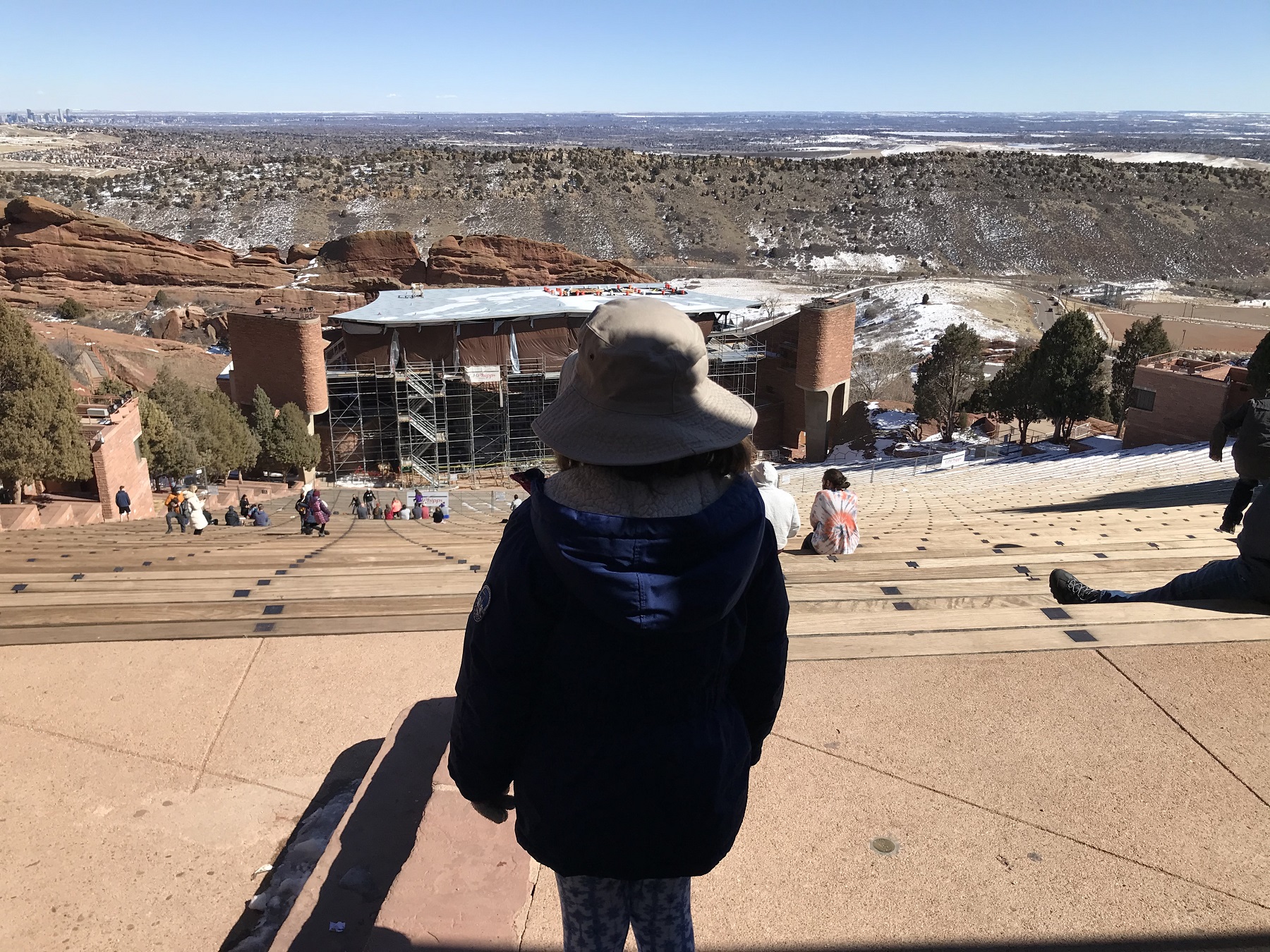
I’ve done a fair bit of traveling around the states and to other countries, but two weekends ago, a trek to Red Rocks Park and Amphitheatre in Morrison, Colorado, was one of the few that left a plastered-on WOW! expression long after soaking up the breathtaking vistas. I only wish my iPhone photos did justice to this dazzling attraction.

My family and I hiked the scenic trails, enjoyed the museum that’s a who’s who of my music collection, and stood at the top of the amphitheater looking down to the stage where so many legends have performed. This may be a tired cliche, but sincerely, I left a part of my soul there.

A little piece of interesting history (for me, anyway): a Cranmer played a big role in the development of this space into a park and music venue. Building on the foundation of another visionary, George Cranmer, Manager of Denver Parks, recognized the potential of the rock outcropping, and became the motivational force behind the land purchase in 1927 and ovesaw the project to its opening event in 1941. I wonder if he's possibly a distant relative.

Who else has enjoyed this amazing terrain, maybe even fortunate enough to experience a live musical performance?


David Cranmer is the editor of the BEAT to a PULP webzine and whose own body of work has appeared in such diverse publications as The Five-Two: Crime Poetry Weekly, Needle: A Magazine of Noir, LitReactor, Macmillan’s Criminal Element, and Chicken Soup for the Soul. Under the pen name Edward A. Grainger he created the Cash Laramie western series. He's a dedicated Whovian who enjoys jazz and backgammon. He can be found in scenic upstate New York where he lives with his wife and daughter.


Saturday, March 6, 2021

EVERYONE NEEDS A 'HERO' - INTERVIEW WITH CAROLINE CLEMMONS

 In honor of National Women's History Month, the next interview will be with Caroline Clemmons, another Woman who Writes stories that take place in the West, mostly the Old West. We hope you are enjoying this short series. 

And now we give you Caroline Clemmons. 

            Did you chose the genre you write in or did it choose you?


I think it chose me. My first book was contemporary, but then I wrote a couple of western historical romances for Kensington. I felt and still feel so comfortable with post-Civil War historical settings. My dad used to tell stories about his family’s adventures after they came to Texas in 1876. He didn’t mention the year, but I learned that when I became interested in genealogy. I loved hearing the stories no matter how many times I’d heard them before.


What was the nudge that gave you faith that you could and wanted to be published?

Oddly enough, my mother-in-law gave me a grocery bag (remember the large brown bags?) filled with romance novels and told me I could write them. I always thought she didn’t like me so that was a BIG surprise. I used to write long, long letters detailing everything my Hero or our precious children did. She said she could tell from my letters that I could write books. Hero agreed. Up until then, I’d only written newspaper articles. Soon after that, I had pneumonia. While I was ill and recovering, I came up with a plot. My sister complained that once I started writing books, she never got nice, long letters again. That’s true.


Did your life experiences influence or hinder your writing?


In my opinion, our life experiences influence our writing in many ways. I don’t mean I take a real event and use it per se. We are the sum of all we have seen, hears, read, or experienced. When writing, we draw on our inner well and pour out the necessary emotions and events to convey what we want our readers to experience.


Where did you get the idea for your latest release and tell a bit about the story?


For a while now I have been participating in multi-author projects (MAPs) in which the MAP creator sets a parameter and each author sets her story within the context. The one I’m writing now is for the Proxy Brides series. Thinking of reasons for a woman to become a proxy bride or mail-order bride is difficult. There were not enough eligible men in the East after the Civil War and that left many women unable to marry unless they did something drastic. I love marriages of convenience such as mail-order brides or proxy brides or Pinkerton Matchmaker brides. Having the husband and wife getting to know one another while forced to battle an assailant adds complexity to the story. The current story is A BRIDE FOR HOUSTON, and V. McKevitt of Black Widow Cover Designs created the gorgeous cover.


Is there a writing routine you follow or do you write when the muse strike?


I write every day. I’m NOT a morning person, so the first thing I do when I sit at the computer is answer email, comment on blogs, and check my groups on Facebook. By then I’m awake and can dive into my work in progress. I usually take a break with my husband and watch a movie on television at about six. Often, I go back and work a while afterward.


            If you had a choice, which is your favorite to write, short stories, novellas or full-length novels?


Ah, I DO have a choice because I’m indie-published. I choose novellas of 30K-50K. With that length, there is room for secondary characters and their stories. My second choice would be full-length novels. I do enjoy writing the longer story but have become used to writing novellas. I’ve tried but don’t like writing short stories.


            Is there anything else you feel people would like to know or would be surprised to learn about you?


I’m an introverted homebody. However, I love to travel with my husband, whom I call Hero but am not one who enjoys huge conventions. The Western Fictioneers conference I attended was a perfect size and my husband could attend with me without feeling out of place. Jacquie Rogers “nudged” me to attend and I’m glad she did. She’s a great “nudger” and a great writer—and not an introvert!


Do you write in other genres?


Yes, I have written a couple of mysteries and have a third ¾ complete. Our youngest daughter and I are considering writing a duet where we each write a cozy mystery set in the same small Texas town with overlapping characters and businesses.


What are your favorite areas of research and why they are important to you?


Having details right are important to make the story credible. Many people who read historical novels are familiar with the history. An error in one place makes them suspicious of other details. A friend and I stopped reading one author because of her anachronisms. The friend’s mother insisted she didn’t care and kept reading the author’s books.

Even if only part of a sentence appears in the book, it’s worth researching to be certain it’s correct. In addition, I love learning the unusual facts of each locale. Getting sidetracked by research is all too easy for those who love history.


When do you start to ‘market’ your new release?


Thank you for that opening—I already have. A BRIDE FOR HOUSTON will be released in April of 2021. It will be available in e-book for $2.99 and in print (I don’t yet know the print price). Where available, it will be free on Kindle Unlimited. 


To follow Caroline or learn more, check out the following links:

 Website

Amazon Author Page