Saturday, May 5, 2018

GUNSLINGER 6: Author GORDON L. ROTTMAN


by Tom Rizzo


Gordon L. Rottman’s latest novel—MARTA’S RIDE—represents an excellent blend of action, adventure, and romance against a backdrop of the Texas-Mexico border in the late 1860s. 

Marta’s Ride—the third in Gordon’s outstanding Ride series—features a mute 16-year old Mexican girl as the protagonist who finds herself alone after Indians massacre her family.

During her quest for survival, she meets Bud Eugen, an unemployed cowboy. Although suspicious and afraid, Marta and this young cowhand form what might be considered a cautious relationship. 

As in the previous two novels, The Hardest Ride and Ride Harder, the characters in Marta face life and death choices amid a harrowing adventure pitting them against brutal weather, ambushes, attacks, and shootouts with evil bloodthirsty banditos.

Gordon gives his resourceful mute teenage heroine a powerful voice in a vivid and memorable tale of kidnapping, murder, friendship, and re-awakening. 

The fourth book in the series, Marta's Daughter, is slated for publication later this year. 

                       GUNSLINGER 6

  
1. A lot of people say heroes/heroines are in short supply these days. Tell us about your protagonist Marta. And, was there a real-life inspiration behind her?  

That's a difficult question. There was no one single person that inspired Marta Amora Hinojosa. She is much like my wife, but she's not as prone to violence...thankfully. Many of her characteristics are derived from my daughters and nieces. All are strong outgoing women and girls. I've spent thirty-five years on the family ranch in Mexico and have watched all these girls working and playing there, it’s a different world.
I've never bought into the concept that most women of the Old West, and especially on the Texas-Mexican Frontier, were mostly passive and subservient. There were, of course, subservient women, but there were just as many if not stronger women. If not, they would never have established a civilized society in that wild land. Marta wanted what most women wanted, security, and safe place to live. She was willing to fight for that and make sacrifices to achieve it.

2. What was the biggest challenge you faced about writing the viewpoint of a character from the opposite sex?   
That's another tough one. It wasn't easy. I did not want this to be just something about how a guy thought a woman would think and react. Of course, Marta's previous life in a family of migrant workers had a big impact on how she responded. It had been a hard and challenging life living rough on the road. She's been physically and verbally abused, looked down upon, assumed to be a prostitute and thief, starved, suffered the weather, had no permanent home and had seldom spent a night under a roof. She did have a loving and hardworking family, and that brought her through many trials: How would she think, how would she deal with situations, most of which we have never experienced.

A major factor in regards to Marta is that she's mute, not because of the trauma of a murdered family, but an accident when she was nine. Being mute Marta has to find ways to express herself and being an "outspoken," and passionate girl makes that a special challenge. 

Because she is forced to find ways to express herself and make her wants and needs to be known, she has become more forceful and outgoing than a "typical" 16-year old Mexican girl. Bud Eugen is quite perplexed by the feisty girl, not only because of her strong personality, but he's had basically no experience with girls.

One example, begging. Marta finds begging one of the most abhorrent tasks she occasionally has to undertake. I talked to some beggars in Mexico and once I got them to open up I was stunned that they actually had strategies and very precise do's and don'ts.

When Marta sets out to beg in a town less than hospitable to Mexicans we learn how she picks the business she would sit at with the pros and cons between businesses and even churches. Where she sat was important, how she protected herself, and what she would do when invariably chased off were on her mind. We learn what threats she was on the lookout for ranging from self-righteous white women, gangs of young boys, and stray dogs. And what would she do when a certain young out of work cowpoke who she never expected to see again showed up? Relatives enlighten me on that reunion.

While a sensitive subject, it is no secret that Marta and the other kidnapped girls were raped and abused in many ways. That, of course, is a difficult subject and writing about it is an uncomfortable challenge. I read numerous articles about depicting this in narrative writing. Most complain that authors present it no better than a porn scene and to varying degrees of explicit description. I don't describe it, you know it happens, and you see the anguish and devastation the girls have to endure afterward, and they each are affected by it and deal with it in different manners just as real people.


3. Some might consider "Marta’s Ride" a retelling of "The Hardest Ride." What’s your take on this?

Marta's Ride is in a way a retelling of The Hardest Ride but from Marta's point of view. It has given her a "voice" of sorts to tell her story--she's the narrator. It does have to cover some of the ground crossed early in The Hardest Ride, but that part's shortened and of course seen from Marta's much different perspective. Too, there are numerous events that Bud never saw and that Marta had to deal with herself. For her, it is the first time she actually lived in an Angelo environment, and there is much that is new to her, some good, some bad.

Once she and the other girls are kidnapped and taken to Mexico, it is a completely different story. There are subplots, characters, terrifying events, and places visited that are not even alluded to in The Hardest Ride. At one point she's kidnapped from her kidnappers. One event sets the stage for a future title that will come to its conclusion three years later. Marta's Ride also gives us "the rest of the story" of what happened once they returned to what Marta now thinks of as home. It provides more on this than even found in the second book, Ride Harder.


4. Tell us something we don’t know about Marta and Bud. What makes them tick? Tell us one thing about them that we don’t learn from the book, perhaps a secret in their past.

Through all three novels, we hear mention of Bud's hateful and abusive mother whom he's not seen in nine years. While he's not making any effort to find her, deep inside he would at least like to know what became of her no matter how dysfunctional she was and how dangerous life with her had been.

Bud has a soft spot in his heart, which he reluctantly admits to. If he didn't, he would have turned his back on a mute, abandoned Mexican girl. Marta has a hidden desire. She wishes to see the ocean, simply because she does not believe such a thing exists. And, eventually, Marta also wishes for a family, her own children, which she never mentions to Bud and something a simple cowpoke like him never dreamed of.


5. Your series is quite popular. Reviews are outstanding. From your perspective, how do you judge the quality of your work? 

I was quite surprised at how popular the books, or rather Bud and Marta, became. I had read barely any Westerns, and the few that I had were mainly Cormac McCarthy. I do like traditional Western movies. I was putting together a story idea for a present-day story set on the Texas-Mexico border. It changed a great deal, and three factors changed it to a traditional Western: 1) Traditional gave me more flexibility in all what occurs without so many present-day real-world constraints, 2) I liked the idea of researching the period, which is not all that different than the present way of life in Morelos, Coahuila, and 3) I liked the challenge of writing a Western something totally new.


6. What was the first story you ever published and what was it like and what do you think of it now?

I'd never done any short stories until I had one punished in Sundown Press's "Sundown Western Tales." I started writing articles for military journals and magazines in 1975. That got me recognized as an "authority." My first military history non-fiction book was in 1984. I've since published about 130 military history books, mostly very dry technical subjects. 

I learned how to do historical research though, which is beneficial in researching Westerns. In the early 1990s, I co-authored three Tom Clancy-style WWIII techno-thrillers, which let me put to use my training as a Soviet military specialist and later as a Special Forces and SEAL war-games writer for 11 years. (I was in the Army for 26 years, and that's a great experience for writers.) 

The Hardest Ride was my first real fiction effort. I made a lot of mistakes including too slow of a start, a bit too much backstory, and included a lot of detail. Of course, that detail was beneficial too. Many reviewers like this subtle insertion of the details of what they ate, what they wore, and how they lived in the 1880s.


I've tried to learn and improve with each subsequent book of the Ride-series. I hope and think the next novel, Marta's Daughter, released by this summer, shows major improvement, although one of my nieces said she was emotionally and morally exhausted proofreading it. 

As a bit of a preview, Marta's Daughter takes place during the Mexican Revolution. Bud is 47 and Marta 41 and makes cameos. Their 17-year old daughter, Arsenia Renee Eugen, is sucked into the storm.
_______

Gordon’s first book of the series—The Hardest Ride—achieved bestseller status at USA TODAY and Amazon. The novel won the Western Fictioneers' Peacemaker Award for Best Western Novel 2014 and also ranked as a Western Fictioneers Peacemaker Award Finalist for Best First Western Novel 2014. Western Writers of America also honored The Hardest Ride, naming it a finalist for a Spur Award for Best Traditional Western Novel for 2013.    


Finalist for the 2013 Western Fictioneers' 
Peacemaker Award for Best First Novel  
_______


Thursday, May 3, 2018

You're Invited to a Gunboat Tea


On my first trip ever to Charleston, SC, I wanted to see as much history as we could squeeze into the few days we were there.  On our trip to the Fort Sumpter Visitor’s Center, I spotted a partial French porcelain tea set from the 1830s.


Seeing cups and saucers that would have been part of Charleston life wasn’t unexpected. However, the reason these artifacts were included in the museum was.  The set had been donated for a Gunboat fair. Families gave up their prized possessions to be sold or raffled off to raise money for the war effort, in this case, to raise funds to build a gunboat for the Confederate Navy.


Items such as a tea set, a linen fan, even a string of pearls—anything that might bring in some needed cash. Mary Boykin Chestnut, raised the daughter of a planter and married to Brigadier General James Chestnut, Jr., an aide to Confederate President Jefferson Davis, the frivolousness of such heirlooms when lives were at stake:  “Our silver and gold, what are they?—when we give up to war our beloved.”


Here’s the picture I took through the display case so you can see the colors of the tea service. Pretty, isn’t it?


For more information, check out “Stolen Charleston--The Spoils of War” by J. Grahame Long.

Tracy


Tuesday, May 1, 2018

Western Fictioneers Book Review


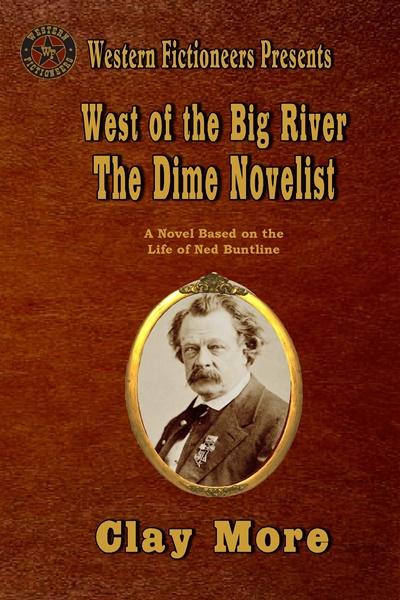
West of the Big River: The Dime Novelist
by Clay More

The historical novels in the West of the Big River series from Western Fictioneers have centered around a number of actual figures from the Old West, exploring the realities of their existence as well as some of the myths and legends that have grown up around them. Now, in THE DIME NOVELIST, the latest volume in the series, acclaimed Western author Clay More takes a closer look at someone who knew many of those historical figures and helped mold their myths and legends: Colonel Edward Zane Carroll Judson, better known to the millions of readers of his hundreds of dime novels by his most famous pseudonym, Ned Buntline.

Judson lived an adventurous and exciting life himself, running away from home at an early age to become a sailor and going on to a career packed with events. Married six times—or was it seven?—he dabbled in business and politics but more than anything else was a writer, publishing several different magazines as well as authoring millions of words of dime novels, articles, and essays. More’s narrative, as Judson reminisces about his life to a young journalist, is one fascinating and colorful story after another, most of them with a germ of truth but also a great deal of embellishment. Buffalo Bill, Wild Bill Hickok, Wyatt Earp, and many more come into and out of Judson’s life, strutting their stuff in the words of a great yarn-spinner. Judson yearned for literary success and respect that he never quite achieved, but in its place he entertained countless people who read his work.

As Ned Buntline, Edward C.Z. Judson is sometimes credited with creating the mythic version of the Wild West. THE DIME NOVELIST is a fascinating exploration of that legend and a brilliant portrayal of a largely forgotten but hugely influential figure in American popular culture. Those of us who write Westerns owe a lot to him, whether we know it or not.


—James Reasoner author of  Outlaw Ranger


Marta’s Ride 

by Gordon L Rottman

Brutal and violent, but beautifully written, Marta’s Ride is both a love story and a story of survival. The tale is told in the first person by Marta, a young, mute, Mexican girl who manages to create a “normal” life for herself in spite of the circumstances of her birth, her infirmity, and her lack of family and money. After meeting Bud, an Anglo man on the road, they become inseparable and their life assumes a semblance of normalcy as she becomes a cook and he becomes a rider for a successful rancher.  Life, however, takes a horrific turn as four young girls, including Marta, are kidnapped by a ruthless band of bandidos that terrorizes the borderlands between Texas and Mexico. Can and will Marta and the other three girls be able to survive daily assaults, rapes, hunger, and fatigue makes up the major part of this story. First person narratives are difficult to execute, but Rottman not only undertakes the task but proves to be efficacious in doing so.

For those readers who enjoy a good western; a strong, well-developed protagonist; and rich imagery, I suggest they tackle Marta’s Ride. I must warn the readers that many of the scenes are brutal, but they only corroborate the strength of Marta’s and the other girls’ characters. One caveat: do not begin reading in the evening, because you’ll be in for an all-nighter. As with so many first-rate novels, I had difficulty putting it down. 

 —Jesse J Elliot, author of Death at Gran Quivera


Showdown at Squaw Pass 

by  Robert B McNeill


When two drovers are found dead on the Western Trail near the Texas town of Cutter's Crossing, marshals Hank Ross and Abe Naylor aim to find their killers and bring them to justice. But their task is complicated when the local schoolteacher, Alice Carnaby, is kidnapped by the drovers' killer, who heads for Mexico with her. Ross and Naylor join forces with George Bowman, a half-breed Indian tracker, and set out after them. However, an unscrupulous local rancher has his own reasons for making sure the marshals don't succeed in freeing Alice, and sends four men to kill both her and the marshals. The rancher is determined there will be no witnesses - and therefore no trial …

This was a great, easy to read story with enough action to keep the pages turning.

When the son of a wealthy man takes it into his head to kill a drover who shows some attention to the woman he loves, it leads to an abduction and chase towards the border.

Except the father has his own agenda and sends his foreman after the wanted and the posse with the instructions that no one apart from his son should return.

After a bloody pursuit it all comes down to one day in court where the only thing from setting two killers free is the word of a woman.

This author knows his stuff and I'll be reading more of his stories.

—Brent Towns Author of Lightning Strike!

Beneath A Horse-Thief Moon

by Elizabeth Clements

Chase Reynolds is on the trail of stolen gold -- but he runs into a woman from his past. A woman he'd long believed dead. Can he find romance with Sara again, or is she somehow involved in the theft? 

This is an exciting read, with outlaws, kidnappings, missing gold and stolen horses. If you like a good romantic adventure, this is a good choice.Chase and Sara are believable characters, and you want everything to work out between them. I can tell you that you'll be satisfied with the ending without giving away any of the surprises along the way.

—J.E.S. Hays Author of Devon Day and the Sweetwater Kid: Down the Owlhoot Trail


Monday, April 30, 2018

Now Available -- West of the Big River: The Dime Novelist by Clay More


Adventurer, showman, charlatan, best-selling author, Ned Buntline was all of these things and more, including one of the most colorful characters in American history. Buntline, whose real name was Edward Zane Carroll Judson (he called himself Colonel Judson, but the rank was as fictional as the pseudonym), produced hundreds of dime novels during the second half of the 19th Century and was the leading author of popular fiction during this period. He was also a womanizer, a liar, and a self-promoter who made heroes out of Buffalo Bill Cody and Wild Bill Hickok but never missed a chance to build his own name and legend. Acclaimed Western author Clay More has painted a vivid portrait of this larger than life figure in THE DIME NOVELIST, the latest historical novel in the popular West of the Big River series from Western Fictioneers. It’s a tale filled with adventure, fantastic characters, and the raw enthusiasm of a young, expanding country.

“Ned Buntline is sometimes credited with creating the mythic version of the Wild West. THE DIME NOVELIST is a fascinating exploration of that legend and a brilliant portrayal of a largely forgotten but hugely influential figure in American popular culture.” – James Reasoner, best-selling author of THE LAWMAN

EXCERPT

Nashville, Tennessee

March 14, 1846

     The judge rapped his gavel on his desk and called for order.
     “I will have silence in this court! Now pipe down all of you or I’ll have the marshal and his deputies begin arresting folk.”
     He grunted, pushed his wire-framed spectacles further up his aquiline nose and turned his attention to the defendant sitting nonchalantly as he wrote in a small notebook at the table by the window.
     “You, Mister Edward Judson, have stirred up a dust storm of trouble for yourself. If you haven’t already, I would suggest you start praying that Robert Porterfield makes a full recovery, instead of scribbling away. Now put that book away and have some respect for this hearing.”


Sunday, April 29, 2018

Pioneer Food: Cooking Coons, Possums, and Armadillos by Vicky J. Rose, aka Easy Jackson


Although the thrust of my research has been in the Republic of Texas era, I think the following can be of use to anyone writing about frontier life.

Pioneers on the way to Texas loaded their wagons with hard tack, a flat bread lasting a long time.

Hard Tack Biscuits

2 pounds (8 cups) flour
1 teaspoon salt
¼ pound butter or lard ( ½ cup ) cut up
3 gills ( ¾  pint) milk.

Mix flour and salt, mix in lard. Add milk and knead dough for ½ hour. Cut into cakes about the size of a small teacup and ½ inch thick. Prick with a fork and bake in a moderate oven until they are a delicate brown.

At night, women would wait until the campfires died down before burying potatoes in the warm ashes to be eaten the next morning. White potatoes were commonly called “Irish potatoes,” as opposed to sweet potatoes which were sometimes referred to as “yams.” Sweet potatoes were much more common in Texas because they were easier to grow than Irish potatoes.

At first, cattle were used mostly for oxen or milk, not to be slaughtered. Cheese, usually a soft version, was often made every day when there was excess milk. Chickens were for eggs and usually only slaughtered when they could no longer lay.

Because of the amount of meat one got for the least amount of effort, pork reined as king. Pigs could be turned out to forage for themselves in the summer and butchered in the fall. The meat, when smoked and cured, kept well. Hams hung in smokehouses, while bacon might be covered with a cloth and thrown on a shelf. The saying was they used “everything but the squeal.”

Sausages and any cooked meat could be preserved by drying or placing in a stone crock and covering with lard.

Poor sanitation caused raw vegetables to be looked upon in disfavor as something that could cause disease, and the vegetables pioneers ate were consequently cooked much longer than we do today. The abundance of wildlife made it difficult in the first few years of settling a new land to be able to have a garden. If pork was king in the meat department, corn ruled in the vegetable world. Cornbread was often served at every meal, as corn was much easier to grow than wheat.

Dewberries - a wilder, smaller version of blackberries
Because oven temperatures were difficult to regulate, cakes often turned out dry and unappetizing. The pioneer woman counteracted this by making heavy cakes filled with dried fruits and nuts. Pies were much more forgiving, and they became the dessert of choice. The pioneer woman used whatever she had on hand for pies: wild fruits, buttermilk, sweet potatoes, vinegar, and even the ubiquitous cornmeal.

Wild Mustang Grapes

Mustang grapes are distinguished by the white velvety underside of their leaves. The fruit when ripe is dark purple with a bitter, acid taste. With enough sugar added, they are fine for making jellies, wines, and grape juice. When mixed with molasses and allowed to ferment, mustang grapes made a homemade wine referred to as “Busthead Whiskey.”
Mustang Grapes Growing Wild in the Trees on a Country Lane

Mustang Green Grape Pie

3 cups green mustang grapes
1 ½ cups sugar
3 tablespoons flour
3 tablespoons butter
Unbaked pastry for two 9-inch pie crusts
Melted butter and sugar for sprinkling over top crust

Pick the grapes when they are still a beautiful green color, just before the seed is formed. Wash them and put in a saucepan. Cover with water and bring to a boil.
Mix the sugar and flour together, add to the grapes when they begin to boil. Add butter and cook over medium heat. Stir, and when mixture begins to thicken, pour into an unbaked 9-inch pie crust. Add top crust or lattice crust. If desired, brush the top crust with melted butter and sprinkle sugar on top.
Bake at 400° for 10 minutes. Reduce heat to 325° and continue baking for 20-30 minutes.

Game was plentiful. Buffalo tongue was considered a special treat. Bear grease is sweeter and much better tasting than pork lard, but it turns rancid quickly.

Bear

Mature bear is usually too tough to eat and should only be used in long cooking stews. However, some cooks believe all bear, except for perhaps black bear, is edible as long as it is soaked in an oil-based marinade for at least 24 hours before cooking. The fat must be removed immediately, as it turns rancid quickly. Cook after marinating as you would beef pot roast or stew. Bear, like pork, can carry trichinosis, so be sure the meat is always well cooked through.

Other wild game was consumed with relish, as it was free and only had to be caught. Mexicans living in Texas also ate armadillo, although I do not think this was common among the Anglos. Armadillo is supposedly a very light, tender and tasty meat.
Hondo peers into an armadillo hole.

Armadillo

Water
½ cup vinegar
Salt
1 cup water
Black Pepper

Lay armadillo on back. With a sharp knife, slit from throat to tail and then across from shoulder to shoulder. Skin leg and shoulder close to the shell. Keep working close to the shell until the whole armadillo is out of shell. Then, being careful not to break the intestines, gut the armadillo. Wash well and cut in half. Place armadillo in a pan, cover with water. Stir in ½ cup of vinegar and about that much salt to make a brine. Soak overnight, drain and rinse. Place in roasting pan and sprinkle with black pepper. Add about 1 cup of water, cover and bake as you would a roast. Add more water as needed until done.

Raccoon & Muskrat

Raccoon and muskrat are both dark meat, and like bear, every bit of the fat must be removed after skinning. Also, like bear, they should be thoroughly cooked to prevent infections by worms. There are several small scent glands that must also be removed before cooking—under the armpits of the front legs, on either side of the spine, and in the small of the back.
Raccoon can be simmered, roasted, fried, or barbequed.  

1 raccoon
Cayenne pepper—to taste
Salt and pepper—to taste
Vinegar
3 garlic cloves, chopped
1 cup celery, chopped
1 large onion, chopped
1 medium green pepper, chopped
Cooking oil
Flour
6 sweet potatoes, peeled

Dress the raccoon and soak it for 1 hour in a mild vinegar and water solution. Drain and cut into pieces. Cover with water. Add salt, peppers, and chopped vegetables. Under medium heat, bring to a boil and reduce heat to a simmer.  Cook until tender. Drain, pat dry, and brown in a small amount of cooking. Place in a roaster.  Prepare a brown gravy with flour and drippings; pour over the raccoon, placing the sweet potatoes around it. Bake at 350° until potatoes are done, 30 to 40 minutes.

Opossum (Almost always referred to as “Possum”)

Cooks prepare possum in various ways. The fat is not objectionable in taste or odor and does not have to be removed. The meat is light-colored and tender. 

Method One:
Drain the blood, remove the entrails and wipe clean. Hang for 48 hours. Skin and cook. Roasting is the preferred method. The liver may be chopped up and added to the gravy.

Method Two:
Trap the possum and feed it for 10 days on cereal and milk. Clean but do not skin. Immerse into water just below the boiling point. Pluck the hair, when it slips out readily, remove the possum and scrape the hair off. While scraping, occasionally pour cool water over the surface of the animal. (Much like you would a hog.) Remove the small red glands in the small of the back, and under each foreleg between the shoulder and rib. Parboil for 1 hour. Cook like you would a pork roast.

Rabbit

A young rabbit has a narrow cleft in the lip and smooth, sharp claws. The ears will be soft and bend easily.

After the kill, drain the blood and remove entrails immediately. Leave the skin on if not cooked immediately. The body cavity can be cleaned with a cloth or dry grass. To ensure tender meat, hang by the feet for 1 to 4 days. They can be eaten immediately if not stiff. Once stiffened, they can still be edible as long as the hind legs are rigid.

Many people like to soak rabbit in either vinegar, wine, or salted water before cooking. Soaking or not is a matter of taste. Brining in salt water is a popular way to keep meat juicy.
Rabbit can be prepared in much the same way as chicken—fricasseed, baked, roasted, or boiled and diced to serve in a salad. For a unique and special sauce, the blood can be used as a thickener.

Squirrels might not be the easiest things to shoot, but they
were highly favored. 
Squirrel

Gray squirrels are preferred; red squirrels are small and gamey in flavor.

Squirrel is one of the finest and tenderest of all game meat. Only the oldest and toughest need to be parboiled. Clean as soon as possible, wipe the body cavity with grass, cloth or paper. Let the body heat dissipate. As with rabbit, it doesn’t have to be skinned until it is ready to be cooked. Squirrels are commonly fried like chicken or put into stews like Brunswick Stew. However, they are delicious broiled, baked, and cooked with dumplings.

My son’s grandfather told him that as a boy, he would kill squirrels and share them with an old black gentleman he knew. He would get angry at him and tell him not to shoot the squirrels in the head—the brains were the best part. (When I repeated this in a speech to a Daughters of the Republic of Texas chapter, several women nodded their heads, saying their grandparents had loved squirrel brains.)

Almost all the blacks living in Texas during the early 19th century were slaves, and they were given the ears, feet, neck bones, and intestines of the hog to eat. Chitterlings (pronounced “chit-lins”) were made with the intestines. They have a strong aroma when cooked that many people find objectionable.

            Chitterlings

After slaughtering a young pig, empty the large intestines while still warm by turning them inside out and scraping as clean as possible. Cover with salted water, keep cool for 24 hours. Drain and wash in 5 or 6 waters. Any excess fat can be removed but leave some for flavor.

            10 pounds chitterlings
            1 garlic clove or 1 teaspoon of minced garlic
            1 onion sliced or coarsely chopped  
            ½ teaspoon salt
            ½ teaspoon pepper
            Enough cold water to cover

Optional ingredients:
 ½ sliced lemon
½ teaspoon each: thyme, clove, mace, and allspice
            1 bay leaf       
1 teaspoon red pepper flakes
            2 tablespoons fresh parsley
            2 tablespoons white wine vinegar
           
Cut chitterlings up in 2-inch lengths. Bring slowly to a boil, add other ingredients. Reduce heat and simmer for about 3 hours. A half a cup of catsup can be added the last thirty minutes of cooking time if desired. Most people like to douse their chitterlings with vinegar or hot sauce.

When ranger companies were formed in Texas, they would live for weeks at a time on nothing but wild game, honey if they could find it, and coffee “the favorite drink of Texans.”

People living near the coast of Texas not only feasted on wild game, but fish, shellfish, and oysters as big as your hand. The wealthy planters living near the port cities had access to a wide variety of food, including coffee, London ale, and champagne. It seems strange to us thinking about the frontier days, but where it was available, champagne was a popular drink.

Almost all the stagecoach stops in Texas served much the same food, salt pork and cornbread. The
The Nicholson Hotel in Bastrop near the river burned down in
the late 1800s, but the Old Stagecoach Inn by the El Camino
Real in Bastrop still stands. Davy Crockett and Sam Houston
were visitors.
Tremont House in Galveston was known for its good food. Nevertheless, one Frenchman coming to the New World ate one meal there, turned around and went back to France. A few others, such as the Nicholson Hotel in Bastrop, became renowned for exceptionally good fare. They all served alcohol, and although the bar was a good source of revenue for innkeepers, murders and fights were not uncommon, much to the dismay of many of the innkeepers’ wives.

Tableware could vary widely from place to place. Some people ate off tin plates using utensils made from cane. In other places, people used fine china and silver cutlery. Most people had steel utensils with wooden handles. Pearlware and creamware, types of decorated pottery, were not uncommon, and shards of pearlware believed to have come from a kiln in Mexico have been found at Presidio La Bahía, a Spanish fort in Goliad.

 Although forks were on the table, knifes were often used to pick up food. It wasn’t considered rude to pour coffee from a cup into a saucer and drink it from the saucer.

Although eastern travelers may have complained about the monotony and unpretentiousness of corn pone, greens flavored with side meat, and bacon, they remarked there always seemed to be an abundance of it. And that, I think, speaks well for the old pioneers of Texas.

Sources:
The Daughters of the Republic of Texas, District VIII:  A Pinch of This and a Handful of That, Historic Recipes of Texas 1830-1900, Eakin Press, Austin, 1988

Joy of Cooking, Irma S. Rombauer, Marion Rombauer Becker, 1962 edition

Recipe Roundup—Compiled by the Whitehead Memorial Museum, Del Rio, TX

Cooking Texas Style, Candy Wagner & Sandra Marquez, University of Texas Press, Austin, 1993

Stagecoach Inns of Texas, Kathryn Turner Carter, Waco, Texian Press, 1972

Mary Austin Holley: The Texas Diary, 1835

Mrs. Blackwell’s Heart of Texas Cookbook, Louise B. Dillow & Deenie B. Carver, Corona Publishing, San Antonio, 1980

Wild Game Cookbook, Edited by L.W. “Bill” Johnson, Grosset & Dunlap Publishers, New York, 1968


Coming in November, 2018, Pinnacle Books

A Bad Place to Die by Easy Jackson 


Saturday, April 28, 2018

TELL AND SHOW by JERRY GUIN

Don’t get caught short on words.
It didn’t take me long to figure out that a story shouldn’t be all dialogue without a sense of where it is taking place. To me, the location should be as descriptive as possible in order to have the reader get a picture in his/her mind of what it would feel like to be right there alongside whomever I am talking about.


Let's suppose a scene whereby a fictitious Marshal named Jed Crane, is on the hunt for a well-known criminal named Wickes.


The Tell
Crane rode his horse down the only street of East Ridge. He guided his horse to a hitch pole in front of The Saucy Lady Saloon. He slid from the saddle, spun his reins, then stepped into the saloon.

Okay, now what picture have I just laid out for the reader? Not much.

The Show
So now let's show what came to Jed Crane’s eyes and what he did. (Remember, you are right there too.)

Jed Crane halted his horse on the edge of town, his eyes were active, searching for any movement by man or beast. There didn't appear to be anyone walking about. He didn't blame them, it was over 90 degrees out and seemed a lot hotter. He could see three horses, two sorrels and a bay, tied to a hitch pole in front of a shabby saloon. Two of the horses stood with heads down, dozing. The other one stood hip shot. All three lazed in their misery while awaiting their master's return. He tapped a heel to side of his sorrel to move forward on the dusty street of East Ridge. Both Jed and his horse were hot, sweaty, and tired from their all-day ride through the dry flat lands that stretched out twenty miles west of the one-street town.

Crane figured Wickes had not arrived yet, but he slipped the keeper thong off the hammer of his .45 single action Colt, just in case. He guided his horse to stand beside the other three. Crane slipped out of his saddle then spun the reins around the hitch pole, which leaned awkwardly to the left. He stood there for a moment taking in the Saucy Lady Saloon sign that hung above the doorway. The painted letters on the sign were faded and peeling but still readable. Over to his right, a big, yellow, shaggy dog lay stretched out in the scant shade of a bench that fronted the saloon. The dog eyed the man but did not bother to move. After Crane had stepped up two steps to the boardwalk, the dog closed his eyes. The saloon’s left swinging door stood open at an odd angle, the top rusty hinge having come loose. Crane, with one hand near the butt of his holstered .45, used his other hand he pushed the remaining door open, then stepped into the semi-darkened interior of the saloon.

Okay, a lot has been shown. Crane is hot and tired after a long ride. There are three horses, two sorrels and one bay, tied to a leaning hitch pole in front of a saloon. The street is dusty. The saloon’s sign has peeling paint. Did you see that lazy yellow dog? One of the saloon’s swinging doors is in disrepair. The inside of the saloon is in semi-darkness.

What do you think? Do you favor the tell or the show?

The show, at least, put a picture in my mind as to what the place looks like. Now is a good time for a convenient dialogue to begin between Crane and the bartender.


I am still learning and hope, in the future, to do a better job of sentence structure and punctuation. For now though, hang the word count, I do not want to be accused of being stingy with words when giving descriptions of a location.


https://www.amazon.com/Pushed-Too-James-Stone-Book-ebook/dp/B078WLBJ6G/ref=sr_1_2?ie=UTF8&qid=1522122735&sr=8-2&keywords=J.L.+Guin